
For a five- or six-night Okinawa trip with a rental car and two or more large bags, I would not treat “more hotel areas” as an upgrade. Start with one or two bases. Add a third only when that move removes repeated long backtracking, buys you a second genuinely useful morning or evening, or solves a separate final-night airport and car-return problem. Otherwise, the time you save on the map can disappear into repacking, checkout, luggage storage, waiting for a new room and setting everything up again.
If you have not decided whether the car itself is necessary, start with Do You Need a Car in Okinawa? This guide starts one step later: once you know the trip has a car, how many hotel bases should you actually use?
30-second decision: for 5–6 nights, start with a two-base ceiling
↔ Scroll table left or right
Trip pattern | Best starting point | What must the extra base actually fix? |
4 nights, family/parents, 2+ large bags | 1–2 bases | Does the second base remove at least two repeat backtracks? |
5–6 nights, consecutive Onna + Motobu days | 2 bases | Will you use a second morning or evening in the new area? |
5–6 nights, north + resort time + early-flight final night | Up to 3 bases | Does the third move solve a separate airport/car-return problem? |
One Churaumi day; everything else central/south | 1–2 bases | Are you moving hotels for one day that could simply be a longer drive? |
Out early, back late; hotel mostly for sleep | 1 base often wins | Does moving create usable hotel time, or only a new address? |
My working rule is deliberately strict: one hotel move should remove at least two repeat backtracks, or create two useful time windows you would otherwise lose. This is not an official Okinawa rule. It is a practical way to stop a 30-minute saving on Google Maps from becoming a half-day of packing and reset work.
What one hotel move really costs — it is not just the drive from A to B
Changing hotels means closing suitcases, checking drawers and chargers, checking out, loading the car, carrying the luggage through the day, finding the next hotel, storing bags if the room is not ready, checking in again and rebuilding the small systems that make a room usable. Add a stroller, children’s bedtime items, medication, wet swimwear or four adult suitcases and the move becomes part of the itinerary.
Hyatt Regency Seragaki Island Okinawa currently confirms that luggage can be stored before check-in and after check-out, subject to availability. That is useful, but luggage storage is not the same thing as having a room. A bag can be safe at the front desk while your group still has no private place to shower, change, rest or unpack. Treat storage as friction reduction, not as proof that a hotel move is free.
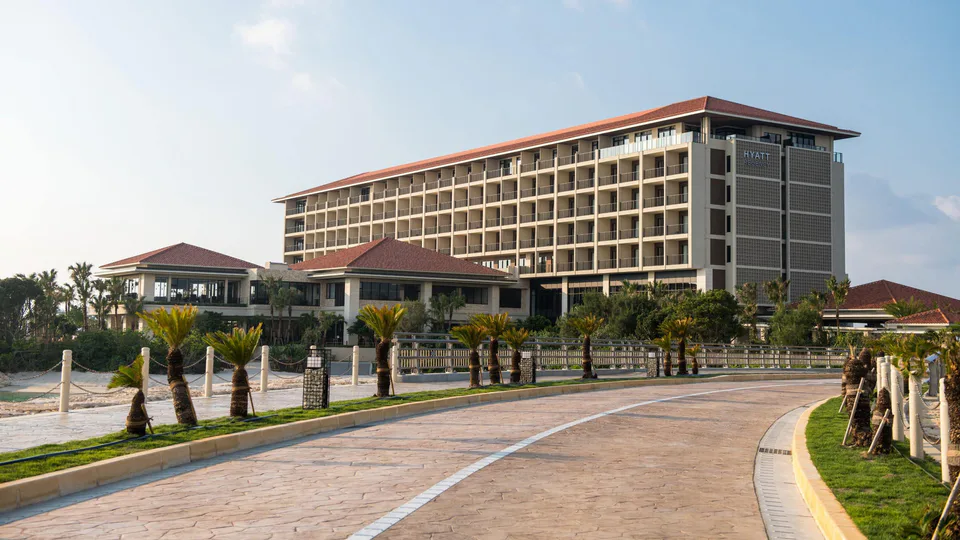
If Onna is meant to be your resort segment, compare Monterey, Manza and Hyatt Seragaki for a two-night stay. The reason to move there should be the afternoon, evening and next morning you will actually use — not simply that Onna looks central on a map.
One base wins when your sightseeing direction is concentrated and the hotel mostly handles sleep
If four of your five nights follow the same pattern — breakfast, leave, stay out through dinner, return once at night — staying put is often more valuable than chasing each day’s attraction with a new address. The hidden benefit is repetition: the same parking entrance, the same room, the same laundry setup, the same charging spots and no second round of “where did we put that?” every other day.
Use Where to Stay in Okinawa to choose the area that catches the largest share of your evenings, then lay the actual route over the 5-Day Okinawa Self-Drive itinerary. If only one day is clearly far away, a longer drive can still be cheaper than another hotel reset.
Two bases are the sweet spot when one area handles daily life and the other fixes two genuinely distant days
Five to six nights is where two bases often make the cleanest split. The first base handles most central and southern days. The second needs a specific job — usually two consecutive northern days, a real resort block, or a part of the trip where starting and ending locally changes both mornings and evenings.
The important word is consecutive. Moving to Motobu for one night and driving south immediately after Churaumi usually saves less than people expect. Moving for two nights can change where two mornings begin, where one evening ends, and how much of northern Okinawa you can use without a long return drive.
Motobu is the clearest test of whether an Okinawa split stay earns its move
Okinawa Churaumi Aquarium currently estimates about two hours by car from Naha Airport via the Okinawa Expressway. Ala Mahaina Condo Hotel, by contrast, describes the aquarium as about five minutes away by car. That is a big enough distance gap to make a second base worth testing — but only if your itinerary keeps working in the north after the aquarium itself.

If Motobu will get two nights, use The Orion Hotel Motobu vs Ala Mahaina to decide whether walkability and resort time or a larger condo-style setup matters more. For a longer northern stay, the Ala Mahaina 2–3 night guide goes deeper into the kitchen, room space and long-stay trade-offs.
Check whether two nights in Motobu earn the hotel move
Three hotel bases are not an advanced strategy — each move needs a separate job
Three bases in five or six nights can work, but the burden of proof is high. “We want to experience Naha, Onna and Motobu” is not enough. A third base should solve something the first two cannot solve neatly: for example, two real northern days, a resort block where you keep an afternoon free, and a final Naha night that materially reduces early-flight or rental-car-return pressure.
The final night deserves its own test. Read Onna vs Naha: Where to Spend Your Last Night in Okinawa before turning the last night into an automatic third hotel. An early flight, same-day car return or an itinerary already moving south can justify Naha. A late flight and a resort you still plan to use may not.
Parents, children and four adults make the same hotel move more expensive
Two adults with one carry-on each can reset a room quickly. Four adults with four large suitcases, a family with a stroller and bedtime gear, or parents travelling with daily medication have a very different transfer cost. The move is not just heavier; it also needs more coordination. Someone has to check drawers, someone is waiting for the bathroom, someone needs an item buried in a suitcase, and the whole group has to be ready at the same time.
For these groups, raise the threshold for a second or third base. The move should remove real long-distance repetition or create clearly valuable early and late hours. “It saves us a little driving tomorrow” is usually not enough.
Chatan vs Onna: your night base can matter more than your daytime midpoint
Daytime maps make Onna look central and Chatan look farther south. Nighttime behavior can reverse the value. If your group wants dinner, shopping and an evening walk around American Village, a Chatan base lets the car stop working once you return. If the point of the two nights is beach, pool, sunset and hotel time, Onna earns its place as a resort base.
For Chatan nights, compare Hilton, Vessel Campana and LeQu. For an Onna block, the Hyatt Seragaki two-night guide is a useful reminder that a resort move only pays when you deliberately protect time for the resort.
With large luggage, count room resets instead of calling them “a hassle”
“Large bags are inconvenient” is too vague to plan around. Count the reset tasks instead: how many suitcases need to close, how many toiletry bags come back out, whether swimwear is still wet, how many chargers and cameras need to be reconnected, and whether children or parents have items that must be immediately accessible. Do the list once and it is manageable. Do it twice in five nights and it starts to consume the trip.
If you are also comparing total trip cost, put hotel changes beside the numbers in the 5-Day Okinawa Budget. A different base can change parking, fuel, route length, rental-car days and the value of an afternoon — not only the nightly room rate.
The useful formula: the gain from moving must beat a full checkout-and-reset cycle
Think of the gain as three things: repeat backtracking removed, useful morning/evening time created, and final-day risk reduced. Think of the cost as repacking, checkout, luggage storage, hours without a room, a second check-in, a second unpack, and any new parking or access steps. You do not need to assign a yen value to every item. You only need to stop comparing “35 minutes less driving” against zero.
If the new base only shortens one small leg on one day, the gain is usually too thin. If it lets two mornings begin in the north, removes two long evening returns, or materially simplifies the departure day, it starts behaving like a real base instead of a hotel collection.
NO-GO: four hotel changes I would cut first
First, moving only to try another pool, breakfast or ocean-view room when you have not protected hotel time. Second, sleeping one night in Motobu after Churaumi and driving south first thing the next morning. Third, splitting five nights across three hotels simply because Chatan, Onna and Motobu all look appealing. Fourth, automatically moving to Naha for the last night when the flight is late and the car return is not time-sensitive. All four confuse “more hotel experiences” with “a better route.”
The opposite is also true: staying in one hotel can be the wrong kind of convenience
One base is not automatically efficient. If you drive from central or southern Okinawa to Motobu or Nakijin on two consecutive days, you are paying the cost as repeated road time instead of a one-off hotel move. The same applies when the final day already needs a Naha car return and the next morning has an early flight. Refusing to move can simply spread the cost across multiple days.
For a first trip, the broader Okinawa Travel Guide helps put trip length, car days, hotel areas and the five-day route back into one sequence before you lock the bases.
Before booking: eight questions that decide whether you need one, two or three bases
1. How many repeat “drive all the way back” legs does the second base remove? 2. Will you stay there at least two nights? 3. Will you use a second morning or evening there? 4. How many large suitcases, strollers or daily-access items are travelling with you? 5. Can the new hotel store luggage before check-in, and under what conditions? 6. Does the transfer day still work if you do not have a room from late morning to mid-afternoon? 7. Does a third base solve a separate car-return, early-flight or southern-route problem? 8. If you delete the hotel move, do you add one short drive or two days of the same long backtrack?
Question eight usually decides it. One extra short drive: stay put. Two consecutive days repeating the same long road: test a second base seriously. Luggage-storage policies, check-in times, parking fees, shuttles and road times can change, so verify the exact hotel rules for your dates before paying.
Reduce 5–6 nights to the right Okinawa hotel bases
Final verdict: 5–6 nights do not become more complete just because you sleep in more places
For most self-drive Okinawa trips with large luggage, one or two hotel bases are the strongest default. One northern day does not automatically justify a move. Two consecutive northern days can. A third base needs another independent job — usually resort time that you will actually use, or a final-night airport and car-return problem that it genuinely solves.
The simplest bottom line is the same one used in the Chinese mother article: every hotel move should remove at least two repeat backtracks or buy two time windows you know you will use. If it cannot do that, stay longer in the same room. Okinawa is often made tiring not by one long drive, but by turning a short trip into a chain of checkouts and restarts.
Decide whether the final night really needs Naha
If you still have not settled on your base, go back to the Okinawa hotel decision guide and re-run the choice by your last stop, driving frequency and travel party.
Sources and what to recheck before booking
Okinawa Churaumi Aquarium official access information — current estimate from Naha Airport to Motobu by car via the Okinawa Expressway.
Ala MAHAINA CONDO HOTEL official site — current Motobu location and approximate driving time to Okinawa Churaumi Aquarium.
Hyatt Regency Seragaki Island Okinawa official FAQ — current luggage-storage policy before check-in and after check-out.
Check-in time, luggage storage, parking, shuttles and road times can change with dates, occupancy, events, construction and weather. Recheck the official pages for your actual stay dates before booking.