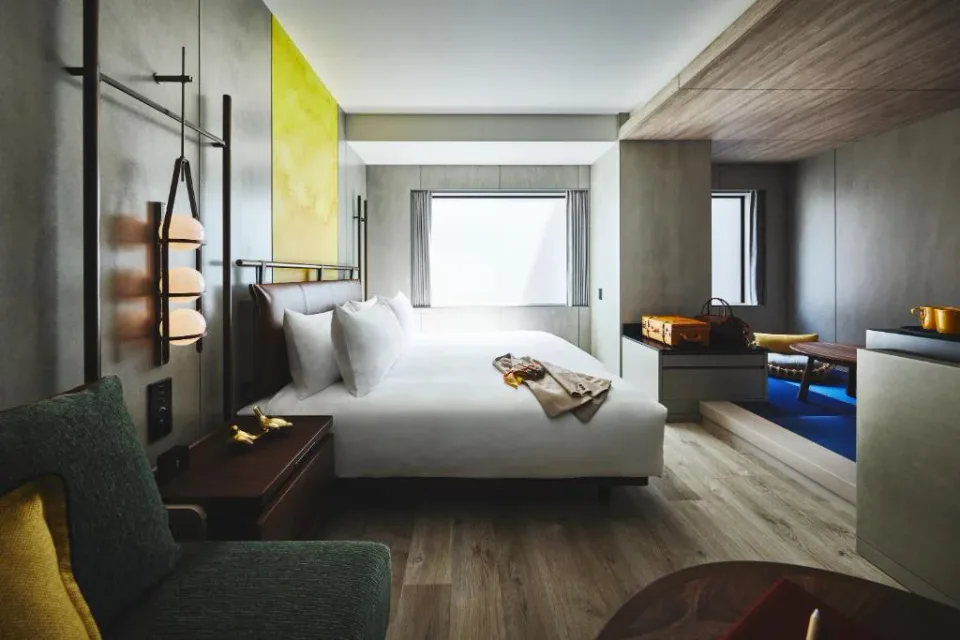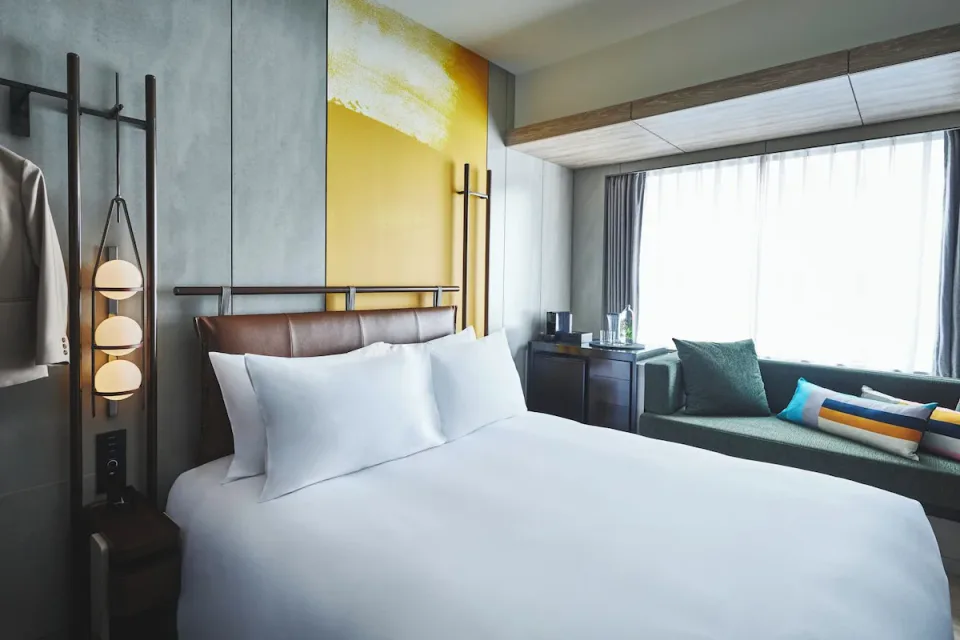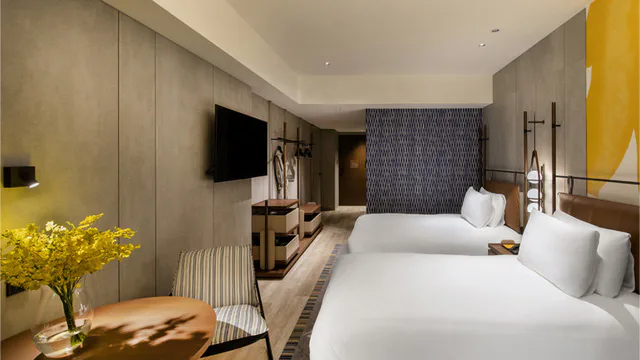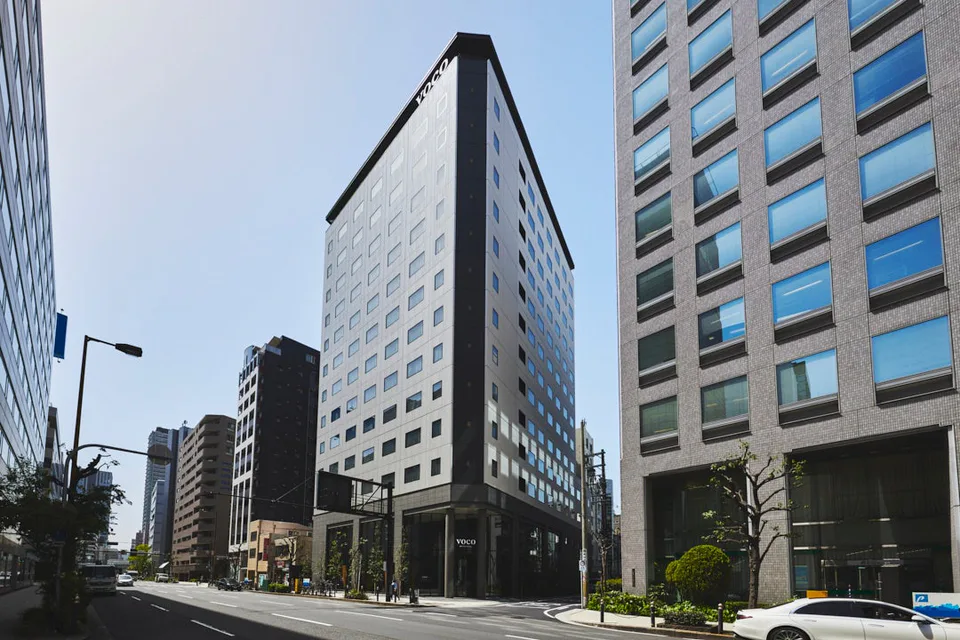
voco Osaka Central is most convincing for a three-to-five-night stay when you will use the room space every night but will not pay the Osaka Station transfer penalty every day. The current IHG room inventory makes that trade unusually clear: Standard rooms are 21–26 m², Premium rooms are 30–31 m² and Grand rooms are 36–40 m². If two adults have large luggage, spend some evenings in the room and make only one JR-heavy day trip, I would seriously consider the Premium room. If the itinerary contains two or three early JR departures to Kyoto, Kobe, Himeji or beyond, a hotel at Osaka Station can beat voco even with a smaller room.
The wrong way to compare this hotel is “30 m² room versus five extra minutes on Google Maps.” The real comparison is room-space benefit every night versus station-transfer debt every day. Higobashi is on the Yotsubashi Line at Y12, one stop from Nishi-Umeda at Y11 and three stops from Namba at Y15. That makes voco central rather than remote, but it is not a JR Osaka Station doorstep hotel and it is not a Nankai/KIX hotel. The value depends on which movement you repeat.
voco Osaka Central: the 30-second decision
↔ Scroll table left or right
Your trip pattern | Verdict | Why | What reverses it |
3–5 nights, two adults, two large cases, mostly Osaka city days | Premium room is a strong fit | 30–31 m² gives you useful living and luggage space every night | You actually leave from JR Osaka Station early on most days |
2–3 JR-heavy day trips from Osaka Station | Compare Granvia / Umeda again | Each day adds a Higobashi/Nishi-Umeda-to-JR hand-off in both directions | Room size is a hard constraint or your Kyoto route works better from Yodoyabashi |
One traveller or light-packing couple | Standard may be enough | 21–26 m² can already solve the stay without paying for unused floor area | You work in the room, carry multiple cases or want twin-bed Premium inventory |
Self-service laundry is essential on night 3 or 4 | Choose another long-stay product | IHG currently lists laundry valet / dry cleaning, not guest coin laundry | The hotel directly confirms a suitable self-service option for your dates |
Namba nightlife and KIX define the stay | Recheck Namba | Higobashi is direct to Namba on Yotsubashi Line, but you still repeat that ride and do not gain direct Nankai airport access | You value the quieter Kyomachibori base and larger room more than being beside Namba |
The Premium-room case is stronger than the old “a few extra square metres” argument
IHG currently publishes three room bands: Standard 21–26 m², Premium 30–31 m² and Grand 36–40 m². The ranges do not overlap. Even the smallest Premium room is 4 m² larger than the largest Standard room; that is roughly a 15% increase from 26 to 30 m². Against the smallest 21 m² Standard, 30 m² is about 43% more published floor area.
That does not mean every square metre is open luggage floor. Furniture, bathroom design and the exact room shape matter. But it does mean the Premium category is a real spatial step rather than a marketing rename. On a four-night stay, that extra space is used repeatedly: opening luggage, sorting shopping, getting dressed at the same time, working at a table or simply not having every loose item migrate onto the bed.
This is why I would not compare the room upgrade only by the first night. A 21–26 m² room may feel completely acceptable after check-in. The cost appears on night three when two suitcases, shopping bags, jackets and laundry all occupy the same circulation path. For a longer stay, ask how the room behaves when it is no longer empty.
But do not overbuy Premium if the room is only a sleep box
The same logic cuts the other way. A solo traveller with one carry-on, or a couple leaving after breakfast and returning after dinner every day, may get little value from 30–31 m². If the room is used mainly for sleeping, a well-priced Standard room can be the more rational buy.
Use a simple room-hours test:
Premium gets stronger if you expect midday breaks, remote work, two large cases, wet-weather recovery or several evenings in the hotel.
Standard gets stronger if you travel light and the room is empty for most waking hours.
Grand gets stronger only when the additional 36–40 m² space or a specific Grand layout solves another real need. Do not climb the room ladder automatically because the next category exists.
There is a useful escalation check here. Premium tops out at 31 m²; Grand starts at 36 m². If the Premium rate on your dates approaches the Grand rate, reopen the comparison because the next step buys at least another 5 m² of published room area. If Grand becomes expensive enough to overlap with a more convenient Osaka Station or Namba hotel, reopen the hotel comparison as well. Upgrading inside one property should never become a sunk-cost ladder.
Higobashi is central, but every JR-heavy day creates transfer debt
IHG describes the hotel as a short walk from Higobashi, Yodoyabashi and Hommachi, and specifically points guests to Higobashi Exit 7, Yodoyabashi Exit 13 and Hommachi Exit 28. That gives the hotel several useful transport directions instead of one station dependency.
For Umeda, Osaka Metro’s Yotsubashi Line places Higobashi at Y12 immediately next to Nishi-Umeda at Y11. For Namba, the same line continues south through Hommachi and Yotsubashi to Namba at Y15. In other words, voco is well connected to both ends of central Osaka; the penalty is not a long suburban commute. The penalty is the extra hand-off when your real trip begins on another railway.
For a JR-heavy itinerary, count that hand-off rather than arguing over one train minute. Three JR day trips can create six repeated hotel-to-JR or JR-to-hotel movements: three outbound mornings and three tired returns. Hotel Granvia Osaka removes much of that station-connection layer because it is integrated with JR Osaka Station. If those six movements are the most annoying part of the trip, the smaller room can be the better product.
That is why the Hotel Granvia Osaka guide should be the direct comparison for a rail-led stay. Do not compare brands; compare the repeated movement each address deletes.
One Kyoto day does not automatically make Osaka Station the better base
There is an important exception to the JR logic. IHG highlights Yodoyabashi as another nearby station and describes the hotel as having access toward Kyoto’s Gion-Shijo side. If your only Kyoto day is concentrated around central/eastern Kyoto rather than Kyoto Station, the useful route may not begin at JR Osaka Station at all.
This is exactly why “we are going to Kyoto” is too vague to choose a hotel. A Kyoto Station / Arashiyama / Shinkansen-heavy day and a Gion / Kawaramachi-focused day create different Osaka departure geometry. Write down the destination station before paying a station-adjacency premium.
For two or more Kyoto days, the bigger question may become whether Osaka should remain the base at all. Use Kyoto vs Osaka for first-time visitors before solving repeated Kyoto mornings with a more expensive Osaka hotel.
For Namba evenings, voco is workable—but the return repeats every night
Higobashi and Namba sit on the same Yotsubashi Line, so voco is not a poor base for Namba. But “direct Metro” is not the same as “walk out of dinner and into the hotel.” If Dotonbori, Shinsaibashi and late Namba meals are the nightly anchor, you pay the same south-to-north return over and over.
That is the mirror image of the Osaka Station problem. One Namba evening is easy from voco. Four Namba evenings turn the hotel location into a repeated cost. If the trip’s useful hours happen after dinner rather than in the room, compare Namba vs Umeda and the Namba hotel comparison before paying extra for the Premium room.
Laundry is the biggest long-stay feature the hotel does not currently advertise
For a three-night stay, laundry may not matter. By night four or five—especially in humid summer, after USJ or on a longer Japan trip—it can become a structural requirement.
IHG’s current amenities page lists dry-cleaning pickup, laundry valet and same-day dry cleaning. It does not list guest self-service coin laundry. That distinction matters. A paid laundry service can solve “I need these clothes cleaned.” It is not the same product as being able to run your own load at 22:00.
I would therefore use a hard boundary: if self-service washing is essential, do not book voco on the assumption that a machine exists. Ask the hotel directly, or compare a property whose laundry setup is explicit. The Tokyu Stay Osaka Hommachi five-night guide is the more relevant alternative when washing clothes is part of the reason for choosing the hotel.
This is also why “Premium room = best long-stay room” is incomplete. Space solves one long-stay problem. Laundry, kitchen equipment and transport solve different ones.
Breakfast is useful only when your mornings are slow enough to use it
LOKAL HOUSE currently serves breakfast daily from 07:00 to 10:00. That timing is perfectly reasonable for city days, business mornings and relaxed departures. It can work against the hotel’s value if the trip repeatedly leaves before or around 07:00 for Kyoto, Himeji, an airport or a long regional day.
Do not pay for breakfast because it makes the booking package look complete. First place your earliest two mornings on the itinerary. If you will miss the restaurant or rush through it, room-only plus an earlier station breakfast can be more coherent.
The hotel’s dining setup is otherwise stronger than the old article implied. IHG currently lists LOKAL HOUSE for breakfast, lunch and dinner, plus café/bar service, and it lists in-room dining availability. So voco is not a “room-only boutique base with nowhere to eat.” The decision is whether you will actually use those hotel hours.
Airport access: do not confuse central Osaka with an airport hotel
IHG currently lists no complimentary local shuttle and no Kansai International Airport shuttle. That means the final airport chain must still be built from rail, bus or taxi.
This matters most on the last night. If a Nankai departure from Namba is the dominant constraint, moving the final night to Namba can make more sense than keeping voco purely to avoid one checkout. If the flight is later and the four-night room setup has been working well, keeping one hotel may still beat another move.
Use the same two-job rule applied elsewhere on ValueNavi: move hotels only when the second hotel solves more than one problem. “Airport train is shorter tomorrow” is a weak reason by itself. “Namba dinner tonight + easier KIX departure tomorrow” is much stronger.
Families and accessibility: Premium is not automatically the answer
IHG currently lists accessible guest-room features, connecting rooms on request and cribs on request. Those are useful options, but they should be confirmed for the exact room and dates rather than inferred from the Premium label.
For a family, first solve the sleeping arrangement and bathroom/crib need, then solve floor area. A larger room with the wrong bed setup can still be the wrong room. For a traveller with mobility needs, the walk from the chosen station exit and the exact accessible-room availability matter more than the nominal square metres.
If the party’s main requirement is four-person apartment-style space rather than a premium hotel room, compare a dedicated family/apartment property rather than making voco’s room ladder solve a different product category.
A four-night worked decision: when voco wins and when it loses
Consider two adults with two large suitcases staying four nights.
Version A: voco wins
Day 1: arrive in Osaka and stay local.
Day 2: Namba / Shinsaibashi.
Day 3: one Kyoto day focused on central/eastern Kyoto.
Day 4: Osaka city / Utsubo / Nakanoshima / shopping.
The Premium room is used for four nights. JR Osaka Station is not the repeated morning hub. Higobashi/Yodoyabashi/Hommachi give several ways into the city. In this pattern, I would value the 30–31 m² room highly.
Version B: Osaka Station wins
Day 1: late arrival by JR.
Day 2: early Kyoto Station / Arashiyama day.
Day 3: Kobe or Himeji.
Day 4: another JR regional trip before an early departure.
Now the hotel keeps sending you back toward JR Osaka Station. The Premium room still feels good at night, but the station transfer debt is paid repeatedly. I would compare Hotel Granvia, Hankyu RESPIRE or another Osaka Station hotel again before paying voco’s room premium.
Version C: neither is the correct answer
Every evening ends in Dotonbori.
KIX is both arrival and departure airport.
There are no meaningful Umeda/JR day trips.
In this version the right comparison is probably Namba, not voco versus Granvia. A useful decision framework must include the option to leave the original comparison entirely.
The price premium needs a job, not a percentage rule
Hotel rates change too quickly for a permanent “pay up to X% more” rule. Instead, assign each premium to the problem it solves.
Standard → Premium: pay for a non-overlapping jump from 21–26 m² to 30–31 m² when room/luggage space will be used repeatedly.
Premium → Grand: pay for 36–40 m² only when that additional space or specific layout is useful enough to justify reopening the price comparison.
voco → Osaka Station hotel: pay for fewer repeated JR hand-offs when those movements dominate the itinerary.
voco → Namba hotel: pay for airport/nightlife geometry when those are the trip’s repeated endpoints.
If you cannot name the job, do not pay the premium.
Final verdict: buy the room space only when you are not buying transfer debt with it
I would choose voco Osaka Central Premium for a three-to-five-night stay when two adults want materially more room than a compact city hotel, carry substantial luggage, expect some real hotel time and have no more than one or two days whose success depends on JR Osaka Station. The 30–31 m² category is a genuine room-size step, not a cosmetic upgrade.
I would move the comparison back to Umeda when two or three early JR days make Nishi-Umeda/Osaka Station a repeated hand-off. I would move it to Namba when late dining and KIX are the repeated endpoints. And I would choose a different long-stay product if self-service laundry is non-negotiable, because IHG currently advertises laundry valet/dry cleaning rather than guest coin machines.
The useful question is therefore not “Is voco worth leaving Osaka Station?” It is: over four nights, which inconvenience repeats more often—the smaller room or the extra station connection? Book the hotel that removes the repeated problem.
Compare voco Osaka Central rooms on Booking.com
Compare voco Osaka Central rooms on Trip.com
References and verification
IHG — voco Osaka Central room categories and published room sizes · IHG — hotel amenities, laundry services, parking and shuttle information · IHG — LOKAL HOUSE dining and breakfast hours · IHG — nearby station and local-area access · Osaka Metro — Higobashi Station / Yotsubashi Line. Checked August 25, 2026. Room inventory, rates, breakfast, laundry services and transport operations can change; verify the exact room and dates before payment.
Miyako Hotel Hakata: Is a Direct Hakata Station Connection Worth the Premium?
Lake Biwa Otsu Prince Hotel: Is the 36.2m² Lake View Worth the Shuttle?
HIRAKUZA Looks Like the Premium Osaka Sumo Option — Until You Ask Who Gets in the Ring
Osaka Hotels for 4–6 Friends: When One Big Room Stops Being the Better Deal