One room or two? Start with bedtime, bathroom queues and privacy
For four to six friends, the biggest Osaka hotel mistake is treating “sleeps six” as the same thing as “works well for six adults.” A large room can be brilliant when everyone keeps similar hours and wants a shared table at night. It can also become a daily bottleneck when six suitcases, one bathroom, different alarms and different bed types all compete for the same space. The first decision is not the hotel brand. It is whether your group actually wants to live in one room.
The short version: four friends with similar schedules should seriously consider one well-designed apartment; four adults with different routines should compare a true two-bedroom setup; five or six people should bring connecting rooms or two separate rooms into the comparison much earlier. If you have not even chosen an Osaka area yet, start with where to stay in Osaka for first-time visitors before comparing room layouts.
↔ Scroll table left or right
Group problem | Start with | What you are really buying | Main trade-off |
4 friends want one shared base | MIMARU Osaka Namba Station | Apartment layout, dining space and fixed beds | One bathroom and less privacy than two rooms |
4 friends hate shower queues | MIMARU Osaka Shinsaibashi Central | Two bunk beds and two separate shower booths | Scheduled to open 1 Sep 2026; verify opening status before staying |
4–6 people need bathroom and room flexibility | Hotel Keihan Namba Grande | 44㎡ family room or 20㎡×2 connecting rooms | The right answer changes with the exact bed setup |
4 adults want real bedrooms | Fraser Residence Nankai Osaka | 77㎡ two-bedroom apartment, living room, kitchen and washer/dryer | Usually costs more and is not a six-adult solution |
Four people and six people should not use the same rule
At four people, one apartment can still behave like a home base. There may be a proper table, enough fixed beds, a kitchen, and enough floor area to keep bags away from the sleeping zone. At six people, every weak point grows at once: two extra suitcases, two extra showers, two more alarms, two more sets of shopping bags and a greater chance that someone wants to sleep while someone else is still talking.
That is why “price per head” is a poor first filter. Two rooms can cost more, but they also create two doors, two bathroom schedules and two places where someone can sleep without negotiating with the entire group. Conversely, if the trip is built around eating convenience-store food together at midnight, sorting tickets and playing cards, a real shared living area may be worth more than the privacy of two standard twins.
Four friends who want to stay together: MIMARU Osaka Namba Station
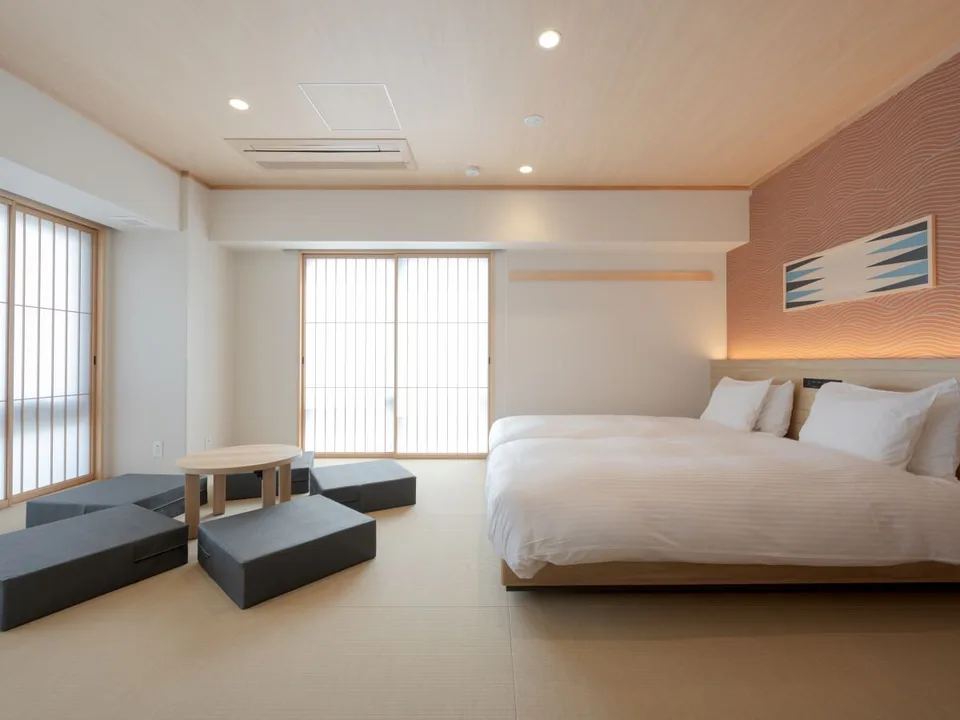
MIMARU Osaka Namba Station is the cleanest example of why an apartment can beat two ordinary hotel rooms. The published Family Apartment is 35㎡ with two single beds plus one bunk bed, a dining area and a kitchen. The important part is not only that four adults fit. It is that the room gives the group somewhere to sit that is not the edge of a bed. For friends who actually want the room to be part of the trip, that changes the evening. The full room-by-room trade-offs are in the MIMARU Osaka Namba Station four-person apartment guide.
The limitation is equally important: there is still one main bathroom flow. Four friends who all leave at 08:00 can create a queue even in a good 35㎡ apartment. If one person comes back at 01:00 while another sleeps at 23:00, the shared room itself becomes the problem. The hotel solves “we want to be together”; it does not solve “we want four private routines.”
Check MIMARU Osaka Namba Station room types for your dates
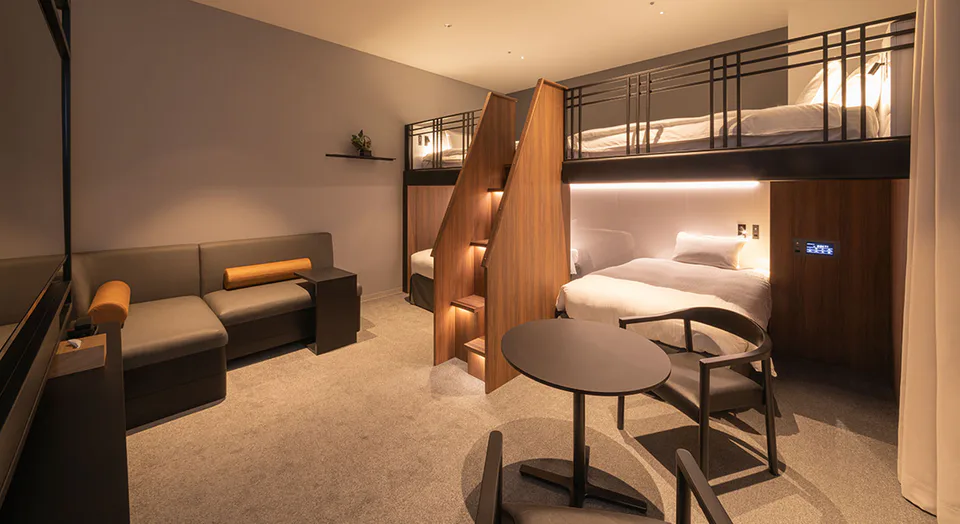
MIMARU Osaka Shinsaibashi Central is scheduled to open on 1 September 2026; its group rooms put shower capacity at the centre of the layout.
If four people hate shower queues: MIMARU Osaka Shinsaibashi Central
This is the most interesting option for a four-friend group because the problem it solves is unusually specific. MIMARU currently says the property is scheduled to open on 1 September 2026. Its Two-Bunkbed Apartment is designed for four guests with two bunk beds and two separate shower booths instead of one bathtub. That layout is not about luxury; it is about letting two people wash at the same time after a long day. The existing MIMARU Osaka Shinsaibashi Central guide goes deeper into the room plan and location.
Because the opening date is still in the future, treat every rendering, room description and operating detail as pre-opening information. Reservations may already be on sale, but before paying for a non-refundable rate you should re-check that the property has opened as scheduled and that the exact room name on your booking still includes the shower layout you are paying for.
Check the exact MIMARU Shinsaibashi Central room on your dates
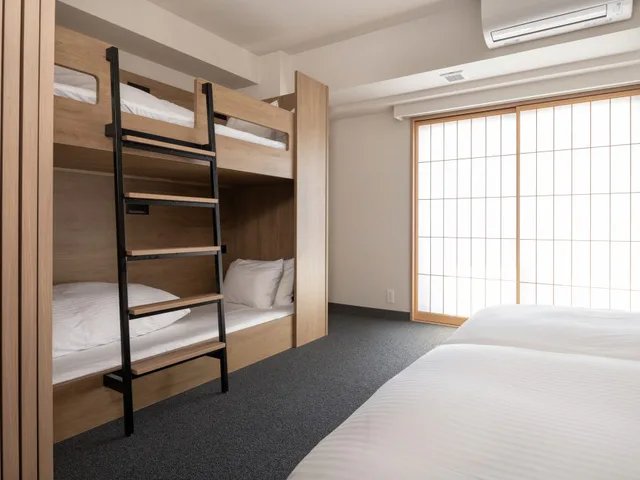
At Hotel Keihan Namba Grande, the decision is not just room size: family rooms and connecting rooms create different bathroom and privacy patterns.
For 4–6 people, Hotel Keihan Namba Grande gives you more than one answer
Hotel Keihan Namba Grande is useful because “group room” does not mean one fixed layout. Its 44㎡ Family Room has four existing single beds and can sleep up to five with an extra bed. Its Connecting Room is two 20㎡ twin rooms joined by an internal door; four existing beds are standard, and the hotel says the setup can take up to six with extra beds. Crucially, each side has its own bathroom and washbasin. The detailed comparison is in the Hotel Keihan Namba Grande family-vs-connecting-room guide.
For four friends, the 44㎡ family room can preserve the “we all stay together” feeling. For five or six, connecting rooms often become more attractive because bathroom and morning-prep capacity scale with the group. The right question is not which option has the larger headline area; it is whether the fifth and sixth sleeping places, bathroom count and door separation match how your group actually lives.
Compare Hotel Keihan Namba Grande family and connecting rooms
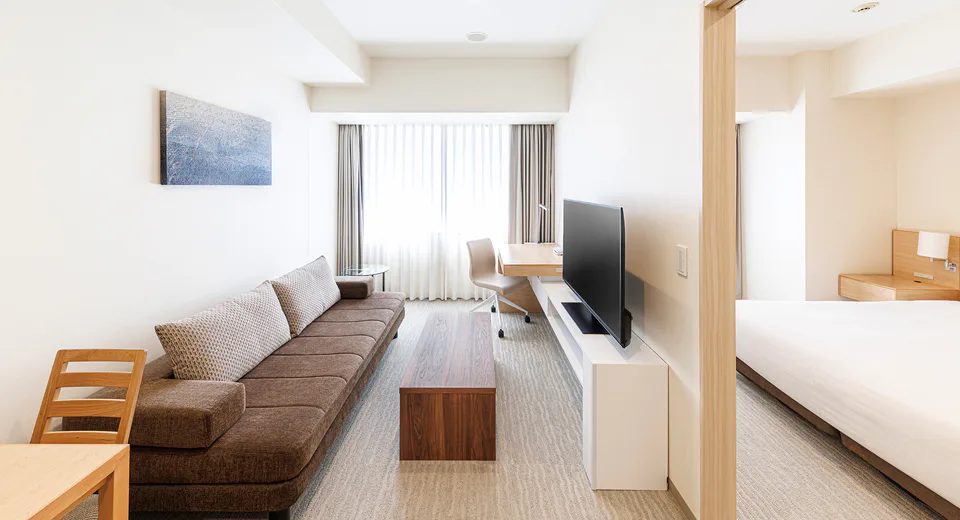
Fraser Residence Nankai Osaka trades the all-in-one group-room feeling for real doors, separate bedrooms and a shared living area.
Four adults who want actual bedroom doors: Fraser Residence Nankai Osaka
Fraser Residence Nankai Osaka is the opposite philosophy. The current Two-Bedroom apartment is 77㎡ with separate living, dining and bedroom areas, a kitchen and washer/dryer. The official capacity is up to four adults plus one child. For two couples, work colleagues, or four adults with different sleep schedules, that can be far more valuable than squeezing everyone into one huge open room. The Fraser Residence Nankai Osaka studio and apartment guide explains the property’s serviced-apartment trade-offs.
This is not a six-adult shortcut and it will often price above one conventional family room. What you are buying is privacy: one person can sleep, another can work, and the group still has a living room to meet in. When friends are older, travelling as two couples, or staying four nights or longer, those doors can be worth more than another ten square metres of shared floor area.
Check Fraser Residence Nankai Osaka two-bedroom availability
The three things group bookings get wrong most often
First, bed labels. “Sleeps four” does not mean four equal fixed beds. A room may mix singles, bunks, sofa beds, futons or extra beds. Decide who sleeps where before deciding that the per-person rate is good. Second, bathroom capacity. One bathtub is not the same as two shower booths, two washbasins or two complete bathrooms. Third, luggage. Four 28-inch suitcases opened at the same time can turn a room that looks generous in photos into an obstacle course.
A useful test is to score the room across four separate scenes: sleeping, showering, opening luggage and sitting together at night. If one of those scenes fails every day, the cheapest room is not actually cheap in use.
Different sleep schedules are the hidden reason to split rooms
Group friction usually appears on the second morning, not the first evening. One friend wants to shower at 06:30, another sleeps until 09:00, someone blow-dries hair, someone searches for clothes with the lights on, and one person got back from Dotonbori at 01:30. None of those problems is visible in the room-size number.
If at least two people have substantially different routines, two rooms or a true two-bedroom apartment deserve a serious price comparison. The extra door is not wasted space; it is a schedule-management tool.
Breakfast exposes whether one room really works
If all four or six travellers wake, leave and eat at the same time, one room remains easy to coordinate. If the group splits for breakfast, shopping, USJ or day trips, shared alarms and one bathroom start to matter more. Ask whether everyone will actually move as one group. The larger the group, the less safe it is to assume that.
If your trip is specifically a male-friends trip with late nights, sauna use, USJ or an early Shinkansen, use the separate Osaka guys-trip hotel guide instead. This article is narrower: it is about room structure and when splitting the group makes the stay smoother.
At six people, a second room is not a failed group trip
There is a strong emotional pull to keep everyone in one room because it feels more like travelling together. But six adults can overwhelm a room that is perfectly good for four. Two rooms can still preserve the social part of the trip: meet in the larger room for snacks and planning, then split for showers and sleep.
Compare three structures on the same dates: one large six-person room, two twin/triple rooms, and a connecting or two-bedroom apartment. Use the same guest count and cancellation terms. Do not compare a flexible two-room rate against a non-refundable group room and call the difference a room-type saving.
The relationship between the travellers matters as much as the number
Four university friends who have shared rooms for years may happily accept bunks and one open living area. Two couples may want bedroom doors. Colleagues may care more about bathroom privacy than a family would. The label “four friends” hides very different expectations, so the room category should follow the relationship, not just the headcount.
How to compare the price without fooling yourself
Use one date, one guest count and one cancellation policy. Then compare the total group cost of: one apartment, two standard rooms, one connecting-room package and one true two-bedroom residence. Add breakfast only if everyone will use it. Add laundry value only if the room really has the machine you expect. Add location value only if the group will return to that area most nights.
If the location itself is still undecided, the Namba vs Umeda comparison should come before room-layout optimisation. There is little point finding the perfect six-person room if every night ends on the other side of Osaka.
A simple decision rule for 4–6 friends
Choose one well-designed apartment when four people keep similar hours, want to socialise in the room and are comfortable sharing the same bathroom rhythm. Choose a two-shower or connecting layout when everyone leaves at similar times but bathroom queues are the main fear. Choose a two-bedroom apartment when privacy and different sleep schedules matter. Start with two rooms much earlier when the group reaches five or six and the sleeping places are not equal.
The second room is not automatically wasteful, and the large room is not automatically better value. The winning option is the one that removes the most repeated friction across every morning and night of the stay.
Booking checklist before you pay
Confirm the exact room name, adult capacity, every bed type, the number of showers, washbasins and toilets, whether connecting rooms are sold as a guaranteed pair or only requested, whether the washer/dryer is inside the room or elsewhere, and whether the photos shown by the OTA belong to the room you are actually buying. For MIMARU Osaka Shinsaibashi Central, also re-check that the hotel has opened as scheduled before your stay date.
Finally, compare the same cancellation deadline. Large group rooms can be limited inventory, but that is not a reason to accept a restrictive rate without checking whether two ordinary rooms give you more flexibility.
Sources and verification
Room layouts and capacities were checked against the official MIMARU, Hotel Keihan Namba Grande and Fraser Residence Nankai Osaka information available on 19 August 2026. MIMARU Osaka Shinsaibashi Central is still listed as opening on 1 September 2026, so treat its room details as pre-opening information until the property is operating. Room inventory, bedding, cancellation terms and opening schedules can change; verify the exact room on your stay dates before payment. This article may contain affiliate links.
Nada no Kenka Matsuri 2026: If You Only Go One Day, Choose Oct 15
Osaka Solo Travel Hotels: Pay for Less Friction, Not a Bigger Room
Early Flight or Late Arrival at KIX: Should You Move Hotels for the Last Night in Osaka?
Fukuoka Tower: Is the ¥1,000 Ticket Worth the Detour? Timing Changes the Answer