
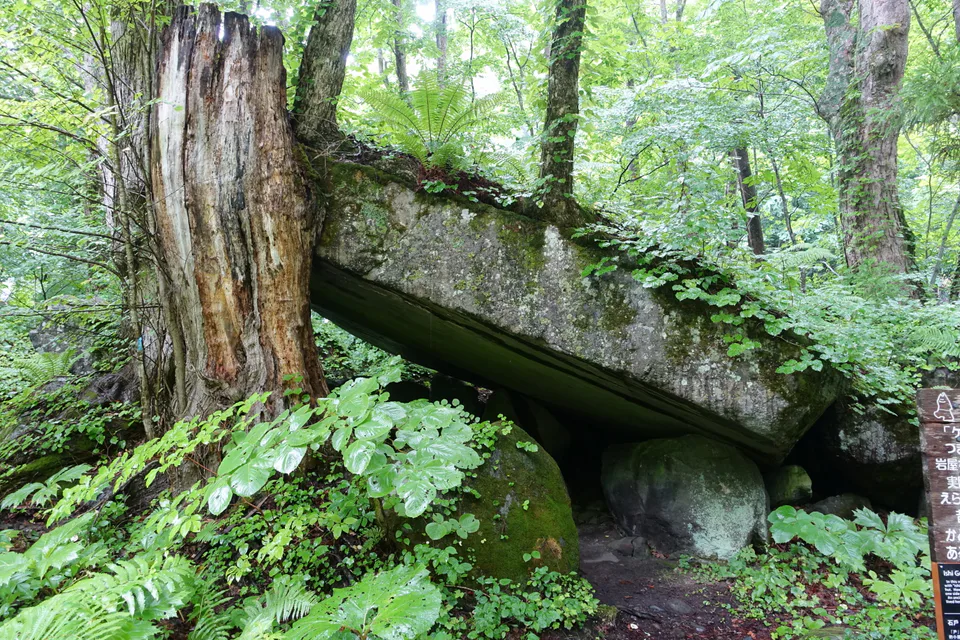
Oirase Keiryu Hotel is worth the premium when the hotel gives you Oirase hours you will actually use: an early stream walk, an evening beside the gorge, the guest shuttle, an onsen session or a booked nature activity. It is much harder to justify when you arrive on the late-afternoon hotel shuttle, eat, sleep and leave on the next morning’s shuttle without using the stream-side location.
The most important distinction is one night versus two. A one-night shuttle stay mainly buys an evening and an early morning. Two nights buy a full middle day, which matters because several of the hotel’s signature guided activities finish after the hotel’s 10:30 Aomori and 11:00 Hachinohe departure shuttles. The second night is therefore not just “more time in the same resort”; it can unlock a completely different activity schedule.
Checked August 27, 2026. Hoshino Resorts still lists the guest Oirase Shuttle from April 10 to November 25, the Aomori Station shuttle at ¥3,500 one way for adults from April through November, and the main guided walk at 08:50–11:50 through November 3. Seasonal activities, room prices and transport capacity can change, so the live hotel pages should control the final booking.
↔ Scroll table left or right
Your stay pattern | Verdict | What the premium is buying | Main catch |
One night, arriving by Aomori hotel shuttle | Conditional | Evening, dinner, onsen and a short early-morning gorge window | The 10:30 outbound shuttle blocks many morning guided activities |
One night, arriving by Hachinohe hotel shuttle | Conditional to good | Slightly earlier arrival plus the same stream-side evening/morning advantage | The 11:00 outbound still conflicts with several signature activities |
Two nights | Strongest first-trip use | One complete Oirase day plus both edge-of-day windows | Higher accommodation cost and fewer nights elsewhere in Tohoku |
Self-drive, early arrival, flexible departure | Often worth it for one night | You control the hotel-use window instead of inheriting the long-distance shuttle timetable | Driving does not remove weather, winter-road or foliage-period constraints |
Winter stay | Recalculate from scratch | Winter resort/onsen experience rather than the spring–autumn stream-shuttle product | The current resident Oirase Shuttle runs only Apr 10–Nov 25 |
Only need daytime Oirase photos and a convenient bed | Usually stay in Aomori or Hachinohe | City dining, rail flexibility and a cheaper room may matter more | You give up easy dawn/evening access and hotel-only activity logistics |
ValueNavi Oirase Hotel Utilization Score: pay for the hotel only when you will use what its location unlocks
This score measures the hotel’s usefulness to the itinerary, not the quality of Oirase Gorge. The model weights edge-of-day access 25%, activity-window fit 20%, transport control 15%, weather flexibility 15%, hotel-specific utility 10%, route progression 10% and cost efficiency 5%.
Stay pattern | Utilization score | Why |
|---|---|---|
One night via Aomori shuttle, dinner + dawn walk + onsen | The hotel creates two useful edge-of-day windows, but the departure time blocks several signature morning activities | |
Two nights with one full Oirase activity day | The middle day converts the property from an overnight location into a flexible nature base | |
One night, self-drive, early arrival and flexible departure | You keep the stream-side location while removing much of the long-distance shuttle constraint | |
One night, late arrival, breakfast, immediate departure | The room is being used mainly as a bed; little of the location premium enters the itinerary | |
Winter stay focused on onsen/hotel atmosphere rather than stream transport | Can still be worthwhile, but the spring–autumn guest-shuttle logic no longer supports the recommendation |
I treat 8.5+ as a strong hotel-use case, 7.0–8.4 as conditional, and below 7.0 as a reason to compare a city base seriously. These are ValueNavi editorial thresholds, not Hoshino Resorts ratings.
The real product is control of Oirase time, not simply a luxury room
Hoshino Resorts describes Oirase Keiryu Hotel as the only resort hotel built on the shore of Oirase Gorge. That location is what changes the trip. A city-based visitor has to spend part of the useful day reaching the gorge and later leaving it; a hotel guest can use the stream before breakfast, return to the room when weather turns poor, and restart later without rebuilding the whole transfer.
That advantage is strongest from spring through autumn, when the hotel’s guest-only Oirase Shuttle runs hourly through the midstream gorge. The current 2026 schedule runs from April 10 to November 25, with the first departure at 06:00 and the last at 16:00; in November the last departure moves to 15:00 because of the earlier sunset. The 50-minute loop stops at places including Ishigedo, Ashura no Nagare and Kumoi Falls.
This is more useful than simply saying “the hotel is close to the gorge.” It lets you design a one-way or segmented walk without leaving your rental car at the far end. But count the benefit only if you will use it. A guest who checks in late, has dinner and leaves immediately after breakfast is paying for a transport tool that never enters the itinerary.
One night by hotel shuttle is much shorter than “24 hours at Oirase”
The long-distance shuttle timetable exposes the real usable window.
The current Aomori Station shuttle leaves at 15:00. Hoshino Resorts publishes an April–November journey time of about 120 minutes, so the scheduled reference puts you at the hotel around 17:00 before any traffic or weather delay. The return leaves the hotel at 10:30 the next morning. The Aomori shuttle currently costs ¥3,500 one way (about US$22) for adults from April through November 2026 and requires reservation at least two days ahead; it closes when full. A round trip therefore adds ¥7,000 (about US$44) per adult before the room, meals or paid activities.
The current Hachinohe Station shuttle leaves at 14:30 from April through November, with a published journey time of about 105 minutes. That gives a scheduled reference arrival around 16:15. The return to Hachinohe leaves at 11:00 the next morning. Again, this is not a guarantee: the hotel explicitly warns that traffic and weather can delay the service.
So a one-night shuttle stay is best understood as late afternoon + evening + early morning, not as a full resort day. That can still be excellent. You can walk beside the stream, use the onsen, eat dinner, wake early and use the guest shuttle or a short self-guided route before leaving. What you cannot do is assume every activity on the hotel website fits inside that window.
ValueNavi true time-cost table: how much of “one night” is actually under your control?
These are schedule-derived planning windows using the hotel’s current published shuttle times. They are not promises of exact arrival because the operator warns that traffic and weather can cause delays.
↔ Scroll table left or right
Pattern | Scheduled hotel arrival | Scheduled departure | Gross hotel window before sleep/meals |
One night via Aomori shuttle | About 17:00 | 10:30 next day | ~17 hr 30 min |
One night via Hachinohe shuttle | About 16:15 | 11:00 next day | ~18 hr 45 min |
Two nights via Aomori shuttle | About 17:00 Day 1 | 10:30 Day 3 | ~41 hr 30 min, including one full middle day |
The difference is not merely “24 more hotel hours.” The second night creates a full daylight block that one-night shuttle guests do not possess. That is why its value can rise faster than the room-night count suggests.
The hidden one-night problem: many guided activities collide with the outbound shuttle
This is the most important schedule check before paying for one night.
The current Oirase Gorge Guided Walk runs from 08:50 to 11:50 from April 20 through November 3 and costs ¥4,400 (about US$27.60). That is incompatible with both the 10:30 Aomori shuttle and 11:00 Hachinohe shuttle. From November 4–25 the guided walk ends at 10:50 and costs ¥3,300 (about US$20.70); in theory that is ten minutes before the Hachinohe shuttle, but it leaves almost no operational margin for collecting luggage or dealing with even a small delay. I would not build a fixed onward connection around that.
The current Moss Trail is even clearer: it runs 09:50–12:50 through November 3 and 09:50–11:50 from November 4–25. It does not fit either standard morning departure shuttle. The hotel-guest Open-Top Bus has an 11:05 departure and currently costs ¥3,850 (about US$24.20), so it also misses the 10:30 Aomori shuttle and is already later than the 11:00 Hachinohe shuttle.
That is why two nights can produce disproportionately more value. Night 1 gets you into the gorge. Day 2 becomes a genuinely owned activity day instead of a checkout morning. Night 2 then lets you recover and depart on Day 3.
What does fit into one shuttle-based night?
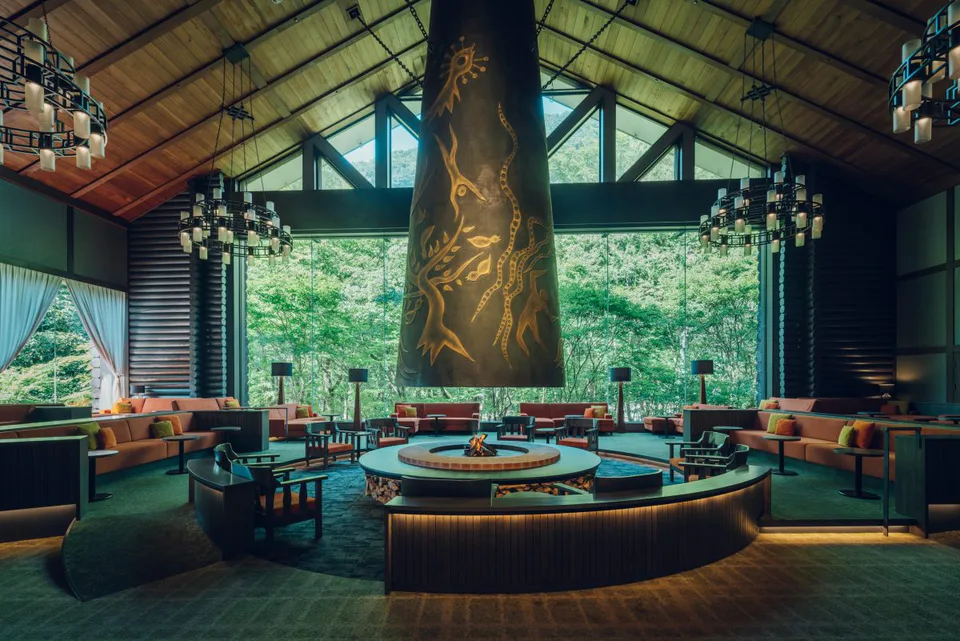
One night is not pointless. It just needs the right product.
Evening: the hotel’s current Mountain Stream Discovery sessions run 17:00–17:30 and 20:00–20:30 from April 10 to November 24. The first session can be tight after an Aomori shuttle arrival but the later session is a realistic option.
Early self-guided stream time: the guest Oirase Shuttle starts at 06:00 during its operating season, creating a genuine before-breakfast window.
Open-air bath: the current Keiryu Open Air Bath is available from 05:00 during the April 10–November 25 operating period, so an early bath can be part of a one-night stay.
Seasonal early programs: some programs are specifically designed for the first hours of the day. The summer Morning Champagne program, for example, runs 05:50–08:00 and currently costs ¥8,800 (about US$55) on its operating dates.
Breakfast: Aomori Ringo Kitchen currently serves breakfast 07:00–10:00, last order 09:30. A later outbound shuttle can accommodate breakfast, but combining breakfast with a long morning activity may not.
This gives a more accurate one-night verdict: one night works best when you want location, self-guided time, onsen and a compact evening/morning program. Two nights get stronger when a guided walk or a full nature-program day is part of the reason you are paying the premium.
Two nights are not automatically better — the middle day needs a job
A two-night stay earns its extra cost when the full middle day is used for something that the one-night timetable cannot hold: a guided gorge walk, Moss Trail, Open-Top Bus, e-bike session, Lake Towada pairing, photography in changing light, or simply the ability to move a forest walk around weather.
The middle day is also where the hotel becomes more resilient. If rain makes an 08:50 walk unattractive, you can move to a later activity, stay in the lounge, use the onsen and try the gorge again without needing to catch a train back to the city that morning.
But apply the same deletion test to night two. If Day 2 leaves the hotel after breakfast for distant sightseeing and does not return until dinner, the second night may be little more than another expensive bed. Two nights are strongest when at least one full daytime block remains inside the Oirase/Lake Towada ecosystem.
Room upgrade or second night? Buy the time before the hardware
The official room list makes clear that the hotel sells materially different room products. A Japanese-style Room with River View is currently 44 m² for up to four guests. A Twin Room with River View Indoor Bath is also 44 m² but adds an in-room hot-spring bath and is limited to two guests. The Keiryu Suite is 120 m² with its own hot spring and much more space.
That means the room premium can buy view, private bathing or space. Those are real benefits, but they do not create another weather window or make an 11:50 guided-walk finish compatible with a 10:30 shuttle.
If your budget forces a choice between one premium room night and two nights in a simpler room, I would usually price the second night first on a first Oirase trip. A second night can unlock one complete day and remove the outbound-shuttle conflict. Upgrade the room instead when the room itself is the trip goal — private bathing, a special occasion, limited mobility or a deliberate long in-room stay.
Do not assume every room has the same stream view merely because the property sits beside the gorge. River view is part of named room categories; book the exact category whose benefit you are pricing.
Dining can either complete the stay or consume the only evening
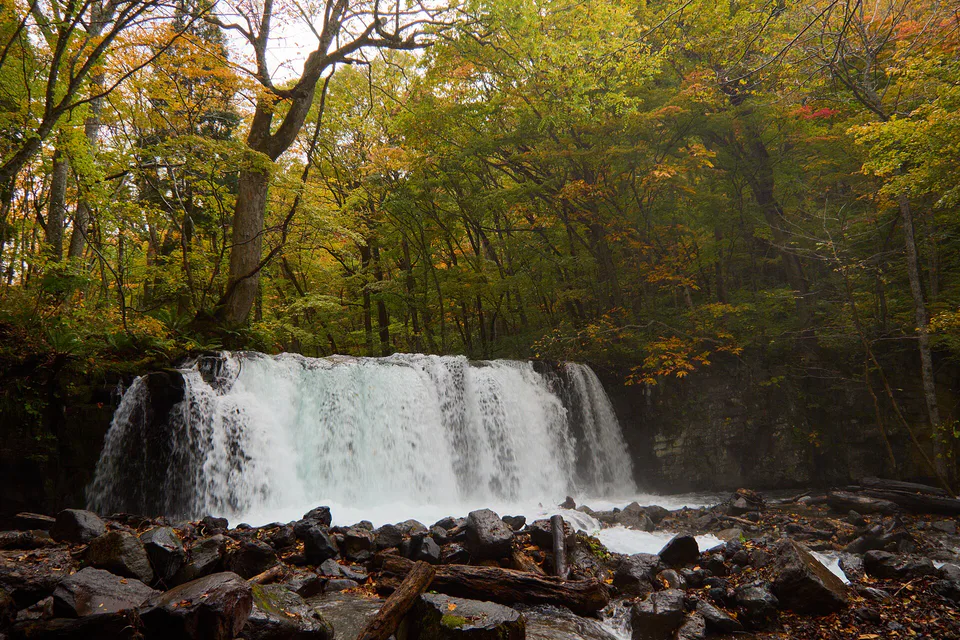
Aomori Ringo Kitchen currently serves buffet dinner from 17:30 to 21:00, last order 20:30, with an average adult price of ¥6,050 (about US$38). Breakfast is 07:00–10:00, last order 09:30, at an average adult price of ¥3,300 (about US$20.70). The current hotel page says advance reservations are not required for the buffet and meal additions/times are handled at the property, subject to operation.
French restaurant Sonore is a different product. The current average dinner price is ¥21,780 (about US$137), dining takes about 2.5–3 hours, reservations are required by 19:00 the day before, and preschool children are not admitted. A same-day cancellation or no-show is charged at 100% except where public transport is suspended.
Sonore can be a strong reason to stay, but it should be treated as one of the night’s main activities. On a one-night shuttle stay, a three-hour dinner deliberately uses a large portion of the only evening you have beside the stream. That can be exactly right for a honeymoon or dining-led trip; it is a poor fit for someone who also expects a long twilight walk, multiple hotel programs and an early start.
FX assumption: ¥1 ≈ US$0.00627 (¥1,000 ≈ US$6.27), checked August 27, 2026. USD figures are rounded planning equivalents, not guaranteed exchange rates.
Winter changes what “worth it” means
The long-distance hotel shuttles continue into the winter season, but the spring–autumn Oirase product does not simply continue unchanged. The current guest Oirase Shuttle is published only through November 25, and the public JR route bus listed on the hotel’s access page is suspended in winter.
The Aomori Station shuttle itself also gets more expensive in winter: the current adult fare rises from ¥3,500 one way in April–November to ¥4,000 (about US$25.10) one way from December 2026 through March 2027. The scheduled journey also lengthens from about 120 to 150 minutes.
That means a December–March stay should not be priced as though you are buying the same hourly gorge-shuttle flexibility available in October. The value shifts toward the winter landscape, hotel facilities, onsen and whatever winter activities are operating on the exact date. Driving also requires a separate winter-risk decision; the hotel warns about snow and road freezing and recommends studless tyres or chains.
This is an important boundary condition for English itineraries built from autumn reviews. A review saying “the hotel shuttle makes one-way gorge walks effortless” may be completely true in October and irrelevant in February.
When a city hotel is the better purchase
Stay in Aomori or Hachinohe when the hotel night is doing mostly transport work. A city base gives you broader restaurant choice, easier rail connections and more flexibility when the Oirase visit is only one daytime excursion inside a wider Tohoku route.
Oirase Keiryu Hotel becomes stronger when the accommodation changes the timing of the destination: you want the stream before breakfast, another session after day visitors leave, resident transport, a booked hotel activity, or a full middle day whose weather can move around.
The useful comparison is therefore not “luxury nature hotel versus cheaper city hotel.” It is:
City hotel: cheaper/flexible bed + daytime Oirase transfer.
Oirase hotel: fewer city conveniences + control of edge-of-day gorge hours + guest-only logistics and activities.
If the second line does not contain anything you will actually use, the premium has lost its job.
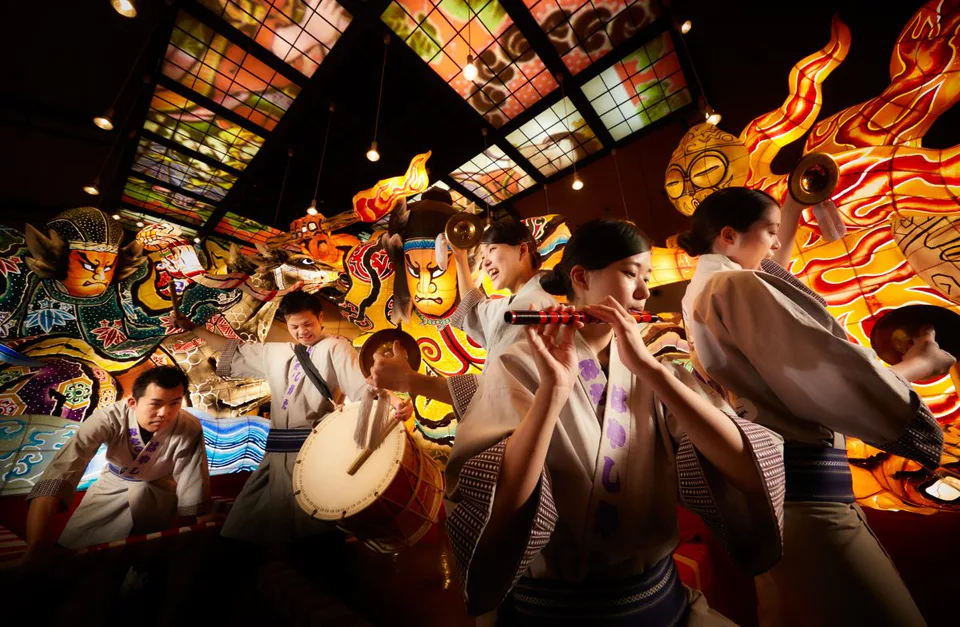
Families, couples and older travellers
Families: two nights can be easier because the middle day removes the pressure to complete a nature activity before a departure shuttle. The buffet accepts children and publishes age-based pricing; Sonore does not admit preschool children. Choose the room from actual occupancy and bed layout rather than the word “family.”
Couples: one night can be enough when the objective is a stream-view room, onsen, dinner and an early walk. Two nights become stronger for photography, guided activities or a genuinely slow retreat.
Older travellers: the hotel can reduce the need to build complex one-way walks around public transport, but only if the guest shuttle is operating in the season and the planned walking distance matches mobility. A river-view room or private bath can be more valuable than a long activity list when walking is limited.
Four failure modes that should change the booking
The shuttle is full. Long-distance hotel shuttles require advance reservation and close when capacity is reached. Do not book a non-refundable hotel rate and assume the transfer can be solved later.
Your only desired activity conflicts with checkout transport. Check the activity finish time against the 10:30 Aomori or 11:00 Hachinohe departure before paying for one night.
You arrive late enough to lose the first evening. A delayed rail/flight chain can turn a one-night resort stay into dinner + sleep + departure. If the route is fragile, consider a city buffer night.
You are booking winter using autumn assumptions. The resident Oirase Shuttle is seasonal, and winter road/public-bus conditions are different. Rebuild the transport plan for the actual month.
Final verdict: count usable Oirase windows, not hotel stars
Book Oirase Keiryu Hotel when the stay creates at least two useful Oirase windows you could not reproduce as easily from the city — for example, evening + early morning, or a full guided-activity day + a relaxed departure morning. One night works for travellers who are happy with a compact location/onsen/self-guided experience. Two nights are usually the stronger first-trip purchase when guided activities and weather flexibility are part of the reason for going.
Stay in Aomori or Hachinohe when you only need a convenient bed around a daytime Oirase visit, or when the hotel shuttle schedule would leave too little usable time. And if the choice is a premium room for one night versus a simpler room for two, price the second night first: in Oirase, another full day can buy more than another layer of room luxury.
Compare Oirase Keiryu Hotel availability after choosing one or two nights
Official sources and verification date
Oirase Keiryu Hotel — rooms and hotel overview · Access and long-distance shuttles · Guest Oirase Shuttle · Oirase Gorge Guided Walk · Hotel-guest Open-Top Bus · Morning Champagne · Dining. Checked August 27, 2026. Shuttle capacity, activity dates, meals, room categories, road conditions and seasonal operations can change; recheck the exact stay dates before payment.