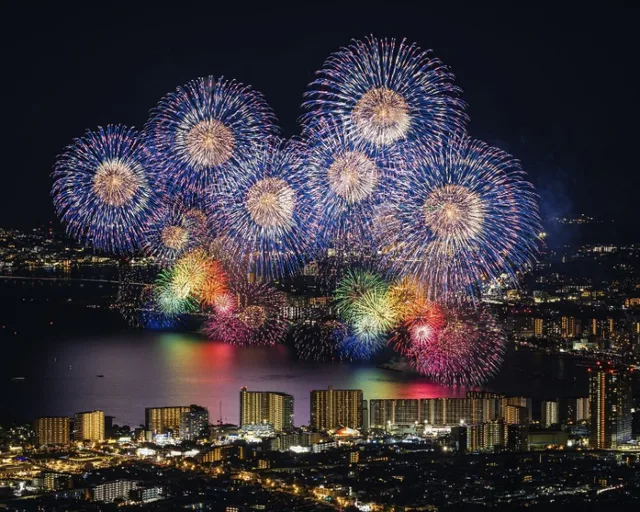
The scheduled August 6, 2026 Lake Biwa Fireworks date has now passed, so this page should no longer be read as a live ticket or hotel-package guide. It is retained as a record of the official 2026 Otsu waterfront rules and as a checklist of what must be reverified before reusing any “free viewing” advice in a future edition. The central lesson is simple: the lake is open and wide, but that does not make every public-looking strip of shoreline a legal or accessible viewing place.
For 2026, the organiser scheduled the 40th-anniversary show for 19:30–20:30 with about 12,000 fireworks and a two-part programme involving drones, lasers, music, large shells and water-level effects. The details matter because the wide composition rewarded a proper lake-facing sightline. If you are planning another Kyoto-area summer event instead, compare the current Kyoto summer-events hotel-base guide rather than assuming the old Lake Biwa event flow still applies. If you return to Otsu in October, Otsu Matsuri 2026 needs a completely different moving-float and evening-exit plan from the waterfront fireworks setup.
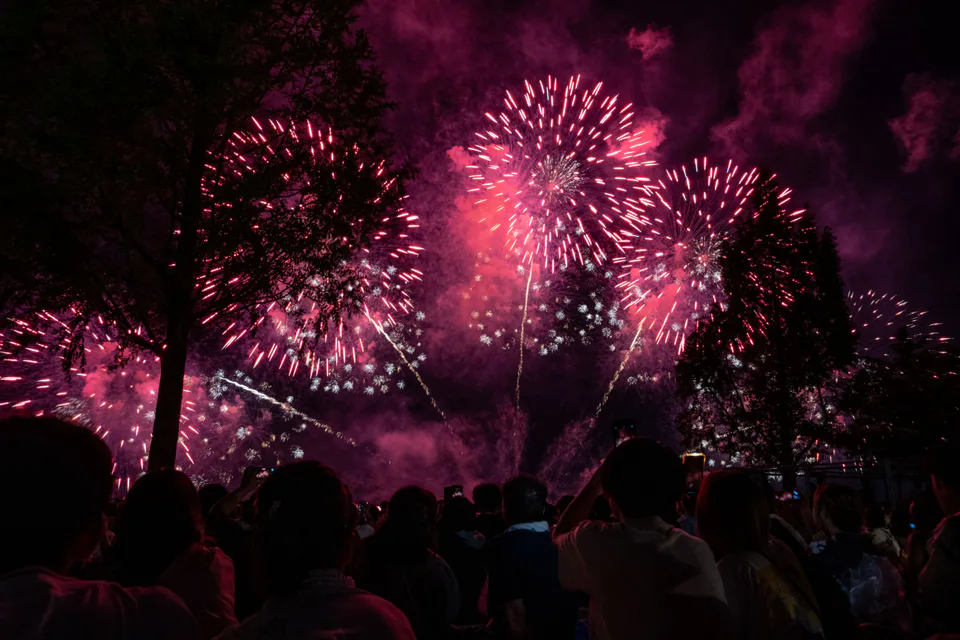
The closest predictable waterfront view was ticket-managed
The 2026 organiser FAQ explicitly positioned the official paid viewing areas as the best way to obtain a clear front-on view. Central Otsu waterfront zones were managed rather than open for casual sheet placement, and the event rules prohibited sitting on roads, laying leisure sheets on roads or park paths, entering private or closed land, and crossing into paid areas without a ticket. That is why old “secret spot” lists were risky even when the underlying sightline was real.
A future visitor should separate three questions: can the fireworks physically be seen from a point, is that point legally open on the event date, and is it practical once fencing and crowd controls begin? The same principle applies to other Kyoto-area night events. The Kyoto Gozan Okuribi transport guide shows why choosing the journey home before choosing the photograph is often the better decision.
Otsu Citizen Plaza was a clear example of why old pins fail
For 2026, Nagisa Park’s Otsu Citizen Plaza and the mapped surrounding area were officially closed from around 19:30 on August 5 until around midnight at the end of August 6 for security operations. The closed area could not be used for fireworks viewing, and LAGO Otsu was also closed on the event day. A photograph or 2025 video proving that the lake was visible from the area did not override the 2026 closure.
That is the reason this article no longer ranks one close-in “best free spot.” Before a future edition, wait for the organiser’s current map and closure notices. If Kyoto accommodation is already tight, the Kyoto hotels sold-out backup guide is useful for thinking through Otsu and other rail-connected bases without relying on an event-specific room package.
The short train ride from Kyoto hides a long crowd journey
JR Otsu and Keihan Biwako-Hamaotsu were the main central access points, while some paid zones used other approaches. On a normal day the rail journey from Kyoto is short; on fireworks night, controlled waterfront exits, barriers, pedestrian flows and station queues dominate the experience. Cars, motorcycles and bicycles were poor last-mile choices because nearby roads and parking facilities were restricted.
If a future event is paired with several Kyoto nights, the Kyoto Station vs Gion comparison clarifies why Kyoto Station is stronger for rail-heavy evenings, while the Kyoto vs Osaka first-time base guide helps if the wider Kansai stay is still undecided.
Water, food and rain should be settled before the shoreline
The 2026 official rules made public transport and compact personal gear the sensible default. A raincoat was more practical than an umbrella because umbrellas during the fireworks could obstruct other spectators. Heavy rain, strong wind or lightning could cause cancellation, with no postponed date. Water, a power bank, waterproof storage and small food were more useful than bulky picnic equipment that might not be legal to spread where you finally stood.
If the weather itself becomes the deciding factor, use the Japan rainy-day itinerary to protect the rest of the day rather than waiting beside the lake with no indoor fallback. For another seasonal Kyoto evening with ticket and transport questions, the Kyoto autumn illumination guide provides a different kind of crowd-management problem.
Pair this with: Kyoto Gozan Okuribi 2026 if you are comparing two summer night events where the exit route matters as much as the viewing position.
At the end of the show, the station became the real bottleneck
The scheduled show lasted one hour, but returning to Kyoto could take much longer than the normal timetable suggested. The hard part was leaving the managed waterfront, reaching the right station and joining the crowd. Groups should choose a reunion point before entering the dense area rather than using a station gate. Anyone with an early long-distance train the next morning should leave more margin; the Obon Shinkansen 2026 guide is a useful example of how festival season and reserved-seat pressure compound each other.
Where to stay: choose the transport problem you want to remove
For a future Lake Biwa fireworks trip, an Otsu hotel removes the post-show rail queue but can sell early around major events. Kyoto Station keeps luggage, Shinkansen and airport connections simple but leaves the crowded Otsu return intact. The Kyoto autumn hotels comparison shows the same station-versus-atmosphere trade-off in another high-demand season, while Avoid Kyoto Autumn Crowds explains why rail corridors are often more reliable than road-based plans in crowded Kyoto.
Do not reuse the old hotel-package notes that once appeared on this page. Fireworks-view room names, dinner inclusions, member rates, cancellation rules and availability are event-specific and become stale quickly. If you are extending the trip beyond Kyoto, the Nara day trip or overnight guide and Nara from Kyoto or Osaka comparison are more durable ways to decide what the next day should look like.
What to verify before using this advice for another year
Before planning another edition, recheck the official event date and time, paid-zone map, closure notices, traffic restrictions, ticket rules, free-view restrictions, station guidance and bad-weather policy. Never copy a previous-year pin because a path looks public on a map. If the fireworks sit inside a longer first Japan trip, use the 10, 12 or 14-day Japan itinerary to give the event a real evening rather than squeezing it after an overfilled Kyoto day.
Mobile access matters on event nights because maps, rail changes and organiser notices can shift while you are already outside. The Japan eSIM guide for Tokyo, Osaka and Kyoto covers data, hotspot and underground-station considerations. If the next day is quieter, the Kyoto Kibune Kawadoko guide is an example of a slower summer experience where transport still needs to be planned carefully.