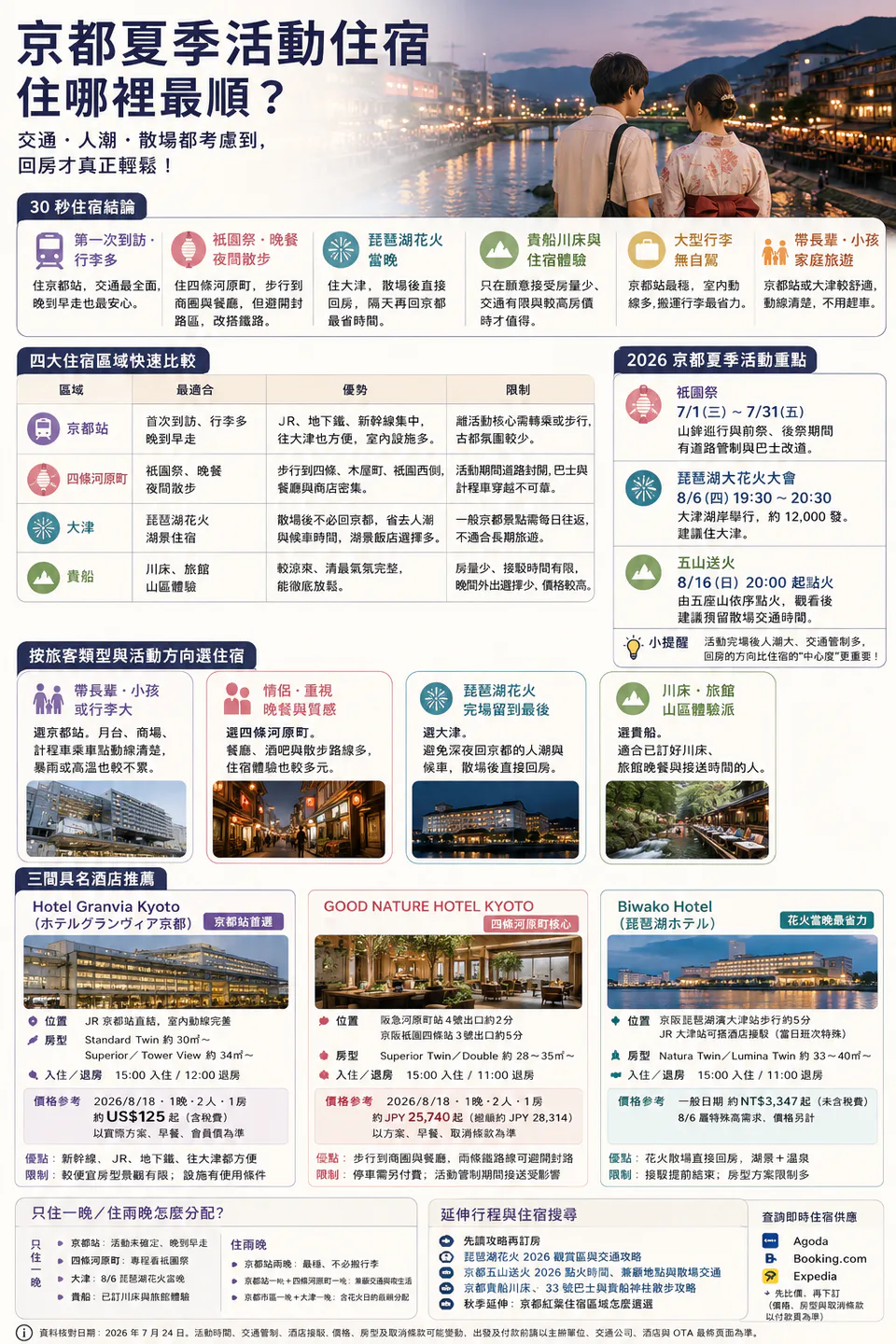
For most Kyoto summer trips, keep one central hotel and change the event route—not the hotel. Kyoto Station is the lower-risk base when luggage, Shinkansen travel or an early departure matters. Kawaramachi becomes stronger when a central festival evening, dinner and the walk back to the room are all part of the same night. Otsu is worth a hotel move only when a Lake Biwa event or a Shiga-focused next day removes a genuinely difficult return. Kibune is different again: staying there only makes sense when the riverside meal, ryokan evening and quiet morning are themselves the product.
The useful test is not “Which area is closest to the event?” It is what does the hotel move remove, and what does it unlock? If changing hotels saves only one ordinary train ride, keep the existing room. If it removes a major post-event crowd transfer and also buys another valuable session—an afternoon reset, a late dinner, a quiet morning or a better next-day route—the move has a job.
Timing note, checked August 25, 2026: Gion Matsuri’s main Yoiyama/procession dates in July, Gozan Okuribi on August 16 and the Lake Biwa Fireworks on August 6 have already passed for 2026. This guide keeps their verified 2026 transport lessons for future planning rather than presenting stale hotel inventory as live. Kibune kawadoko is still in its official 2026 season through September 30, although individual restaurants can differ.
The 30-second decision
↔ Scroll table left or right
Your actual night | Start with | Why | What reverses it |
One event night inside a longer Kyoto stay | Keep the current Kyoto hotel | One crowded return is usually cheaper than checkout, luggage movement and another check-in | The event return is exceptionally difficult and the new base also improves the next morning |
Shinkansen arrival/departure, large luggage or only one night | Kyoto Station | It protects the hardest arrival/departure edge and keeps the long-distance transfer finished | Two or more evenings are genuinely centred on Kawaramachi/Gion and you will use the room between them |
Gion Matsuri-led evening plus dinner/Pontocho/Gion | Kawaramachi, conditionally | The end of the evening can become a walk rather than another cross-city ride | The festival is a one-off night and the next morning is an early train from Kyoto Station |
Lake Biwa Fireworks or another major Otsu night | Otsu only when the overnight does two jobs | It can delete the post-event return to Kyoto and place you for a Shiga morning | You would check in late, sleep, then return immediately to Kyoto |
Kibune kawadoko dinner / ryokan night | Kibune only if the stay itself is the experience | Dinner timing, river setting and the morning can justify sleeping locally | It is only a lunch visit; keep the Kyoto hotel and travel light |
Use the two-benefit rule before moving hotels for an event
A summer event can make a nearby room feel irresistible because the normal return route looks unpleasant. That is not enough on its own. A hotel move has its own fixed cost: packing, checkout, moving luggage, possible storage before check-in, learning another station or entrance and then checking out again.
I would move only when the event-specific hotel creates at least two meaningful benefits:
It removes a genuinely difficult event-night return. Not merely a normal 10- or 15-minute train ride, but a crowd-controlled waterfront exit, a late mountain connection or a final transfer that is likely to be unpleasant with children or luggage.
It unlocks another useful time window. A pre-event shower and rest, a post-event dinner, an early walk, a ryokan breakfast or a lake/mountain morning that you would otherwise miss.
It improves the next hard movement. The following day continues through Shiga, starts in Kibune, or otherwise moves in the direction of the new hotel rather than backtracking to the original base.
The luggage move is cheap enough. One overnight bag is very different from moving two 29-inch suitcases and a stroller through festival crowds.
If the only benefit is “we will be a little closer after the event,” keep the existing room. This is especially true on a two- or three-night Kyoto stay, where a split can consume a disproportionate amount of useful time.
Kyoto Station: buy arrival and departure resilience, not event proximity
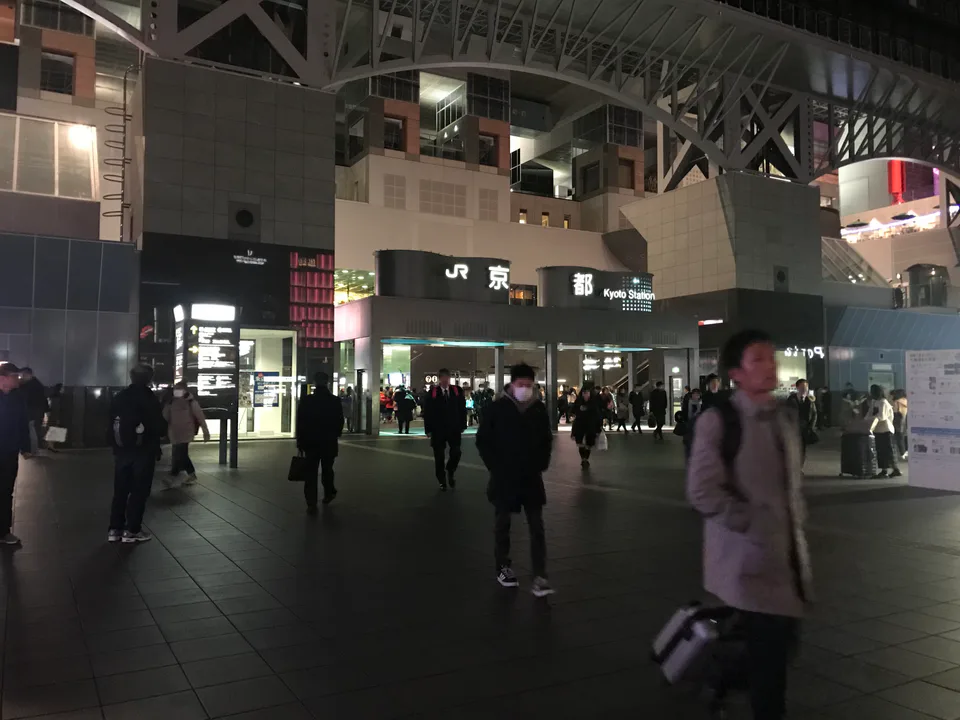
Kyoto Station is rarely the closest base to a central summer festival. Its advantage is that it finishes the difficult long-distance part of the journey before the event begins. Arrive by Shinkansen, leave the main bags, cool down and travel into the event with only a small bag. Afterward, you have one city return instead of an event return followed by another hotel move.
This makes Kyoto Station especially strong for:
one-night Kyoto stops;
large luggage;
late afternoon Shinkansen arrivals;
an early Shinkansen, airport transfer or regional departure the following morning;
families who would rather make the more complicated transfer while everyone is still awake and fresh.
The weakness appears when your useful evenings repeatedly belong to central Kyoto. If two or three nights finish around Shijo, Kawaramachi, Pontocho or Gion, you may be paying the station advantage once and the evening return repeatedly. In that case, compare Kyoto Station vs Gion and the broader Kyoto area guide before treating the station as a universal default.
Gion Matsuri: Kawaramachi is useful for the night, but Shijo-Karasuma may be the purer festival base
Kyoto’s official 2026 guide listed the Early Festival Yoiyama on July 14–16, the Early Procession on July 17 at 09:00, the Latter Festival Yoiyama on July 21–23 and the Latter Procession on July 24. Those dates are over for 2026, but the route logic is durable.
A common mistake is saying “Gion Matsuri = stay in Gion.” The float neighbourhoods and procession geography spread through the central grid. If your only objective is access to the Yoiyama float streets, the Shijo-Karasuma side can be more operationally direct than pushing farther east. Kawaramachi earns its premium when the whole evening matters: festival streets, dinner, Pontocho, the Kamo River and a short final walk back to the hotel.
That distinction changes the hotel decision:
One Yoiyama evening inside a three-night Kyoto stay: usually keep the existing hotel and travel into the central area.
Two central festival evenings plus dinners and daytime room resets: Kawaramachi becomes much stronger because the room is being reused, not merely slept in.
Early Shinkansen the morning after: Kyoto Station can still win even if the evening return is less elegant. The difficult movement has moved to the morning, when the schedule is less forgiving.
The hotel should follow the hours you refuse to lose, not the event name.
Gozan Okuribi: stay for the exit corridor, not a theoretical “best view”
Kyoto’s official 2026 notice confirmed Gozan Okuribi for August 16, with the first lighting at 20:00 and the remaining fires following in sequence. The event is distributed across the city rather than concentrated inside one ticketed venue. That makes “hotel near the event” too vague to be useful.
The stronger method is to choose the viewing area and then work backward from the journey home. A room beside one theoretical viewpoint can be a poor choice if the route there crosses a packed bridge, requires a bus that becomes unreliable under crowd pressure or leaves you far from the next morning’s transport.
For most visitors already holding a central Kyoto room, I would not move hotels solely for Gozan Okuribi. Instead:
pick the fire or viewing zone you actually care about;
identify the rail/subway/walking corridor you can still use after the lighting;
accept that seeing all five from street level is not the goal;
protect the hotel route before optimizing the photograph.
The Gozan Okuribi guide handles the detailed viewing and dispersal decision. The hotel question should come afterward.
Lake Biwa Fireworks: Otsu can remove a major crowd transfer, but one sleep is not enough
The 2026 Lake Biwa Fireworks took place on August 6 from 19:30 to 20:30. The organiser’s official outline records about 34万人—roughly 340,000 spectators—and about 12,000 fireworks. The organiser also confirmed on August 10 that the 2026 event had ended. This is therefore no longer a live 2026 room-booking recommendation.
It is, however, the cleanest stress test for an Otsu overnight. A normal-day “Kyoto to Otsu is quick” comparison misses what happens when hundreds of thousands of spectators leave a controlled waterfront at the same time. On this kind of night, sleeping in Otsu can delete the hardest part of the trip: the post-show rail journey back to Kyoto.
But the hotel move still needs a second job. Strong cases include:
Fireworks + relaxed Otsu/lake morning: the room buys both the exit and another usable session.
Fireworks + next-day Shiga sightseeing: the new hotel moves the itinerary forward.
Family or older travellers: avoiding the post-show station queue can be worth more than avoiding a checkout the next morning.
A weak case is Kyoto sightseeing all day → Otsu hotel only to sleep → Kyoto again first thing next morning. In that version, you have traded one difficult crowd return for luggage movement and backtracking. The 2026 Lake Biwa Fireworks record explains why old “free viewing” pins and normal transport times should never be reused blindly for another year.
Kibune is the only one of these summer choices still live in late August 2026
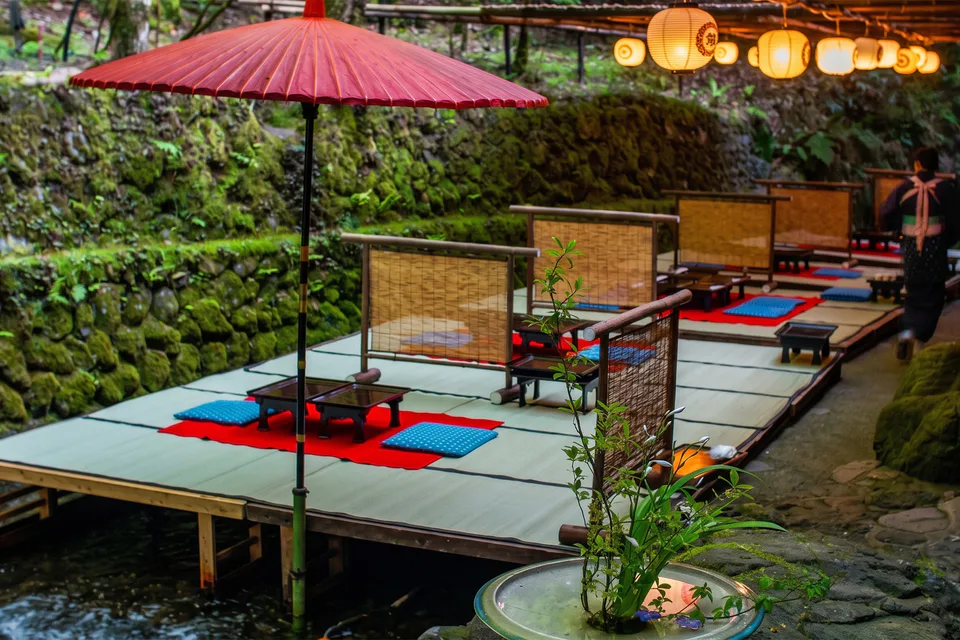
Kyoto’s official tourism guide lists the 2026 Kibune kawadoko season from May 1 through September 30, with individual restaurants able to differ. Access is normally Eizan Railway to Kibuneguchi and then Kyoto Bus to Kibune. As of August 25, this is the summer product in this guide that still has a meaningful 2026 booking window.
Kibune should use a stricter hotel test because the mountain setting creates both the value and the friction. A lunch reservation does not justify moving hotels. Keep the Kyoto room, leave the main luggage behind and return to the city.
An overnight becomes rational when several of these are true:
the ryokan or restaurant dinner is fixed and time-sensitive;
you want the river setting after the normal day-trip period;
the accommodation itself has a bath, meal or atmosphere worth several awake hours;
you want a quiet morning before returning to central Kyoto;
you would otherwise be depending on a late mountain bus after dinner.
Rain is a genuine boundary condition. Individual kawadoko operators can move dining indoors when river conditions or weather make the deck unsafe. If an indoor meal would make the whole purchase feel like a failure, read the cancellation rules before treating the event as a non-negotiable overnight. The Kibune kawadoko guide covers the current 2026 meal, weather and Bus 33 planning in more detail.
Heat makes the afternoon hotel reset more valuable than the map suggests
Kyoto summer event planning is not ordinary sightseeing with a later finish. Heat changes the value of returning to the room. A hotel that lets you shower, cool down, change clothes and rest from 16:00 to 18:00 can contribute more to the night than a slightly faster morning commute.
This is one reason Kawaramachi can beat Kyoto Station on a festival-heavy stay even when the station has better regional transport. If the room is realistically used before dinner on two evenings, the location premium is being paid back twice.
The reverse happens when the event is the only central night. Moving the whole stay for one afternoon reset is usually too expensive in hotel-change friction. Keep the existing room and simplify the daytime schedule instead.
Families and older travellers should count hand-offs after 21:00
A route planner treats a bus-to-subway transfer as a line change. A tired family experiences it as getting a child through a crowd, finding a lift, keeping bags together, waiting on a platform and then walking the final streets to the hotel.
For event nights, count the hand-offs that remain after the event ends. A slightly more expensive room can be justified when it deletes two of them. A room that saves only one short ride but adds a hotel move the next day may not.
This is also why “closest hotel” is not always the right answer. The final 500 metres should be lift-friendly, understandable in the dark and aligned with the transport you can actually use after crowd controls begin.
One night vs two nights: a split has a much higher burden of proof
One night: choose Kyoto Station unless the event itself creates a very strong overnight reason. An Otsu fireworks night, a Kibune ryokan dinner or another destination-specific evening can justify a move; one ordinary central festival night usually cannot.
Two nights: one Kyoto hotel is the default. Split only if the second base solves two separate problems—for example, event-night exit + next-day Shiga, or Kibune dinner + quiet morning.
Three or more nights: area selection can finally reflect repeated evening geography. If two or three evenings are centred on Kawaramachi/Gion, the hotel is no longer an event-night hack; it is your actual city base. At that point compare the normal Kyoto accommodation areas rather than treating every night as a special-event exception.
Final verdict: move the hotel only when the event changes both the night and the next day
Kyoto Station is the default for transport-heavy or luggage-heavy stays. Kawaramachi wins when central festival evenings repeat and the room is genuinely used between them. Otsu deserves an event-night move when avoiding the crowd return and using Shiga afterward both matter. Kibune deserves an overnight when the meal, ryokan and morning are the experience—not for a simple lunch visit.
The deletion test is simple: remove the event from your itinerary. Would you still want that second hotel for its evening, morning or onward route? If the answer is no and the move only saves one ordinary train journey, keep the original room.
Compare Kyoto stays after choosing the right base
References and verification date
Kyoto City Official Travel Guide — 2026 Gion Matsuri Yoiyama and processions · Kyoto City Official Travel Guide — 2026 Gozan Okuribi · Lake Biwa Fireworks organiser — 2026 event outline and audience record · Kyoto City Official Travel Guide — 2026 Kibune kawadoko season. Checked August 25, 2026. Future editions must recheck annual event dates, traffic controls, transport and accommodation conditions rather than reusing the 2026 operating plan.
Where to Stay in Hokkaido for Autumn Leaves: Six Bases Compared
Where to Stay for Tokushima Awa Odori: Tokushima, Naruto or Takamatsu
Where to Stay in Hakone for One Night: Yumoto, Gora or Lake Ashi