
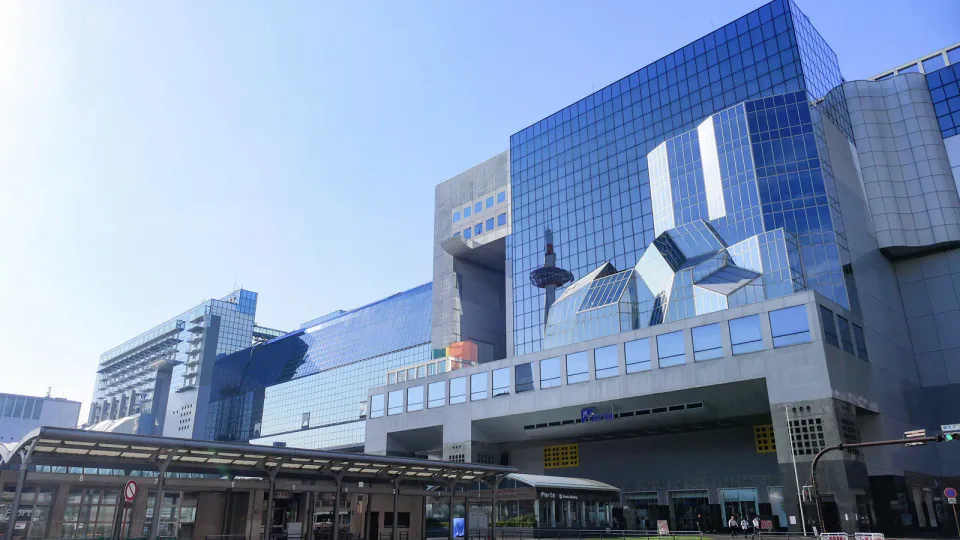
With older parents, I would choose Kyoto Station when the trip is rail-heavy and luggage-heavy, but I would choose central Kyoto when the most tiring repeated task is getting back to the hotel after Gion, Nishiki Market or dinner. The important correction is that “Shijo-Kawaramachi” is not one transport point. Shijo/Karasuma and Kyoto-Kawaramachi solve different problems: Shijo Station is on the subway spine and connects underground to Hankyu Karasuma Station, while Kyoto-Kawaramachi sits farther east beside the downtown evening zone. Kyoto’s official guidance puts the walk from Shijo Kawaramachi to Subway Shijo Station at about 13 minutes, which is too large to ignore when that walk repeats every day.
So the real decision is often three-way rather than two-way: Kyoto Station for JR/Shinkansen and luggage, Shijo/Karasuma for the best transport compromise, Kyoto-Kawaramachi for the shortest downtown evening return. Do not pay for a central address unless your parents will actually use those evening or midday-return hours, and do not pay for a Kyoto Station hotel merely because it is the biggest transport hub if most days end east of the river-facing downtown core.
↔ Scroll table left or right
Your repeated constraint | Best starting area | Why | Main trade-off |
Shinkansen arrival/departure + 2 or more JR-heavy day trips | Kyoto Station | Removes repeated local transfers with luggage and on rail days | Most downtown evenings still require another ride back |
Mixed Kyoto sightseeing + Nara/Uji/Osaka + parents who tire after dinner | Shijo/Karasuma | Subway access to Kyoto Station plus Hankyu access and a central location | Not as close to Gion/Pontocho as Kyoto-Kawaramachi |
Gion, Pontocho, Nishiki, Teramachi and downtown dinners dominate | Kyoto-Kawaramachi | The day can end near the hotel instead of with another transit leg | JR/Shinkansen days add a local connection |
Wheelchair, walking aid or very low walking tolerance | Hotel-specific decision | Curbside access, elevator route and hotel entrance can matter more than district name | A “3-minute” hotel can still use the wrong exit or underground path |
First split “Shijo-Kawaramachi” into Shijo/Karasuma and Kyoto-Kawaramachi
This is the decision gap that most area comparisons miss. Kyoto’s official access guidance says the Subway Karasuma Line ride from Kyoto Station to Shijo Station takes about four minutes. Shijo Station connects by underground passage to Hankyu Karasuma Station. That makes Shijo/Karasuma a useful compromise for travellers who want downtown access without giving up a simple subway link back to Kyoto Station.
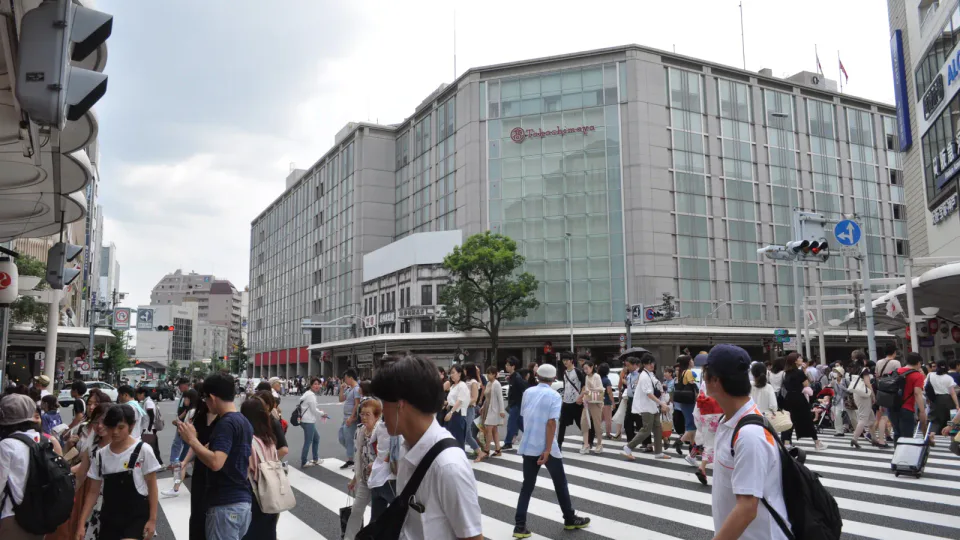
Kyoto-Kawaramachi is one Hankyu stop farther east and is the stronger evening base for Pontocho, Teramachi, Shinkyogoku and the western edge of Gion. But Kyoto’s own Kinkaku-ji access guide says walking from Shijo Kawaramachi to Subway Shijo Station takes about 13 minutes; it specifically notes the Shijo Underpass as a way to avoid road crossings and crowds. For a fit traveller that may be trivial. For an older parent after a full sightseeing day, repeating it morning and night can become the hidden cost of the “central” hotel.
That means a hotel advertised as “Shijo area” can behave very differently depending on whether it is nearer Karasuma or Kawaramachi. Before booking, pin the exact entrance and the exact station you expect to use most. Area names are too coarse for a mobility-sensitive trip.
Use a mobility budget: count hard legs, not just travel minutes
For this trip type, I would count one hard leg whenever a day requires something that becomes disproportionately tiring after several hours out: a large-station transfer with luggage, a long underground walk, a crowded bus, an exit search with stairs, or another transit leg after dinner. The best base is the one that removes the largest number of hard legs across the whole stay.
For example, four nights with Shinkansen arrival, Nara, Uji and Shinkansen departure gives Kyoto Station four obvious opportunities to remove a local connection. In that itinerary, paying a station premium can be rational even if Gion is farther away.
Now reverse the trip: four nights with two Higashiyama days, three downtown dinners and one midday hotel rest. Kyoto Station may only save the arrival and departure legs, while a central hotel can shorten three evenings and make the midday reset usable. The same parents can therefore get the opposite answer without their physical ability changing at all—the itinerary geometry changed.
Kyoto Station wins when the hotel is part of the rail system
Kyoto Station is strongest when the hotel needs to absorb luggage and long-distance movement. Shinkansen arrival, JR day trips, a later move to Tokyo or Hiroshima, or repeated rail use to Nara and Uji all increase the value of staying close enough that there is no extra subway, taxi or bus leg before the main journey.
Kyoto’s official tourism services actively promote luggage storage and hotel delivery through HANDS FREE KYOTO, including delivery from Kyoto Station to accommodation. That creates an important alternative: if the only reason you are choosing Kyoto Station is the arrival-day suitcase, luggage delivery may remove part of that advantage. A central hotel can become more attractive when you send the heavy case ahead and travel into the city with only a day bag.
This is a better way to compare the station premium. Ask: how many times does Kyoto Station save a hard leg after arrival day? If the answer is “arrival and departure only,” do not automatically make four nights revolve around those two hours.
Shijo/Karasuma is the compromise many two-area comparisons hide
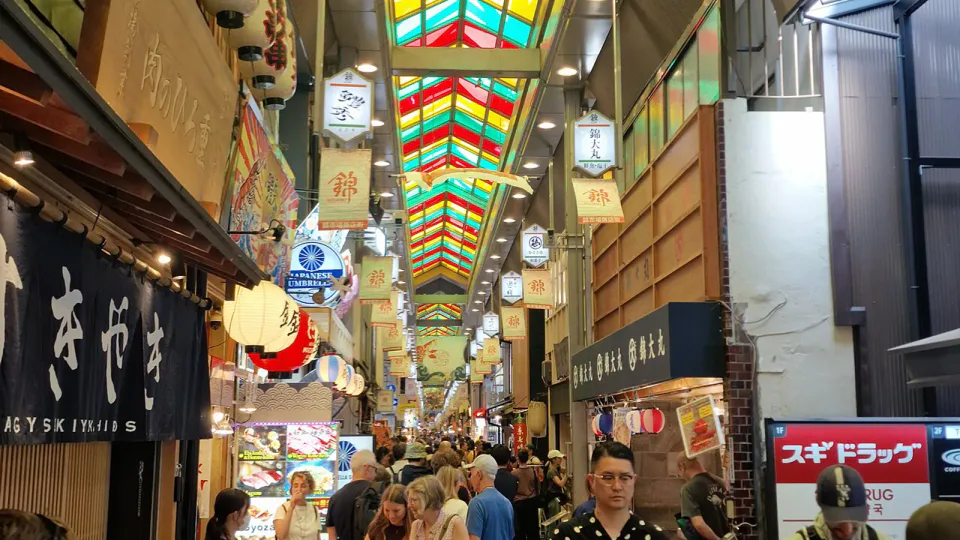
If Kyoto Station feels too far from your evenings but Kyoto-Kawaramachi feels too dependent on east-west walking, Shijo/Karasuma is often the cleaner middle answer. Kyoto’s official central-Kyoto access guide recommends the subway from Kyoto Station to Shijo for Nishiki Market: about four minutes on the train, then roughly five minutes walking east to the Daimaru area before turning toward Nishiki.
Karasuma Station also sits on the Hankyu Kyoto Line, and Hankyu’s current station map lists elevators, escalators, a slope and an accessible toilet. That does not mean every hotel route is step-free, but it does mean the station itself provides barrier-free infrastructure and a direct transfer relationship with Subway Shijo Station.
For parents who can walk normal city distances but dislike long, repeated end-of-day walks, this area can outperform both extremes: easier Kyoto Station access than Kawaramachi, yet much closer to Nishiki and downtown dining than a hotel beside the Shinkansen platforms.
Kyoto-Kawaramachi wins only if you will actually use the evening geography
Kyoto-Kawaramachi is worth its extra rail friction when the hotel’s location keeps paying back after 17:00. Pontocho, Teramachi, Shinkyogoku, Kawaramachi department stores and Gion-side evenings are the use case. The strongest benefit is not that these places are famous; it is that a tired group can finish dinner and remove one more transfer from the night.
Kyoto’s official guide describes Nishiki Market as immediately accessible from the Shijo-Kawaramachi side, while it recommends subway plus a short walk from Kyoto Station. That difference becomes more important when your parents want to return to the room after lunch, rest, then go out again for dinner. A central room can create two shorter sightseeing blocks instead of one exhausting continuous day.
But do not overpay for this if your parents prefer early dinner near the hotel and are unlikely to go back out. A nightlife-adjacent address has little value when the usable hotel pattern is “sightsee, eat early, sleep.” In that case, Shijo/Karasuma or Kyoto Station may give you more transport value for the same money.
Do not make crowded buses the reason Kyoto Station “wins”
Kyoto Station has a large bus terminal, but that does not make a bus-heavy itinerary automatically easier for older parents. Kyoto’s current official travel guidance encourages visitors to check congestion, shift travel times and use trains where practical. Its luggage guidance also asks visitors not to bring large suitcases onto city buses and points travellers toward hands-free services.
For this trip, I would use rail and subway as the structural spine, then add a short taxi when it removes the worst final approach. This is especially useful for places where the nearest station still leaves a slope or longer walk. The taxi does not need to replace the whole day; it only needs to delete the one segment most likely to exhaust the group.
Kyoto’s congestion forecast currently covers areas including Gion/Kiyomizu, Nishiki Market, Kyoto Station and Fushimi Inari. Check the actual date and time rather than assuming a bus route that looked good during trip planning will behave the same way at autumn peak.
Elevators exist at Karasuma and Kyoto-Kawaramachi—but the hotel exit still decides the real walk
Hankyu’s current station maps list elevator access and wheelchair-accessible facilities at both Karasuma and Kyoto-Kawaramachi. That is useful, but it is not the same as saying every numbered exit is equally accessible. Kyoto-Kawaramachi has multiple exits spread along Shijo-dori, and the current official map even lists different opening hours for several exits.
Before paying for a “two-minute walk” hotel, ask four practical questions:
Which elevator-equipped exit should we actually use?
How far is that exit from the hotel entrance, not from the station boundary on Google Maps?
Can a taxi stop close to the entrance without a difficult crossing or long arcade walk?
Does the route stay manageable in rain, heat and with luggage?
This is the point where a slightly farther hotel can beat a theoretically closer one. A flat, obvious curbside approach can be worth more than saving 150 metres on paper.
Three trip patterns give three different answers
Four nights, Shinkansen both ends, Nara + Uji
Choose Kyoto Station. Arrival, departure and two rail-heavy days all reuse the same hub. The trade-off is that downtown evenings need another ride, so keep at least one dinner near the station or use a taxi back after a long day.
Four nights, mixed sightseeing, Nishiki + Gion but also one Nara day
Start with Shijo/Karasuma. It gives the best balance: direct subway access toward Kyoto Station, Hankyu access, and a shorter walk into downtown than a station-area hotel. The trade-off is that Pontocho and Gion are not literally outside the door.
Three or four slow Kyoto days, evening walks and frequent room rests
Choose Kyoto-Kawaramachi or the west edge of Gion. The hotel earns its premium every afternoon and evening. The trade-off is one extra local movement on JR/Shinkansen days.
When the district decision should be overridden by the hotel itself
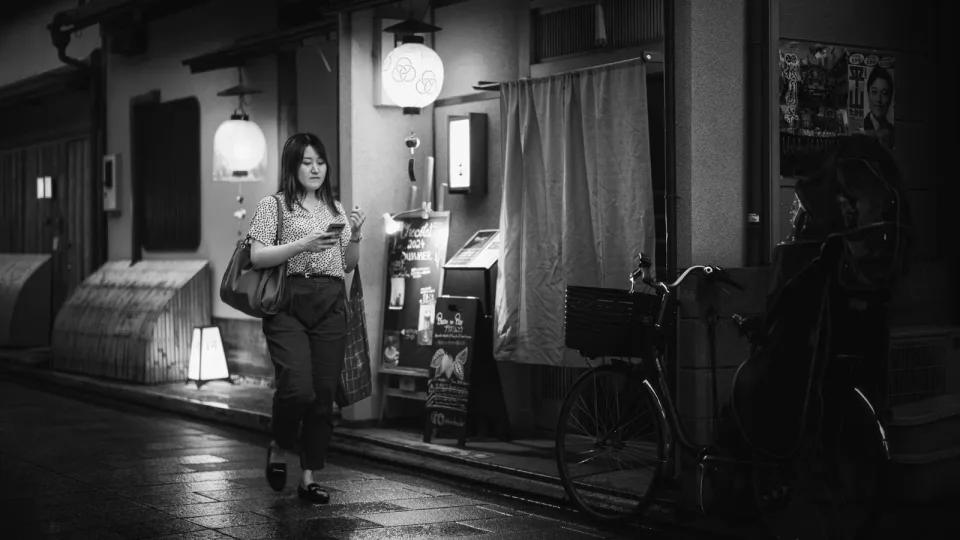
With older parents, the winning district can still contain the wrong hotel. Override the area verdict when another property offers a materially better entrance route, larger room, separate beds that fit the group properly, an easier bathroom threshold, reliable elevators, or direct taxi access.
This is also why I would not split a short Kyoto stay simply to enjoy both areas. Two or three nights are usually too short to justify another checkout, luggage move and check-in. For four or five nights, split only if the move solves a new phase of the itinerary—for example, two rail-heavy nights beside Kyoto Station followed by several slow Higashiyama evenings. Moving hotels just to save one dinner commute is normally a bad trade.
Final verdict: choose the base that removes the repeated hard leg
Kyoto Station is the best default when Shinkansen/JR days and luggage dominate. Shijo/Karasuma is the strongest compromise when you need both Kyoto Station access and central-Kyoto evenings. Kyoto-Kawaramachi is the better experience base when Gion, Pontocho, Nishiki and midday hotel rests repeat often enough to justify the extra rail connection.
The most important correction is not to treat Shijo/Kawaramachi/Karasuma as one point. Kyoto’s own access guidance shows that the distance between the Kawaramachi intersection and Subway Shijo Station is meaningful. For older parents, that difference can matter more than a five-minute headline train-time saving elsewhere.
If the group has very limited walking tolerance, stop comparing districts and compare actual hotel entrances. The right answer is the property with the easiest real elevator/taxi/door route inside the district that already fits the itinerary.
Sources and verification
Kyoto City Official Travel Guide — central Kyoto/Nishiki access · Kyoto City Official Travel Guide — Shijo Kawaramachi to Shijo Station walking guidance · Kyoto Travel Congestion Forecast · Kyoto tourist information — luggage delivery from Kyoto Station · Hankyu Railway — Karasuma Station map · Hankyu Railway — Kyoto-kawaramachi Station map. Checked August 25, 2026. Station exits, congestion, luggage services and hotel accessibility can change; verify the exact property route before travel.
Osaka Budget Itinerary: 7 Days With USJ, Kyoto, Nara and Kobe — Without Buying Every Pass
Fukuoka Hotels With Parents: Reduce Repeated Walking, Transfers and Bathroom Friction
Osaka Hotels for Kyoto and Kobe Day Trips: When 3–5 Minutes to the Station Matter Twice a Day
Osaka and Kyoto 4-Day Itinerary With USJ: Does Kyoto Still Fit?
Where to Stay in Tokyo With Parents: I’d Eliminate These “Convenient” Hotels First