
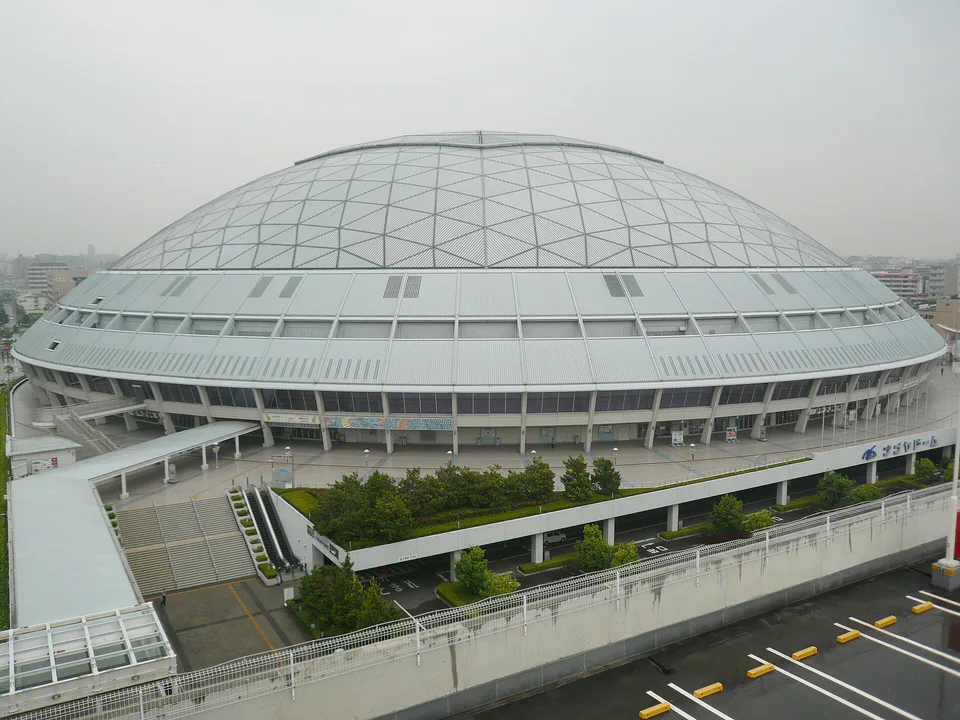

For the Aichi-Nagoya Asian Games 2026, buy the session that would genuinely disappoint you to miss before you lock a non-refundable hotel. The official Games period is September 19 to October 4, but the competition footprint is much wider than central Nagoya and some sessions begin before the opening ceremony. The programme spans 43 sports and 53 venues across Aichi plus venues in Gifu, Shizuoka, Tokyo and Osaka. Football fixtures, for example, begin on September 14.
The planning order should therefore be priority session → exact matchup → current session schedule → venue access → hotel corridor → flexible extra sessions. Do not reverse that order because a Nagoya hotel deal looks attractive. In August 2026 the organisers were still changing schedules, reopening ticket inventory, launching official resale and adding new ticket products. The official ticket portal now also highlights that matchups have been confirmed across all sports, which means team-following travellers can move from broad sport-level planning to the exact session and venue they will actually attend.
Checked August 25, 2026. The official ticket portal currently highlights “Matchups Confirmed Across All Sports” and “Access Information for Competition Venues.” That makes an old screenshot of a sport schedule a weaker planning tool than the live draw, exact session page and venue access page. A hotel chosen before those three agree can become the most expensive fixed part of the trip.
↔ Scroll table left or right
Your situation | What I would do | Why |
One must-see medal session | Buy it when available, then build the trip around it | Do not treat resale or extra releases as a guaranteed Plan A |
Following a specific team | Use the confirmed matchup, session and venue before choosing the hotel | One sport can use several cities; sport-level planning is now too coarse for team-following travel |
Opening or closing ceremony | Treat entry as a hard deadline, not a normal 18:00 session | Visitor information must be registered in advance; identity is checked at entry and late arrival after the specified time may mean refusal without refund |
Several sessions in different Aichi cities | Start with Nagoya Station as the hotel hedge | It keeps Shinkansen, JR, Meitetsu and subway options open while the venue mix stays broad |
Two consecutive early/late sessions at the same outlying venue | Price a venue-side hotel against Nagoya | The second hotel becomes rational when it removes at least two costly transfers |
A session marked “currently unavailable” | Keep checking official sales and resale, but keep a backup session | The organisers have already reopened inventory after earlier allocations ended |
Flexible evening with no must-see sport | Check eligible After 4 inventory close to the date | It is a flexible evening product, not a ticket to anchor the whole Japan itinerary around |
There are four clocks to manage: ticket, schedule, transfer and ceremony entry
The Asian Games are unusually easy to mis-plan because several separate things can change the value of the same booking.
Ticket clock: general sales are first-come, first-served and continue until each session date, subject to availability and platform rules. The official site now also has resale, additional releases and other ticket products. Inventory can therefore move in both directions.
Schedule clock: the official ticket information posted another competition-schedule change notice on August 19, only a month before the opening ceremony. Earlier changes had already cancelled or retimed football sessions because team numbers changed. The portal now says matchups are confirmed across all sports, which is useful progress, but it does not make an old timetable screenshot authoritative. Use the confirmed draw to identify the session, then recheck the current session time before travel.
Transfer clock: 53 venues do not behave like one Olympic park. A ticket can be cheap and technically available while the journey between two sessions is still a bad idea. Venue access, spectator shuttles, security, crowd dispersal and the final walk all belong in the itinerary.
Ceremony-entry clock: opening and closing ceremonies add prior visitor registration and identity verification. The organiser will announce a specified arrival time for those checks, and the current ticketing guide warns that arriving after that time may lead to refused admission without a refund.
That four-clock model is the main reason I would keep the hotel flexible until the priority sessions are fixed. The event ticket may cost less than the room, but the ticket determines where the room needs to work.
“Currently unavailable” is not the same as “you have zero chance”
One of the most useful changes on the official ticket site happened on July 14: the organisers changed the ticket-availability wording from “sold out” to “currently unavailable” / planned allocation ended. That wording matters because additional inventory can later be released.
And that is not theoretical. In August the organisers announced multiple additional-sale rounds, including inventory for sessions that had previously reached their planned allocation. Official resale also opened on August 4.
This creates two different buying strategies:
Priority session: if missing it would damage the trip, buy when a suitable ticket is available. Do not plan flights and hotels on the assumption that extra stock will appear later.
Flexible session: if it is a bonus evening or second-choice sport, “currently unavailable” is a reason to keep checking official inventory and resale rather than immediately redesigning the whole trip.
The key distinction is certainty. Additional releases and resale create another chance; they do not create a guarantee.
Official resale is useful, but it has its own deadline and exclusions
The official resale service began on August 4. The organisers currently state that eligible tickets can generally be listed until 23:59 three days before the relevant session, with separate rules for the opening and closing ceremonies. Eligibility depends on the ticket type and how it was purchased, and some competitions can be temporarily excluded from resale when schedules are still subject to change.
That means resale should be treated as a recovery channel, not as universal insurance. A buyer should not assume every ticket can be resold later, and a late buyer should not assume the resale market will contain the exact sport, session, seat category and quantity needed.
If your Japan itinerary is still flexible, this also affects hotel choice. A fully non-refundable room booked for one uncertain session can be a worse risk than a slightly more expensive flexible hotel near Nagoya Station. The room and the event ticket have different cancellation systems; price them as a combined commitment.
After 4 Tickets are for flexible evenings, not priority sport days
The official ticket site added After 4 Tickets in August 2026. They are timed-entry products that allow admission from 16:00 for eligible sessions. This creates a useful option for travellers who have sightseeing or work during the day and want a lower-commitment event evening.
But I would not use an After 4 product to design a must-see sports day. It only applies to selected sessions, and entering from 16:00 means you are deliberately giving up the earlier part of that session. It is strongest when the sport is a flexible bonus and the venue already fits the day’s geography.
A good use case is: Nagoya sightseeing during the day → confirmed eligible evening session on the same transport corridor → hotel nearby afterward. A weak use case is: long day trip outside Nagoya → race across the region for a 16:00-entry product → late transfer back to a distant hotel.
Opening and closing ceremonies have a hard-entry risk that normal sessions do not
The opening ceremony is currently scheduled for September 19 at 18:00 and the closing ceremony for October 4 at 18:00. Those times can look like ordinary evening sessions on a calendar, but the current official ticketing guide adds a separate admission process.
Before attending either ceremony, visitor information must be registered in advance. At entry, staff will verify that information against acceptable identification. For an overseas visitor, carrying the same valid passport or other government-issued photo ID associated with the booking is the simplest way to remove ambiguity. The official guide also allows two qualifying government-issued non-photo IDs, but that is a less useful travel plan for most international visitors.
The most important itinerary consequence is timing. The organiser says a specified arrival time will be announced for identity verification. If you arrive after that specified time, admission may be refused, and the ticket will not be refunded. The organiser also expects the admission process to be crowded and asks spectators to arrive early.
ValueNavi rule: treat a ceremony as a hard-entry event, not an “18:00 start, arrive at 17:45” event. Do not pair it with a distant afternoon session, a tight Shinkansen arrival or a hotel check-in that consumes the same buffer. The unused hour before a ceremony is not wasted time; it is insurance against an expensive non-refundable failure.
This also changes hotel value. On a normal sports day, a slightly farther hotel can be fine if the transfer tree is simple. On ceremony day, I would pay more attention to a route with fewer failure points to Mizuho Park because the entry deadline has a much higher penalty than missing the first few minutes of an ordinary session.
The Games start before September 19 for some spectators
The official overall Games dates are September 19 to October 4, but competition schedules can extend outside the ceremony window. Football fixtures currently begin on September 14, and the official schedule has already been revised after team numbers changed.
This is a practical hotel-booking trap. If you are following a team sport, do not search accommodation only for the headline Games dates. Open the exact session schedule first. A traveller following preliminary football could need Nagoya, Shizuoka or Osaka accommodation before the formal opening date, depending on the match.
The same principle applies later in the tournament: do not assume the city printed in the event name is the city where your sport happens. Swimming and diving are at Tokyo Aquatics Centre, artistic swimming is in Hamamatsu, cycling track is in Izu, and some football is in Shizuoka, Gifu and Osaka. The official competition list, not the event branding, is the routing authority.
Matchups are confirmed: team-following travel should now be planned at session level
The current official ticket portal now highlights that matchups are confirmed across all sports. That is a meaningful planning milestone for travellers following a national team rather than a sport in general.
Before the draw is known, “I want football” or “I want basketball” can only produce a broad date-and-city hedge. Once the matchup is confirmed, the useful unit becomes team + session + venue + start time. If your team has two sessions in different cities, one Nagoya hotel may no longer be the right answer even though both tickets belong to the same Asian Games.
Use the draw to collapse uncertainty, but keep one layer of caution: a confirmed matchup does not freeze every operational detail forever. The organisers were still publishing schedule changes in August, so recheck the live ticket/session page after the draw and again before travel.
ValueNavi hotel test for team followers: map every confirmed session you genuinely plan to attend. If two or more create the same repeated venue corridor, choose the hotel for that corridor. If the sessions scatter across prefectures, stop looking for one “Asian Games hotel” and treat the event as separate city blocks inside the Japan itinerary.
Venue-geography veto: some tickets should remove Nagoya from the hotel comparison entirely
The official venue list is the fastest way to prevent a bad hotel decision. “Aichi-Nagoya 2026” is the event name, not a promise that every session belongs inside a Nagoya-based itinerary. If your priority ticket is for Tokyo Aquatics Centre, Izu Velodrome or Nagai Stadium in Osaka, stop comparing Nagoya Station with Sakae for that event block. The correct base is the city or corridor that serves the actual venue.
Use Nagoya as the hedge only when the venue geography still points back toward Nagoya or several Aichi venues. For a single outlying Aichi session, commuting can remain cheaper than moving hotels. For two consecutive early or late sessions in the same outlying cluster, the venue-side hotel test becomes much stronger.
One official-source mismatch is worth handling explicitly. On August 7, the organisers announced formal OCA approval for padel and teqball at Nagoya City Higashi Sports Center, saying the venue did not change from the provisional plan. The current English Sports Program/Competition Venues index can still display both sports as “TBD.” That is a publication-lag problem inside first-party material, not a reason to ignore the newer approval announcement. For padel or teqball transport planning, use the August 7 approval plus the live session/ticket information, and recheck again before travel.
↔ Scroll table left or right
Priority-session geography | Hotel logic |
Central / Nagoya-city venue | Nagoya Station remains the transport hedge; compare Sakae only when evenings and local-city access outweigh intercity flexibility |
One outlying Aichi venue | Usually keep one Nagoya room unless the session has a hard early/late edge |
Two or more sessions in the same outlying Aichi corridor | Price a venue-side stay because one hotel move can delete multiple repeated transfers |
Tokyo / Izu / Osaka venue | Exit the Nagoya-hotel comparison; sleep where that event block actually occurs |
This is the boundary condition the broad “Nagoya Station is safest” advice needs: Nagoya is only a low-regret default while the tickets still form a Nagoya-centred transport tree.
Nagoya Station is the safest hotel hedge when your venues point in several directions
If you have two or three event days and the venues are not all on one local line, Nagoya Station is the low-regret default. Its value is not nightlife. It is keeping multiple transport systems available while the itinerary remains multi-directional: Shinkansen for longer intercity movement, JR, Meitetsu, subway and onward connections.
The trade-off is that Nagoya Station can be less pleasant for repeated central-city evenings than Sakae, and “near Nagoya Station” still ranges from directly connected hotels to properties with a meaningful outdoor walk. If your sessions finish late, the last station-to-room segment matters.
A hotel such as Vessel Hotel Campana Nagoya should therefore be judged by whether the extra walk buys useful room, bath or breakfast value after the event—not simply because the listing says Nagoya Station.
When should you leave Nagoya and sleep near the venue?
I would only add a venue-side hotel when it deletes repeated high-friction travel.
Use this ValueNavi test: the second hotel should remove at least two expensive venue transfers or protect one genuinely hard deadline.
Strong case: early session and late session on consecutive days at the same outlying venue. Moving once may remove two long round trips.
Strong case: very early spectator access at Aichi Sky Expo or another airport-side venue, followed by a flight from Chubu Centrair.
Weak case: one afternoon session outside Nagoya, then everything else returns to central Nagoya. Take the train and keep one room.
Weak case: changing hotels solely because the venue appears far away on the map, without checking the Games-specific shuttle/access plan.
Hotel changes have a fixed cost: packing, checkout, luggage storage, another transfer and another check-in. One inconvenient journey often costs less than one unnecessary move.
Do not combine two sessions until you have checked the official spectator access plan
A map can show a morning sport ending at 12:00 and an evening sport beginning at 17:00 and make the day look easy. That five-hour gap is not five hours of free sightseeing.
Add:
the real end time rather than the scheduled start time;
exit queues and security dispersal;
the walk or shuttle from the first venue;
the intercity or local transfer;
entry screening at the second venue;
food and toilet time;
and a disruption buffer.
Aichi Prefecture has published venue-specific spectator access information that can include public transport, shuttle buses, accessible transport and park-and-bus-ride arrangements depending on the venue. The official Asian Games venue pages now also surface an access-information link and a “Find Your Route” public-transport planner. Use that event plan instead of treating normal-day Google Maps time as the whole journey.
My default for two different venue cities is one priority session plus one flexible block. Pair two ticketed sessions only when the transfer still looks comfortable after you add the event-specific friction.
If the second event is the opening or closing ceremony, use a stricter rule. The identity-check arrival deadline outranks the convenience of squeezing in another ticketed session beforehand. A technically possible transfer is not enough when late arrival can invalidate a non-refundable ceremony ticket.
Family tickets change the seat decision, not only the price
The current official ticket rules define child tickets for children under 15 on the session date. Child pricing is attached to the lowest seat category for that sport. When a child under 15 watches with someone aged 15 or older, the adult also needs the corresponding lowest-category general ticket for that group. Children under three can sit on a parent or guardian’s lap without a ticket if they do not require their own seat.
This matters because “we found cheap child tickets” can quietly determine the whole family’s seat category. Compare the family’s final seating arrangement, not just the child discount.
Wheelchair tickets are a different product again: the current rules include one adjacent companion in the wheelchair-ticket price, and companions must enter and exit with the wheelchair user. Accessible venue transport can also be session- and venue-specific. Resolve those rules before committing to a hotel whose route depends on stairs, long walks or a shuttle you have not verified.
Four days around the Games: do not let event tickets erase the Japan trip
If the Asian Games are one stop inside a 10- to 14-day first Japan trip, the event can easily consume more time than expected because every session has a transport tail.
A practical four-day event block might be:
Day 1: arrive Nagoya + flexible city evening.
Day 2: one priority session + local dinner near the return corridor.
Day 3: second priority session, or one After 4 session after a light sightseeing day.
Day 4: departure / Shinkansen onward rather than squeezing in another distant venue before moving cities.
If two event days already require long regional transfers, do not also force Takayama, Kyoto or a major theme park into the gaps. Use the 10-, 12- or 14-day Japan itinerary to decide what the Games are replacing, not just what they are being added to.
The last-month checklist: recheck these seven things even if you already booked
Exact matchup: the official portal now says matchups are confirmed across all sports; team followers should re-map their itinerary using the actual opponent/session rather than an old sport-level placeholder.
Exact session status: available, currently unavailable, additional release or resale availability.
Latest schedule: the official ticket site posted another competition-schedule change notice on August 19.
Exact venue: do not rely on “Nagoya” as a destination label; for padel/teqball, check the newer August 7 approval if the English venue index still says TBD.
Official spectator access: use the venue access page / route guide because shuttle and temporary access arrangements can differ from ordinary-day transport.
Ceremony entry documents and deadline: if attending the opening or closing ceremony, confirm visitor-information registration, carry accepted identification and check the specified arrival time once published.
Hotel cancellation deadline: know when a flexible hotel becomes non-refundable, especially if the ticket or team schedule is still moving.
This is one of the rare events where checking again close to departure is part of the plan rather than a sign that the original planning failed.
Final verdict: lock certainty in the right order
Buy the sport you care about most when a suitable ticket is available. For team-following travel, use the now-confirmed matchup to identify the exact session and venue. Keep optional sessions flexible. Then use the current schedule and official spectator access to choose the hotel that removes the transfer you will repeat.
Nagoya Station is the best default hedge for a mixed-venue itinerary, not because it is universally the best neighbourhood but because it keeps the transport tree open. Move closer to an outlying venue only when that hotel deletes at least two difficult transfers or protects one hard early/late deadline. If the priority session is in Tokyo, Izu or Osaka, stop using Nagoya as the hedge altogether and build that event block around the actual venue city.
For the opening or closing ceremony, add one stronger exception: optimize for guaranteed early arrival and successful identity verification, not for maximizing the number of activities before 18:00. A spare buffer is cheaper than being refused entry to a non-refundable ceremony ticket.
Most importantly, do not read “currently unavailable” as permanent sold out, and do not read “resale/additional tickets exist” as a guarantee that your priority session can safely wait. The useful strategy is asymmetric: certainty for the must-see sport, confirmed-session routing for the team you follow, and flexibility for everything else.
Miraikan Grand Antarctica Exhibition 2026: Tickets, Highlights and Odaiba Plan
Port of Nagoya Public Aquarium 2026: How Long to Spend and When Night Entry Is Worth It
Okinawa Travel Guide: First-Time Itinerary, Hotels and Transport
Takayama Autumn Leaves: Old Town, Hida Folk Village, Transport and Hotels
Dazaifu Shinko-sai 2026: Mikoshi Route, Candlelight and Transport
References
Aichi-Nagoya 2026 Official Ticket Information — current ticket status, confirmed-matchup notice and venue-access links · Official ticketing guide — opening/closing ceremony identity verification and admission rules · Official Sports Program and Competition Venues · August 7 venue approval for padel and teqball · Official resale-service announcement · Official competition-schedule change notice · Aichi Prefecture spectator venue-access information. Information rechecked August 25, 2026. Ticket inventory, competition schedules, matchups, identity-verification instructions and access plans can change; recheck the exact session before travel.