
Miraikan’s 2026 Antarctica exhibition is worth a Tokyo half-day when the science and hands-on exhibits are genuinely interesting to you, or when bad weather makes an indoor Odaiba day more valuable. It is not worth crossing Tokyo simply because the exhibition is temporary. The key deadline is now unusually hard: the special exhibition ends on September 27, 2026, and Miraikan itself is scheduled to close for refurbishment from October 1, 2026 through April 22, 2027. If your Tokyo dates fall in late September, this is one of the final windows before a long museum closure. If your trip begins after September 27, delete the Antarctica exhibition from the itinerary.
For most visitors, I would allocate 2–3 hours for the special exhibition or 4–5 hours when combining it with Miraikan’s permanent exhibitions and a meal. The ticket already includes the permanent galleries, so the real decision is whether you will use that extra museum time—not whether a second admission fee exists. Dome Theater admission remains separate.
↔ Scroll table left or right
Your Tokyo trip | Verdict | Why | Main reason to reverse |
Science-focused adult / family, before Sep 27 | Go | Real Antarctic ice, deep ice core, meteorites and field-research stories create a coherent science half-day | Only 2–3 Tokyo days and Odaiba is otherwise off-route |
Rainy / very hot Tokyo day | Strong backup | Most of the value is indoors and the permanent galleries are included | You already hold a harder-to-replace timed ticket elsewhere |
First Tokyo trip with only one spare half-day | Conditional | The exhibition is good, but Odaiba transport and museum time compete with core Tokyo neighbourhoods | Antarctic science is one of your specific interests |
Sep 28–30, 2026 | Do not go for Antarctica | The special exhibition has ended even though the museum has not yet entered the Oct 1 refurbishment closure | You want the remaining permanent museum experience for its own sake |
Oct 1, 2026–Apr 22, 2027 | No-go | Miraikan has announced a museum closure for refurbishment | Recheck only if the museum later changes the official closure plan |
The exhibition has a hard expiry date — and the museum closes three days later
Miraikan currently lists the Antarctica special exhibition from July 1 through September 27, 2026. Opening hours are 10:00–17:00 with final admission at 16:30. The exhibition is closed on September 1, 8 and 15; the July closure dates have already passed.
The more important planning fact is what happens immediately afterwards. Miraikan has separately announced a refurbishment closure from October 1, 2026 to April 22, 2027. That creates three different late-September products:
Through Sep 27: Antarctica exhibition + permanent galleries are both available under the special-exhibition ticket.
Sep 28–30: Antarctica is finished. Do not travel to Odaiba expecting the exhibition just because Miraikan itself has not closed yet.
Oct 1 onward: the museum enters the announced refurbishment closure.
This is a stronger boundary than ordinary exhibition FOMO. If you are in Tokyo on September 26–27 and Antarctica is genuinely interesting, moving the museum forward can be rational because there is no later recovery date on that trip.
Do not confuse the current ¥1,800 discount with a universal advance-ticket price
The current standard special-exhibition admission is JPY 2,000 for adults aged 19+, JPY 1,300 for ages 6–18 and JPY 900 for ages 3–5; children aged two and under are free. The ticket also grants access to Miraikan’s permanent exhibitions, but not the Dome Theater.
Miraikan is currently running specific JPY 200-off campaigns for visitors who present qualifying Rinkai Line or Yurikamome day passes / tickets at the exhibition ticket counter, as well as a Koto resident / worker campaign. Those campaigns reduce the adult price to JPY 1,800 and the younger categories by JPY 200.
That is different from saying every traveller automatically gets an “advance price” of JPY 1,800. The official English exhibition page currently presents the normal adult price as JPY 2,000 and its parenthetical discount as the group rate. If price matters, check the exact sales channel or eligible transport campaign rather than carrying an old advance-price assumption into the booking.
The decision impact is small in cash terms. A JPY 200 discount should not determine whether you spend half a Tokyo day in Odaiba. Use it only after the museum already fits the itinerary.
Special exhibition only or full Miraikan? Let the ticket inclusion change the plan
The Antarctica ticket includes Miraikan’s permanent exhibitions. That means the marginal admission cost of staying longer in the museum is effectively zero; the scarce resource becomes time.
Choose the 2–3 hour version when Antarctica is the specific target, another Odaiba booking is fixed later, or your first Tokyo trip has limited museum time. Move through the real ice, ice-core / climate-science story, meteorites, wildlife research and Showa Station material without trying to consume every interactive station.
Choose the 4–5 hour version when science museums are already a priority, the weather is poor, younger travellers need a slower pace, or you would otherwise spend the same afternoon crossing Tokyo to another indoor attraction. Add permanent galleries and lunch rather than inventing another cross-city stop just because the Antarctica section ends earlier than expected.
Do not stay five hours because the permanent galleries are “free.” Included admission is not a reason to spend time on exhibits that do not interest you. Sunk ticket value should not control the rest of the day.
The best exhibits are the ones another Tokyo museum cannot easily substitute
The exhibition has many objects, but not every display should receive equal itinerary weight. For a first visit, I would prioritise the elements that create a distinct Antarctica product:
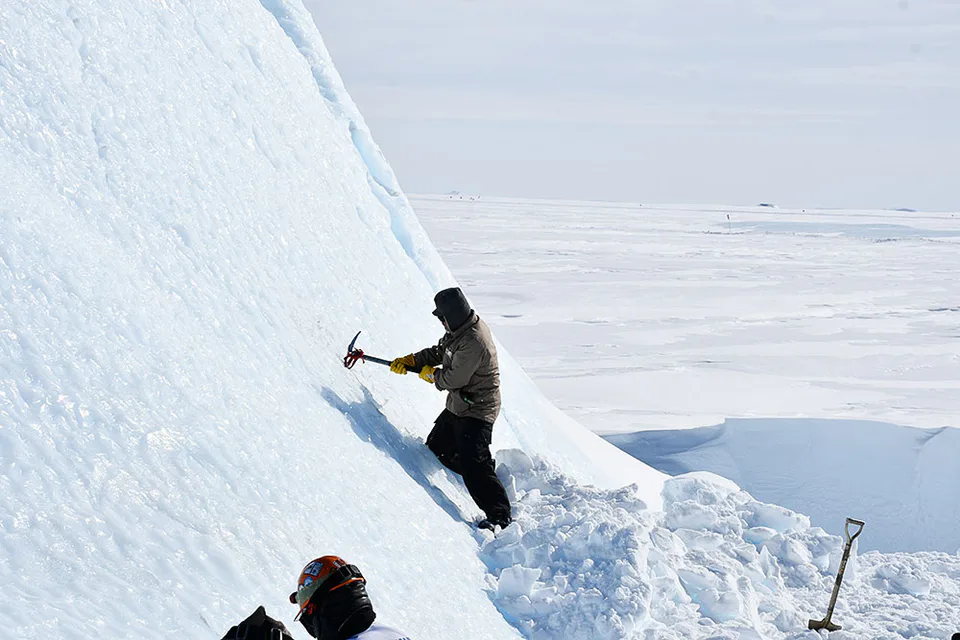
Real Antarctic ice: a tactile object rather than a photograph or model.
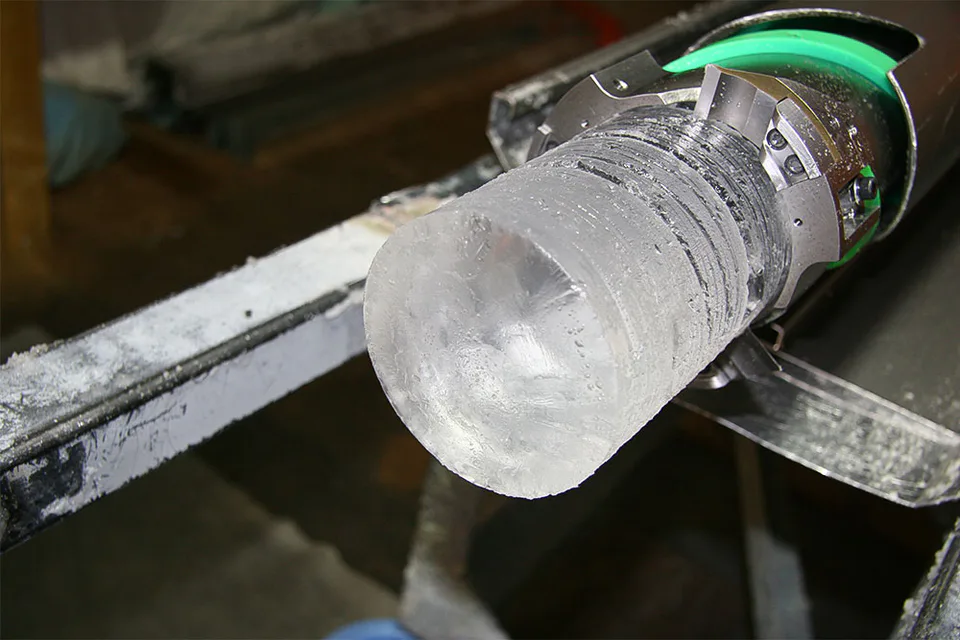
Deep ice core with ancient trapped air: the cleanest link between Antarctic fieldwork and long-term climate evidence.
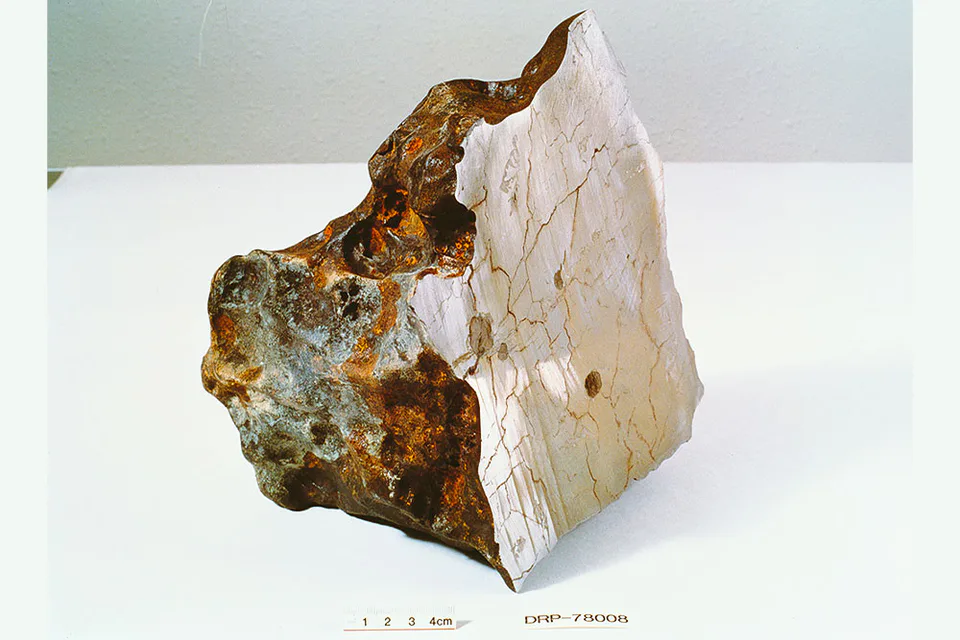
Antarctic meteorites: more than thirty specimens are presented, including material linked to the Moon and Mars.
Blizzard / extreme-environment experience: useful because it turns field conditions into a physical rather than purely text-based concept.
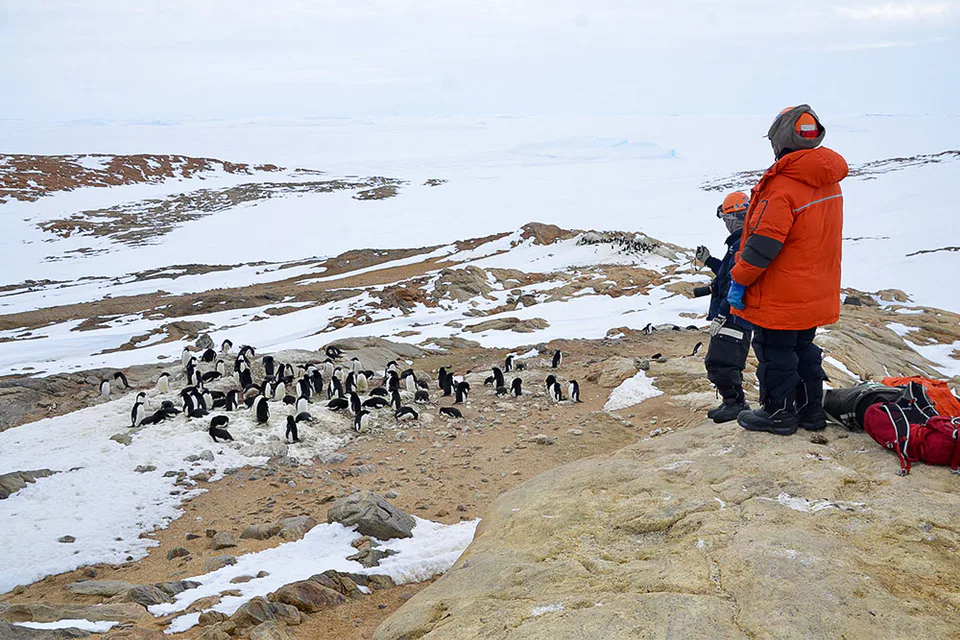
Showa Station and wildlife-research sections: these explain the operational work behind long-term polar science rather than treating Antarctica as scenery.
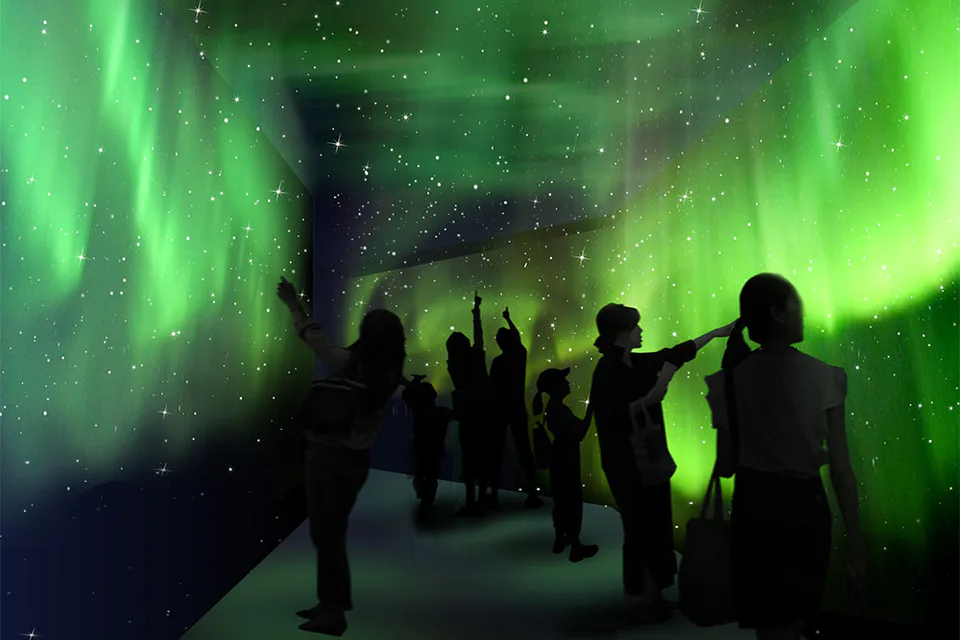
The aurora installation is visually attractive, but it should be treated as an exhibition finale rather than the reason to sacrifice the science sections. If photographs are the only part that interests you, this is probably not the best use of a scarce Tokyo half-day.
For families, the exhibition works best when Antarctica is the anchor and Miraikan supplies the slack
Families have a different reason to choose the full-museum version. Hands-on stations can create unpredictable dwell time: one child may spend much longer with the ice or blizzard experience, while another may be ready to move on. Because the permanent galleries are already included, you can let the family pace vary without feeling that a separate museum ticket has been wasted.
The exhibition is also easier to cut than an outdoor attraction. If energy falls after two hours, leave. If everyone is still engaged, continue into the permanent galleries. That makes it a resilient rainy-day product.
The boundary is attention span. A child who wants character attractions or rides rather than science will not become interested because the exhibition ticket includes more floors. For a mixed-interest family, use Antarctica as one deliberate half-day rather than asking the museum to fill an entire day.
Adults should compare it with the science they would otherwise choose, not with “something to do in Odaiba”
For adults without children, the strongest reason to visit is the Antarctic research story: climate records in ice, field logistics, meteorites and long-running ecological observation. The museum becomes weaker when the goal is merely “an indoor attraction near the waterfront.” Tokyo has too many indoor alternatives for location alone to justify the detour.
If your alternative is another science-heavy museum, decide by subject. The National Museum of Nature and Science in Ueno gives a broader natural-history / science day in a more central sightseeing cluster. Miraikan’s Antarctica exhibition wins when the polar-research theme and hands-on presentation are the specific draw.
Access: Yurikamome reduces the weather penalty; Rinkai Line may fit the rest of the day better
Miraikan currently lists a five-minute walk from Tokyo International Cruise Terminal Station and a 15-minute walk from Tokyo Teleport Station. That ten-minute walking difference becomes more important in midsummer heat, heavy rain or with younger / older travellers.
So I would use the Yurikamome when weather exposure and final walking are the dominant problem. I would still consider the Rinkai Line when the next stop, hotel or inbound route makes Tokyo Teleport materially cleaner. The “best station” is a day-sequence decision, not a universal museum fact.
For qualifying visitors, current Yurikamome and Rinkai day-pass campaigns can also reduce the Antarctica ticket by JPY 200 when the pass is presented at the museum ticket counter. Treat that as a bonus after choosing the transport mode, not as the reason to buy a day pass.
Do not arrive at 16:00 expecting the full product
Final admission is 16:30 and the museum closes at 17:00. A 16:00 arrival can physically enter the special exhibition, but it cannot deliver the same 2–3 hour visit described in this guide.
I would use these practical cutoffs:
Before 13:00: full museum + lunch remains easy.
13:00–14:00: special exhibition + selected permanent galleries works.
14:00–15:00: prioritise Antarctica and cut the permanent galleries first.
After 15:00: only go if the special exhibition itself is worth a compressed visit; do not pretend the included permanent collection still adds meaningful value.
These are ValueNavi planning thresholds, not official entry rules. They exist to stop “final admission 16:30” from being mistaken for “a full experience is still available at 16:30.”
What should you pair with Miraikan?
The best pairing stays on the east / waterfront side of Tokyo. A Toyosu or Odaiba activity can turn the museum into one half of a coherent day. The Tokyo Toyosu Manyo Club works when you want an indoor recovery block after the museum. A nearby interactive attraction can work for a family if it is already part of the Odaiba plan.
The weaker pattern is Miraikan → cross Tokyo → another timed museum → dinner in a third district. The Antarctica exhibition is easy to schedule precisely because it does not require a full day; do not spend the saved time on unnecessary transfers.
If the broader trip has only three or four Tokyo days, use How Many Days in Tokyo? before assigning Odaiba half a day. A temporary exhibition should not displace a first-time district you care about more simply because its closing date creates urgency.
Three trip profiles
Science-focused first-time visitor, four or five Tokyo days
Go before September 27. Give Antarctica 2–3 hours and add permanent Miraikan only while interest remains. Pair Odaiba geographically rather than crossing Tokyo twice.
Family facing a rainy or extremely hot day
Strong choice. Use the exhibition as the anchor, keep lunch and permanent galleries as flexible slack, and leave when attention drops. The indoor resilience is part of the value.
First Tokyo trip with only two or three full days
Only go if Antarctica / emerging science is one of the things you specifically want. Otherwise, the temporary deadline should not push Shibuya, Asakusa, Ueno, central Tokyo or another core priority off the trip.
Final verdict: urgency should move the exhibition earlier, not make it mandatory
If you are in Tokyo before September 27 and genuinely care about Antarctic science, Miraikan deserves a half-day—and late September has extra urgency because the special exhibition ends immediately before a long museum refurbishment closure. Use 2–3 hours for Antarctica alone or 4–5 hours for the full museum. Use Yurikamome when the final walk matters, and do not arrive near final admission expecting the same experience.
If Antarctica is only a mildly interesting backup, keep it flexible. The right lesson from the September 27 deadline is “move it earlier if you already want it,” not “visit because it is ending.” From September 28 onward, remove the exhibition from the plan; from October 1, the museum itself enters the announced refurbishment closure through April 22, 2027.
References
Miraikan — Special Exhibition Antarctica, dates, hours and admission · Miraikan — access and visitor information · Miraikan — current Rinkai / Yurikamome ticket-discount campaigns · Miraikan — refurbishment closure notice (Oct 1, 2026–Apr 22, 2027). Checked August 25, 2026.