Yabakei is not one autumn-leaves park. It is a set of valleys, rock formations, temples and river corridors spread across Nakatsu, and the biggest planning mistake is treating Hitome Hakkei, Ao-no-Domon, Rakanji and lower Hon-Yabakei as four equal pins. For a first-time driver, make Hitome Hakkei the main autumn objective and add one lower stop only if traffic, daylight and weather still cooperate. Without a car, build around the lower Hon-Yabakei corridor from Nakatsu instead of improvising a deep-valley extension.
There is also a 2026 access issue that changes the map: Ao-no-Domon reopened to pedestrians on April 1, but vehicles remain blocked through the affected road section after another rockfall was identified in March. Nakatsu City’s June update still says vehicle reopening work is underway. Walking and driving therefore use different routes.
Rakanji needs an even stronger warning for international travelers. Nakatsu City’s current visitor rules list a ¥1,000 (about US$6.30) donation/admission for junior-high-school age and above, 8:30–15:30 entry, no photography or mobile-phone use inside, appropriate hiking footwear, and—crucially—foreign visitors must be accompanied by an interpreter. The former lift has also remained suspended since March 2024. Do not add Rakanji to an English-language itinerary until you have checked that you can meet the current entry conditions.
ValueNavi decision table: which Yabakei zone should you actually choose?
↔ Scroll table left or right
Your situation | Best first choice | Why | What to drop first |
First visit + rental car + good weather | Hitome Hakkei | It gives the classic Shin-Yabakei rock-and-maple landscape in a compact viewing block. | Rakanji if time or entry conditions are uncertain. |
No car / older traveler / family | Ao-no-Domon + Yabakei Bridge corridor | Easier to shorten and easier to stage from Nakatsu. | Deep-valley Hitome Hakkei unless a confirmed bus makes it practical. |
Strong interest in Buddhist heritage | Rakanji only after rule check | The temple adds something completely different from viewpoint hopping. | Skip if the interpreter, footwear, weather or mobility rules do not work for you. |
Heavy rain / recent rockfall warning | Nakatsu or Hita cultural day | Yabakei’s cliffs, river and mountain approaches make bad-weather risk more consequential. | All gorge/trail ambitions. |
Only one autumn day from Fukuoka | One Yabakei corridor | Long approach time means depth beats collecting distant stops. | Beppu/Yufuin add-ons on the same day. |
ValueNavi Score: the “best” stop changes with transport
These are editorial planning scores, not official attraction ratings.
Zone | Autumn payoff | Time efficiency | No-car fit | Bad-weather resilience |
|---|---|---|---|---|
Hitome Hakkei | 9/10 | 8/10 once parked | ||
Ao-no-Domon / Yabakei Bridge | 7.5/10 | 8/10 | ||
Rakanji | 7/10 foliage; 9/10 heritage | 4/10 | ||
Lower Hon-Yabakei / Keisekien | 7/10 | 8/10 |
Hitome Hakkei wins for a driver who wants one signature autumn scene. The lower corridor wins when flexibility matters. Rakanji is not a “third attraction”; it is a separate physical and procedural commitment.
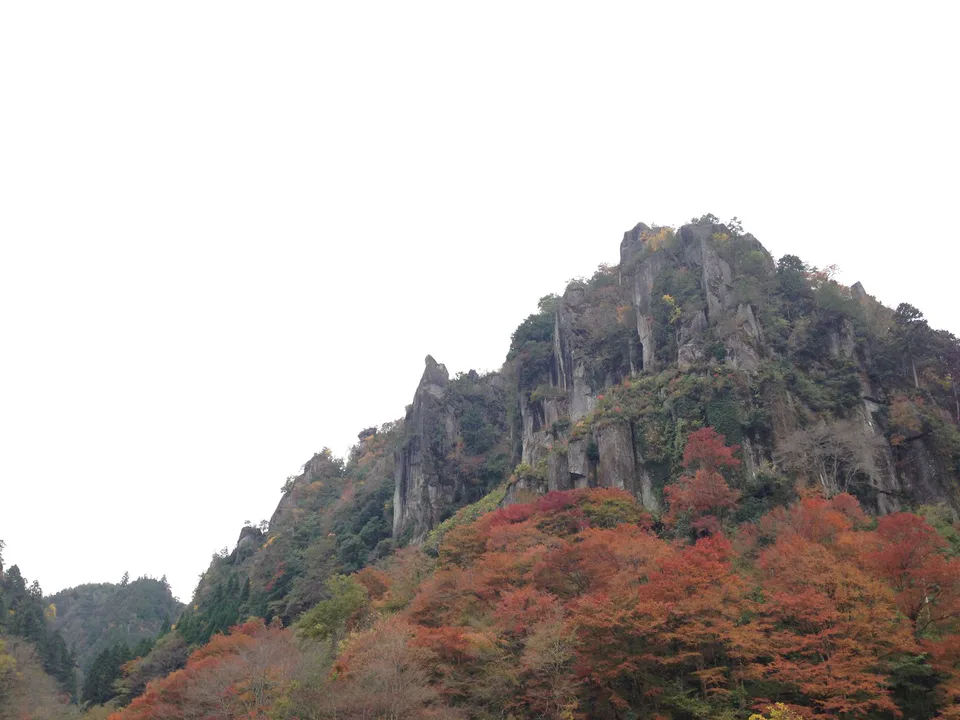
Hitome Hakkei: the viewpoint is short; the peak-weekend logistics are not
Nakatsu City lists Hitome Hakkei itself as roughly a 30–60 minute stop. The public Shin-Yabakei car park is about five minutes away on foot and has 256 standard-vehicle spaces plus bus spaces, operates 24 hours, is free and cannot be reserved. On paper, that looks easy.
In autumn, the useful time block is larger. Allow time to enter the valley, find parking, walk to the viewpoint, cross the river path if conditions permit, use the shops/toilets and then get back onto the road. Protect roughly 90 minutes around the core stop rather than treating the official 30–60 minute sightseeing estimate as door-to-door time.
Hitome Hakkei itself is not illuminated. The official page warns that lighting between the car park and viewpoint is limited. That makes “arrive after sunset to avoid crowds” a poor default. Late-autumn daylight is a hard constraint, especially if you are unfamiliar with the mountain road.
Driving day: Hitome Hakkei first, then earn the second stop
A first-time driving day should be asymmetrical. Put Hitome Hakkei first. After the viewpoint and lunch, decide whether traffic and daylight have earned you a second zone. That is safer than precommitting to four attractions and then rushing every one of them.
↔ Scroll table left or right
Checkpoint | If conditions are good | If conditions are poor |
Morning arrival | Hitome Hakkei + short riverside walk | If parking queues are severe, do not roadside-park; move to the backup plan. |
After lunch | Choose Ao-no-Domon/bridge or a lower garden | Return toward Hita or Nakatsu before darkness. |
Weather deteriorates | Shorten to flat, lower stops | Cancel gorge paths and temple slopes. |
Navigation shows a “shorter” local road | Follow official signed route | Do not improvise around closures or rockfall controls. |
The city’s official Yabakei driving model already treats Ao-no-Domon, Rakanji and Hitome Hakkei as separate driving segments. That is the clue: they form a touring route, not one walkable attraction complex.
Ao-no-Domon in 2026: “reopened” does not mean normal vehicle access
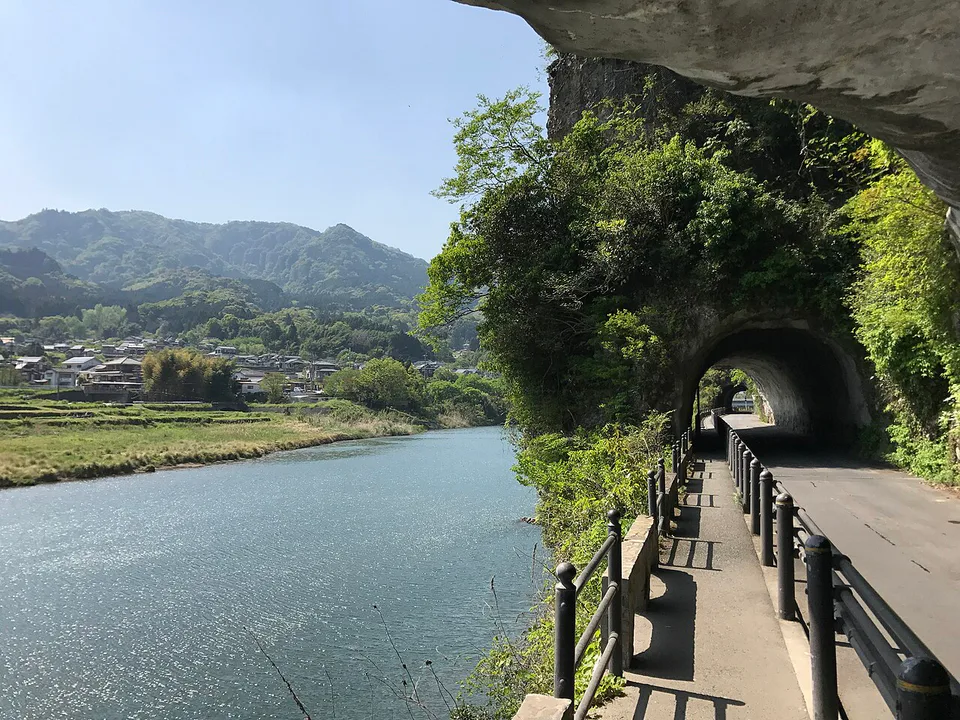
Pedestrian access resumed April 1, 2026 after restoration work, but part of the road/footpath remains unavailable, so pedestrians use a signed detour through the hand-carved tunnel side. Vehicle traffic remains prohibited through the affected section after another rockfall was discovered in March. Nakatsu City’s June administrative update still described work toward reopening vehicles.
Drivers should follow the official detour and road signs rather than trusting the shortest line in a navigation app. Travelers with a wheelchair, stroller or uncertain balance should also check the latest surface and diversion conditions before treating pedestrian reopening as full accessibility.
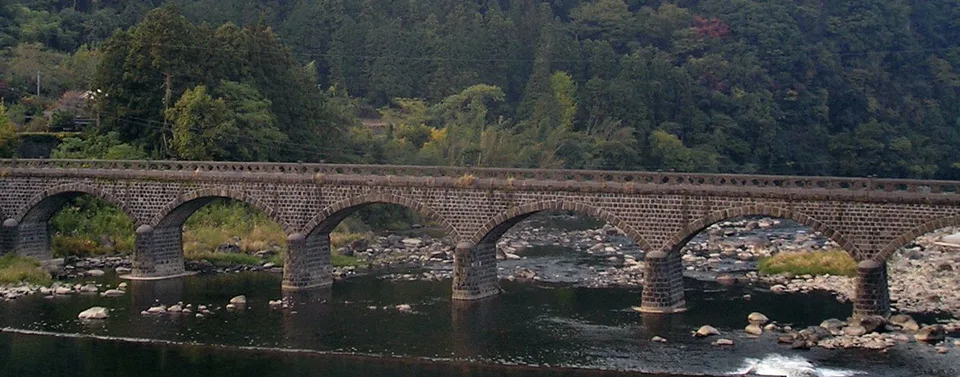
Ao-no-Domon and nearby Yabakei Bridge are a good pair because they add history and river scenery without another deep-valley transfer. They are also the strongest “we do not need to maximize foliage” option: even if color is imperfect, the tunnel story and bridge still give the stop independent value.
Rakanji: check the rules before deciding whether it belongs in your English itinerary
Rakanji is the stop most likely to be recommended by a generic “Yabakei attractions” list and then fail at the gate or on the approach. Nakatsu City’s current page says entry is 8:30–15:30 with closure at 17:00; the donation/admission is ¥1,000 (about US$6.30) for junior-high-school age and above and ¥500 (about US$3.10) for elementary-school children.
The same official page states that photography and phone use are prohibited, appropriate footwear is mandatory, groups of five or more must contact the temple by the previous day, and foreign visitors require an interpreter companion. It also says visitors who are unwell or have mobility limitations should be cautious because of steep stone steps and slow emergency access. The lift has been suspended since March 2024.
That turns the verdict into a boundary condition: Rakanji can be one of the most culturally distinctive parts of Yabakei if you satisfy the current rules and want the physical climb. If you cannot, delete it without regret. Do not convert a heritage recommendation into a stressful compliance exercise.
Without a car: be deliberately less ambitious
No-car Yabakei works best as a lower-corridor day staged from Nakatsu, but only after you confirm the exact 2026 bus for your travel date. Seasonal services and weekend patterns can change; a timetable from an old foliage blog is not enough.
The important planning principle is that public transport removes your ability to “just add Hitome Hakkei if there is time.” A sparse return bus converts a 30-minute viewpoint into a schedule anchor. Check outbound and return service first, then decide whether Ao-no-Domon, Yabakei Bridge and one additional lower stop fit between them.
If the confirmed service is poor, choose a rental car or choose a different autumn day trip. A destination is not automatically good value because access is technically possible.
Hita vs Nakatsu: your hotel should follow the corridor
Hita is the natural base for Hitome Hakkei/Shin-Yabakei and a Fukuoka-side approach. Nakatsu is stronger for Ao-no-Domon, Yabakei Bridge, Rakanji access and no-car staging. Beppu offers more hotel supply, JR convenience and onsen but sits farther from the valley.
↔ Scroll table left or right
Base | Choose it when | Trade-off |
Hita | Hitome Hakkei is the headline; arriving from Fukuoka | Less convenient for lower Hon-Yabakei. |
Nakatsu | Ao-no-Domon / lower corridor / public transport | Longer approach to Shin-Yabakei. |
Beppu | You value hotel choice and onsen backup more than shortest drive | More road time on the foliage day. |
Do not change hotels solely to save 20–30 minutes on one viewpoint. Change when the base improves the whole route. If your Kyushu plan also includes Yufuin, Aso or Beppu, use the Kyushu car-vs-public-transport guide before locking accommodation.
Compare Hita hotels on Booking.com
Compare Nakatsu hotels on Expedia
Foliage timing: use “mid-November to early December” as a window, not a booking promise
Nakatsu City’s Hitome Hakkei page describes the area as a classic autumn destination and previous local planning material places the main season around mid-November into early December. Elevation, wind and cold can move individual valleys differently, so Shin-Yabakei and lower Hon-Yabakei should be checked separately in the final week.
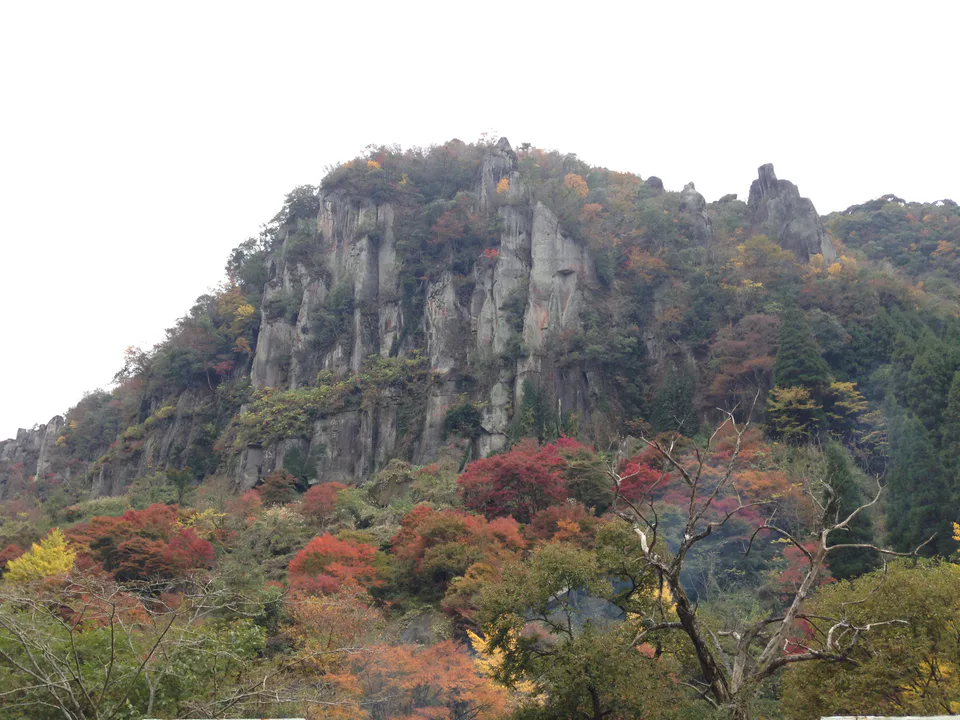
A large timing mistake is staying late because you expect illumination. Hitome Hakkei itself is not illuminated. A nearby maple has been lit in previous seasons, but a previous-year event is not a confirmed 2026 schedule. Unless Nakatsu City publishes a dated 2026 event for your trip, plan to finish the mountain portion in daylight.
Failure modes: the valley punishes small planning mistakes more than a city park
↔ Scroll table left or right
Failure mode | Why it matters | Better decision |
Following navigation through a closed road | Ao-no-Domon vehicle access remains restricted. | Use Nakatsu City detour maps and on-road signs. |
Arriving at Hitome Hakkei near dark | Limited lighting; mountain-road return. | Protect daylight even if that means deleting the second stop. |
Assuming Rakanji lift or easy access | The lift remains suspended and steep stairs are part of the visit. | Check temple rules and physical fit before travel. |
Using an old seasonal bus timetable | A missed return can destroy a no-car day. | Verify the dated outbound and final useful return. |
Forcing gorge walks after heavy rain | Rockfall and river conditions remain relevant even after rain stops. | Switch to Nakatsu, Hita or Beppu cultural/onsen plans. |
Final verdict: Yabakei rewards one strong corridor, not a four-stop checklist
Drivers: make Hitome Hakkei the main objective, then add one lower stop only if the day is running cleanly. No-car travelers: start from Nakatsu and keep the plan in Hon-Yabakei unless a verified bus makes Shin-Yabakei genuinely practical. International travelers considering Rakanji: treat the current interpreter requirement and suspended lift as a pre-trip eligibility check, not an afterthought.
The strongest counterargument is that Nakatsu City itself publishes a driving model linking Ao-no-Domon, Rakanji and Hitome Hakkei. That route is indeed possible. The reason not to copy it automatically in autumn is that peak-season parking, short daylight and foliage photography expand every stop. A sightseeing model shows connectivity; it does not guarantee that the same number of stops remains enjoyable on a crowded November weekend.
If one stop has to disappear, delete it early. Yabakei’s value comes from valley scale, rock scenery and slow autumn views—not from proving you touched every icon on the map.
Official sources and last verification
Checked August 27, 2026. Nakatsu City confirms pedestrian reopening at Ao-no-Domon from April 1 with a signed diversion and continued vehicle closure; its June update still describes work toward vehicle reopening. The city’s Hitome Hakkei page lists the 256-space public parking area, 30–60 minute viewing estimate and no illumination at the viewpoint. Its Rakanji page, updated in 2025 and currently published, lists the admission rules, interpreter condition for foreign visitors and suspended lift. USD figures are approximate at the August 27 exchange rate.
Tohoku Autumn Leaves Itinerary: 5 or 7 Days, JR EAST PASS and Hotels
How Many Nights in Lake Kawaguchi? Fuji Weather, Autumn Leaves and Hotels
Kenrokuen Autumn Leaves 2026: Early Entry, Illumination, Transport and Hotels
14-Day Japan Autumn Leaves Itinerary: Six Routes, Flights and Hotels
Lake Kawaguchi vs Lake Yamanaka for Autumn Leaves: Views, Access and Hotels