For a 14-day Japan autumn trip, choose the route in this order: seasonal access first, latitude and elevation second, flight direction third, and famous foliage spots last. Two weeks are long enough to combine two coherent regions, but still short enough that three separate mountain corridors can turn the trip into a chain of checkouts and weather bets. My default is four to five sleeping bases, one major inter-region move, two genuinely swappable flex days and an open-jaw flight whenever it removes a return across Japan.
As of August 25, 2026, a precise nationwide 2026 peak-date map is not yet something I would build a non-refundable route around. The Japan Weather Association says its autumn-foliage forecasts are released about three times during September–November and that high-elevation areas normally colour earlier than surrounding lowlands. Use that pattern to choose the corridor now. Use the 2026 forecasts and live conditions later to move individual days inside the corridor.
↔ Scroll table left or right
Travel window | Best route family to start with | Main reason | Hard warning |
September | Hokkaido / high alpine Japan | High latitude and elevation colour first | Do not build the trip around lowland Kyoto foliage |
October | Hokkaido south / Tohoku / alpine Chubu, depending on date | The useful band moves south and lower through the month | One generic “October Japan” route is too broad |
Late Oct–early Nov | Tohoku → Tokyo or Tokyo → Chubu | Mountains first, lower cities later | Do not make Nikko, Kawaguchiko and a Chubu mountain corridor all mandatory |
Mid-November | Tokyo + Kyoto / Setouchi | Lowland city and temple foliage becomes more useful | Kamikochi transport season ends November 15 |
Late Nov–early Dec | Kyoto / Setouchi / Kyushu | Shift south and lower | Tateyama Kurobe Alpine Route ends November 30; do not treat December as an alpine extension |
First filter: can the mountain route physically operate on your dates?
This is the missing step in many autumn itineraries. Foliage timing is flexible; seasonal transport closures are not.
Kamikochi is a hard example. The official Kamikochi site describes the sightseeing season as ending on November 15, after which facilities close for winter and public transport no longer runs beyond the Kama Tunnel. The 2026 Sawando/Akandana and long-distance bus information is also built around an April 17–November 15 operating window. A traveller arriving in Matsumoto on November 18 cannot rescue a Kamikochi plan by saying the autumn colours were late that year. The transport product is already gone.
The Tateyama Kurobe Alpine Route has a different boundary. Its official 2026 season runs April 15–November 30, and it publishes a separate November 4–30 timetable. That means November 10 and November 25 are both technically inside the operating season, but they should not be treated like the same mountain day: daylight, cold, snow and service patterns can materially change the experience.
So before looking at a foliage forecast, run every mountain idea through three questions:
Is the transport route open on the exact date?
Is the timetable still frequent enough to make a day trip resilient?
If weather closes or degrades the mountain day, is there a lower-elevation substitute from the same hotel base?
If the answer to the first question is no, delete the destination. If the answer to the third is no, consider an overnight only when the mountain itself is important enough to justify the weather risk.
Second filter: choose a seasonal corridor, not an exact peak date
The Japan Weather Association says autumn-foliage forecasts are normally released about three times between September and November. Its methodology combines past foliage data and temperature information, and it notes the broad pattern that colour begins around September in Hokkaido and high-altitude Honshu before progressing southward.
That suggests a four-stage booking process:
Now: choose the latitude/elevation band and international airports.
After the first 2026 foliage forecast: choose the principal corridor—Hokkaido, Tohoku southbound, Tokyo–Chubu, Tokyo–Kyoto or Kyoto–Setouchi/Kyushu.
Seven to ten days before each outdoor block: compare live foliage reports, webcams, weather and transport operation.
Twenty-four to forty-eight hours out: swap days inside the same base rather than adding a five-hour transfer to another prefecture.
The central rule is change elevation before changing region. If a lowland garden is still green, use a higher accessible site nearby. If the high ground is past peak, move lower. A two-week trip becomes resilient when the route can absorb a one-week timing error without changing hotels.
A flex day only counts if you can actually move it
“Leave two buffer days” sounds sensible but can be meaningless when every hotel, train and ryokan dinner is locked to a specific date. I would split flexibility into two categories.
↔ Scroll table left or right
Type of day | What should be movable | Good examples |
True flex day | Outdoor target can move by 1–2 days without changing hotel | Nikko from Tokyo, a Kyoto foliage corridor, a Sapporo day trip |
False flex day | Label says “free,” but the next hotel, limited transport or ryokan dinner fixes the sequence | A mountain overnight between two non-refundable bases |
Flight-protection day | Keep the final 24 hours geographically conservative | Tokyo, Osaka/Kyoto side, Sapporo or Fukuoka before departure |
For fourteen days, place one true flex day around Days 5–7 and another around Days 10–12. Do not park both on Day 13. A buffer beside the airport cannot repair the alpine day that rained out a week earlier.
When choosing hotels, this also changes what “flexible cancellation” is worth. The premium for a cancellable city hotel can be useful if it allows one night to slide after a forecast update. A fully prepaid mountain sequence may be cheaper on the booking screen but more expensive in lost option value.
Set a hotel-move budget before choosing the six route families
Fourteen calendar days normally produce about twelve useful sightseeing days after arrival and departure. My default ceiling is four to five sleeping bases. Every additional checkout should buy something that cannot be reproduced as a day trip: a sunrise, a quiet post-crowd evening, a ryokan dinner, an early trailhead or a transport progression that moves the trip forward.
A strong two-region shape is:
arrival base → outdoor corridor → recovery/flex base → one major transfer → second corridor → departure base.
A weak route is Tokyo → Nikko → Kawaguchiko → Matsumoto → Takayama → Kanazawa → Kyoto → Hiroshima → Fukuoka because every place might have autumn colour. The trains can all work individually while the trip as a whole still fails the deletion test: too many mornings are spent packing, finding platforms and checking in rather than using the best light and weather.
Use luggage forwarding between major bases when it lets you carry only a one- or two-night bag into a mountain segment. Do not assume rural same-day delivery.
Route 1 — Hokkaido in depth: the early-season answer
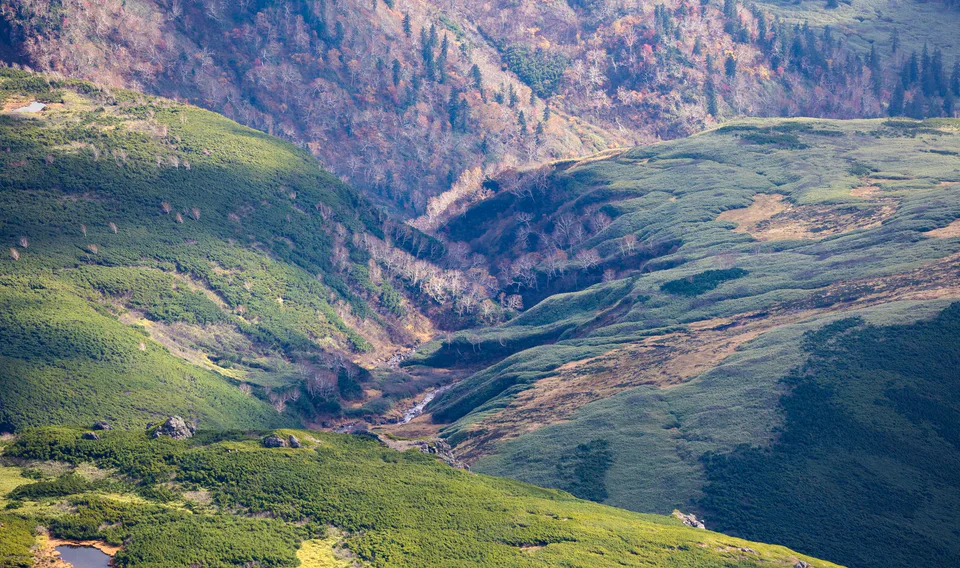
Use Hokkaido when the trip is early enough that high latitude and elevation are the main autumn product. A practical two-week structure is Asahikawa for the first mountain access, Sapporo as the flexible urban base, then a southern finish such as Jozankei, Onuma or Hakodate depending on the date and flights.
Choose one primary Daisetsuzan mountain system—Asahidake or Kurodake/Sounkyo—rather than making both mandatory. If wind, frost or early snow removes the high mountain day, Sapporo and lower-elevation alternatives still protect the trip.
An Asahikawa-in / New Chitose- or Hakodate-out flight can be worth more than squeezing one more attraction into the itinerary because it prevents the whole route from folding back on itself.
Route 2 — Tohoku → Tokyo: let the route descend with the season
For October, Tohoku works best as a southbound or lower-elevation progression. Start around Aomori/Hachinohe or Morioka, use Sendai as the second transport base, then finish in Tokyo. Oirase, Hakkoda, Hachimantai, Kurikoma, Naruko and Yamadera should not all be hard requirements.
Pick two or three outdoor corridors and make the rest substitutes. Tokyo then does two jobs: lower-elevation autumn and a weather/flight recovery base. That is better than using Tokyo only as a shopping night after six consecutive outdoor transfers.
Route 3 — Tokyo + Chubu: the exact November date matters
This is the route family where the seasonal-access filter matters most. Late October to early November can support Tokyo plus one Chubu mountain corridor. A reasonable shape is Tokyo 4 nights, one Nikko or Kawaguchiko overnight only if it earns its hotel move, then Matsumoto plus one onward corridor.
Do not put Kamikochi, the Tateyama Kurobe Alpine Route, Okuhida, Shirakawa-go and the Nakasendo into one “Japanese Alps” bucket. They have different gateways and seasonal constraints. In 2026, Kamikochi’s normal sightseeing/public-transport season ends November 15, while the Tateyama Kurobe Alpine Route remains scheduled through November 30. That date difference alone can reverse which Chubu route is viable.
If your dates straddle November 15, design the itinerary so Kamikochi comes before that boundary and the lower/east-west corridor comes later. Do not book the route in the opposite order and hope foliage timing will compensate.
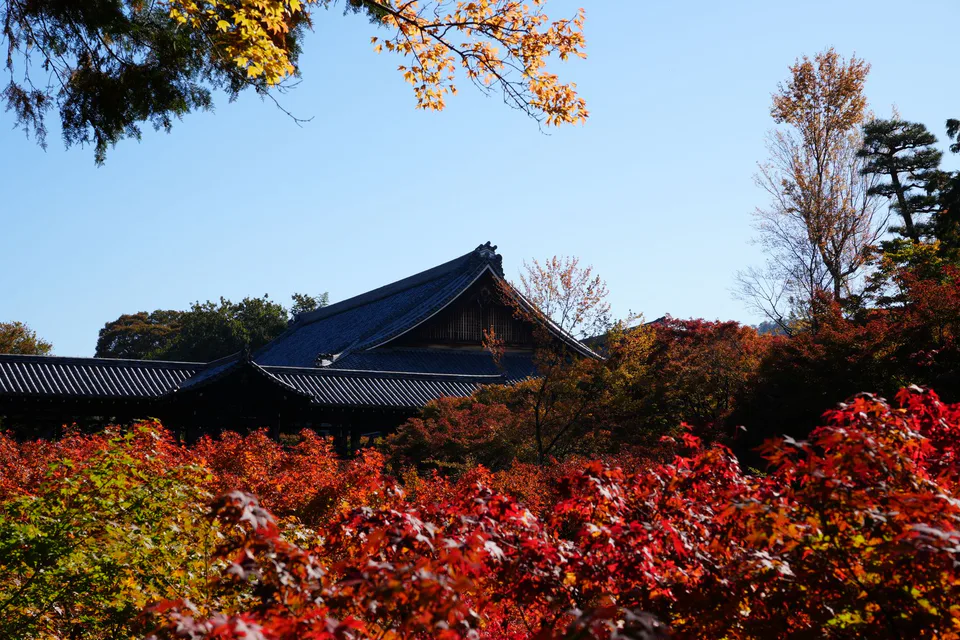
Route 4 — Tokyo + Kyoto: the lowest-regret November first trip
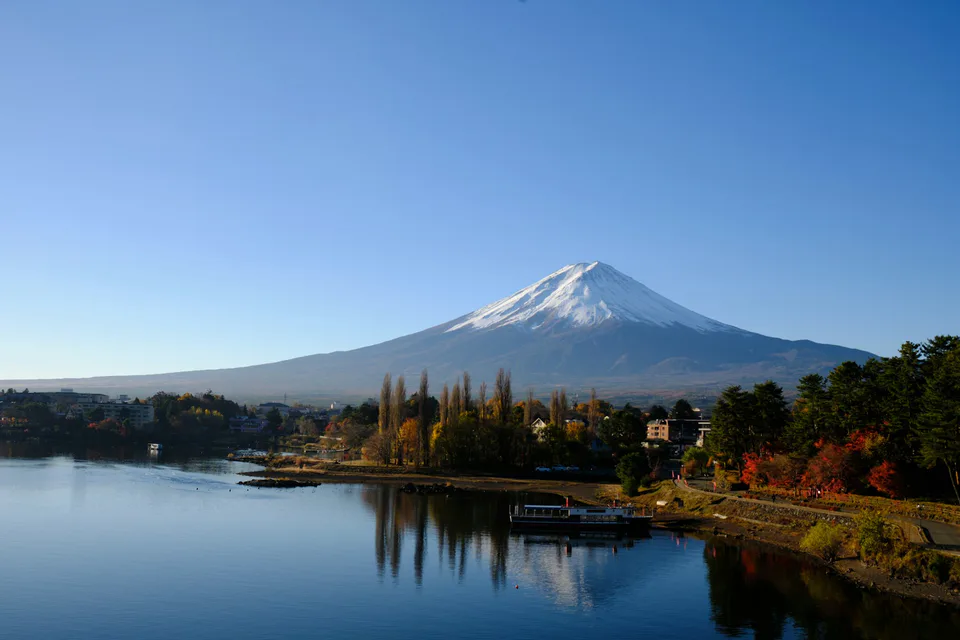
For many first-time visitors in November, Tokyo + Kyoto remains the most resilient two-region answer. Five nights in Tokyo and roughly five in Kyoto/Kansai leave enough room for one or two carefully chosen side trips plus flex/transfer time.
The important subtraction is what not to add. Tokyo does not need Nikko + Kawaguchiko + Hakone. Kyoto does not need Takao + Kibune + Arashiyama + Higashiyama + Uji + Nara + Koyasan. Pick one or two autumn corridors from each base and let the others stay as substitutes.
Open-jaw international flights—Tokyo in and Kansai out, or the reverse—deserve to be priced before a nationwide rail pass. Removing the final return Shinkansen can save both money and a hotel-move day even when the airfare itself is slightly higher.
Route 5 — Kyoto + Setouchi: better when weather tolerance matters
For mid-to-late November, Kyoto + Okayama/Kurashiki + Hiroshima/Miyajima offers more lowland and urban fallbacks than a mountain-heavy route. It is particularly strong for families, older travellers or anyone who wants autumn scenery without stacking multiple alpine weather bets.
If Shikoku enters the plan, choose one corridor—Shodoshima/Kankakei or Iya, not both by default—and make it replace an existing night. A map that is geographically linear can still be operationally messy when ferries, island buses and mountain lodging are all time-sensitive.
Route 6 — Kyushu in depth: move south for the late end of autumn
Late November into early December can make Kyushu a stronger autumn product than forcing already-finished high mountain areas. Use Fukuoka as the arrival/transport base, add one Oita onsen block such as Yufuin or Beppu, then choose one southern or central extension: Kumamoto/Aso, Nagasaki/Unzen or another corridor that fits the departure airport.
Do not rent a car for fourteen days because one mountain sector benefits from one. Use rail/bus for the city spine and a partial rental where it actually changes access. Volcanic restrictions, fog or bad weather can then remove one mountain day without deleting the whole route.
JR Pass: the purchase channel now matters as well as the route
Price the route first. The official JAPAN RAIL PASS site currently lists the 14-day Ordinary pass at JPY 80,000 when purchased through the official online service. For Exchange Orders purchased through designated overseas agencies, JR lists JPY 80,000 through September 30, 2026 and JPY 84,000 from October 1, 2026.
That is a useful 2026 boundary because many autumn travellers will be buying around the change. Do not write “the 14-day JR Pass costs JPY 84,000 from October” without naming the purchase channel.
More importantly, the pass should not invent journeys. Tokyo + Kyoto with one major Shinkansen move does not automatically justify a nationwide pass. Hokkaido, Tohoku and Kyushu may be better served by regional products; a route with domestic flights or buses may need no nationwide pass at all. Compare the journeys you already intend to take, then add the convenience value separately.
NOZOMI and MIZUHO are also not included in the base entitlement. If you want those trains, include the separate pass-holder supplement rather than treating every Shinkansen departure as identical.
The two-week route should survive three failure tests
Failure test 1 — foliage is one week late: can you move higher without changing hotels? If not, your first corridor is too rigid.
Failure test 2 — the mountain day is cancelled by weather: can the same base produce a useful city, onsen, museum or lower-elevation day? If not, you have concentrated too much value in one weather event.
Failure test 3 — one transfer day slips: does that destroy a ryokan dinner, the last mountain bus or the final flight? If yes, move the hard deadline earlier in the trip or add margin before it.
This is the deletion test for autumn itineraries: remove one mountain day. If the entire 14-day route collapses, it was never resilient enough.
Final verdict: use two weeks to widen your timing window, not your checklist
For September, choose Hokkaido or another truly high-elevation corridor. For October, use Hokkaido south, Tohoku or one alpine corridor depending on the exact dates. For November, Tokyo + Kyoto or Kyoto + Setouchi is the safest first-trip default; late November and early December increasingly favour lower western Japan and Kyushu.
Before booking any mountain overnight, check the seasonal-access hard edge. Kamikochi ending November 15 and the Tateyama Kurobe Alpine Route ending November 30 are more important than a speculative August peak-date map. Then build two true flex days, not merely two blank labels surrounded by non-refundable bookings.
If the route still contains six sleeping bases, three mountains and two long backtracks after that exercise, delete something. Two weeks are most valuable when they give autumn weather room to move.
References and verification date
Japan Weather Association — autumn-foliage forecast methodology and release season · Kamikochi Official Website — sightseeing season and winter closure · Tateyama Kurobe Alpine Route — 2026 operating season and ticket schedule · Tateyama Kurobe Alpine Route — 2026 November timetable · JAPAN RAIL PASS — current online and overseas-agent prices. Checked August 25, 2026. Foliage timing, mountain access, transport and pass pricing can change; verify the exact travel dates before departure.
Naruko Gorge 2 Day Itinerary: 2026 Trains, Trails, Onsen and Hotels
Free Autumn Leaves in Kyoto 2026: Parks, Paths, Ginkgo and Routes
4-Day Shikoku Autumn Leaves Itinerary: Takamatsu, Shodoshima, Iya or Matsuyama?
Hokkaido Autumn Leaves 2026: Daisetsuzan, Sapporo and Hakodate Routes
Iya Valley Autumn Leaves Guide: Driving, Buses, Vine Bridges, Onsen and Hotels