For a first visit to Arashiyama, I would give the core area about three hours: go to the Bamboo Grove and Kameyama Park side early, use Tenryu-ji as the fixed paid stop, then finish around Togetsukyo Bridge. If you have four to five hours, add either Arashiyama Monkey Park or one quieter Sagano/Okusaga extension—not both. A full day only makes sense when you deliberately want deeper Sagano, cycling, a long lunch or another substantial west-Kyoto activity.
The hidden planning problem is geography. Arashiyama has three useful rail arrivals—JR Saga-Arashiyama, Randen Arashiyama and Hankyu Arashiyama—and they do not place you at the same edge of the district. The best route therefore starts with two decisions: how many hours are you giving Arashiyama, and which attraction must come first?
↔ Scroll table left or right
Time available | What I would do | What to cut |
2–3 hours | Bamboo/Kameyama → Tenryu-ji garden → Togetsukyo | Monkey Park and deep Sagano |
4–5 hours | Core route + Monkey Park or one Okusaga/Sagano extension | Do not stack both extensions unless the group walks quickly and genuinely wants them |
6+ hours | Core + one major extension + a real lunch/rest block | Still avoid collecting every temple simply because you have a full day |
Older travellers / limited mobility / very hot day | Bamboo, Tenryu-ji and river | Monkey Park first; its summit requires an uphill walk |
Autumn, Nov 14–30, 2026 | Consider Tenryu-ji’s 07:30 early garden opening as part of the first block | Do not assume the normal 08:30 opening on those dates |
Choose the station by the first and last thing you want to do
“Take the train to Arashiyama” is incomplete advice because the three main rail stations sit in different positions. Tenryu-ji’s current official access page puts Randen Arashiyama about five minutes from the temple, JR Saga-Arashiyama about 13 minutes away and Hankyu Arashiyama about 15 minutes away. Hankyu also approaches from the south side of the river, which makes it especially relevant when Togetsukyo or Monkey Park is part of the route.
↔ Scroll table left or right
Station | Best fit | Main trade-off |
JR Saga-Arashiyama | Starting from Kyoto Station; rail-heavy Kyoto day | You still have a meaningful walk into the core sightseeing area |
Randen Arashiyama | Tenryu-ji / central Arashiyama; trips that already fit the Randen or subway-Randen connection | It is not automatically the best route from every Kyoto hotel |
Hankyu Arashiyama | Starting around Kyoto-Kawaramachi; bridge or Monkey Park is important | Tenryu-ji and the Bamboo Grove are on the other side of the core route |
Kyoto City’s current visitor guidance says JR is the convenient option from Kyoto Station and notes that the Sagano Line can be crowded. It also recommends subway + Randen as an alternative and warns that a direct bus from Kyoto Station can be both crowded and time-consuming. From Shijo-Kawaramachi, the official guidance points travellers toward Hankyu via Katsura.
The ValueNavi rule is simple: do not automatically return from the same station you arrived at. If the day naturally finishes south of the river after Monkey Park, Hankyu may be a cleaner exit for some onward routes. If you finish in northern Sagano, forcing the group back across the whole district just to reuse the arrival station can create unnecessary walking. Check the next destination before deciding the exit.
If the Bamboo Grove matters, spend your crowd advantage there first
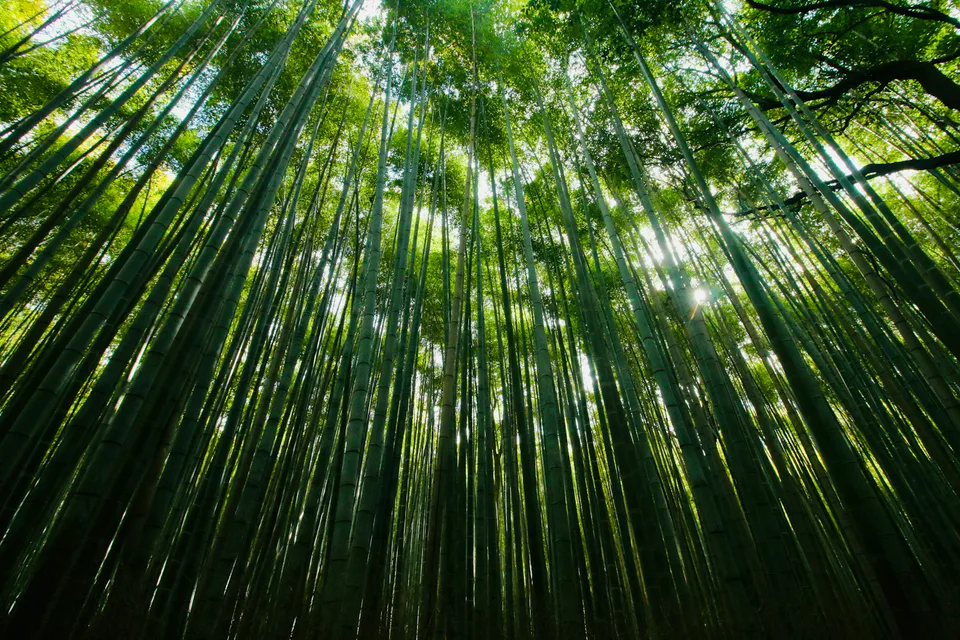
Kyoto’s official tourism site describes the Bamboo Forest and Togetsukyo as consistently busy and provides a current congestion forecast with live cameras for both. That is useful because “go at 7:00” is not a guarantee of an empty path. Weather, season, weekends and tour-group timing can still change the feel of the area.
For a traveller who cares about bamboo atmosphere or photography, I would use the earliest part of the morning on the Kameyama/Bamboo side rather than saving the grove for late morning. Once the corridor is busy, waiting for an empty frame usually has poor value. Move on to the garden, river or a quieter Sagano street.
If low crowds are not a priority, the answer changes. A family that values breakfast and an easier start more than photography does not need to turn the entire Kyoto morning into a race. Use the official congestion forecast on the actual day and accept that Arashiyama’s famous core is popular.
Tenryu-ji is the best fixed anchor because its hours and price are predictable
Tenryu-ji’s garden currently opens 08:30–17:00, with last admission at 16:50. Garden admission is ¥500 for high-school students and adults, ¥300 for elementary and junior-high students and free for preschool children. Entering the main buildings costs an additional ¥300. The separate Cloud Dragon viewing costs another ¥500 and is only available on specified days and periods.
For most first-time half-day routes, I would prioritise the garden rather than automatically paying for every add-on. The garden gives the route a reliable anchor after an early outdoor walk. Buildings and the Cloud Dragon become optional when time, heat or temple fatigue is more important than completion.
There is a useful 2026 exception: from November 14 to November 30, Tenryu-ji currently schedules special early admission to Sogen Pond Garden from 07:30. On those dates, the usual “bamboo first, wait for the temple to open” sequence can change. An early temple garden can be part of the first sightseeing block instead of a later anchor.
Monkey Park is a 60–90 minute planning block, not a quick add-on
Arashiyama Monkey Park Iwatayama currently lists admission at ¥800 for high-school age and above and ¥400 for children aged four through junior-high school, with entry hours around 09:00–16:00. Kyoto’s official family-travel material describes the monkey area at about 160 metres elevation and an approximately 20-minute uphill walk from the entrance to the summit area.
That changes the itinerary. Twenty minutes uphill, time at the top and the descent mean I would reserve roughly 60–90 minutes for the park as a ValueNavi planning allowance. That total is not an official duration; it is a practical buffer derived from the published climb plus time needed to see the monkeys and return.
Add Monkey Park when: the group is active, animals and the city view are a real priority, and Togetsukyo is already part of the route. Skip it when: you have only three hours, the day is very hot, someone has limited mobility, or the Bamboo Grove and temples are the actual reasons for coming.
For families, “monkeys” can sound like the obvious child-friendly choice, but the climb is the hidden cost. The park can be excellent with school-age children who enjoy walking; it is a different proposition with a stroller, tired toddler or older relative. Check the park’s current operating status before committing because closure days are irregular.
Okusaga is the better extension when you want quieter streets rather than another headline attraction
Kyoto City’s official Saga/Arashiyama guide explicitly separates the crowded Bamboo Forest/Togetsukyo core from quieter Okusaga, highlighting temples and historic scenery farther north and west. This is the extension I would choose when the goal is atmosphere, walking and smaller temples rather than monkeys or a summit view.
The trade-off is time. Kyoto’s official hidden-temple guide shows how quickly walking distances grow: locations such as Gio-ji, Adashino Nenbutsu-ji and Otagi Nenbutsu-ji sit progressively farther from the main stations. Otagi, for example, is deep enough in Arashiyama that the guide suggests considering a bus back toward Saga-Arashiyama or Hankyu Arashiyama.
That is why “northern Sagano” should not be a vague fourth bullet after Bamboo Grove, Tenryu-ji and Monkey Park. If Okusaga wins, let it replace Monkey Park. A full-day version can go deeper, but a half-day should have only one extension.
Three routes that are actually different trips
Core first-timer route — about 3 hours
Start early around Kameyama Park and the Bamboo Grove, move into Tenryu-ji when the garden opens, then finish around Togetsukyo. This is the cleanest answer when Arashiyama shares the day with another Kyoto district.
What you gain: the three experiences most people actually came for. What you sacrifice: Monkey Park and deeper Sagano. For a short first Kyoto trip, that sacrifice is usually rational.
Active family / animal route — about 4–5 hours
Use the same core, then cross toward Monkey Park and reserve enough time for the uphill walk, summit and descent. If the park becomes the family highlight, do not add several northern temples afterward just because the map shows them nearby.
What you gain: a genuinely different experience from temples and bamboo. What you sacrifice: quieter northern streets and some energy for the rest of Kyoto.
Slow Sagano route — about 5–6 hours
Use Bamboo Grove and Tenryu-ji as the core, then continue into one coherent northern Sagano/Okusaga block instead of crossing the river for Monkey Park. Build in lunch rather than treating every minute as attraction time.
What you gain: less repetition and more contrast with the crowded core. What you sacrifice: the monkey summit and a faster return to central Kyoto.
When does Arashiyama deserve a full day?
A full day is justified when the extension itself is part of the reason for visiting. Kyoto City publishes a Saga–Arashiyama cycling route of roughly five hours that goes deeper into Sagano and Okusaga; that is a different product from a three-hour Bamboo Grove visit. A full day can also make sense when you want a slow meal, multiple smaller temples and substantial time by the river.
A full day is weak value when it is created by stacking famous names with no route logic. Bamboo Grove + Tenryu-ji + bridge + Monkey Park + several northern temples is technically a list of nearby places, but it forces the group to keep changing direction and activity type. The better question is what you want the second half of the day to feel like: active, quiet or finished.
Rain, summer heat and autumn should change what you cut
Light rain does not automatically ruin Arashiyama. Bamboo, moss, the temple garden and riverside scenery can still be worthwhile, although footwear and walking comfort matter. If the weather is unpleasant enough that the uphill Monkey Park extension no longer sounds appealing, cut the climb before cutting the whole district. For a wider weather backup, use the Japan rainy-day itinerary guide.
Summer heat should make the same decision stricter. A long exposed walking day plus the Monkey Park climb is not equivalent to a cool autumn half-day. Tenryu-ji itself shortens the summer viewing hours of the indoor Cloud Dragon on some dates because of heat risk, which is a useful reminder not to treat every optional indoor add-on as a guaranteed afternoon escape.
Autumn increases both visual payoff and congestion. If autumn colour is the reason for the visit, use the dedicated Arashiyama autumn leaves guide for seasonal timing, and remember the special 07:30 Tenryu-ji garden opening from November 14–30, 2026.
Do not pair Arashiyama with another attraction that needs the same early-morning advantage
A common planning error is pairing Arashiyama with Fushimi Inari and expecting both to feel like quiet early-morning visits. They cannot both own the same first two hours of the day. The combination is physically possible, but one of the two will usually be visited later and busier.
If Arashiyama gets the morning, pair the afternoon with a destination whose value does not collapse when you arrive after lunch. A central Kyoto activity such as the Kyoto tea ceremony guide can fit better than another distant crowd-sensitive outdoor district. If the whole Kyoto itinerary is already overloaded, use the first-time Japan itinerary to decide whether Arashiyama deserves the half-day at all.
Large luggage should not be part of the sightseeing route
Arashiyama involves station walking, narrow pedestrian areas and potentially a hill or long Sagano extension. A transfer day with full-size suitcases therefore changes the trip far more than the simple rail time suggests. Leave large bags at the hotel when returning to the same base, or solve the intercity move separately with luggage forwarding when the next hotel can receive them.
The point is not that Arashiyama is impossible with luggage. It is that carrying the bags converts a scenic walking district into a storage-and-navigation problem. On a short Kyoto stay, protecting the sightseeing hours is usually worth more than forcing the luggage to follow you.
Final verdict: one core route, one extension at most
For most first-time visitors, Arashiyama is a half-day, not a full-day obligation. Give the core about three hours: Bamboo/Kameyama early, Tenryu-ji as the paid anchor, then Togetsukyo. If you have another one to two hours, choose one extension based on what the group actually wants: Monkey Park for animals and an active climb, or Okusaga for quieter walking and smaller temples.
Make it a full day only when the deeper district itself is part of the trip. The recommendation reverses for travellers who love slow temple walks, cycling or a deliberate west-Kyoto day; it becomes even shorter for limited mobility, summer heat or a Kyoto itinerary already competing for scarce mornings.
The most important choice is not whether you arrive at 07:00 or 08:00. It is whether you stop adding attractions once the route has already delivered the experience you came for.
Edogawa Fireworks 2026: The Best Free Side to Watch, When to Arrive and How to Get Out
Japan January Weather: What to Wear in Tokyo, Sapporo and Okinawa
Kochi Yosakoi Festival 2026: Which Day, Which Venue and Do You Need Paid Seats?
Hotel Sonia Otaru: Is a Canal-View Room and Rooftop Onsen Worth the 8-Minute Station Walk?
Is Fukuoka Worth Visiting on a First Japan Trip? When to Add It—and When to Skip It
References
Kyoto City Official Travel Guide — Saga & Arashiyama · Kyoto City Official Travel Guide — Comfortable access to Saga/Arashiyama · Kyoto Travel Congestion Forecast · Tenryu-ji — admission, hours and access · Kyoto Prefecture Tourism Federation — Arashiyama Monkey Park Iwatayama. Checked August 25, 2026. Opening hours, closures and transport conditions can change; recheck the actual travel date.