
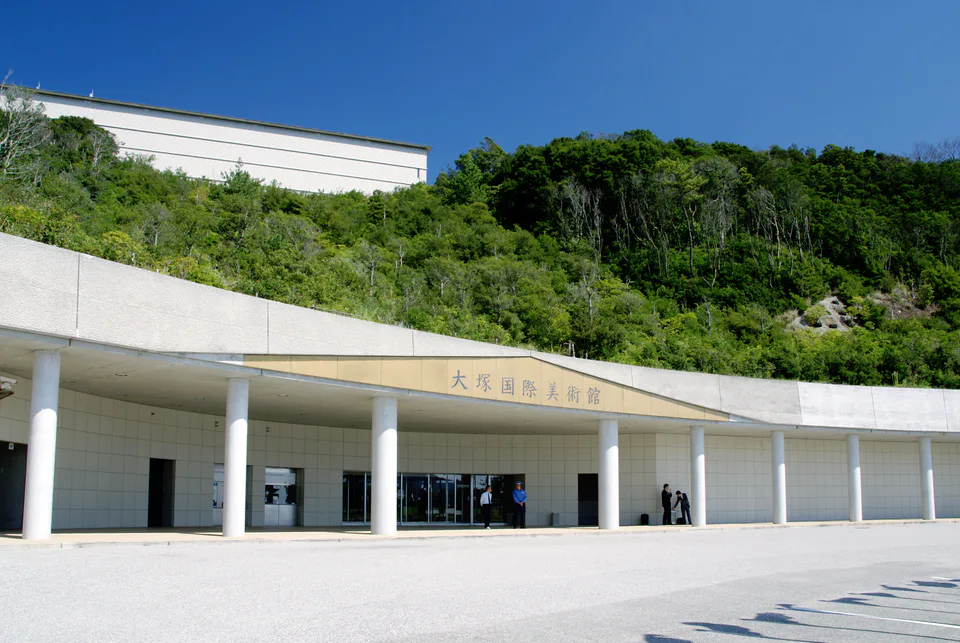
Otsuka Museum of Art 2026 is easy to misunderstand. The ¥3,300 adult ticket (about US$20.70 at the August 27 exchange rate) is not the first question; the first question is whether you are happy paying to see reproductions. The museum recreates more than 1,000 Western masterpieces from 26 countries at full scale on ceramic boards, including the Sistine Chapel murals, Mona Lisa, Sunflowers and Guernica. If the emotional point of a museum visit for you is standing in front of an original canvas, this is a perfectly sensible place to skip. If you care more about scale, art-history context and comparing works that normally live thousands of kilometres apart, it can be one of Shikoku’s most unusual half-day experiences.
The bigger cost is time. The museum’s own viewing route is about 4 km. Add three to five hours inside plus the journey to Naruto and this stops being a casual rainy-day gallery. From Takamatsu, the two current direct-bus patterns turn the outing into roughly an eight-hour block from departure to return. That is why ValueNavi would judge this museum by route fit and time budget first, ticket price second.
ValueNavi decision table: who should give Otsuka half a day?
↔ Scroll table left or right
Your situation | ValueNavi call | Why | Main trade-off |
You are already staying in Naruto or northern Tokushima and enjoy art history | Strong yes | The unusual 4 km collection becomes the main activity rather than a transport project | You still need three or more hours of attention and walking |
You are based in Takamatsu and have a full day available | Yes, if this beats Naoshima for you | Two direct bus round trips make the day operationally simple | The bus timetable effectively commits about eight hours of the day |
You only care about original artworks | Skip | The museum is explicitly built around ceramic reproductions, not originals | No amount of scale or quantity changes that premise |
You have only 60–90 minutes | Skip | A 4 km route and 1,000+ works punish rushed completion | You pay the same ¥3,300 while using only a fraction of the museum |
Rain has disrupted a Tokushima/Naruto day | Excellent replacement | The museum can absorb a long indoor block without becoming filler | Bad weather does not remove the bus or driving time to Naruto |
The decisive boundary is simple: Otsuka is a destination museum, not a museum-shaped gap filler. If Naruto already fits the trip, the unusual premise becomes a strength. If Naruto is a new detour and you are lukewarm about reproductions, the same museum can become an expensive use of a day even though the ticket itself is not particularly high.
ValueNavi Attraction Score: 8.9/10 from Naruto, 7.2/10 as a Takamatsu day trip
To keep attraction comparisons consistent across ValueNavi, this score uses the same seven positive-direction dimensions: uniqueness 25%, time efficiency 15%, route fit 15%, weather resilience 10%, booking flexibility 10%, crowd resilience 10% and value for money 15%. A higher score is better. This is an editorial model built from verified operating facts and itinerary friction, not an official rating or a claim of first-hand testing.
Dimension | Naruto / nearby base | Takamatsu day trip | What changes |
|---|---|---|---|
Uniqueness | 9.5/10 | More than 1,000 full-scale ceramic reproductions and architectural environments are genuinely unusual | |
Time efficiency | 4.5/10 | The same 3–5 hour museum becomes an all-day commitment once tied to Takamatsu bus departures | |
Route fit | 4.0/10 | Naruto removes most of the detour; Takamatsu adds a cross-prefecture return journey | |
Weather resilience | 9.5/10 | The core visit is indoors | |
Booking flexibility | 9.0/10 | Same-day admission remains available; check the calendar and your transport rather than treating this like a scarce timed-entry attraction | |
Crowd resilience | 7.5/10 | The museum is physically large, but major rooms and seasonal periods can still concentrate visitors | |
Value for money | 6.5/10 | ¥3,300 buys much more value when the day is not dominated by the transfer |
The score is deliberately scenario-sensitive. The museum itself does not become worse when you sleep in Takamatsu; the trip around the museum becomes less efficient.
The museum sits in Naruto Park, Tokushima Prefecture. It is a destination museum, not a downtown gallery you casually pass between train connections.
Otsuka Museum of Art 2026 only works if you accept the premise: these are ceramic reproductions
There is no bait-and-switch here. Otsuka openly describes itself as a museum of Western masterpieces reproduced in faithful colours and original dimensions on ceramic boards. That distinction matters because it changes what “worth it” means. You are not paying for provenance, brushstrokes ageing on canvas or the thrill of seeing the object touched by the artist. You are paying for a comparison machine.
That machine can do things original-collection museums cannot. A room-scale recreation lets you understand how frescoes sit inside architecture. Different versions and related works can be placed close enough to compare without flying between Paris, Madrid, Florence and New York. For someone learning Western art history, or travelling with a companion who gets lost when every museum assumes prior knowledge, that can be surprisingly useful.
The counterargument is equally valid: if authenticity is the point, a technically impressive ceramic board is still a reproduction. No amount of “1,000 masterpieces” fixes that. This is one of the rare museums where deciding what you value before leaving the hotel saves more regret than reading another top-ten list.
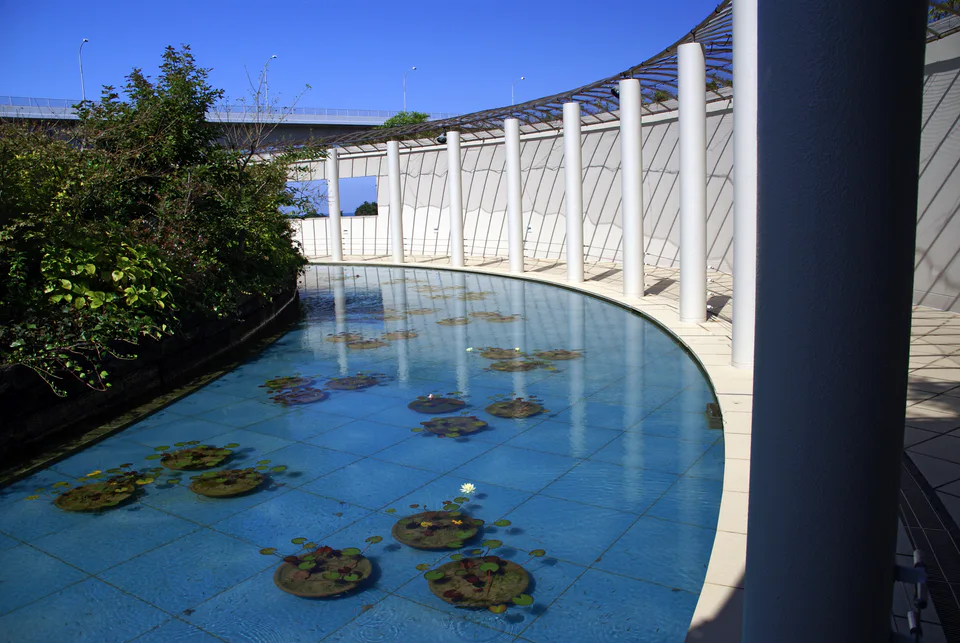
The value is in seeing scale and context together, not pretending a ceramic reproduction has become the original artwork.
The ¥3,300 price looks very different at 90 minutes, 3 hours and 5 hours
The official same-day admission is currently ¥3,300 for adults (about US$20.70), ¥2,200 for university students (about US$13.80) and ¥550 for elementary, middle and high-school students (about US$3.45). USD conversions use roughly ¥1 = US$0.00627 on August 27, 2026 and are rounded for planning; your card rate will move.
↔ Scroll table left or right
Time you actually spend inside | Adult ticket cost per museum hour | ValueNavi reading |
90 minutes | About ¥2,200/hour (US$13.80/hour) | Poor fit unless you have a very specific shortlist of rooms |
3 hours | About ¥1,100/hour (US$6.90/hour) | Reasonable lower-bound visit if you choose priorities instead of trying to complete everything |
5 hours | About ¥660/hour (US$4.14/hour) | Strong ticket value for visitors who genuinely enjoy the premise and can sustain the attention |
This is not a claim that “more hours are always better.” Museum fatigue is real. The point is that the headline admission price tells you less than the amount of the collection you can enjoy without rushing.
The 4 km route matters more than the “1,000+ works” headline
The official FAQ says the appreciation route is about 4 km and the museum contains roughly 1,000 works. That is a much more useful planning number than the collection count. Four kilometres indoors still means four kilometres of walking, stopping, reading and repeatedly deciding whether your brain has room for another masterpiece.
Trying to “complete” the museum can turn an interesting idea into visual homework. A better strategy is to pick your priorities before arrival: Renaissance, religious art, Impressionism, Van Gogh, Picasso, architectural recreations or a few specific famous works. Visitors with no preference at all should use the museum’s model courses and floor map, otherwise the final galleries risk becoming a blur of paintings you technically saw but stopped absorbing an hour earlier.
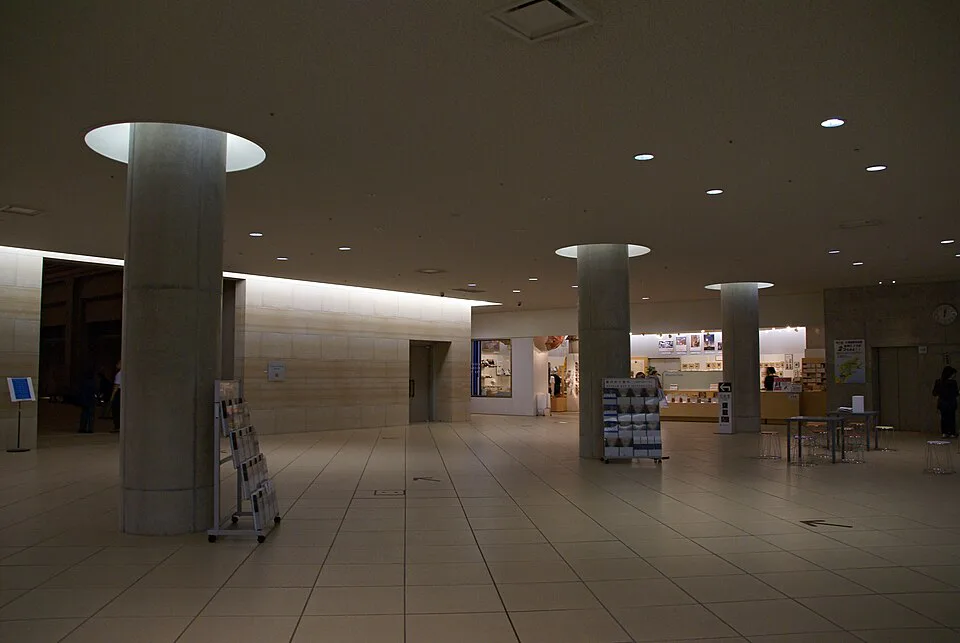
The museum is large enough that attention management becomes part of the itinerary. Comfortable shoes are not a dramatic travel hack here; they are simply sensible.
Coming from Takamatsu? The current direct-bus timetable turns this into an 8-hour outing
The museum’s current access notice lists two direct express-bus round trips per day. The early pattern leaves Takamatsu Station Bus Terminal at 08:10, reaches Otsuka Museum at 09:30, leaves the museum at 15:24 and returns to Takamatsu at 16:43. The later pattern leaves Takamatsu at 09:40, arrives at 11:00, departs the museum at 16:24 and reaches Takamatsu at 17:43.
↔ Scroll table left or right
Direct-bus pattern | Time at museum area | Takamatsu departure-to-return block | Best for |
Early: 08:10 → 09:30 / 15:24 → 16:43 | 5h 54m | 8h 33m | Travellers who want enough time for a long visit without watching the clock |
Later: 09:40 → 11:00 / 16:24 → 17:43 | 5h 24m | 8h 03m | A slower morning, but still essentially the day’s main commitment |
This is the hidden cost that a “90-minute direct bus” description misses. The actual scheduled day is not three hours of transport plus a museum; your outbound and return departures shape the entire middle of the day. That can be excellent if Otsuka is the point of the day, and frustrating if you thought it would leave room for another serious Takamatsu activity.
If you have only a few days in Shikoku, first decide whether Takamatsu or Matsuyama should be your main base. That decision affects more of the trip than saving a few hundred yen on an attraction ticket.
And if Naoshima is competing for the same day, make it an actual either/or decision. A Naoshima day trip from Takamatsu uses ferry timing and a full island day; Otsuka uses a fixed bus window plus a huge indoor collection. Trying to call both “half-day art stops” is how a pleasant Shikoku trip becomes transport Tetris.
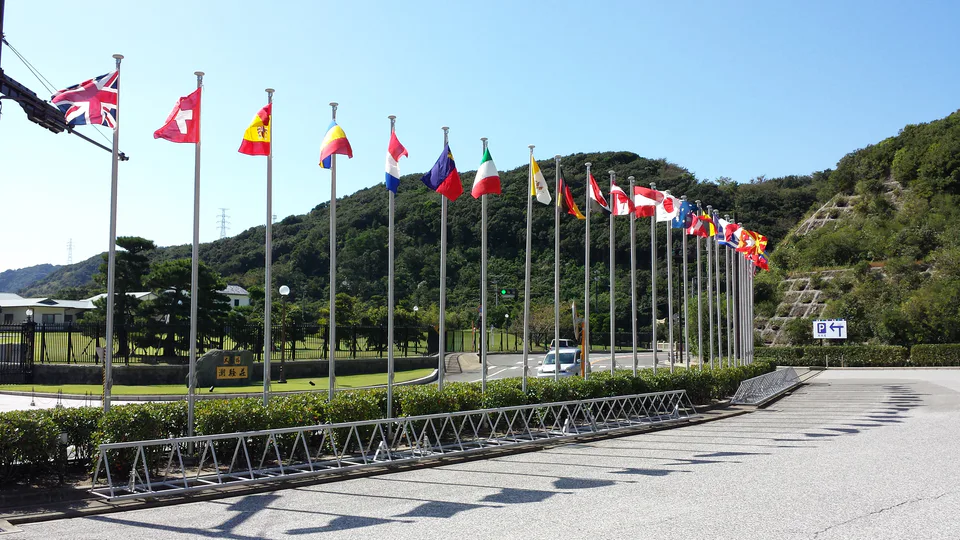
The museum works best when Naruto is deliberately part of the day, not when it is treated as a tiny detour from another Shikoku city.
Same-day re-entry makes lunch a strategy, not a countdown timer
Same-day re-entry is officially allowed if you complete the procedure before leaving. That matters more here than it does at a small gallery. A long route is easier to enjoy when you can pause rather than treating hunger or fatigue as an enemy that must be defeated before the final room.
It also makes Otsuka a strong bad-weather anchor—provided you still account for the transport to Naruto. “Indoor” is not the same as “frictionless.” If rain knocks out another Tokushima activity, the museum can absorb half a day very well; if you are staying far away, the bus timetable remains the boss.
Do not buy the ticket before the day itself makes sense
The official ticket price is stable enough to be a useful benchmark: ¥3,300 for an adult at the museum. If you use Klook or another seller, compare the final checkout amount with that benchmark and make sure the ticket conditions fit your actual travel date. Do not let a small apparent discount create a Naruto day that otherwise does not belong in the itinerary.
The existing Klook product below is most useful after you have already decided to spend the day around Naruto. Platform prices, validity periods and cancellation terms can change, so recheck them on the checkout screen rather than relying on an old screenshot or a converted headline price.
This article may contain affiliate links. ValueNavi may earn a commission from an eligible booking at no extra cost to you.
Your Naruto day is fixed: compare Otsuka Museum admission on Klook
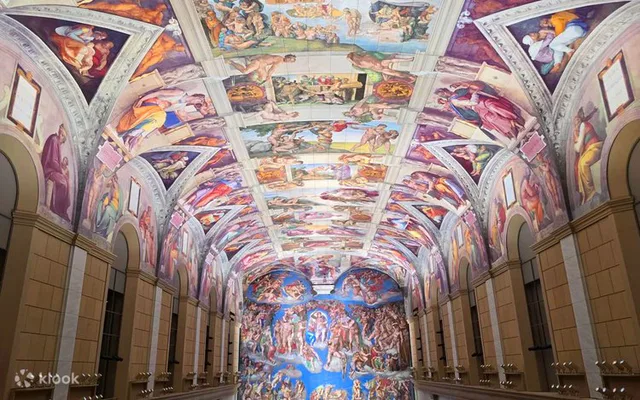
Room-scale environments such as the Sistine Hall are the clearest reason Otsuka feels different from a simple exhibition of printed copies.
Visiting in late summer 2026? The extras are bonuses, not reasons to distort the route
Current official notices add a few seasonal layers. Monet’s blue water lilies are in their viewing season around July to September 2026; a permanent ceramic-board reproduction of Vigée Le Brun’s Marie Antoinette with a Rose opened on July 11; and the QuizKnock keyword-rally art quiz book is currently extended through September 30, 2026. The museum also announced an additional Marie Antoinette-themed menu running September 1 to November 15.
These are good reasons to look a little more closely once you are already going. They are not good reasons to rebuild a Shikoku route around the museum. Seasonal extras should sweeten a decision that already makes sense, not rescue one that does not.
Festival season changes the calculation: Tokushima itself may deserve the day
If your trip overlaps August festival season, compare the museum against what Tokushima is doing that day. Our Tokushima Awa Odori 2026 guide shows why evening transport and stage choices can shape the whole day. In that context, Otsuka may work beautifully as a daytime anchor—or become one commitment too many.
If you want a shorter hands-on Tokushima experience instead of another long museum, compare the local indigo-dyeing workshops. That is a different decision entirely: making something versus walking through art history, and a few hours versus most of a half day.
NO-GO: four travellers who should probably skip Otsuka Museum of Art
Skip it if you only care about originals; if you can spare no more than 60–90 minutes; if your Shikoku route is already overloaded with Naoshima, island ferries and long city transfers; or if Naruto was never part of your trip and you are adding it only because a generic itinerary called the museum “must-see.” None of those are failures of taste. They are simply mismatches between the museum’s premise and your trip.
If Naoshima does win the decision, the next practical issue is moving around the island rather than adding another museum. The Naoshima e-bike and ferry route guide is more useful at that point than continuing to compare attraction tickets.
Verdict: accept the reproductions and give it half a day, or leave it alone
Otsuka Museum of Art is easiest to recommend to travellers who are curious about Western art history, do not need original works for a museum visit to feel meaningful, and can genuinely spare three to five hours in Naruto. For them, the full-scale rooms and ability to compare works from many collections in one building can justify both the ¥3,300 (about US$20.70) ticket and the unusual location.
The strongest counterargument is that a Takamatsu day trip is efficient because the bus is direct. Operationally, yes; strategically, not always. The direct bus removes transfers but still turns the outing into an approximately eight-hour block. That is why Otsuka can be an excellent day from Takamatsu and still be a poor add-on to Takamatsu.
Before paying, check five things: you are comfortable with reproductions; you can reserve at least around three hours; your shoes can handle roughly 4 km; you have checked the museum calendar and bus timing; and the ticket seller’s flexibility is actually useful for your trip. Facts and prices checked August 27, 2026.
Before departure, recheck the official Otsuka Museum of Art website for the opening calendar, hours and any temporary viewing restrictions.
Next decision: place this half-day inside a no-car Shikoku itinerary
Sources and verification
Otsuka Museum of Art — official basic information and admission · official FAQ — 4 km route and same-day re-entry · official Takamatsu direct-bus timetable notice · official 2026 news and seasonal notices.
USD conversions use the August 27, 2026 market rate of approximately ¥1 = US$0.00627 and are rounded for planning. Exchange rates, ticket rules, bus timetables and seasonal programming can change; recheck official sources immediately before travel.