
For most first-time visitors, Ai no Yakata is the best starting point for Awa indigo because it combines the merchant history, exhibits and a short hands-on dyeing session in one place. A smaller working studio becomes the better choice only when the instruction itself, a specific finished item or seeing a craft workshop matters enough to justify advance booking and extra transport. The useful comparison is not “touristy versus authentic.” It is 30-minute convenience versus deeper workshop time versus production context.
Ai no Yakata currently says its standard indigo-dyeing activity takes about 30 minutes. Individual visitors buying the facility’s own fabric do not normally need a reservation; groups of 10 or more and anyone bringing their own fabric do. By contrast, Furusho Dye Factory in Tokushima City is currently reservation-only by the previous day and lists roughly 60 minutes for the experience. That difference is large enough to change the rest of a Tokushima day.
↔ Scroll table left or right
What you actually want | Start with | Why | Main cost |
First Awa indigo experience with history + one easy souvenir | Ai no Yakata | Museum context plus a ~30-minute workshop; standard fabric can be bought on site | It is about 9 km from Tokushima Station, so the transport can take longer than the workshop |
More time with a working dye workshop in Tokushima City | Furusho Dye Factory | About 60 minutes and a more workshop-led format | Reservation required by the previous day; small capacity |
Indigo production itself is a major trip interest | Kamiita / Waza-no-Yakata area | Kamiita is a major sukumo-producing area and adds production context | More rural transport; this is no longer a quick central-Tokushima add-on |
You only want a simple first craft and have an Awa Odori evening | Ai no Yakata, early | The short activity is easier to protect from festival crowds and evening deadlines | Return to central Tokushima with a generous buffer |
You want to dye your own T-shirt or fabric | Ai no Yakata bring-your-own session or a specialist studio | You control the object instead of choosing only a small souvenir item | Advance reservation, material restrictions, weight-based cost and longer protected time |
The first decision is whether indigo is a 30-minute activity or a half-day theme
Awa indigo can occupy very different amounts of a Tokushima itinerary. If you simply want to understand why indigo matters to the region and make one object yourself, Ai no Yakata is efficient. The facility occupies the former residence of the Okumura indigo-merchant family, so the history and the hands-on activity sit in the same visit.
Its current FAQ gives roughly 30 minutes for the dyeing itself. But that does not mean “indigo costs only 30 minutes.” Official East Tokushima tourism material places Ai no Yakata about 9 km / roughly 20 minutes by car from Tokushima Station. A car-free traveller must also solve the bus or taxi leg. The total block can therefore be several times longer than the hands-on portion.
This produces a useful planning rule: if Awa indigo is only one secondary interest, optimise for total route time; if the craft is one of the reasons you came to Tokushima, optimise for teaching depth and the object you want to make.
Ai no Yakata is the low-friction default — especially if you buy the fabric there
Ai no Yakata currently opens 09:00–17:00 and is normally closed on Tuesdays. Current admission is JPY 300 for adults, JPY 200 for junior/senior high-school students and JPY 150 for elementary-school students. The facility currently accepts indigo-dyeing registrations until 15:30.
For ordinary individual visitors using the fabrics sold by the museum, advance booking is not normally required. Reservations are required for groups of ten or more and for bring-your-own-fabric sessions.
The current official fabric list starts at:
handkerchief: JPY 1,000;
hand towel / bandana / lace handkerchief / tenugui: JPY 1,500;
small silk stole: JPY 2,000;
gauze stole: JPY 3,000;
large silk stole: JPY 3,500.
This is why I would not automatically choose the cheapest handkerchief. The workshop time is broadly similar, while the usefulness of the finished object can be very different. If a JPY 500–2,500 increment buys something you will actually wear or use, the item can matter more than minimising the workshop price.
Bring-your-own fabric is a different product, not a free upgrade
Ai no Yakata currently requires a phone reservation by the previous day for bring-your-own dyeing. The listed time slots are 09:00–10:30, 10:30–12:00 and 13:30–15:00. The facility also publishes material preparation rules: fabric should be washed in advance with neutral detergent and no fabric softener, and water-repellent or shape-memory treatments may prevent good dye uptake.
Current bring-your-own charges are weight-based: cotton/linen is JPY 30 per gram, with a JPY 1,000 minimum for items up to 35 g; silk is JPY 50 per gram, with a JPY 2,000 minimum for items up to 40 g. The museum’s own example puts a roughly 200 g cotton T-shirt at about JPY 6,000.
That changes the value calculation. A personal T-shirt may be more memorable than a small handkerchief, but it can cost several times more and needs a fixed reservation slot. Bring your own item only when the item itself is the point. Do not choose it merely because “custom” sounds more authentic.
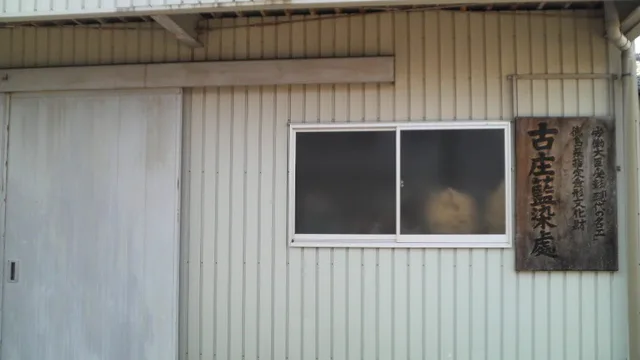
Furusho Dye Factory is better when the instructor/workshop context matters more than the museum
Tokushima’s official tourism site currently lists Furusho Dye Factory in Tokushima City as a working natural lye-fermentation indigo workshop where visitors can observe and try dyeing. The experience is reservation-only by phone, requires booking by the previous day, is limited to about eight participants and takes roughly 60 minutes. Prices start at JPY 1,000.
Its geography is different from Ai no Yakata: the official listing puts it about ten minutes on foot from JR Kuramoto Station, about three minutes from the Sako Nanabancho bus stop, or roughly 15 minutes by car from JR Tokushima Station.
For a traveller without a car who wants a deeper workshop but does not want to build the day around Aizumi, this can be the more coherent option. The trade-off is flexibility: you are now protecting an appointment rather than arriving at a museum-style facility on your own rhythm.
The decision can be simplified:
Ai no Yakata: choose context + flexibility.
Furusho: choose workshop time + reservation certainty.
Neither is automatically “more authentic.” They are different visitor products.
Kamiita becomes worth the detour only when indigo production is the subject, not merely the souvenir
East Tokushima’s official guide identifies Kamiita as Japan’s largest producer of the sukumo indigo dye and highlights Waza-no-Yakata as a place where visitors can learn the dyeing process and participate in workshops. The same guide also lists Watanabe’s, a reservation-only workshop linked to a producer who cultivates indigo and handles dye-making, dyeing and finished products.
This is a more specialist choice. If the question is “I want to make a blue cloth,” travelling deeper into Kamiita can be unnecessary. If the question is “I want to understand Awa indigo as agriculture + sukumo production + dyeing,” the rural detour starts to have unique value.
That is the deletion test: remove the production context. If you would still make the trip, the workshop itself is the destination. If not, Ai no Yakata or Furusho is more efficient.
Children: choose the object and session length before choosing the “best” workshop
Ai no Yakata explicitly welcomes children as well as adults, and its roughly 30-minute standard activity makes it the easiest first family option. A small handkerchief or tenugui gives a child a visible beginning-to-end result without requiring a long technical session.
The limiting factor is not simply age. It is whether the child can follow instructions around dye vats, wait through repeated dipping/oxidising steps and avoid treating the workshop as free-form painting. For a child who loses interest quickly, a 60-minute reserved workshop can be worse than a simpler 30-minute experience even if the teaching is excellent.
For families, also keep the rest of the day lighter. Dyeing + a museum + a long regional transfer + an evening festival is more tiring than each item looks alone.
Awa Odori day: protect the evening before choosing the workshop
If the trip is built around Tokushima Awa Odori, the festival is the hard edge and the dyeing session should flex around it. Do the craft in the morning or early afternoon, return to central Tokushima, put the finished item away and reset before the evening crowd.
Do not schedule a rural workshop whose return connection only barely reaches a ticketed performance. The workshop may finish on time; the bus, traffic or festival crowd may not.
For a festival trip, use Where to Stay for Tokushima Awa Odori to fix the hotel first. A central hotel lets you drop the dyed item, change clothes and enter the evening with less luggage.
Do not combine Ai no Yakata with Naruto just because both are east of Tokushima
The map can tempt visitors to build “indigo + Naruto whirlpools + Otsuka Museum + Awa Odori” into one day. The problem is not individual distance; it is the number of fixed and semi-fixed time windows.
Naruto whirlpool viewing depends on tide timing. A dyeing appointment or workshop registration has its own cutoff. Awa Odori has an evening schedule. Three separate clocks in one day create a fragile itinerary.
If Naruto is a major priority, give it the daytime and use a central-Tokushima indigo option on another block. If indigo is the priority, keep the surrounding day in eastern Tokushima rather than treating the activity as a 30-minute gap filler.
What should you make?
↔ Scroll table left or right
Item | Best for | Trade-off |
Handkerchief | First attempt, child, tight schedule, low budget | Least surface area for pattern experimentation |
Tenugui / bandana | Better pattern visibility without bulky luggage | Slightly higher cost |
Stole | A souvenir you may actually wear | Higher price and more fabric to handle |
Your own T-shirt / fabric | Personal item is the whole reason for booking | Advance reservation, material restrictions and weight-based cost |
For a multi-city Japan trip, the best object is often the one that packs flat and does not need special handling for the rest of the holiday. Do not create a luggage problem in order to create a souvenir.
Final verdict
Choose Ai no Yakata for a first Awa indigo experience unless you can name the specific benefit you want from a smaller studio. It is the strongest all-round choice because the merchant-history context, exhibits and roughly 30-minute dyeing activity sit in the same visit, and normal individual sessions using museum fabric do not require advance booking.
Choose Furusho when a 60-minute working-studio session and closer workshop context are worth giving up walk-in flexibility. Go deeper into Kamiita when indigo production itself is one of the main reasons for visiting Tokushima. And on an Awa Odori trip, never let a dyeing appointment threaten the evening event that brought you to the city.
Nara Prison Museum: How to Plan Tickets, the Direct Bus and a Half-Day Visit
Aso Hot-Air Balloon Guide: Aso Nature Land Booking, Meeting and Cancellation
September Grand Sumo Tokyo 2026 Is Sold Out: Official Resale and No Walk-Ups
Karuizawa Autumn Leaves 2026: Kumoba Pond, Shiraito, Cycling and Trains
References
Ai no Yakata — indigo workshop · current fabric types and prices · FAQ, duration and reservation rules · Tokushima official tourism — Furusho Dye Factory · East Tokushima official tourism guide — Ai no Yakata, Waza-no-Yakata and Watanabe’s. Checked August 25, 2026. Workshop availability, prices and special-event rules can change; verify the exact date before travelling.