
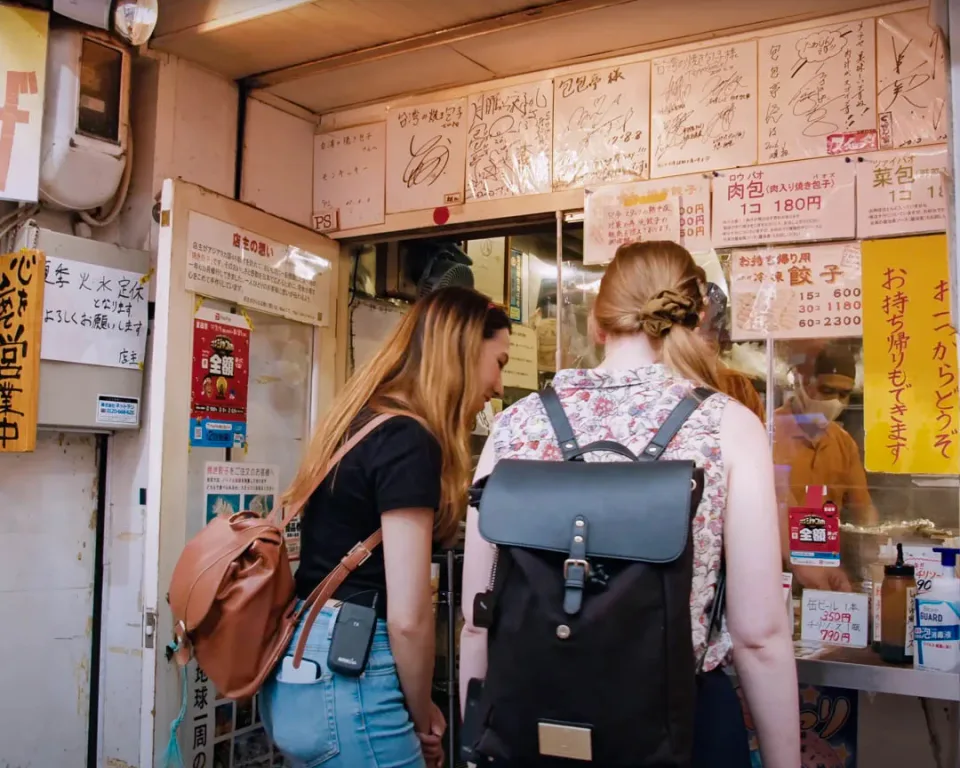
My default for Osu is to self-guide, not book a food tour. Nagoya's official visitor guide says the district has more than 1,200 shops and restaurants, and the streets themselves are free to explore. The paid tour only becomes rational when the thing you want to buy is not food alone but decision removal: a two-hour small-group route, five preselected street-food tastings, drinks, temple context and a guide who removes the need to compare dozens of stalls.
At the latest check, the same tour was displayed at ¥19,119 on Klook's Japanese storefront and US$133.29 on the US storefront. Those two numbers are a useful warning in themselves: localized platform prices are not necessarily a simple live-FX conversion, so compare the actual checkout currency rather than mentally converting one storefront. At this price level, independent eaters should usually keep the money for a larger Nagoya meal. First-time visitors who actively dislike food research have a stronger case for paying the premium.
↔ Scroll table left or right
ValueNavi decision | Recommendation | Why |
First Nagoya trip, only one Osu block, no saved food list | ★★★★☆ Consider booking | You are paying to compress choice, food and neighborhood orientation into two hours. |
You already have 3–5 specific Osu stalls saved | ★★☆☆☆ Self-guide | The guide solves a research problem you have already solved. |
Vegan traveler | ★☆☆☆☆ Skip | The current booking notes say the experience is not advisable for vegans. |
Vegetarian / pescetarian traveler | ★★★☆☆ Check first | The operator says these diets may be accommodated with advance notice, but the exact food lineup can change. |
Important dinner planned around 19:00 | Choose 11:00, not 16:00 | Five tastings plus drinks ending at 18:00 can blunt your appetite for the meal you care about more. |
Traveling with a child under 6 | Skip this product | The current eligibility rule is age 6+, and children 6+ are charged the adult rate. |
Visiting on the 18th or 28th | Tour + extra free time | Osu Kannon's antique market runs on those dates, so a two-hour tour alone would underuse the neighborhood. |
ValueNavi Score: strong time efficiency, weak menu freedom
These are ValueNavi editorial scores, not official ratings. A higher score is more favorable for an international visitor deciding whether this particular paid tour deserves scarce Nagoya time.
Decision factor | Score | What drives it |
|---|---|---|
Time efficiency | Five food stops plus neighborhood context are compressed into a fixed two-hour block. | |
Route fit | Osu sits naturally inside a central-Nagoya day and does not require a dedicated day trip. | |
Booking resilience | There is 72-hour free cancellation, but late arrivals are not refunded and confirmation can take up to 48 hours. | |
Food-choice flexibility | The tour is curated; exact food contents can change and vegan travelers are specifically poor fits. | |
First-trip usefulness | A guide can reduce choice overload in a district with 1,200+ businesses. | |
Value for money at ¥19,119 / US$133.29 | The premium is defensible for curation and explanation, not for the raw cost of five street-food items. | |
Uniqueness | The food itself is independently accessible; the distinctive part is the fixed shortlist plus guided context. |
Five tastings are not five meals — the premium buys curation, not food volume
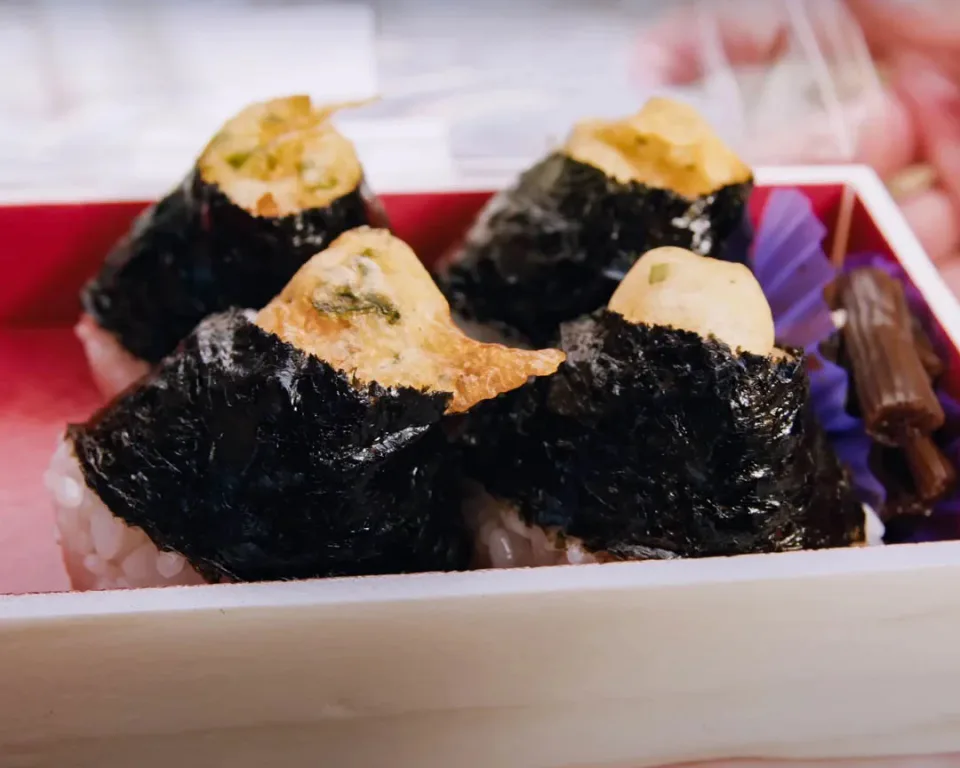
The current package includes five street foods from local stalls, snacks and drinks, an omikuji fortune draw and guided time around Osu Kannon and the shopping streets. Treat this as a tasting walk. Five stops do not mean five restaurant-sized meals, and judging the tour purely by calories makes the economics look worse than the product is trying to be.
The more useful question is whether a guide meaningfully improves your afternoon. If you normally spend 30–45 minutes opening maps, comparing reviews and deciding which queue looks worthwhile, a prebuilt route can remove real travel friction. If you enjoy that process, the same curation becomes a constraint. You are paying someone to narrow your options in a neighborhood whose main appeal is having too many options.
Osu's 1,200+ shops are the best argument both for and against a guide
Nagoya's official visitor guide describes Osu as a huge shopping district with more than 1,200 shops and restaurants, including cafes, food counters, secondhand clothing and electronics. That abundance creates two opposite traveler profiles.
Choice-overload traveler: you want one good two-hour block and would rather ask a guide questions than compare 20 saved pins. The tour can be worth a premium because it converts research into a scheduled experience.
Discovery-first traveler: the whole point is wandering, seeing a queue, changing your mind and trying whatever looks good. For you, self-guiding is not the budget compromise; it is the better experience.
If curation is the thing you actually want, compare the live Osu food-tour price and session|Klook
11:00 or 16:00? The wrong slot can cost you a better Nagoya meal
The current schedule offers 11:00–13:00 and 16:00–18:00 sessions. I would choose 11:00 by default. Let the tastings replace lunch, finish around 13:00, then use the afternoon to keep wandering Osu, continue to Sakae or revisit one of the guide's stops independently.
The 16:00 session is better only when you are happy to treat the tour as an early dinner. Five food stops and drinks finishing at 18:00 create an opportunity cost: a carefully planned hitsumabushi, miso-katsu or izakaya dinner may no longer be enjoyable at the time you booked it. Saving a daytime sightseeing slot is not a win if the tour crowds out the meal you wanted more.
There are three hidden costs: appetite, fixed timing and currency localization
Appetite cost: the tour may replace one proper meal even though it is marketed as tastings. That matters if your Nagoya food list is already crowded.
Schedule cost: the group leaves at the scheduled time, and current terms say latecomers or no-shows are not refunded. A fixed 16:00 tour after a long regional excursion is therefore a brittle pairing.
Currency-display cost: the latest Japanese storefront showed ¥19,119 while the US storefront showed US$133.29. Those localized amounts should not be treated as a pure live exchange-rate conversion. Promotions, storefront pricing and checkout currency can differ. Keep the yen figure visible as the Japan-price reference, but compare the number you will actually be charged in your own checkout currency before paying.
Where should this fit in a Nagoya itinerary? Protect a real city block for it
If Nagoya is only a four-day base, solve the large route decisions before locking a two-hour food activity. The Nagoya–Takayama four-day decision guide shows why a Takayama overnight consumes much more than the visible train time. If Takayama is already in the plan, place Osu on a proper Nagoya day instead of attaching a fixed booking to an intercity transfer.
Next decision: keep Nagoya to four days or give Takayama an overnight?
Autumn travelers face the same issue with Korankei. The Korankei autumn leaves day-trip guide explains the bus and traffic cost of leaving Nagoya for the day. I would not book the 16:00 food tour after Korankei unless your return buffer is generous. One delayed bus can turn a relaxed food walk into a no-refund arrival problem.
The 18th and 28th change the answer: do not leave Osu as soon as the tour ends
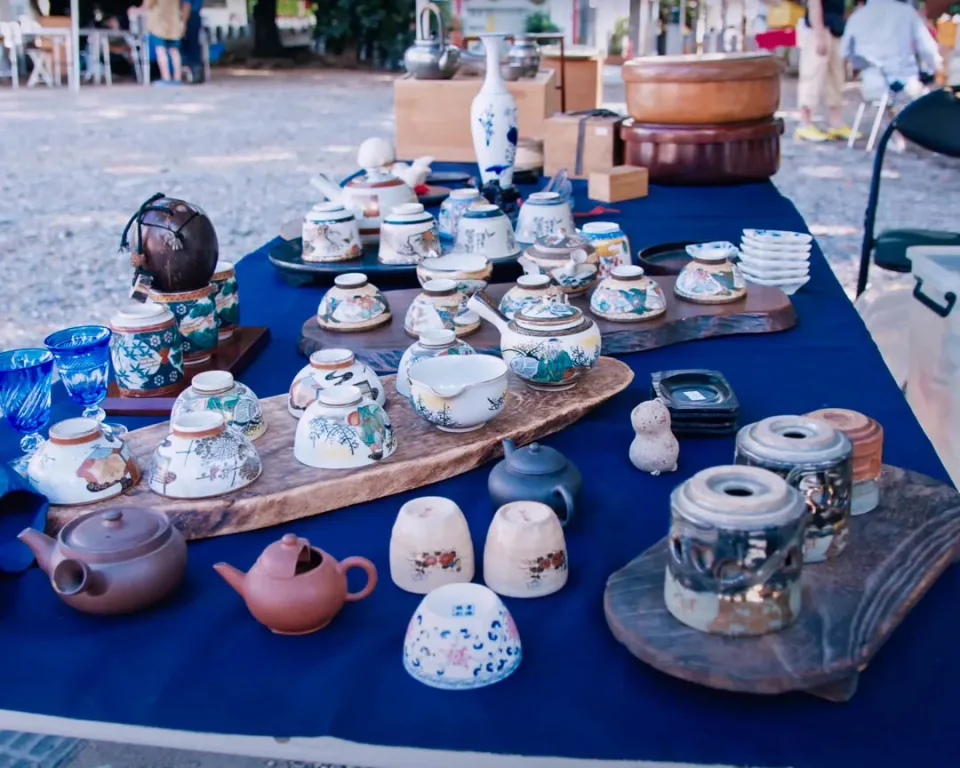
Nagoya's official visitor information says an antique market is held at Osu Kannon on the 18th and 28th of each month. If your date matches, the paid tour should be an anchor inside a longer Osu visit, not the entire visit.
On a normal day, I would still leave at least an extra hour after the 11:00 session. The guide gives you a shortlist; the district is much larger. On an antique-market day, keep more unstructured time so the fixed two-hour route does not become the reason you miss the event that only happens twice a month.
Dietary restrictions are not a footnote — they can reverse the verdict
The current booking notes say the experience is not advisable for vegans. Vegetarian and pescetarian requirements may be accommodated when communicated in advance, while the exact contents of the tour can change depending on availability.
That makes the decision different from a self-guided food walk. When you self-guide, you can reject a stall and move on. In a five-stop curated product, every substitution affects a larger share of what you paid for. If your dietary needs are complex, do not book because a generic line says a diet can be accommodated; confirm the specific selected date and restrictions first.
Families: stroller-friendly does not mean all ages are eligible
Klook currently labels the activity stroller-friendly, but the eligibility rules also say participants must be aged six or above. Children aged six and over are charged the same rate as adults and must be accompanied by a paying adult.
For a family, that changes the value calculation quickly. Two adults plus an eligible child means paying three full rates for a tasting-style walk. If the child is a selective eater, the curation premium may be harder to justify than a self-guided Osu afternoon where each person can choose independently.
¥19,119 / US$133.29 is a curation budget, not a street-food budget
At the latest check, the tour's localized displays were ¥19,119 and US$133.29. That is much more than you need simply to buy several snacks around Osu. The fair comparison is therefore not “tour price versus five snacks.” It is “tour price versus food plus two hours of guiding, cultural explanation, a prebuilt route and zero stall research.”
My red-team test is simple: if the guide vanished but the five foods stayed, would you still pay close to this amount? If the answer is no, the guide and curation must carry most of the value for you. That is why I would not recommend the tour to a budget-first traveler, even if a temporary promotion lowers the price. The product works when removing uncertainty is itself valuable.
If Nagoya is part of a wider Chubu trip, route structure matters more than this booking
Travelers continuing through Takayama, Shirakawa-go and Kanazawa should solve the regional route first. The Takayama–Shirakawa-go–Kanazawa four-day itinerary is more important to the trip than locking two hours of food in Nagoya. Once you know how many complete Nagoya blocks remain, this tour becomes easy to place—or easy to cut.
The same is true in autumn. The Central Japan autumn leaves route helps sequence higher-elevation destinations before Nagoya. A food tour is a flexible city add-on; mountain buses and foliage timing are not. Build around the less flexible parts first.

If your trip coincides with the 2026 Aichi-Nagoya Asian Games, use the Aichi-Nagoya Asian Games 2026 travel guide to lock the transport-sensitive city blocks before adding a timed food experience.
Recheck these before paying
The current listing shows two-hour sessions at 11:00 and 16:00, a 2–10 person small group, English and Spanish guidance, five local street foods, snacks and drinks, an omikuji draw and free cancellation with at least 72 hours' notice. The meeting point is at a 7-Eleven close to Osu Kannon Station Exit 2, with the detailed location provided on the voucher. Guests are asked to arrive 10 minutes early, and latecomers or no-shows are not refunded. Confirmation can take up to 48 hours.
Prices, food contents and availability can change. The yen and US-dollar figures in this article are storefront snapshots, not a promise that every traveler will see the same checkout total.
This article may contain affiliate links. If you make an eligible booking through one of them, ValueNavi may receive a commission at no extra cost to you.
Final verdict: self-guide by default; pay only if you want your choices removed
Osu does not need a tour to be worth visiting. For most independent eaters, more than 1,200 shops and restaurants make self-guiding the better-value default. You keep menu freedom, can spend less and can save your appetite for another Nagoya meal.
I would book the paid tour only when three conditions line up: this is your first Nagoya visit, you want Osu explained rather than merely browsed, and choosing food stops feels like work rather than fun. Under those conditions, ¥19,119 / US$133.29 is paying for a two-hour decision shortcut. If any of those conditions disappear—especially if you have a saved food list, a vegan diet, a child under six or an important dinner after the 16:00 session—the recommendation flips back to self-guiding.
Information last checked: August 27, 2026.