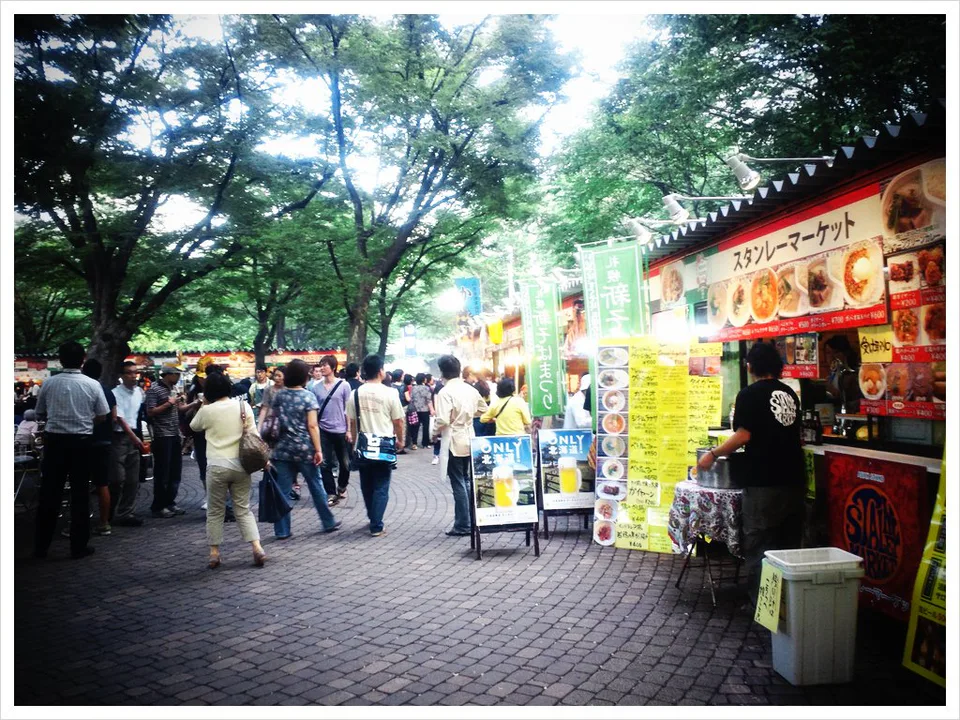
Sapporo Autumn Fest is easiest when the route is planned before the first order. In 2026 the festival runs September 11–October 3 across seven venue areas in Odori Park: West 4, 5, 6, 7, 8, 10 and 11 chome. The corridor is roughly one kilometre long. The common first-visit mistake is not missing a stall; it is filling up at the western end, buying too many drinks before dinner, carrying food through a crowd, or finishing at the wrong side of the park for the hotel.
For most adults, start around 3:00 p.m. at 11-chome, share one chef dish, move east through meat and the Hokkaido regional market, then leave 4–6 chome for the later part of the evening. Families can shift the same route earlier. The festival is free to enter and food is bought individually, so there is no need to “get value” by staying from opening to closing.
Hotel location changes the correct direction. Travellers still choosing a base should compare Sapporo Station, Odori and Susukino before planning the food route. An Odori or Susukino stay makes a west-to-east finish convenient, while a Sapporo Station stay makes the final subway or underground-walk decision more important. If the number of nights is still open, settle 2, 3 or 4 nights in Sapporo before using the festival to justify another hotel night.
Seven Odori venues, seven different reasons to stop
↔ Scroll table left or right
Chome | 2026 theme | How to use it |
11 | CHEF'S & BEER TERRACE | One chef plate or beer; strongest start for adults |
10 | Hokkaido meat | Share one savoury item; easy place to over-order |
8 | Hokkaido regional market | Best regional-food comparison stop |
7 | 7-chome BAR | Drink stop only if it still fits the route |
6 | Sapporo FOOD JAM | Good late-route main dish area |
5 | EAT THE NORTH | Save for food still genuinely wanted |
4 | IN4 information / food area | Finish, dessert, information, final decision |
Why 11-chome is a better first stop than 4-chome
Starting at West 11-chome forces the route to pass through the entire festival instead of repeatedly backtracking around the busy eastern entrance. The 2026 11-chome concept combines chef food and beer culture, so one shared plate creates a clear opening without becoming a full dinner. West 10-chome then becomes the meat decision, and 8-chome becomes the regional Hokkaido decision. West 9-chome has no festival venue, which is useful: walk, drink water and decide whether hunger still exists before ordering again.
Do not arrive directly from New Chitose Airport with a large suitcase and treat the park as a luggage corridor. Check into the hotel or use proper storage first. Anyone arriving late enough that this becomes difficult should solve the first night before forcing Autumn Fest into an airport transfer day.
3 p.m. is the easiest first-visit start
A weekday 3:00–5:00 p.m. arrival gives enough daylight to read menus, photograph food and find a table before the strongest after-work dinner traffic. It also lets the route move through sunset into the evening atmosphere. Weekend dinner is harder because food queues, table hunting and people carrying hot plates peak together. Families can move the same route to late morning or lunch; travellers focused on beer and night ambience can still begin before the evening wave.
If only one hour is available, do not attempt all seven blocks. Pick a theme: 11+10 for chef food and meat, 8 for regional Hokkaido, or 4–6 for an easy central-city tasting. If two to three hours are available, the full west-to-east walk is realistic as long as the group shares plates. Four or more hours only makes sense when the festival itself is the evening’s main event.
Share dishes so the seventh block still matters
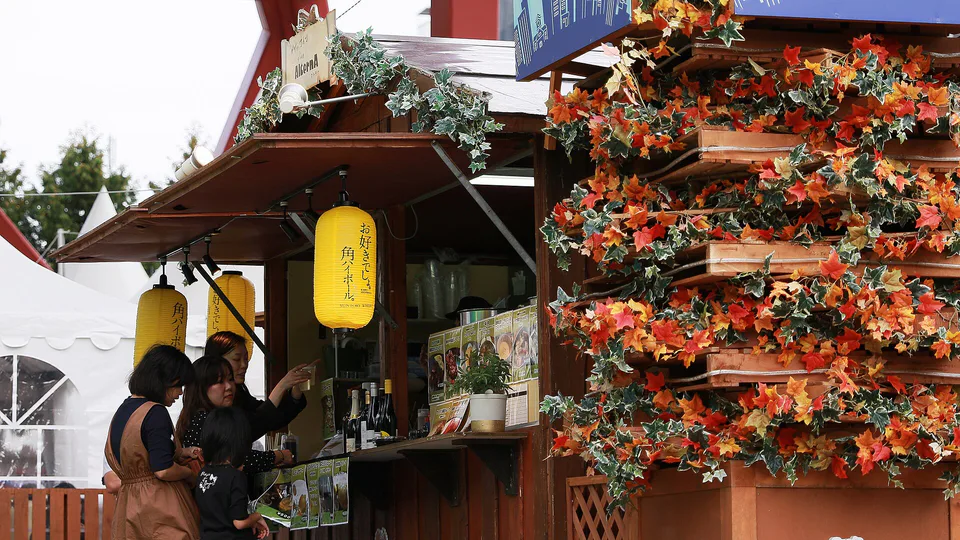
Two adults can easily turn the first three venues into a full meal if each person orders independently. A better tasting rule is one savoury item per block for the group, with a deliberate skip after every second purchase. Use water as the default drink until the food route is stable. If one person wants a large beer, make it a planned stop rather than something that accompanies every plate.
This approach is especially useful for travellers who have other Hokkaido food goals. The Hokkaido itinerary by region helps decide whether Sapporo should remain the main food base, while an Otaru day trip or overnight stay gives a different seafood-and-canal day without repeating another festival-length dinner.
Seating is part of the plan, not something to solve with a hot plate in hand
Before buying a dish that needs two hands, look for a realistic place to eat it. Do not send one person into a queue while everyone else disappears in search of seats without agreeing on a meeting point. A small group can split into “order” and “seat” roles, but only if the exact venue block and landmark are fixed. Return trays, cups and waste to the correct collection points rather than carrying them across several blocks.
Solo visitors should reduce the number of savoury stops because sharing is not available. One chef plate, one regional item and one dessert or drink is enough for a complete experience. Families should do the opposite adjustment: fewer blocks, earlier timing and a seated meal before children become tired. Groups of four can sample the most variety, but they also need the clearest meeting plan because queues separate people quickly.
Pair this with
Choose the hotel by the walk after dinner
If walking back through Odori after dinner sounds tiring, hotel choice can solve the problem. Tokyu Stay Sapporo Odori suits a central food-focused stay with in-room laundry options, while SAPPORO STREAM HOTEL makes sense when the evening continues into Susukino.
JR-heavy travellers can compare JR Tower Hotel Nikko Sapporo with central alternatives before paying a station premium. If winter luggage and a public bath are bigger concerns than nightlife, the Hotel Gracery vs Hotel Emion comparison gives a more useful framework than a simple distance ranking.
Budget by appetite, not by the number of venue blocks
Admission is free and items are purchased individually. A light tasting plan can stay modest; a full dinner with alcohol needs more room in the budget. Vendor prices and accepted payment methods vary, so carry one familiar cashless method plus some cash and read the displayed price before ordering. The most useful budget trick is to protect one final purchase: if the first half of the park consumes the entire food budget, the route stops being a tasting route.
Rain plan: split the kilometre into two short tastings
There is no continuous underground substitute beneath the entire east–west length of Odori Park. In heavier rain, use the western 11- and 10-chome venues, take the subway to Odori, then select only two eastern blocks around 4–6-chome. A compact waterproof layer and shoes with grip work better than a large umbrella in food queues. If outdoor eating becomes unpleasant, move the remaining meal into the underground shopping streets or a restaurant rather than proving that every block was visited.
For a weather-heavy Hokkaido trip, keep one indoor city day available. The broader Hokkaido without a car guide helps separate rail-friendly city days from trips where bad weather creates a much bigger transport problem.
Use Odori and Nishi 11-chome as two different access points
The official access page lists Odori Station exits for the eastern venues and Nishi 11-chome Station for West 10–11. That makes the west-to-east route easy: arrive at Nishi 11-chome, walk toward Odori, then leave from the central station network. The park itself has no event parking. Public transport is the sensible default, especially when alcohol is part of the evening.
Travellers deciding whether to sleep near JR or nightlife can use the Sapporo Station vs Susukino comparison. A central station stay is stronger for next-day rail; Susukino is stronger when Autumn Fest is only the first half of the night.
Do not let one food festival distort the rest of Hokkaido
Autumn Fest is a strong reason to spend an evening in Sapporo, but it is not a reason to commute from the city to every mountain or resort. Winter travellers deciding whether urban convenience is worth the daily transport should read ski from Sapporo or stay at a ski resort. For a one-day ski comparison, Sapporo Teine vs Sapporo Kokusai shows how quickly a food-and-city itinerary becomes a transport itinerary once a mountain day is added.
A winter repeat visit has a very different city rhythm. Compare the Sapporo Snow Festival stay guide before assuming the same Odori hotel always wins.
A realistic 3 p.m. to 7 p.m. route
Arrive at Nishi 11-chome around 3:00 p.m. and share one chef plate. Move to 10-chome for one meat dish, then use the quiet 9-chome gap before choosing one regional item at 8-chome. Around 4:30–5:00 p.m., stop rather than ordering automatically. Use 7-chome for a drink only if it fits the appetite and hotel route. After sunset, pick one main dish between 6 and 5, then finish at 4-chome with dessert, information or simply the final waste return. Solo visitors can reduce three savoury stops to two; families can move the whole window earlier and stop after 8-chome if everyone is already satisfied.
What to recheck 24 hours before visiting
Official venue pages for the current restaurant and chef lineup.
Weather, temperature and rain intensity for the outdoor eating window.
Hotel check-in, luggage storage and the most convenient subway exit.
Any food allergies or dietary restrictions that should be asked before joining a queue.
The final transport plan if the evening continues into Susukino.
For a station-side alternative with a shorter central walk, compare the Solaria Nishitetsu Hotel Sapporo guide before defaulting to the highest-rise JR option.
Sapporo Snowmobile 2026–27: 30, 60 or 90 Minutes? Choose the Route First
Nada no Kenka Matsuri 2026: If You Only Go One Day, Choose Oct 15
Save Sunday for Omotesando: The One Super Yosakoi 2026 Plan Saturday Can’t Match
Osaka Kuromon Market Food Tour 2026: You’re Paying for a Guide, Not the Food
Dogo Autumn Festival 2026: October 7 at Dawn Is the Main Event
References
Sapporo Tourism Association: Sapporo Autumn Fest venue guide; official access guide; 2026 autumn event listing