
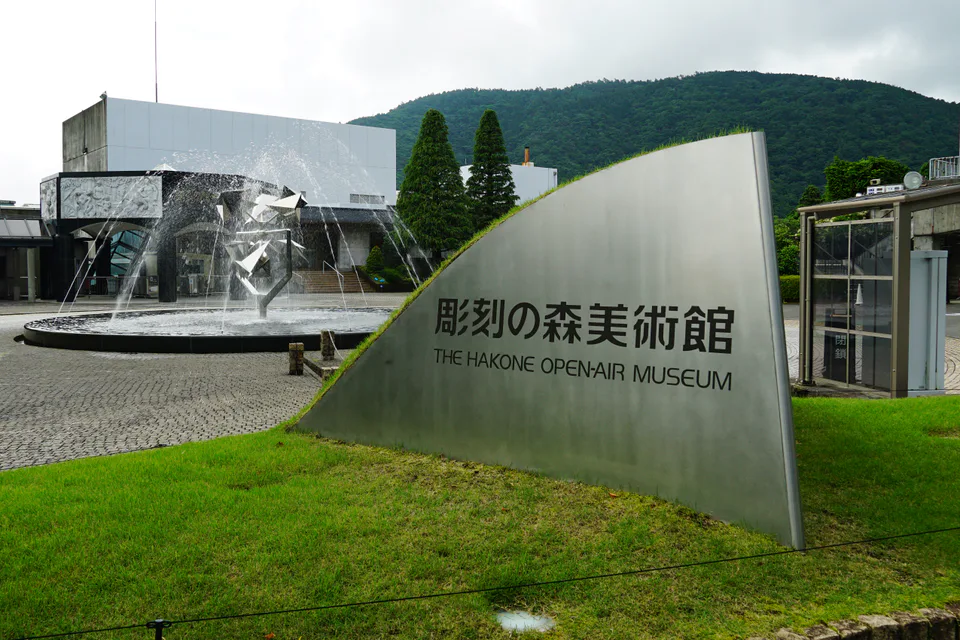
Hakone Open-Air Museum 2026 is one of the easiest places to enjoy badly if you treat 4:30 p.m. as an arrival target. That is the last-admission cutoff, not a promise that one hour is enough. The museum’s own guide says all exhibitions can be covered in about 60–90 minutes, while 90–120 minutes is more comfortable once indoor galleries and breaks are included. That makes 3:00–3:30 p.m. the practical latest-arrival range for a normal visit, not 4:30 p.m.
If you like outdoor sculpture, are staying around Gora, or want a museum that works better with children than a silent white-box gallery, the ¥2,000 walk-up price (about US$12.55) or ¥1,800 official web ticket (about US$11.29) is easy to justify. If you are trying to squeeze it in after Owakudani, Lake Ashi, Hakone Shrine and the ropeway, it is often the museum—not the ticket—that gets shortchanged.
ValueNavi latest sensible arrival table: 4:30 p.m. is only the legal cutoff
↔ Scroll table left or right
Arrival | Time until 17:00 close | What the official guide implies | ValueNavi call |
15:00 | 120 min | Matches the upper end of the museum’s relaxed 90–120 min guidance | Latest arrival I would choose for a full, unhurried first visit |
15:30 | 90 min | Still within the relaxed-visit range | Good practical cutoff if the loop is running late |
16:00 | 60 min | Only reaches the bottom edge of the faster 60–90 min circuit | Deliberately abbreviated visit; skip indoor extras and long breaks |
16:30 | 30 min | Below the museum’s own fast-loop estimate | Last entry, not a sensible first-visit target |
This table is derived from the museum’s current 9:00–17:00 hours and its own visit-time guidance. It is not an official rule telling you when to arrive. It answers the decision the official last-entry time does not: how late can you arrive and still get the kind of visit you probably imagined?
ValueNavi decision table: when the museum deserves the two-hour block
↔ Scroll table left or right
Your situation | ValueNavi call | Why | Main trade-off |
Staying in Gora, arriving before 15:30 | Strong yes | The museum is about two minutes from Chokoku-no-Mori Station and does not fight the route | You still give up 90–120 minutes that could have gone to ryokan or loop time |
Family with school-age children who want interactive art | Good fit | Woods of Net and the Symphonic Sculpture make the visit more participatory than a conventional gallery | Play time can push the visit well beyond 90 minutes |
Heavy rain and Woods of Net is the main reason you are going | Think twice | The museum has substantial indoor content, but the outdoor play artwork may close in poor weather | You are paying for an open-air museum whose core value is partly weather-sensitive |
One-day Hakone loop with Owakudani, Lake Ashi and Hakone Shrine all non-negotiable | Usually skip | The extra two-hour block makes every transport delay more expensive | You miss an excellent museum, but protect the experiences you ranked higher |
Lake Ashi stay and you would double back to Gora only for this | Route-dependent | The museum itself may be worth it; the backtracking may not be | Location friction can exceed the ¥200 ticket-saving question |
ValueNavi Attraction Score: 8.7/10 on a Gora day, 6.8/10 as a 4 p.m. afterthought
This uses the same positive-direction attraction model used across ValueNavi: uniqueness 25%, time efficiency 15%, route fit 15%, weather resilience 10%, booking flexibility 10%, crowd resilience 10% and value for money 15%. A higher score is better. It is editorial analysis based on verified operating facts and itinerary friction, not an official rating or first-hand testing claim.
Dimension | Gora + 90–120 min protected | 16:00 arrival after a full loop | Why it changes |
|---|---|---|---|
Uniqueness | Large-scale outdoor sculpture, Picasso holdings and interactive structures remain distinctive | ||
Time efficiency | Near Gora, two hours are easy to protect; at 16:00, closing time controls the visit | ||
Route fit | The museum fits naturally near Gora but becomes an extra leg when bolted onto the end of the loop | ||
Weather resilience | Indoor galleries remain useful, but the outdoor setting and some family features lose value in poor weather | ||
Booking flexibility | Official web and walk-up admission mean you do not need to treat the museum like a scarce timed-entry attraction | ||
Crowd resilience | The site is large, although popular interactive works can still concentrate visitors | ||
Value for money | The ticket buys much less when closing time forces you to abandon half the experience |
The open landscape is not decorative background. It is part of why this museum feels different from a conventional indoor stop.
¥2,000 at the door or ¥1,800 online: the ¥200 difference matters more for a family than for one adult
The museum is currently open 9:00–17:00 every day of the year, with last admission 30 minutes before closing. Official adult admission is ¥2,000 at the counter (about US$12.55) or ¥1,800 online (about US$11.29). University and high-school students are ¥1,600 walk-up / ¥1,400 online; elementary and middle-school students are ¥800 / ¥600; preschool children are free. USD figures use roughly ¥1 = US$0.00627 on August 27, 2026 and are rounded planning conversions.
↔ Scroll table left or right
Example booking | Walk-up | Official web | Difference |
1 adult | ¥2,000 (US$12.55) | ¥1,800 (US$11.29) | ¥200 (US$1.25) |
2 adults | ¥4,000 (US$25.09) | ¥3,600 (US$22.58) | ¥400 (US$2.51) |
2 adults + 2 elementary/middle-school children | ¥5,600 (US$35.13) | ¥4,800 (US$30.11) | ¥800 (US$5.02) |
For one adult, I would not distort the itinerary to save ¥200. For a family of four with two school-age children, ¥800 is enough to justify spending a minute on the official web ticket once the day is fixed. The important order stays the same: secure the time block first, then optimize the ticket.
Gora makes the museum easy; a badly ordered Hakone loop makes it feel like a detour
The access itself is straightforward. Chokoku-no-Mori Station on the Hakone Tozan Railway is about a two-minute walk from the museum. The friction comes from how you order the rest of Hakone, not from the front gate.
If you are staying in Gora, the museum is an easy pre-check-in, post-checkout or morning stop. If you have not chosen your base yet, use the Yumoto vs Gora vs Lake Ashi accommodation guide first. Staying in Gora turns the museum into a low-friction choice; staying by Lake Ashi and then doubling back purely for one attraction changes the calculation.
Trip length matters too. On a one-night versus two-night Hakone stay, the second night buys you more than sleep: it lets you separate a museum-sized two-hour stop from the main transport loop instead of making every attraction compete for the same afternoon.
On a one-night trip, think of the museum as a real block in your route. If you are still deciding whether to run the Hakone loop before check-in or after checkout, put the museum into that sequence before you start counting buses and cable cars.
Next decision: Hakone loop before check-in or after checkout?
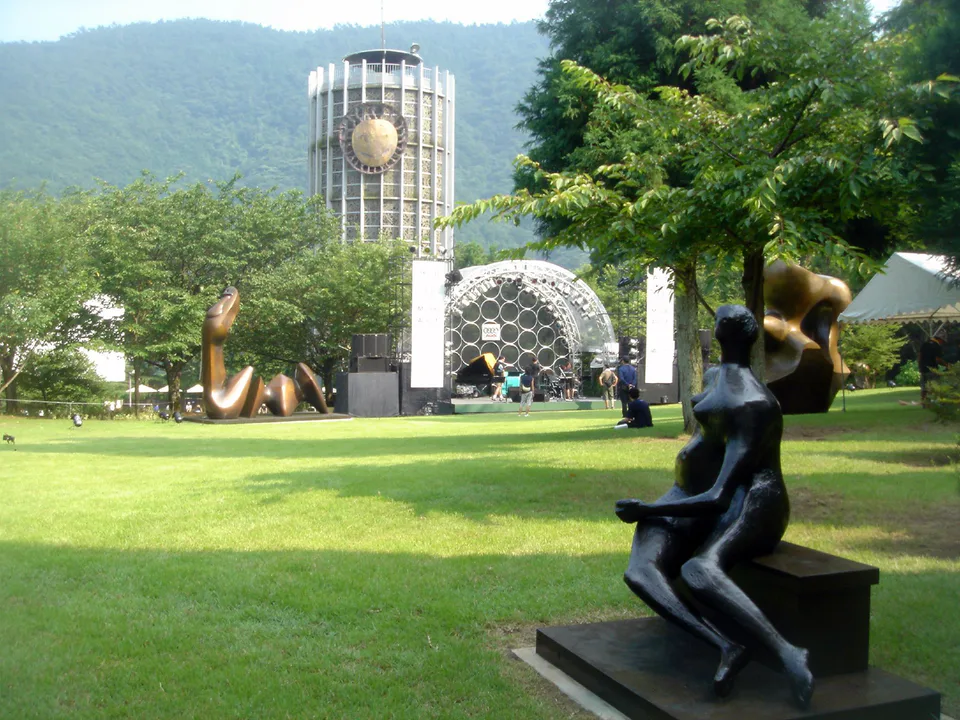
On a clear day, the outdoor setting is part of the admission value, not just a path between indoor rooms.
Rain does not ruin the museum—but it changes what you are paying for
Rainy days are not an automatic no. The Picasso Pavilion, Main Gallery, Art Hall and other indoor areas still give you somewhere substantial to go. But the museum’s identity comes from modern sculpture spread through a mountain landscape, so heavy rain, strong wind or cold weather reduce the pleasure of the core experience more than they would at a conventional indoor museum.
The family trade-off is sharper. Woods of Net is a giant hand-knitted play artwork where children aged 12 and under can climb, jump and sit inside the structure. If poor weather closes or limits the feature, a family whose child was excited mainly about that piece has lost more value than an adult who came primarily for Picasso and sculpture.
In autumn, weather and elevation already shape the entire day. The Hakone autumn leaves timing guide is useful for deciding whether a clear window should go to higher-elevation scenery first, leaving the museum for a cloudier stretch rather than forcing the same plan in every forecast.
With children, this can beat a traditional museum—but family time expands fast
Woods of Net works because children can physically enter the artwork rather than being told not to touch anything. The Symphonic Sculpture is another easy win for mixed-age groups: visitors can step inside the 18-metre stained-glass tower and climb the spiral staircase as coloured light fills the interior. These are good reasons to choose this museum when not everyone in the group is excited by a conventional gallery.
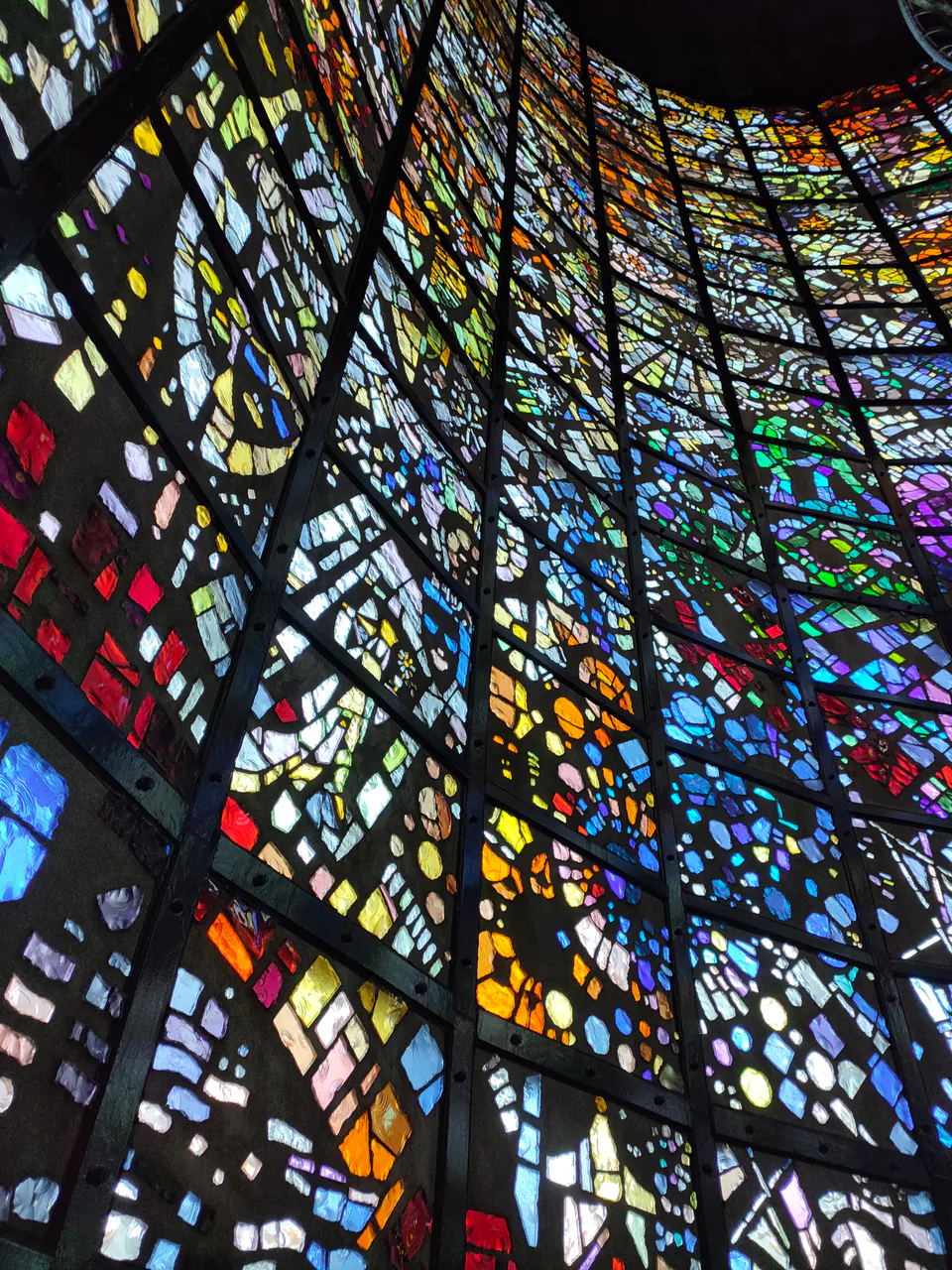
The 18-metre Symphonic Sculpture is much more than a photo from outside; the interior climb is the experience.
The catch is time. Twenty minutes at Woods of Net, a slow climb in the tower, the Picasso collection and a footbath break can push a nominal 90-minute visit well beyond two hours. If your ryokan has a fixed dinner schedule, check the trade-off in the Hakone private-onsen ryokan guide before adding “just one more room.” Missing a dinner window is a much worse exchange than skipping one sculpture.
The Picasso Pavilion is the part that keeps a wet-weather visit from feeling hollow
The museum holds more than 300 works by Pablo Picasso. The collection is centred on 188 ceramic pieces purchased from his daughter Maya Picasso, but also spans painting, sculpture, tapestry and other media. That makes the indoor component more than a consolation prize when the weather turns.
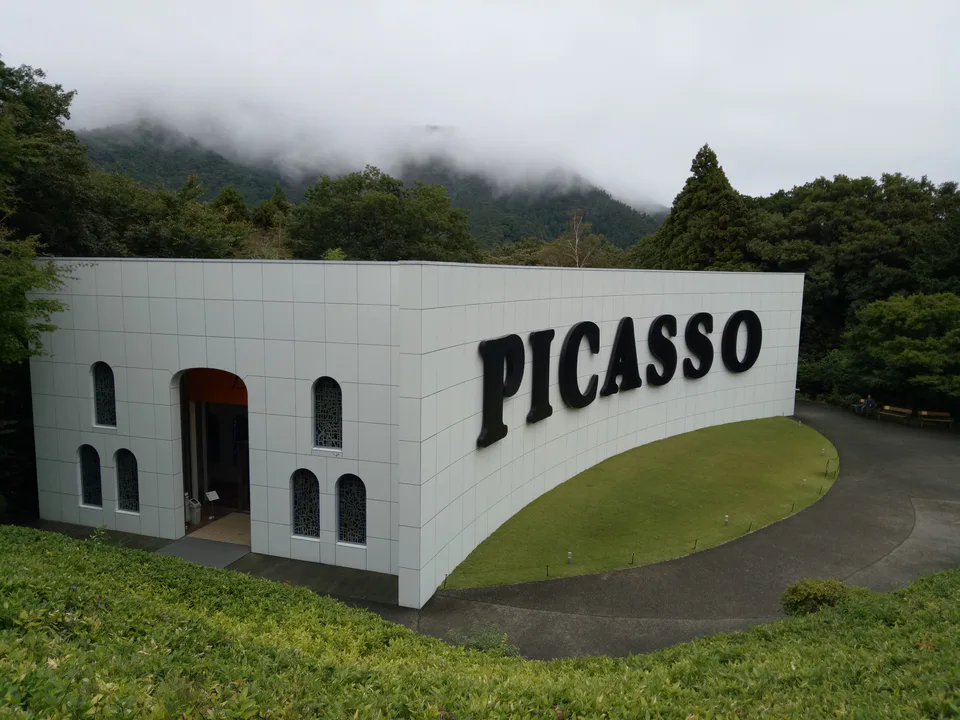
The Picasso Pavilion is the strongest indoor anchor for travellers who do not want an all-outdoor visit.
The current exhibition calendar also lists the museum’s Kusama Pumpkin installation and related interview video through November 1, 2026. Treat temporary programming as extra value after the base itinerary works, not as a reason to force a poor route.
Self-driving? The hidden museum cost is parking time, not just admission
The museum’s official parking fee is currently ¥500 for the first three hours for a standard car, then another ¥500 for each additional hour. For the museum’s recommended 90–120-minute visit, the first three-hour band is normally enough once you include arrival and departure. A longer visit that crosses the three-hour threshold turns a ¥500 (about US$3.14) parking line into ¥1,000 (about US$6.27).
That is still not a reason to rush a good visit just to save ¥500. It is a planning boundary: if you are deliberately adding lunch, the footbath, slow family play and every indoor gallery, know that a four-hour stop is different from a two-hour stop in both itinerary time and parking cost.
The footbath is not filler: a 15-minute pause can improve the second half of the visit
The forest footbath uses hot-spring water and gives tired legs a sensible midpoint rather than a novelty photo. That matters in a museum where you are already walking outdoors, climbing structures and moving between buildings. Sitting for ten or fifteen minutes can make the final galleries more enjoyable than trying to “win” the museum in exactly sixty minutes.
If your real reason for visiting the area is hot springs, ryokan time and Fuji views rather than art, zoom out before adding more attractions. The Hakone vs Kawaguchiko comparison is a better place to decide what you want from the trip. Sometimes an extra hour in the onsen is more aligned with the holiday than one more famous stop.
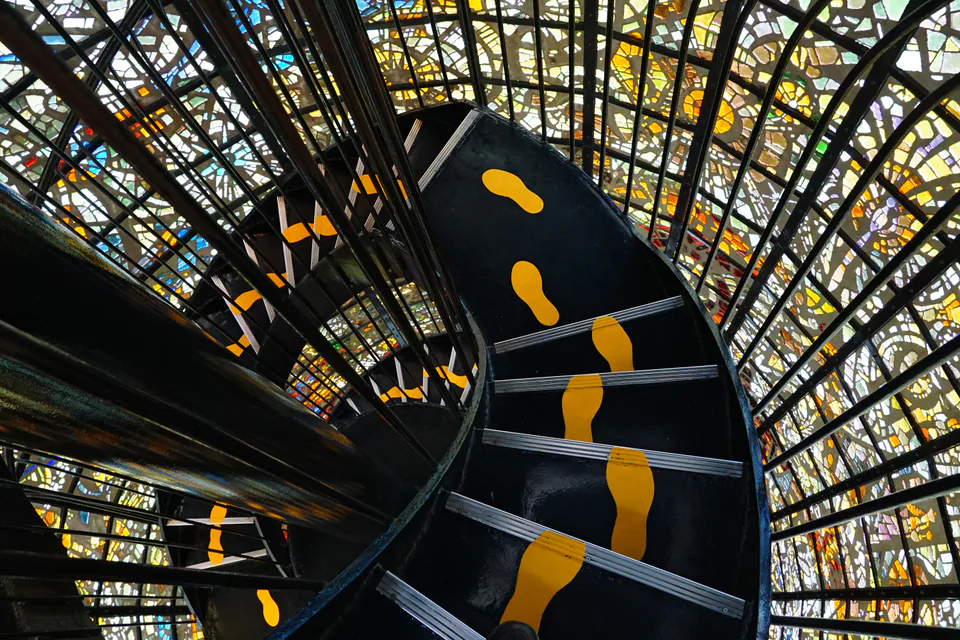
The stained-glass tower is one of the museum’s most recognisable landmarks, but the interior light is the more memorable part.
Klook is for a date you have already chosen—not a reason to lock the itinerary early
Klook’s exact Hakone Open-Air Museum product 22229 currently lists a selected-date admission ticket with instant confirmation and a suggested duration of 2–3 hours. Its current conditions say a 100% cancellation fee applies from 00:00 on the scheduled date of use, with refund requests handled through Klook customer service.
That makes the decision straightforward. First lock the Gora day and compare your checkout price with the museum’s own ¥1,800 online adult ticket. Do not assume a third-party platform is automatically cheaper, and do not let a selected-date ticket force a museum visit into a day when the weather or Hakone transport has changed.
Once your Gora day is fixed, compare the admission option
This article may contain affiliate links. ValueNavi may earn a commission from an eligible booking at no extra cost to you.
Your Gora date is fixed: compare Hakone Open-Air Museum admission on Klook
Skipping the museum? Rebuild your Hakone loop instead
Prices and cancellation conditions can change. Recheck the selected date, final checkout amount and current conditions before paying.
Late August 2026 bonus: the final tote-bag workshop weekend is August 29–30
The museum’s current August calendar still lists its colour-your-own tote-bag workshop on August 29–30, 2026 after the August 22–23 dates. If you are already visiting that weekend and enjoy hands-on activities, it is a nice extra. It is not a good reason to rebuild a Hakone trip around August 30.
NO-GO: four Hakone itineraries that should skip the museum without guilt
Skip it if you only have one day and Owakudani, Lake Ashi and Hakone Shrine are your non-negotiables; if you will not reach Gora until around 16:00 but still want a relaxed full visit; if the family is mainly coming for Woods of Net and the weather is poor enough that the outdoor experience is compromised; or if you genuinely care more about ryokan time than outdoor sculpture. Fame is not a scheduling obligation.
This is why the museum works best as part of a coherent Hakone plan, not a trophy stop. The more your day depends on ropeways, buses and weather, the more important it is to remove one attraction cleanly rather than make every attraction worse.
Verdict: excellent for Gora stays and protected two-hour blocks; poor as a 4 p.m. afterthought
Hakone Open-Air Museum is easiest to recommend to travellers staying in or passing through Gora, anyone willing to protect at least 90–120 minutes, families who want interactive art, and people who enjoy sculpture more when landscape and weather are part of the experience. At ¥1,800 online (about US$11.29) or ¥2,000 at the door (about US$12.55), the admission price is not difficult to defend when the timing is right.
The strongest counterargument is that a 60-minute fast visit is still allowed by the museum’s own guide. True: 60–90 minutes is its faster complete-circuit estimate. But that is very different from arriving at 16:30 with only 30 minutes left, and it leaves little room for indoor galleries, family play or the footbath. The recommendation therefore changes by arrival time rather than pretending every ticket buys the same experience.
Before paying, check five things: you can protect at least around 90 minutes; the forecast still suits the outdoor experience you want; family play features matter enough to make weather a deal-breaker; the museum sits naturally in your Gora or accommodation route; and Klook is actually better for your selected date than the official online ticket. Facts and prices checked August 27, 2026.
Before departure, recheck the official Hakone Open-Air Museum visitor information for weather-related closures, maintenance and current opening information.
Sources and verification
Hakone Open-Air Museum — official hours, admission and access · official guide map — 60–90 and 90–120 minute visit guidance · official 2026 exhibition and workshop calendar · Klook product 22229 for selected-date and cancellation conditions.
USD conversions use the August 27, 2026 market rate of approximately ¥1 = US$0.00627 and are rounded for planning. Ticket prices, parking, event schedules, weather restrictions and platform conditions can change.