
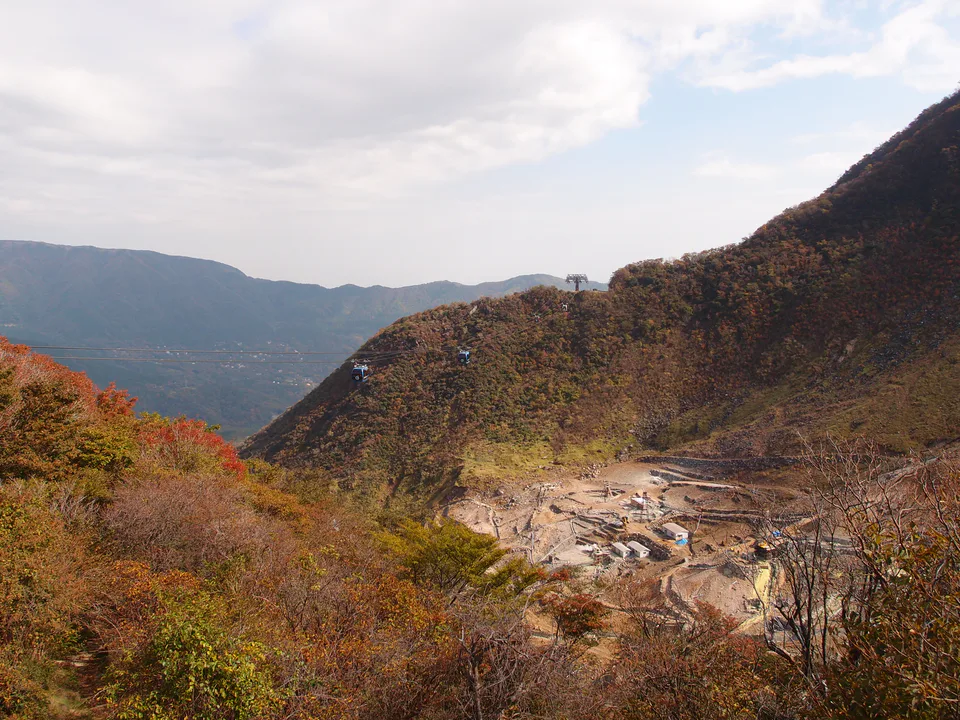
Hakone autumn leaves do not peak across the whole region on one weekend. Owakudani reaches about 1,042 metres, Lake Ashi sits at roughly 724 metres and Hakone-Yumoto is close to 100 metres. Gora, Sengokuhara, Miyanoshita and Kowakudani fall between them, while slope direction, tree species, exposure and the lake create local differences. The useful question is not simply when Hakone reaches peak colour, but which elevation should receive your limited time and which route still works if a ropeway, cruise or bus is disrupted.
2026 status, checked 4 August 2026: Hakone has not issued a confirmed 2026 peak-colour calendar. Every date range below is a historical planning framework, not a promise. Replace it with the official live foliage report and transport notices 24–48 hours before entering the mountains.
Hakone autumn leaves: the 30-second answer
Late October is normally an elevation-chasing period rather than a whole-Hakone peak. Early November usually offers the broadest choice across Gora, Owakudani, Sengokuhara and Lake Ashi. Mid-November shifts the centre toward Gora, Kowakudani, Miyanoshita, Moto-Hakone and the lake. Late November is primarily a lower-elevation decision, with Miyanoshita and Hakone-Yumoto more realistic than exposed high ground. Early December should only be selected for low Hakone when the current-year report supports it.
For a first overnight stay, Gora gives the best balance of mountain access, museums and wet-weather alternatives. Hakone-Yumoto is safer for late arrival, early departure, older travellers and unresolved luggage. Lake Ashi is a resort-led choice for travellers who value a quiet morning, half board and lake scenery more than late transport flexibility. Sengokuhara works when pampas grass, art museums, Gotemba access or two slower nights are central to the trip.
↔ Scroll table left or right
Area | Approx. elevation | Historical planning window | Best use |
Owakudani / Sounzan | 1,042m / about 750m | Late October to early November | Volcanic scenery, aerial views and early highland colour |
Gora / Kowakudani | About 541–610m | Early to mid-November | Gardens, museums, railway scenery and overnight access |
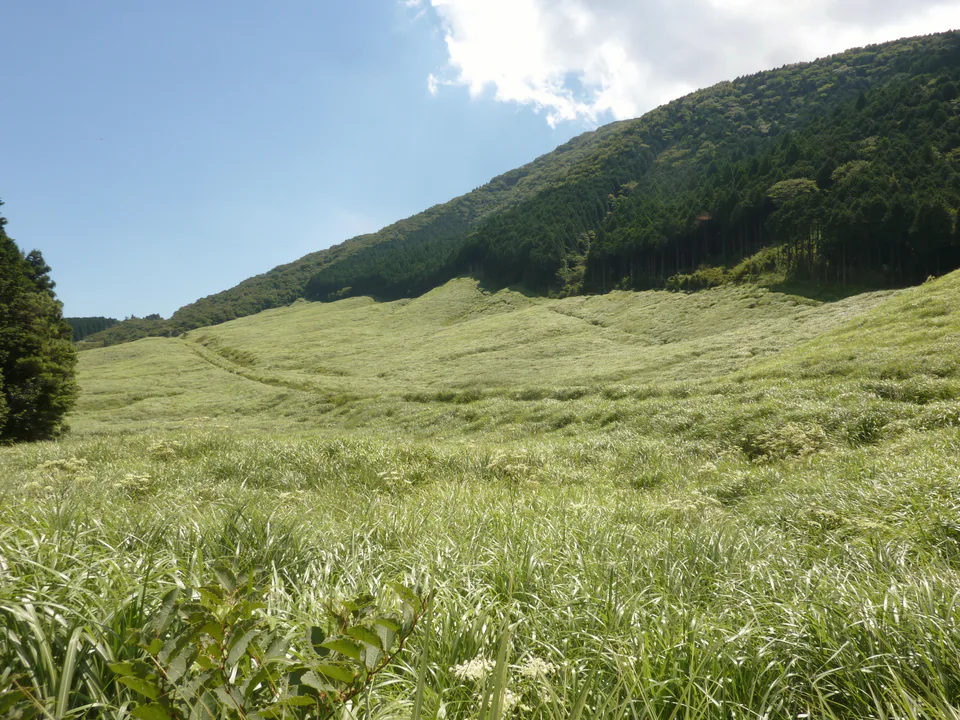
Sengokuhara | About 650–700m | Golden pampas from late Sep–late Oct; woodland monitored in November | Grassland, museums, Gotemba corridor and slower stays |
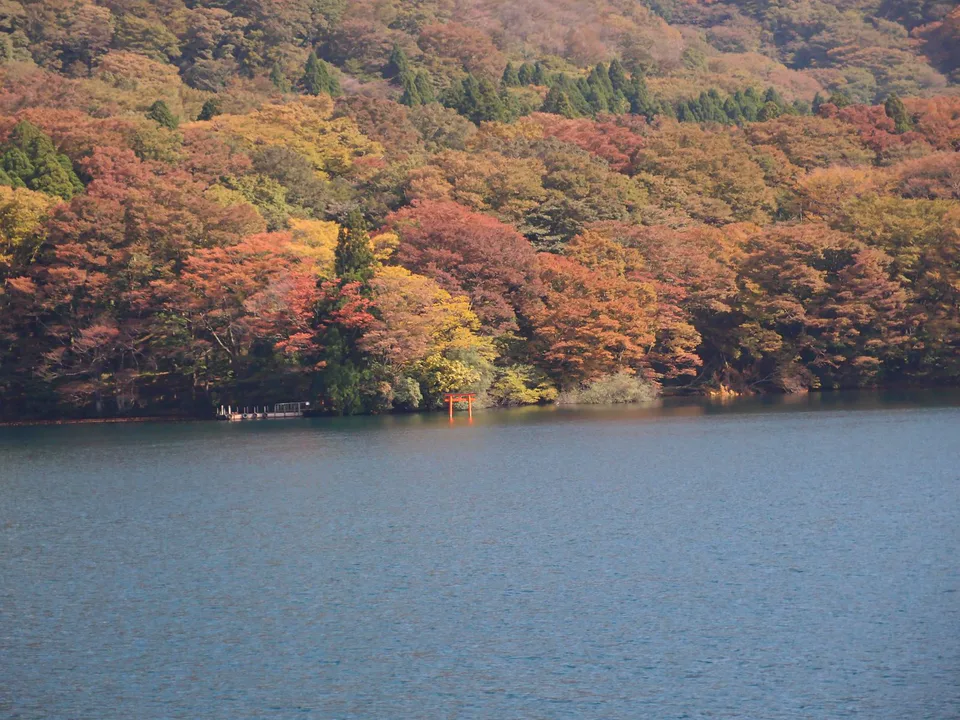
Lake Ashi / Moto-Hakone | About 724m | Early to mid-November | Shoreline, shrine, Onshi Park, cruise and lake hotels |
Miyanoshita | About 430m | Mid to late November | Ravines, heritage streets, onsen and later colour |
Hakone-Yumoto | About 100m | Late November into early December in suitable years | Late arrival, luggage, mobility, onsen town and Odawara access |
How elevation changes the route, not only the foliage date
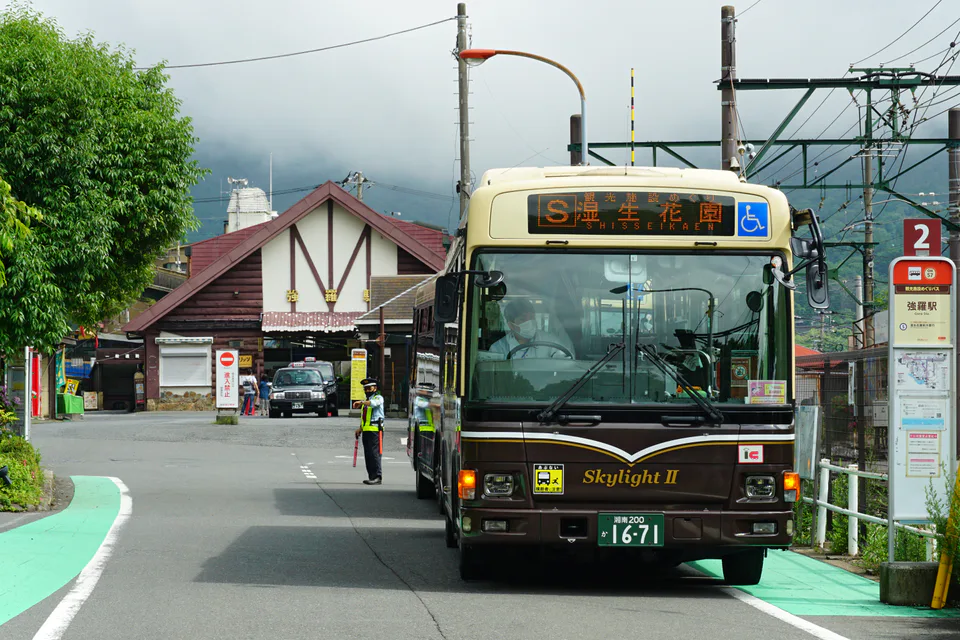
Odawara is the lowland gateway where Shinkansen, JR and Odakyu services meet. It is also the easiest place to separate large luggage from the mountain trip. Hakone-Yumoto is the first mountain hub and the most forgiving overnight base. Miyanoshita sits farther up the Tozan Railway and suits heritage streets and later colour. Gora connects the railway with the cable car, but several hotels that look close on a map are reached by steep roads. Sounzan is primarily a transfer point to the ropeway, while Owakudani is the highest major sightseeing stop and carries volcanic-gas, fog and temperature risks.
Togendai is the western interchange for the ropeway, Lake Ashi cruise and buses. The official ropeway currently operates from 09:00 to 17:00 from February through November and from 09:00 to 16:15 in December and January. Since October 2025, the adult one-way fare across the ropeway network is ¥2,000 and the adult return fare is ¥3,000. These hours and fares help with budgeting, but wind, lightning, fog, volcanic conditions and maintenance still override the timetable. A ticket never guarantees that the complete loop will operate.
Which part of Hakone should you choose by date?
Late October: follow the high ground, not the whole loop
Late October is usually too early for low Hakone. Prioritise Owakudani and Sounzan when the live report shows colour on exposed slopes, or make Sengokuhara’s golden pampas field the central landscape. Gora may be starting, while Miyanoshita and Hakone-Yumoto are often still green. A day trip should use Gora–Sounzan–Owakudani–Togendai as its spine only when visibility and operations are favourable. An overnight stay is more useful in Gora or Sengokuhara than at the low entrance.
Early November: the broadest first-visit window
Early November normally gives the broadest range of choices. Gora, Owakudani, Sengokuhara and Lake Ashi can all be relevant, although a cold or windy spell may strip the most exposed high slopes. This is the strongest period for a reduced classic loop or a Sengokuhara–Togendai–lake route. Gora is the most balanced base because it gives early access uphill and still supports museums and onsen if weather closes the upper route.
Mid-November: slow down and move lower
Mid-November shifts the centre toward Gora, Kowakudani, Miyanoshita, Moto-Hakone and Lake Ashi. Owakudani may already be past its best, and spending half the day in queues for bare high ground is a poor trade. A museum-and-ravine day, a Gora garden route or a slower Moto-Hakone and Onshi Park itinerary often produces more colour and less transport risk. Hakone-Yumoto may still be developing, so it remains a practical base rather than the automatic foliage target.
Late November and early December: use the railway corridor
Late November is a lower-elevation trip. Miyanoshita, the Tozan Railway corridor and Hakone-Yumoto are the sensible targets, while Owakudani, Sengokuhara and much of the lake zone carry substantial leaf-fall risk. In early December, only plan specifically for Hakone-Yumoto when the live report shows remaining colour. Otherwise make onsen, architecture, food and Odawara the purpose rather than treating a delayed peak as guaranteed.
↔ Scroll table left or right
Date window | Priority | Day-trip structure | Overnight base |
Late October | Owakudani / Sounzan and Sengokuhara pampas | Gora–Owakudani–Togendai if operating | Gora or Sengokuhara |
Early November | Gora, Owakudani, Sengokuhara and Lake Ashi | Reduced loop or Sengokuhara–lake corridor | Gora; lake for a second night |
Mid-November | Gora, Miyanoshita, Kowakudani and Moto-Hakone | Museum, ravine and lake-shore route | Gora, Miyanoshita or Yumoto |
Late November | Miyanoshita and Hakone-Yumoto | Mountain railway corridor and low Hakone | Yumoto or Miyanoshita |
Is the complete Hakone loop a good autumn itinerary?
The classic loop runs Hakone-Yumoto–Tozan Railway–Gora–cable car–Sounzan–ropeway–Owakudani–Togendai–Lake Ashi cruise–Moto-Hakone or Hakone-machi–bus back. It is a transport architecture, not a requirement. On peak weekends, queues and road congestion can remove lunch, photography and safety margin. Large luggage, a stroller, mobility limitations or a fixed ryokan dinner make the complete circuit a weak objective.
A one-day loop suits an early starter carrying only a day bag, comfortable with repeated transfers and willing to delete a stop immediately if the ropeway or cruise is suspended. Split the route across two days when the trip includes half board, Sengokuhara, museums, serious photography, children or older travellers. Poor visibility is a reason to reduce Owakudani time; strong wind is a reason to remove the ropeway or cruise; severe road delay is a reason to use a direct bus rather than preserving the circle.
Six practical Hakone autumn routes
1. One-day reduced classic loop
Enter through Hakone-Yumoto on an early service, continue to Gora, Sounzan and Owakudani while visibility and operation are favourable, then move to Togendai. Take either a useful cruise segment or a direct bus according to the final connection. Leave large luggage in Tokyo, Odawara or Yumoto and keep at least 60–90 minutes before the last practical return. If the ropeway closes, change to Gora, Miyanoshita and a museum rather than rebuilding the loop through uncertain buses.
2. Gora gardens and museum day
Use the Tozan Railway to Gora and combine Gora Park, the Hakone Museum of Art after its confirmed reopening, the Open-Air Museum or Kowakudani. This is the strongest rain, mobility-conscious or ropeway-free route, although Gora Park itself includes slopes and steps. Keep lunch flexible and return through Miyanoshita. When upper-mountain transport is unstable, this route is more reliable than repeatedly waiting at Sounzan.
3. Sengokuhara and Lake Ashi day
Take a Togendai-bound bus to Sengoku-kogen, allow about 60–90 minutes for the out-and-back pampas path, have lunch in Sengokuhara and continue to Togendai. Add a short cruise or one shore section rather than the full Gora–Owakudani circuit. This works best during the pampas season and with a small bag. If road delay becomes serious, remove the cruise and leave directly from Sengokuhara or Togendai.
4. Two days and one night
Use day one for Miyanoshita, Kowakudani or Sengokuhara, then check into Gora, Sengokuhara or a lake ryokan before dinner. Use day two for the best-elevation corridor according to the live report. Deliver luggage from Hakone-Yumoto only when the property and cutoff are confirmed; otherwise store it or travel with an overnight bag. The main value of two days is the ability to exchange the mountain and museum days when wind or rain changes.
5. Low-transfer route for older travellers
Take a direct bus from Odawara or Hakone-Yumoto to Moto-Hakone, use a short shrine or Onshi Park section and return on the same corridor, or ride only the mountain railway to Miyanoshita. Choose a station-near hotel and remove the steep Sengokuhara walk, Gora Park’s full circuit, the Owakudani research trail and any dependence on the final bus. A flat hotel approach and reliable shuttle matter more than a short map distance.
6. Rainy-day museum and onsen route
Combine the Open-Air Museum when conditions permit, Okada Museum or Kowakudani indoor facilities, then finish with an onsen. In heavy rain or thunderstorms, cancel the exposed pampas path, guided Owakudani trail and cruise. Do not use Freepass coverage as a reason to remain outdoors. A good rainy-day plan is deliberately smaller and keeps the hotel dinner and return journey protected.
Owakudani volcanic gas and trail restrictions
The Owakudani Nature Research Trail is not an ordinary open promenade. The official system uses guided, reserved entry on a route of about 700 metres. Participants must be able to evacuate independently, and gas readings, rain, wind or fog can cancel entry. Travellers with respiratory or heart conditions, anyone who becomes unwell around sulfur gases and people unable to self-evacuate should not treat the trail as essential. A trail cancellation and a wider-area closure are not always identical, so read the exact official notice.
Where to stay for Hakone autumn leaves
Hakone-Yumoto is the safest base from Tokyo. It offers the easiest late arrival, food, luggage storage and early Odawara departure, but it is weaker for an early Owakudani start and its foliage is usually later. Yumoto Fujiya Hotel is the representative station-near full-service choice. Gora is stronger for the mountain route, gardens and museums. HAKONE YUTOWA is a practical near-station example, while Gora Kadan represents the higher-end ryokan decision. Always verify the slope or shuttle before booking.
Miyanoshita and Kowakudani suit later foliage, heritage or family facilities. Sengokuhara suits the pampas field, art museums and Gotemba access; Mount View Hakone and Hakone Highland Hotel are useful only when the bus stop, dinner and shuttle fit the route. Lake Ashi and Moto-Hakone suit travellers who value lake mornings and half board more than late transport flexibility; Hakone Hotel and Hotel de Yama are representative choices. The district determines luggage, dinner, last transport and the first route next morning.
Where to Stay in Hakone: Yumoto, Gora or Lake Ashi explains the district choice. Hakone Ryokan with Private Onsen covers dinner cutoffs, bath types, tattoos and car-free access.
Search Hakone stays on Booking.com | Compare Hakone stays on Expedia
Check availability on Booking.com
Check availability on Expedia
Hakone Freepass, Romancecar, IC cards and luggage
The Hakone Freepass covers specified local transport, including the Tozan Railway, buses, cable car, ropeway and Pirate Ship, but it does not make closed services operate and it does not include the Romancecar limited-express surcharge. Calculate the route you genuinely intend to use rather than forcing the full loop to recover the pass price. Travellers staying near Tokyo Station or continuing toward Kyoto can use JR or the Tokaido Shinkansen to Odawara and then choose local transport separately.
IC cards work on many individual sectors, but they are payment methods rather than reservations. Large suitcases should not travel around the complete loop. Use confirmed Hakone-Yumoto delivery to a participating hotel before the stated cutoff, station storage, hotel storage or a small overnight bag. Delivery is not universal, can be disrupted by severe weather and excludes some fragile or valuable items. Resolve the luggage plan before booking a mountain hotel with an early dinner cutoff.
Disruption and foliage Plan B
If the ropeway is suspended, remove the Owakudani crossing and use Gora, Kowakudani or a single bus-accessible area such as Sengokuhara. If volcanic restrictions apply, obey the exact gas and safety notice rather than trying to interpret it from social media. If the mountain railway is suspended, use the official replacement route and shrink the day toward Yumoto, Miyanoshita or Odawara; replacement buses may not absorb all passengers. If the Pirate Ship is suspended, return from Togendai or Moto-Hakone by bus and keep only a short shoreline visit.
In strong wind, thunderstorms or heavy rain, cancel the upper pampas path, guided volcanic trail and lake cruise and use museums, onsen and station-near meals. Early snow or ice can change gates, roads and bus service even when Tokyo is mild. If the high elevations are bare, move down to Miyanoshita or Hakone-Yumoto. If Yumoto remains green, move uphill only after checking live images. When buses are severely delayed, remove the farthest sector and protect the ryokan dinner. When hotels are sold out, stay in Odawara and enter early rather than accepting an unsuitable mountain location.
Hakone autumn leaves FAQ
What is the best month for Hakone autumn leaves?
Early to mid-November normally offers the broadest choice, but high elevations can be earlier and Miyanoshita or Yumoto later.
Can I complete the loop in one day?
Yes with an early start, a day bag and only one or two long stops. Peak weekends require a route that can be shortened immediately.
Is the Hakone Freepass always worth it?
No. It is easier to justify for two days or a substantial part of the loop. Price a Yumoto-only or single-area trip sector by sector.
Does the Romancecar need a separate ticket?
Yes. The reserved limited-express surcharge is separate even when the base journey is covered by a pass.
Where should older travellers stay?
Hakone-Yumoto is the lowest-risk choice. A flat, near-station Gora property also works when the shuttle and luggage plan are confirmed.
Is Owakudani suitable for children?
The wider area depends on live gas and safety conditions. The guided research trail has age and evacuation requirements that must be checked.
Is Hakone worthwhile in rain?
Yes when the trip shifts to museums, crafts, onsen and near-station meals. Remove exposed grassland and lake transport in severe weather.
Should I choose Hakone or Lake Kawaguchiko?
Choose Kawaguchiko for a direct Mount Fuji-and-lake composition. Choose Hakone for onsen, museums, elevation-based foliage and stronger wet-weather alternatives.
Official checks and related guides
Check Hakone live transport and visitor information, the Hakone Ropeway operating page and the official ropeway fare page before travel. Last checked 4 August 2026.
Tokyo to Hakone transport | Where to Stay in Hakone | Tokyo–Kawaguchiko–Hakone 3-Day Itinerary