
For a first Hakone ryokan stay, choose the bath product before you choose the hotel name. If you want hot-spring water available privately whenever you like, book a room whose full description explicitly says it has an in-room onsen. If you are comfortable reserving a shared private bath for one timed session, you can spend less—but availability, duration and arrival time become part of the booking risk. And if a room merely says “open-air bath,” verify the water source: an outdoor tub is not automatically an onsen.
The second decision is time. A private onsen ryokan is poor value when you arrive after dinner, use the bath once at midnight and leave early the next morning. It becomes much easier to justify when the room, dinner and bath create several useful hotel hours. For a one-night stay, I would normally protect a mid-afternoon arrival, dinner, at least two realistic bathing windows and an unhurried morning before paying a large premium for privacy.
↔ Scroll table left or right
What you actually want | Product to book | Main risk | Current example |
Private hot-spring water whenever you want | In-room onsen explicitly attached to the room category | Assuming the cheapest room has the bath shown in the gallery | Hakone Kowakien Ten-yu: official site says every guest room has an open-air onsen bath |
Maximum privacy for an adult couple | Ryokan built around private in-room onsen rather than communal bathing | Age restrictions and high room premium | Kinnotake Tonosawa: every room has a private open-air onsen; guests under 12 are not accepted |
Lake Ashi location matters more than in-room hot-spring water | Room with open-air tub plus separate private/public onsen facilities | Outdoor room bath may not use hot-spring water | Hakone Ashinoko Hanaori: selected rooms have open-air baths, but current plan information states the guest-room bath is not hot-spring water |
Private onsen experience at a lower accommodation price | Normal room + reservable private hot-spring bath | Timed slots can sell out or be unavailable after a late arrival | Mount View Hakone: private sulfur-spring baths are sold in 45-minute sessions and are generally reserved at check-in |
Private onsen is not one product: five labels that change the booking
The phrase “private onsen” is used too loosely on hotel and OTA pages. Before comparing rates, translate every candidate into one of these products:
↔ Scroll table left or right
Listing term | What it can mean | Question that must be answered |
In-room bathtub | Normal indoor bathroom | Does the room description explicitly say hot spring / onsen? |
In-room open-air bath | Outdoor or semi-outdoor tub attached to the room | Is the water hot-spring water or heated tap water? |
In-room onsen | Private bath in the room using hot-spring water | Is it available in every room or only the exact category you selected? |
Private / family bath | Shared facility used privately by one party for a time slot | How is it reserved, how long is the slot, what does it cost, and is availability guaranteed? |
Public onsen | Communal gender-separated or rotating bath | What are the tattoo, child, diaper, accessibility and opening-hour rules? |
The most expensive mistake is booking from the photo gallery. A beautiful open-air bath can belong to a premium room, a communal facility or a paid reservable bath rather than the room you are about to buy. Match the full room name on the payment page to the bath description.
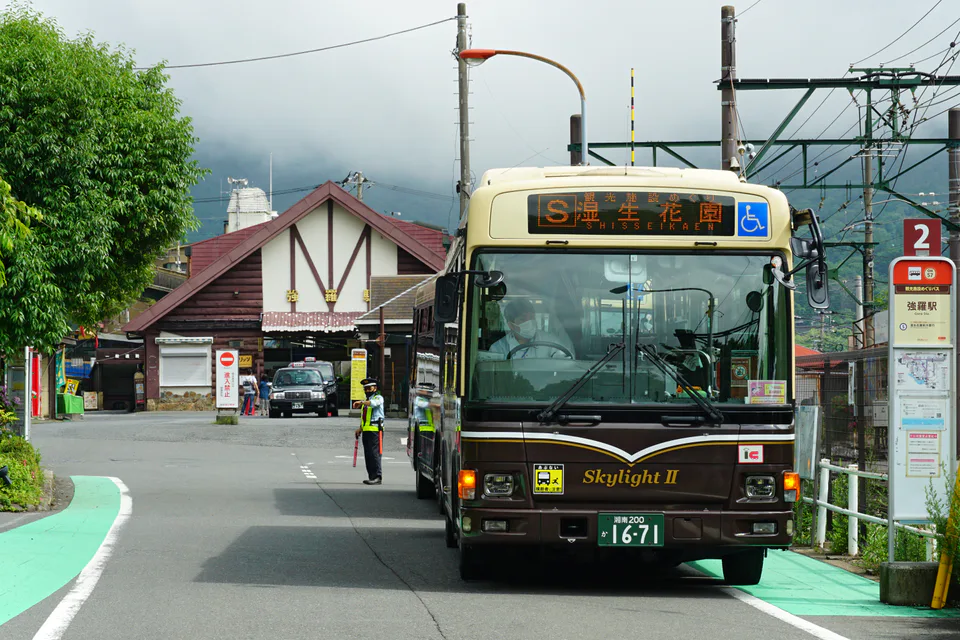
Regional Gora image for transport context, not a guest-room bath.
Use a three-level private-bath hierarchy instead of a hotel ranking
A numerical ranking hides the most important fact: different ryokan are selling different products. For most travellers, these three levels are more useful than a “top 10” list.
Level 1 — in-room onsen in every room: pay for certainty and unlimited timing
Hakone Kowakien Ten-yu is a clean example. Its current official room and onsen pages state that all guest rooms have a private open-air onsen using Kowakudani hot-spring water. That means you are not gambling on a shared private-bath time slot and you do not have to upgrade simply to obtain the basic private-onson function.
Kinnotake Tonosawa is an even more privacy-led example. Its official site states that every room has a terrace and private open-air onsen, with free-flowing hot-spring water; the property currently does not accept guests under 12. This is the product for travellers who want the bath to be part of the room itself, not a scheduled facility visit.
What you are paying for: certainty, repeated use and control over timing. The premium makes the most sense when you will use the bath more than once—before dinner, after dinner and/or the next morning. If you only plan one quick soak, a timed private bath elsewhere may solve the same privacy problem for much less.
Level 2 — open-air room tub plus separate hot-spring facilities: location may be the real premium
Hakone Ashinoko Hanaori is the useful counterexample to “open-air bath = onsen.” Current Odakyu plan information explicitly says the open-air bath in the guest room does not use hot-spring water. The hotel separately operates public onsen and reservable private hot-spring baths; the official private-bath page currently lists two private half-open-air baths at JPY 3,000 for 40 minutes.
That does not make Hanaori a weak hotel. It changes what you should pay for. Its location near Togendai, Lake Ashi setting and larger shared onsen experience can be the reason to stay. But a traveller whose non-negotiable requirement is “natural hot-spring water in my room at 23:00” should not let the phrase “room with open-air bath” pass the filter.
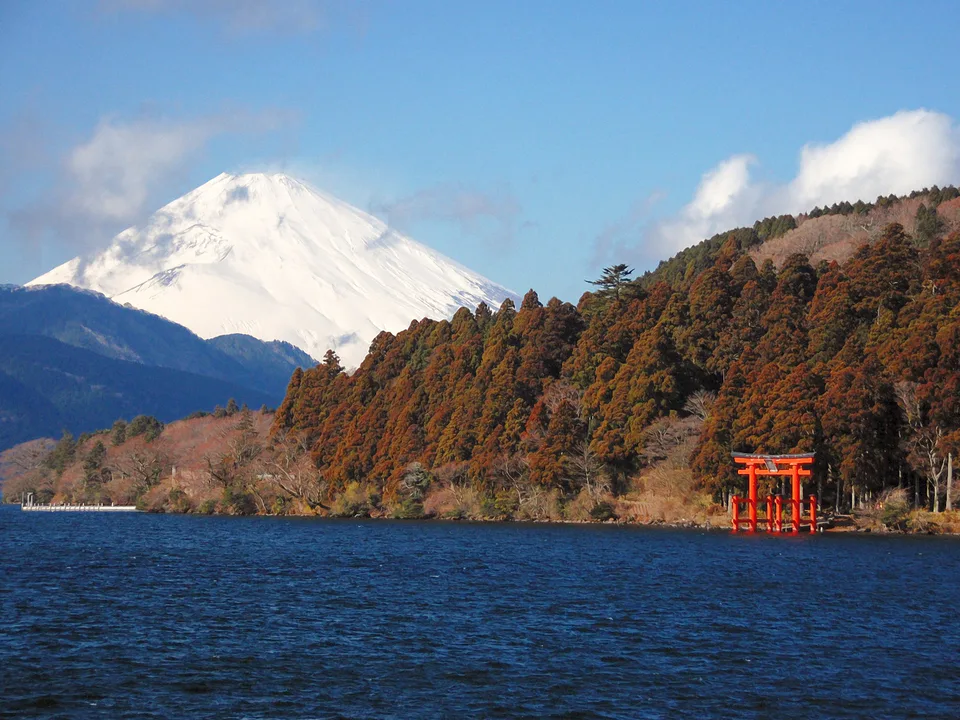
Regional Lake Ashi image for location context, not a Hanaori guest-room bath.
Level 3 — normal room plus reservable private onsen: cheaper, but timing becomes part of the risk
Mount View Hakone is a good example of the lower-cost strategy. Its current official site lists three private open-air sulfur-spring baths: one at JPY 2,000 and two at JPY 3,000, each for 45 minutes. Its current booking information says private baths are generally reserved on a first-come, first-served basis at check-in; some special plans include or pre-select a private-bath session.
This model can be excellent value when the goal is privacy for one soak rather than unlimited room bathing. But the product is no longer “my room has an onsen.” It is “my stay gives me a chance or a booked slot to use a private onsen.” A late arrival can reduce the available choices, and the property explicitly warns on some plans that late arrival may prevent it from accepting a private-bath reservation.
The decision: if the private bath is the emotional centre of the trip, buy certainty. If it is one nice experience inside a broader Hakone stay, a timed bath can be the more rational purchase.
Count private-bath sessions before paying the room premium
A useful way to compare a premium in-room-onson room with a cheaper ryokan is to count the bathing sessions you realistically expect to use.
One session: a reservable private bath can often solve the privacy requirement.
Two sessions: an in-room onsen starts to become more valuable because you avoid schedule pressure twice.
Three or more sessions: the room bath becomes a real stay feature rather than a photograph you paid for.
This is ValueNavi analysis, not a hotel rule. The point is to stop paying for unlimited access when the itinerary leaves only one usable hour at the property.
Dinner is a harder constraint than the latest front-desk check-in
Half-board is often what turns a Hakone hotel into a ryokan experience, but it also turns arrival time into a hard operational constraint. Do not ask only “What is the latest check-in?” Ask what time must I arrive to receive the dinner included in this rate?
Mount View Hakone provides a clear current example: its official information says guests with dinner should check in by 18:00, and it may be unable to serve dinner after the specified time; the missed dinner is not refundable under the stated rule. Other ryokan use different dinner windows, so the exact property and rate must control your plan.
If you are leaving Tokyo late, arriving from Fuji Five Lakes, or stacking Hakone sightseeing until evening, breakfast-only or room-only can be the more resilient product. An expensive kaiseki dinner has no value if the transport plan makes you miss it.
For a one-night half-board stay, I would build backwards:
confirm the dinner start / arrival deadline;
reserve enough margin for mountain buses, trains or shuttle collection;
place the final sightseeing stop before that buffer;
only then decide whether another attraction fits.
This is why where you stay in Hakone and how you reach Hakone should be settled before a meal-heavy ryokan booking.
Late arrival can erase most of the private-onsen premium
Imagine two otherwise identical one-night stays.
Stay A: arrive 15:30, soak before dinner, eat, soak again late, sleep, use the bath again in the morning.
Stay B: arrive 20:30 after sightseeing, dinner is missed or not included, use the bath once, sleep, leave at 07:30.
The same room can be excellent value in Stay A and poor value in Stay B. The difference is not hotel quality; it is awake hotel hours. If the ryokan is the splurge night of a Japan trip, protect the hours that allow the splurge to perform.
Tattoo privacy and tattoo permission are separate questions
An in-room onsen is useful for tattooed travellers because it creates a private bathing route. It does not prove that every communal bath, spa, pool or shared facility at the property permits tattoos.
Ten-yu’s current official onsen page explicitly states that guests with tattoos are refused admission to its public onsen. A Ten-yu room bath therefore solves private bathing, but it should not be rewritten as “the hotel is tattoo-friendly.” For properties whose public rules are unclear, obtain a written answer before booking if communal facilities matter.
A practical message to the ryokan should ask separately:
Can I use the in-room bath with my tattoo?
Can I use the communal onsen?
Are cover stickers accepted, and are there size limits?
Can I use any reservable private bath?
Keep the reply. “Private bath available” is not a substitute for a policy.
Car-free travellers should solve the last mile before comparing views
Hakone is not one compact resort town. Hakone-Yumoto is the transport gateway; Gora and Kowakudani sit deeper in the mountain network; Sengokuhara is bus-oriented; Lake Ashi properties can be excellent for the loop but less forgiving for late arrivals. A ryokan can be “in Hakone” and still require a bus, shuttle, taxi, slope or internal transfer after the train from Tokyo ends.
Large luggage magnifies that last mile. Hakone’s current official luggage transport service lets travellers drop eligible bags at Hakone-Yumoto Station from 08:30 to 12:00 for same-day delivery to participating accommodation, with hotel pickup after 15:00. The current one-way fee is JPY 1,500 for regular luggage within the stated size/weight limit and JPY 2,500 for larger accepted pieces. Not every property participates, and weather can disrupt the service.
That creates a useful split:
Arrive before noon: a deeper Gora, Sengokuhara or Lake Ashi stay becomes easier when your ryokan participates in luggage delivery.
Arrive after the luggage cutoff: station distance, shuttle certainty and bus crowding matter much more.
Arrive late with two large cases: Hakone-Yumoto or a very clear pickup route may beat a more photogenic remote ryokan.
For wider multi-city baggage planning, use the Japan luggage-forwarding guide; the Hakone same-day service is a local tool, not a universal substitute for intercity takkyubin.
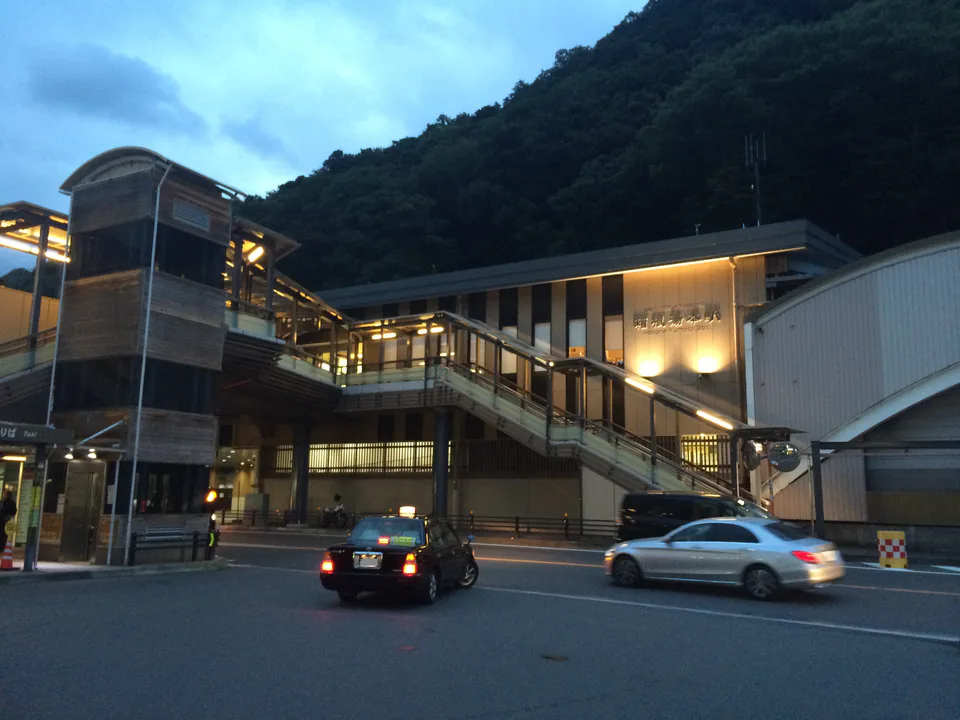
Regional Hakone-Yumoto image for transport context.
Families should filter room occupancy and bath rules before luxury
Private bathing can make Hakone much easier with children, but “family-friendly ryokan” is not one booking condition. Check child age, whether the child counts toward room occupancy, whether meals and futon are included, whether diapered children can use communal facilities, and whether the private bath itself has an age/capacity rule.
Kinnotake Tonosawa is an immediate hard filter because its current official site says guests under 12 cannot stay. Mount View also publishes some room and private-bath plans that are limited to adults or to two adults, so the exact room/rate matters. Do not assume a room that physically looks large enough is legally bookable for your family.
For a family with two large cases and a stroller, the most romantic room in a remote location can be a worse purchase than a more accessible property with a reliable transfer. The room has to solve the whole stay, not only the bath.
For couples, separate “private onsen” from “traditional ryokan”
A couple can want three different things:
Bath privacy: hot-spring water inside the room at any time.
Ryokan ritual: dinner, breakfast, tatami/futon elements and a slower evening.
Resort privacy: larger room, terrace, forest/lake setting and minimal interaction with public facilities.
Those are related but not identical. A modern hotel with an in-room onsen can solve bath privacy without feeling like a small traditional inn. A traditional ryokan may have beautiful communal baths but only selected rooms with private bathing. An adults-oriented luxury property may prioritise privacy and space over the “first ryokan” learning experience.
Write the priority in one sentence before opening OTA filters. “We want a natural hot spring in the room and kaiseki dinner” is useful. “We want a romantic ryokan” is too vague.
When is the private-onsen premium not worth it?
You arrive after dinner and leave early. The hotel does not have enough useful hours to justify the premium.
Only one person wants to bathe once. A reservable private bath may solve the same need.
The room tub is not hot-spring water and that was your non-negotiable requirement. Do not pay for the photograph.
You are forcing a remote ryokan into a luggage-heavy or late-arrival day. The last mile can consume the calm you were trying to buy.
The private-bath slot is not guaranteed but the bath is the reason for the trip. Upgrade to a room with a verified in-room onsen instead.
The room category premium is so large that you must give up another high-value Japan night. Compare the opportunity cost, not only the Hakone hotel page.
When is it worth paying more?
You will use the room bath two or three times. Unlimited timing becomes a genuine feature.
Tattoos or privacy make communal bathing undesirable. A verified in-room onsen removes a major uncertainty.
The ryokan night is the destination. You are arriving early enough for dinner, bath and morning rather than treating the property as a transit hotel.
Bath access solves family or couple logistics. You can bathe on your own schedule rather than coordinate a shared facility.
The location also improves the next day. A Lake Ashi, Gora or Yumoto stay that fits the route can make the hotel premium work twice.
A four-example shortlist that covers most private-onsen decisions
↔ Scroll table left or right
Example | Use it to test | Verified boundary |
Hakone Kowakien Ten-yu | Do I want natural hot-spring water in every room with no private-bath slot to reserve? | Every room has an open-air onsen; public onsen currently refuse tattooed guests |
Kinnotake Tonosawa | Do two adults want a privacy-led luxury stay where the room bath is central? | Every room has a private open-air onsen; guests under 12 are not accepted |
Hakone Ashinoko Hanaori | Is Lake Ashi/Togendai location more important than having hot-spring water inside the room? | Selected rooms have open-air baths, but current plan information says the room bath is not hot-spring water; separate reservable private onsen exists |
Mount View Hakone | Can one 45-minute private onsen session meet my privacy need at a lower room cost? | Private sulfur-spring baths are timed and paid; standard booking is first-come at check-in unless a specific plan says otherwise |
These examples are not a universal ranking. They deliberately represent four different ways a “private onsen” search can be fulfilled. Once you know which product you need, compare other Hakone properties against the same criteria.
Ten checks before payment
Does the full room name explicitly include the bath you want?
Is the room bath natural hot-spring water?
Is the bath inside your room or a shared facility reserved by time?
If timed, is the slot guaranteed before arrival?
How long is the private-bath session and is there an extra fee?
Does the rate include dinner and breakfast, and what is the dinner-arrival deadline?
What is the written tattoo rule for each shared facility you want to use?
How do child age, bedding, meals and maximum occupancy work for this exact rate?
What is the station/bus/shuttle/luggage path on the day you arrive?
After taxes, meals, bath fees and transport, is the premium still worth the hotel hours you will actually use?
Final verdict: buy bath certainty only when you will use it
For a first Hakone splurge, I would start with a verified in-room onsen if privacy is non-negotiable, then choose the area and dinner plan that let you use it properly. Ten-yu demonstrates the simple version: every room has an open-air onsen. Kinnotake Tonosawa shows the adult privacy-led version. Hanaori shows why “open-air bath” must not be confused with in-room hot-spring water. Mount View shows how a timed private onsen can solve the same privacy problem more economically when one session is enough.
The most important booking decision is therefore not “Which ryokan ranks first?” It is what exact bath access am I buying, how many times will I use it, and what must go right before dinner for the stay to deliver that value? If those answers are unclear, do not pay the private-onsen premium yet.
Compare Hakone accommodation after choosing your bath type
Furano Rafting: Standard, Private or Canyoning? Start With Transport and River Type
Okinawa With Kids: The Road Trip Works Only If the Car Seat, Boot and Nap Window Fit Together
Tokyo Bay Private Cruise 2026: Yacht, Yakatabune or Dinner Cruise? Start With Group Size
Mount Kurikoma vs Naruko Gorge: Hiking, Access, Onsen and Sendai Day Trips
References
Hakone Kowakien Ten-yu — official onsen information · Kinnotake Tonosawa — official room and private-onsen information · Hakone Ashinoko Hanaori — official private-bath information · Mount View Hakone — official private-bath and meal-arrival information · Hakone Luggage Transport Service. Checked August 25, 2026. Room inventory, meal plans, bath availability, tattoo rules and transport can change; verify the exact room/rate before payment.