A Tokyo Bay private cruise is one of those experiences that looks easy to compare until you put actual group size into the math. A couple wanting skyline views, eight friends wanting a private space, and a 20-person family dinner may all search for a Tokyo private yacht or Tokyo yakatabune, but they are not buying the same thing. One product is priced around the use of an entire boat. Another is effectively a restaurant, drinks package and group venue that happens to move through Tokyo Bay. A third is simply a seat on a scheduled Tokyo Bay dinner cruise.
That difference matters more than whether the boat looks luxurious in photos. The useful question is not “Which cruise is best?” but “What cost is this boat replacing for my group — private space, dinner, transport between areas, or just 90 minutes of skyline views?”
30-second answer: couples usually do not need a charter, 6–8 people should recalculate, and 15+ people can make a yakatabune surprisingly logical
For two people, a join-in dinner or sightseeing cruise is usually the rational default. You pay for two seats instead of carrying the fixed cost of a whole vessel. A private charter can still be worth it for a proposal, photography, a milestone birthday, or simply because not sharing the space is the entire point — but that is a privacy purchase, not a bargain.
At four to six people, the answer becomes less obvious. A fixed boat price spread across the group can stop looking absurd, yet a scheduled cruise may still be much cheaper once meals are included. This is the zone where you should compare total group spend, not headline price per person.
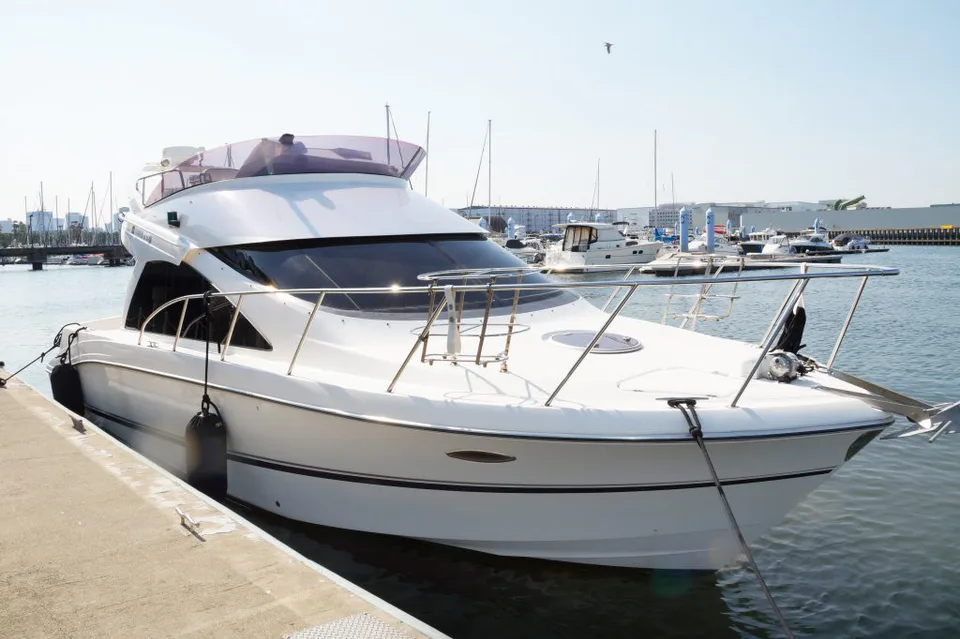
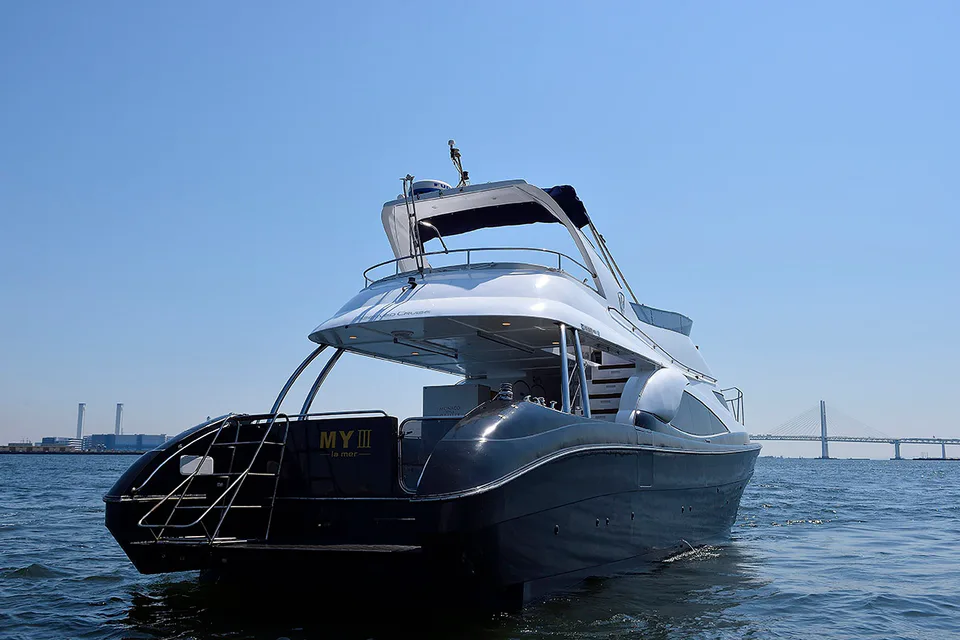
At six to eight people, a small private motor yacht begins to make real sense. One current Tokyo Bay charter is a 90-minute private cruise for up to eight passengers and explicitly allows guests to bring their own food and drinks while providing no catering. That is a strong clue about what you are paying for: the boat, route, captain and private space — not dinner.
At roughly 10–14 people, small-group yakatabune and special-charter products enter the conversation. Takamoto says its own boats can be privately chartered from 10 guests, while some exact platform packages set different purchase minimums. The operator minimum and the package minimum are therefore not interchangeable.
At 15 people and above, a yakatabune can become easier to justify because dinner, drinks and a group venue were likely going to cost money anyway. Instead of asking whether the boat is expensive, ask whether it replaces a restaurant reservation, private room, entertainment and part of the evening itinerary at the same time.
If this is your first trip and you are still choosing where to stay in Tokyo, settle that before picking a pier. A cruise should fit your base; your hotel should not be moved around one evening on the water.
A 90-minute private yacht buys autonomy, not a premium dinner cruise
The current 90-minute private charter sold for Tokyo Bay is a useful example. It is capped at eight people and allows outside food and drinks, but the operator does not provide meals. That makes it fundamentally different from a dinner cruise. If your plan is “good dinner plus night views,” you still have to source the food, carry it to the marina, manage timing, and decide what happens after you disembark.
That sounds like a drawback only if dinner is the main goal. For a proposal, a small reunion, family photos, or a group that wants to talk without strangers nearby, the lack of a formal meal can actually be the advantage. The boat is not dictating when you sit, when the course meal arrives or when entertainment starts.
This is also why “price per minute” is a weak metric. Ninety private minutes can be more valuable than 150 minutes on a scheduled vessel if privacy is the scarce thing you are buying. The reverse is true if you wanted dinner and service all along.
If what you really want is an expensive but dramatic skyline viewpoint rather than private social space, compare the water experience with a Tokyo helicopter night-view route. A helicopter buys altitude and compressed sightseeing; a yacht buys time together and a private environment.
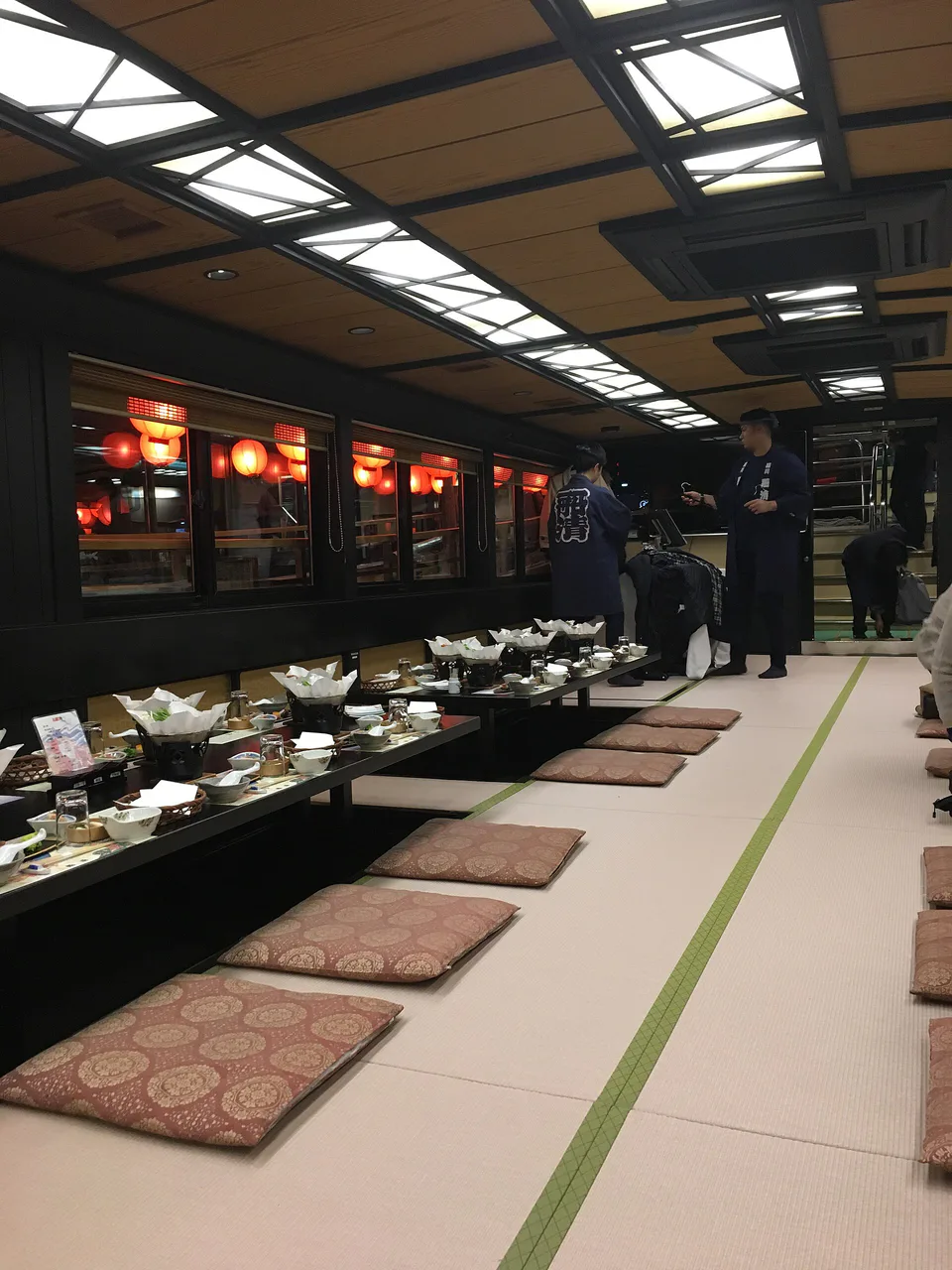
A yakatabune is not a slower yacht: it is a restaurant, party room and cruise bundled together
Takamoto’s current official pricing shows several meal packages in the roughly ¥13,000–¥17,000 per-person range and says private chartering is possible from 10 guests. Current platform listings also include 150-minute private packages, a small-group option for 14 or fewer, and packages that require a higher minimum purchase. These are different commercial structures even though they all use the same “yakatabune charter” label.
That bundled structure is exactly why a 15- or 20-person group can make better financial sense than a couple. A larger group was already going to need dinner, enough seats together, drinks, and somewhere everyone can remain in one place. On a yakatabune, those costs are combined with the cruise.
For a six-person group that mainly wants skyline photos, the same bundle can be overkill. If nobody wants a full meal, a long seated experience or a traditional boat atmosphere, paying for all of those features is not automatically an upgrade.
For 2–4 people, a join-in dinner cruise is often the boring answer — and the correct one
Tokyo currently has plenty of scheduled cruise inventory, including dinner, sunset, lunch and yakatabune experiences where you buy individual seats. That matters because small groups do not need to solve the minimum-headcount problem at all. You give up total privacy and route control, but the meal, timetable and boarding process are already organized.
For a couple on a four-night trip, that efficiency can be more valuable than exclusivity. If the cruise is just one evening among many things to do in Tokyo, the best product is often the one that does not create another half-day logistics project.
This matters even more if you are already debating a Kamakura day trip in a four-day Tokyo stay or whether Nikko fits the same short trip. A private cruise is not only a ticket purchase; it claims one of your limited evenings and the travel time to the pier.
The pier can cost more time than the cruise: Yumenoshima, Ryogoku and Asakusa are not interchangeable
Private motor yachts commonly use a marina such as Tokyo Yumenoshima, while yakatabune operators may offer boarding around Asakusa, Ryogoku, Nihonbashi, Harumi, Toyosu, Odaiba or Ariake. For a visitor, that is not a cosmetic choice. It changes how long you travel before boarding and how awkward the return feels after dinner or drinks.
Takamoto currently allows different boarding and disembarkation points for an additional fee and lists separate pier charges for certain locations. Nihonbashi, Toyosu, Odaiba and Ariake are examples where extra pier costs can apply. “Multiple boarding options” therefore does not mean “every pier costs the same.”
If you are based near Tokyo Station, compare that base with Shinjuku before you lock the cruise night. If you plan to stay right by the station, the Tokyo Station hotel comparison can also help you decide whether an evening transfer to the waterfront is trivial or annoying in the context of your whole trip.
If Asakusa is already your base, a yakatabune can fit the evening far more naturally. For larger families, the Asakusa group-room guide is useful because a good cruise evening is quickly ruined if the final hotel transfer becomes the hardest part of the night.
Do not assume every “Tokyo Bay” cruise shows the same landmarks from the same angle
Rainbow Bridge, Tokyo Tower, Odaiba and Tokyo Skytree appear repeatedly in cruise descriptions, but route, angle and time near each landmark depend on the departure point, actual duration, river or bay segment, tide, weather and operating restrictions. A 90-minute yacht and a 150-minute yakatabune do not automatically cover the same water.
Tokyo Yumenoshima Marina’s own current short-cruise information says its standard route is decided by the captain according to conditions, even though Rainbow Bridge and the Toyosu area are part of the normal loop. That is the right mindset for any charter: treat the published route as the normal plan, not a contractual checklist of every skyline icon.
For photography, ask for the usual route, where the boat can slow or stop, and what the alternative route looks like if conditions change. That is much more useful than counting landmarks in the marketing copy.
Fireworks cruises are a different product category, not a clever substitute for a normal night cruise
A fireworks sailing uses different inventory, timing, crowd management, navigation restrictions and cancellation risk. Current Tokyo cruise marketplaces list special fireworks cruises separately from ordinary dinner and private cruises, which is exactly how you should treat them.
If the goal is specifically fireworks, start with the Tokyo fireworks 2026 comparison and choose the event first. Do not buy a normal Tokyo Bay cruise and assume the captain can simply drift toward a fireworks venue.
Daytime, sunset or night: night is not automatically the premium answer
Daytime is best for clear city geometry, bridges and portraits. Sunset gives you daylight, golden-hour color and city lights in one booking, but the exact departure time matters much more. Night gives you the most obvious “special occasion” atmosphere, yet handheld photography becomes harder and the moving boat matters more.
If the group mainly wants to talk, eat and drink, the latest night slot may be worse than an earlier departure. A 20-person family group does not become happier simply because the skyline is darker. Return time, children, older relatives and the next morning’s plans often matter more.
Maximum capacity is not comfortable capacity
An eight-person maximum on a private yacht tells you the legal or operating limit, not how spacious eight adults with bags will feel. A yakatabune built for dozens of guests can still have different stair access, deck layouts, toilet arrangements and seating styles. Families should check the actual vessel, not just the number on the booking page.
The same applies to seasickness, mobility limitations and small children. A stable-looking dinner boat and a small open cruiser do not create the same ride. If one person in the group is likely to spend the whole trip uncomfortable, dividing the fixed price by more people does not make the purchase better.
If rain is forecast, keep a real fallback rather than assuming every vessel operates normally. The Tokyo rainy-day itinerary gives you a city-day alternative if the cruise operator changes or cancels the sailing.
Cancellation rules matter more as the group gets larger
Takamoto’s current official policy increases cancellation charges as the sailing date approaches and reaches 100% for same-day customer cancellations, while weather- or nature-related operator cancellations are treated separately. It also requires a deposit to confirm a reservation. For a large group, this is not fine print — it is part of the product cost.
The practical risk is participant uncertainty. If 20 people are “probably coming” but five have not confirmed, do not calculate the per-person cost using 20 and ignore the minimum purchase, final headcount deadline and cancellation schedule. Your cheap-looking group cruise can become expensive simply because the denominator changes.
Five traveler types: choose this way
1 | Couple: start with a join-in dinner or sightseeing cruise. Upgrade to private only if privacy, proposal space or photography is the actual reason for going.
2 | Four to six friends: compare the whole-boat price against four to six individual seats, then add food, drinks and pier transport on both sides.
3 | Six to eight people: a Tokyo private yacht becomes a serious option, especially if you value conversation and flexible food more than a formal meal.
4 | Ten to fourteen people: look at small-group yakatabune and private packages, but verify the minimum headcount on the exact package rather than relying on the operator’s general minimum.
5 | Fifteen or more: calculate yakatabune as dinner + drinks + venue + cruise. This is the group size where the bundle can stop feeling like a luxury surcharge and start replacing several expenses at once.
Four NO-GOs: stop before checkout if any one applies
NO-GO 1 | Two people only want skyline views but choose an entire yacht because “private” sounds more premium.
NO-GO 2 | You compare 90 minutes with 150 minutes without adding meals, drinks, private space and pier travel back into total cost.
NO-GO 3 | You assume the phrase “Tokyo Bay” guarantees close views of Tokyo Tower, Skytree, Rainbow Bridge and Odaiba on every sailing.
NO-GO 4 | A large group books a minimum-headcount yakatabune before the participant list is actually stable.
Eight checks before you pay
1 | Is the price per boat or per person? 2 | What is the minimum purchase and maximum passenger count? 3 | What is the actual time under way rather than the total activity window? 4 | Are food, drinks, tableware and cleanup included? 5 | Are boarding and disembarkation at the same pier, and are there pier surcharges? 6 | What is the normal route and the alternative route? 7 | What are the rules for children, mobility, luggage and seasickness concerns? 8 | How do weather cancellation and customer cancellation differ?
Final verdict: a Tokyo Bay charter is a fixed-space cost that becomes rational only when enough people actually value the space
For two people, a private cruise is usually a deliberate splurge on privacy. For six to eight, the fixed cost starts spreading across enough people to deserve a proper comparison. For 15 or more, a yakatabune can make even more sense because dinner, drinks and a group venue were expenses you were likely to incur anyway.
The mistake is declaring one option cheap from a single per-person or per-boat price. Put group size, catering, pier location, duration and cancellation risk back into the same calculation. Then decide whether you are buying skyline views, private space or a complete evening event.
Next decision
If the cruise is going into a short first-time Tokyo itinerary, check whether it is stealing the only flexible evening from more important city time.
Next decision | Choose your Tokyo base before you choose the pier
If the cruise is fixed, align the evening with the transport pattern of your hotel instead of forcing a cross-city transfer.
Next decision | Tokyo Station or Shinjuku for your trip?
Okutama Rafting 2026: Tokyo Full-Day Tour vs Local Half-Day — You're Paying for Transport
Tokyo First & Last Day Itinerary: What to Do With 3, 5 or 7 Usable Hours
40 Best Things to Do in Tokyo in 2026 — What’s Actually Worth Your Time by Area
Tokyo Disney Attraction Tickets vs Premier Access: Which Is Better in 2026?
Yakushima Hiking: Jomon Sugi, Shiratani or Yakusugi Land? Start With How Long You Can Walk
Sources
Klook | 90-minute private cruise charter in Tokyo Bay
Klook | Tokyo Bay chartered yakatabune Takamoto
Yakatabune Takamoto | Official meal and pricing plans
Yakatabune Takamoto | Official boarding locations, pier fees and cancellation rules