
Do not plan your first Tokyo day from landing time or your last day from flight time. Plan from the hours when your luggage is actually out of your hands and you are free to move. If that usable window is under three hours, stay near the hotel. With roughly four to six hours, choose one district. Only with seven or more genuinely free hours would I build a real half-day.
The same rule works in reverse on departure day: decide when you must leave Tokyo for the airport, subtract the time needed to return for luggage, then stop sightseeing before that line. A last-day attraction is only “nearby” if it is near both your luggage and your airport route.
ValueNavi Usable Window Equation
This is the core proprietary calculation for flight days.
Arrival day:
usable window = personal stop time − time luggage is stored and you are free to move
Departure day:
usable window = airport-departure cutoff from the city − luggage-return time − final sightseeing-to-luggage travel
The airport-departure cutoff itself should include the airline’s required airport arrival target, the real city-to-airport journey and a disruption buffer appropriate to your route. ValueNavi deliberately does not publish one universal “leave Tokyo X hours before your flight” number because international/domestic flights, terminals, airlines and transport modes differ.
What 3, 5 or 7 usable hours are actually worth
↔ Scroll table left or right
Usable luggage-free time | ValueNavi limit | Good examples | What to avoid |
0–3 hours | Hotel district only | Dinner, supplies, short walk, nearby free view | Cross-city travel or timed tickets |
4–6 hours | One district | Ueno, Asakusa, Tokyo Station/Ginza, Shinjuku or Shibuya | Two districts connected only because Google Maps says 20–30 minutes |
7+ hours | One coherent half-day | Asakusa + Ueno, Marunouchi + Ginza, Meiji Jingu + Shibuya | A fragile day with multiple reservations |
ValueNavi rule: every extra district must still leave one easy way to shorten the day. If the route only works when every train and queue behaves perfectly, you do not really have those hours.
Flight-Day Route Score: where should the half-day happen?
This ValueNavi editorial score uses five dimensions: one-direction finish (30%), luggage-return fit (25%), airport-route directness (20%), schedule flexibility (15%) and weather fallback (10%). Higher is better. The score is for a route pattern, not for the neighbourhood’s overall tourism quality.
Flight-day pattern | Route score | Why | Main failure mode |
|---|---|---|---|
Ueno hotel + Narita + Ueno/Ameyoko last block | One luggage return and direct Skyliner geography | You detour west before returning to Ueno | |
Tokyo Station hotel + Narita + Marunouchi/Ginza | Central sightseeing remains close to luggage and direct N'EX access | You turn Ginza into a long shopping session and lose airport margin | |
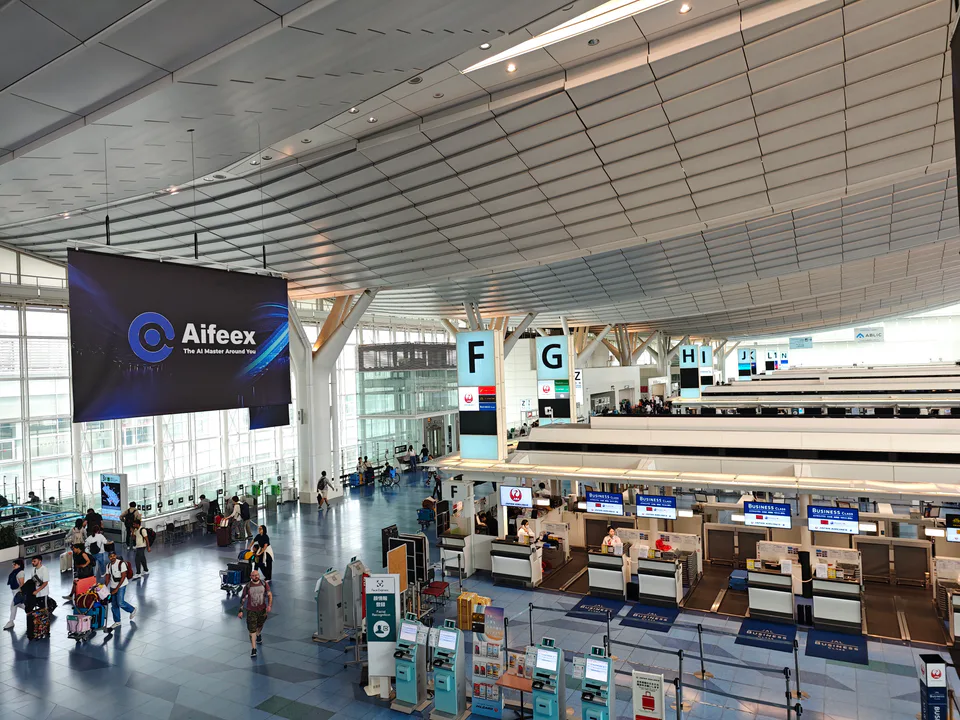
Shinagawa/Hamamatsucho corridor + Haneda | Very strong airport direction and easy city cutoff | You use the airport proximity to justify a distant detour | |
Shinjuku hotel + Haneda + Shinjuku half-day | No luggage backtracking within the district | Large station navigation and a longer airport ride than Shinagawa | |
Hotel in east Tokyo + last stop in west Tokyo + Narita | The sightseeing can be good | You create cross-city travel, a luggage return and then the airport trip |
Haneda gives you more city time — not permission to zigzag
Haneda’s official access guide currently estimates about 15 minutes to Shinagawa, 20 minutes to Hamamatsucho, 30 minutes to Tokyo Station, 40 minutes to Ueno/Asakusa, 45 minutes to Shibuya and 50 minutes to Shinjuku by train/monorail routes. These are estimated major-station times, not hotel door-to-door guarantees.
The useful conclusion is that Haneda can preserve an evening. It does not convert arrival day into a normal sightseeing day. If the bag is down at 18:00, a Shinjuku or Shibuya evening is sensible when that is already your base. Crossing to Asakusa for one famous photo is not.
Narita makes east-versus-west Tokyo a first-day decision
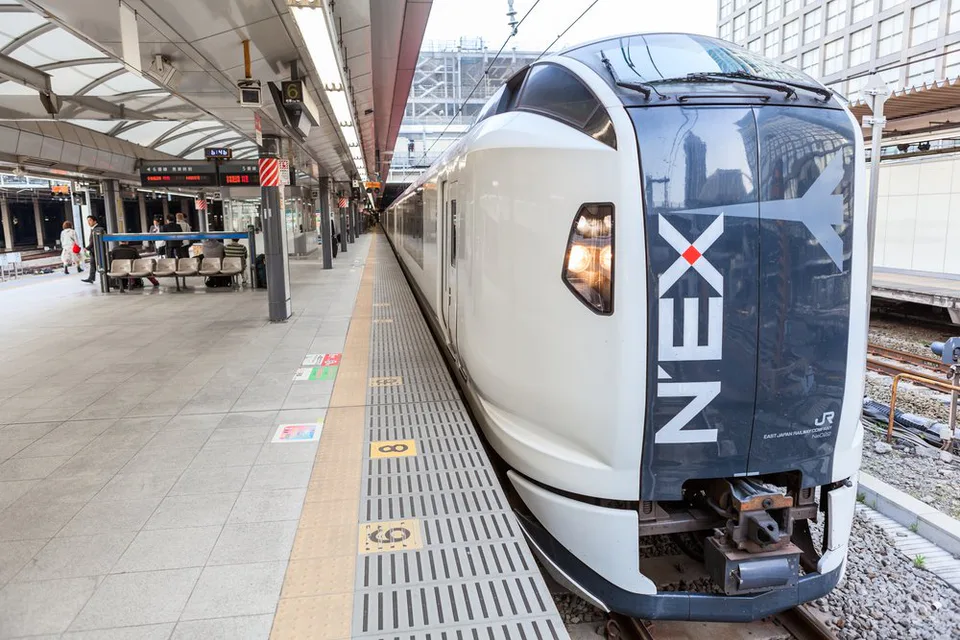
Keisei currently lists its fastest Skyliner trip between Narita Airport Terminal 2·3 and Keisei-Ueno at 41 minutes. JR East lists the Narita Express from Narita Airport Station to Tokyo Station from 53 minutes, with direct services continuing to major stations including Shinagawa, Shibuya and Shinjuku.
The 12-minute headline difference between those examples is often less important than what happens after the train. A Ueno hotel makes Skyliner + east-Tokyo sightseeing unusually clean. A Shinjuku hotel may justify a slower direct N'EX rather than saving rail minutes and then adding a large-luggage transfer.
Arrival day: 0–3 hours means the hotel district is the attraction
Use the time to learn the station exit, eat, buy breakfast or toiletries and take one walk. This is not a wasted day. It is a low-risk setup block that protects the first full morning.
If you arrive late enough that the real question is whether to continue into the city at all, switch to the Haneda late-arrival or Narita late-arrival decision guide.
Arrival day: 4–6 hours means one district
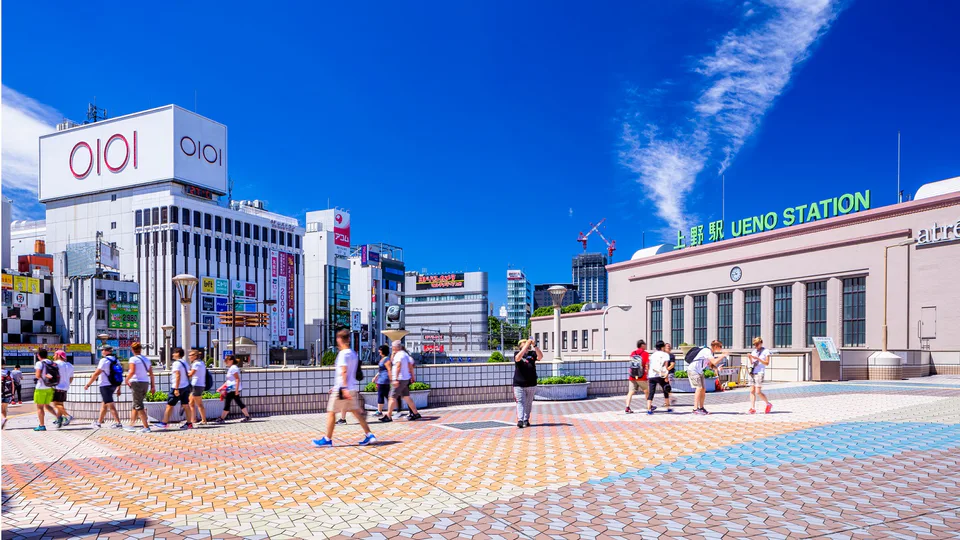
Ueno: best when the hotel or Narita arrival already points there. Use Ueno Park, Ameyoko or a museum if the timing works.
Asakusa: strong for a later east-Tokyo arrival because Senso-ji, Kaminarimon and the river can work without a timed ticket.
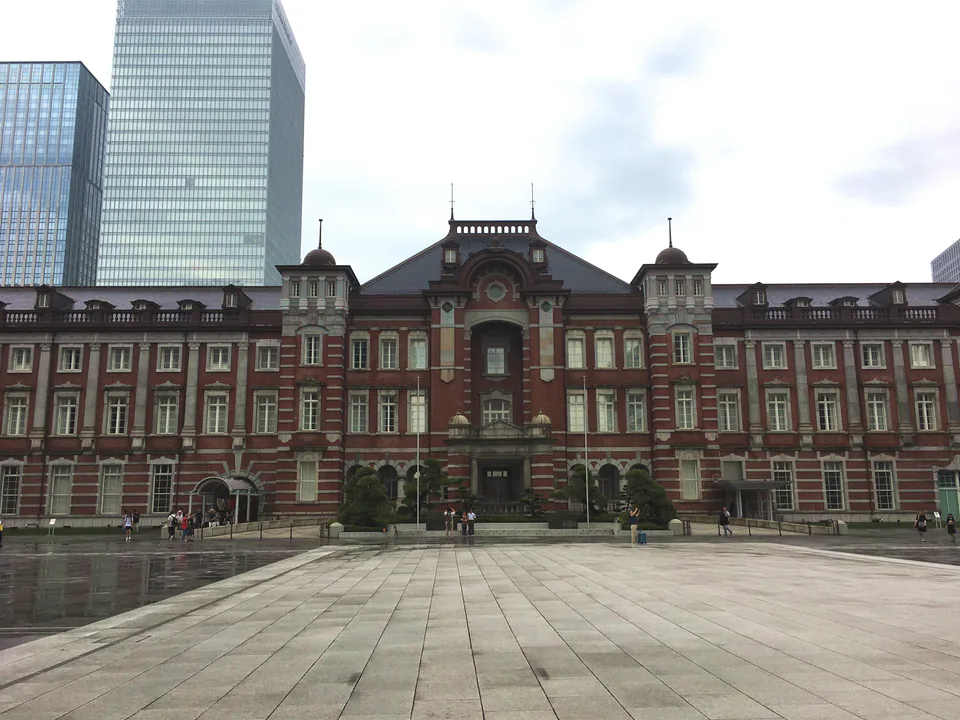
Tokyo Station / Ginza: excellent when the hotel is central. Marunouchi, KITTE, underground shopping and Ginza can all be shortened without losing a reservation.
Shinjuku / Shibuya: keep the night west if the hotel is already west. Do not pre-book a tight sunset slot immediately after an international flight.

Departure day: work backwards from the airport, then decide whether sightseeing exists
The last day should be planned in reverse:
Write down the airport arrival time required by your airline.
Add the real route from the city to the correct terminal.
Add a disruption buffer appropriate to the route.
Add the time needed to get back to your luggage and retrieve it.
Only then calculate the remaining sightseeing window.
If that leaves three hours, you have three hours — not “a day until the 19:00 flight.”
ValueNavi Luggage Return Penalty
A hotel storage room is often the easiest luggage solution, but it creates a mandatory return trip. ValueNavi treats that as a separate planning cost:
Luggage Return Penalty = current sightseeing point → stored luggage + retrieval time + luggage → airport transport point
A free attraction 30 minutes away can therefore be more expensive in usable time than a paid attraction beside the hotel. On flight day, geography outranks admission price.
If you are changing cities rather than just going to the airport, use the luggage forwarding guide instead; that is a different logistics problem.
Do not put these on arrival or departure day
↔ Scroll table left or right
Activity | Why it is fragile | Better placement |
SHIBUYA SKY sunset | Timed entry + weather-sensitive rooftop + arrival uncertainty | A normal West Tokyo day |
Mt Fuji road day trip | Traffic/weather can change the return | Middle of the trip |
Disney | Full-day ticket value | Dedicated park day |
Non-refundable tasting menu | One airport delay can destroy the reservation | A normal city evening |
Far-edge Tokyo neighbourhood | Creates cross-city luggage backtracking | Pair it with another day in the same region |
When the rule can reverse
A timed attraction can work on departure day when you are already checked out, the bags are stored near the attraction/airport route, the ticket has forgiving entry rules and the airport margin remains large after the full route calculation. The point is not “never book.” It is that the ticket must fit inside the verified usable window instead of defining it.
A first-day paid attraction can also be reasonable for a domestic arrival with no checked luggage and a large time buffer. That is a different risk profile from a long-haul international arrival.
Final verdict
For both the first and last Tokyo day, optimize for reversibility. With under three usable hours, stay near the hotel. With four to six, pick one district. With seven or more, build one coherent half-day. Choose the district that points in the same direction as your luggage and airport transport.
The ValueNavi test is simple: if one late train, one long queue or one luggage return can erase the attraction, the plan is too fragile for a flight day.
References
Haneda Airport — current train/monorail access and estimated times to major stations
JR East — Narita Express routes and current airport access information
Transport information checked August 26, 2026. ValueNavi usable-window and luggage-return formulas are editorial planning tools; they are not airport minimum-connection rules.