
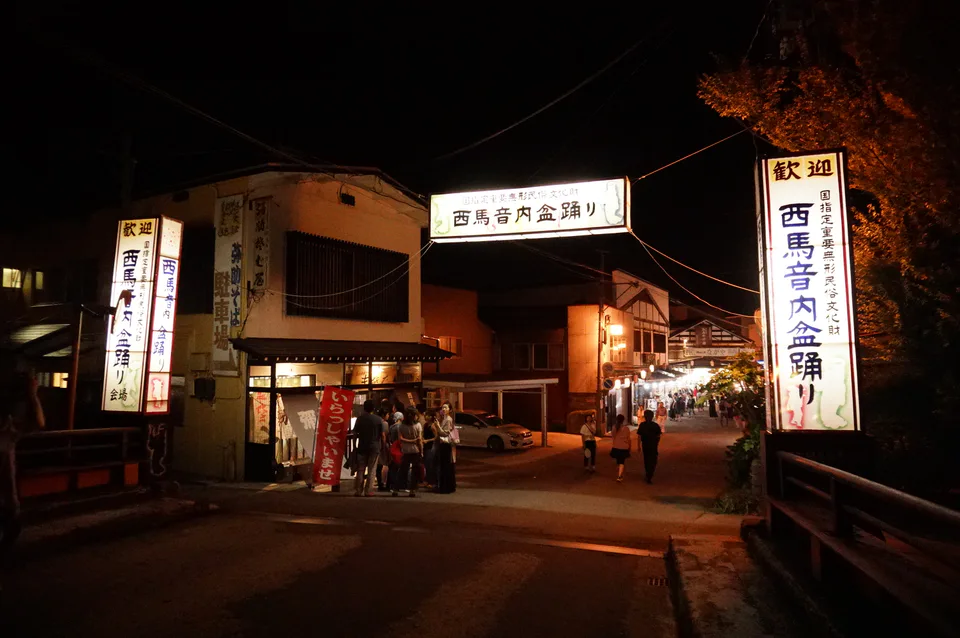
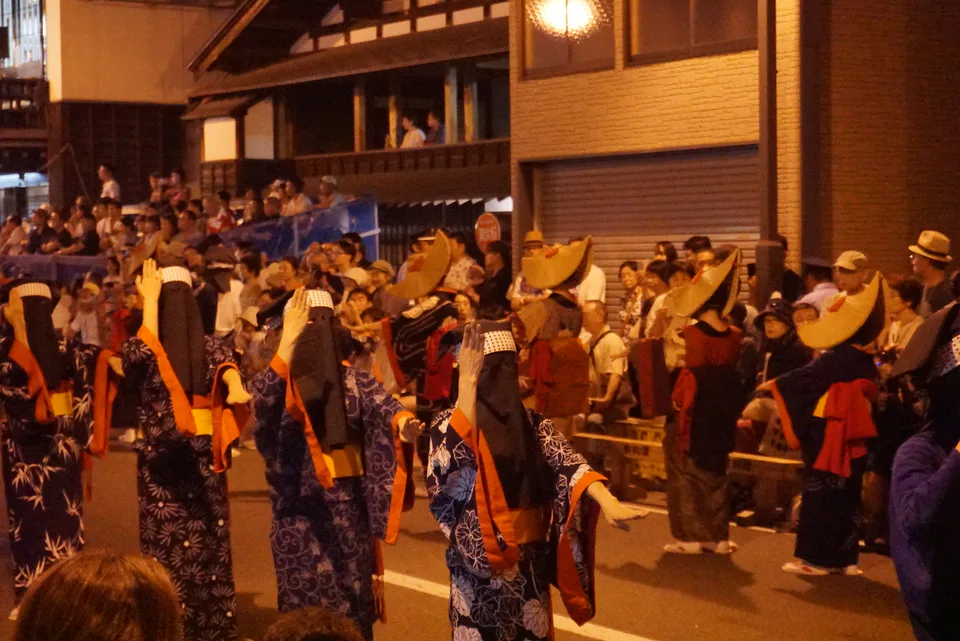
Nishimonai Bon Odori runs August 16–18, 2026, but arriving at the 19:30 start is not automatically the best plan. The official organiser says the first half is centred mainly on children and that the adult dancers assemble after 21:00. If the adult costumes, hikosazukin hoods and late-evening atmosphere are your priority, the key is to be settled before 21:00 rather than simply being first on HonmachiStreet.
Where you sleep can change that decision. The Nishimonai accommodation guide compares Ugo, Yuzawa and Yokote for the late finish, onward rail and car-free planning; solve that before choosing an arrival time that leaves you stranded after the dance.
Choose your arrival time in 30 seconds
Adult dancers are the main reason for going: arrive around 20:15–20:30 and be settled before 21:00.
Travelling with children or only sampling the festival: start at 19:30 and leave when the group has had enough.
Want the longest adult-dancer window: August 18 runs until 23:00 rather than 22:30.
Rain is possible: check the 14:00 venue decision before using any fair-weather arrival strategy.
19:30 is best for the full build-up, not the fullest adult-dance scene
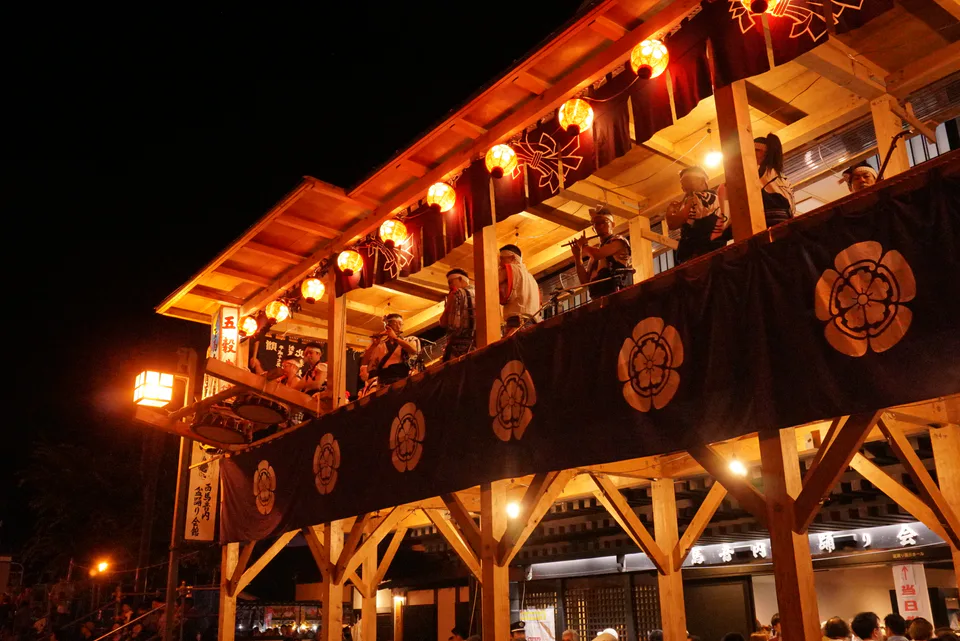
Starting at 19:30 works when you want to hear the hayashi settle into its rhythm, learn the layout, find toilets and exits and watch the evening evolve. Families also gain the option to leave before the latest period instead of committing a child to a 22:30 or 23:00 finish.
If you are comparing Nishimonai with larger Tohoku events, the Japan summer festivals comparison helps explain why this is a different kind of night from Morioka Sansa Odori: Nishimonai rewards staying for a later atmospheric shift rather than chasing a parade start.
20:15–20:30 is the best balance for most first-timers
Arriving around 20:15–20:30 gives you time to orient yourself, buy water and stop moving around before the adult-dancer period builds after 21:00. Planning to watch after 21:00 is not the same as arriving at 21:00: a buffer protects the part of the night you came to see.
If Nishimonai is part of a longer northern-Japan route, the Tohoku summer festival itinerary is useful for deciding whether another late event belongs in the same trip. The Akita Kanto Festival guide is the better comparison if you are deciding where to spend limited Akita nights.
Pair this with: Where to Stay for Nishimonai Bon Odori 2026
Arriving after 21:00 is efficient on paper and fragile in practice
If the adult dancers are all you care about, a post-21:00 arrival looks efficient. The problem is that you would be navigating, choosing where to pause and finding facilities exactly when you want to be watching. Traffic restrictions are already in force from 16:00, so the final approach should not be treated like an ordinary evening trip.
For car-free visitors, review how to ride buses in Japan for the general boarding logic, but use the current festival transport information for the actual event night. If your next stop is another Akita event, the Omagari Fireworks transport guide shows why late-event transport needs to be planned before the performance ends.
August 18 gives you 30 more minutes, but the exit is later too
August 16 and 17 run from 19:30 to 22:30. The final night, August 18, runs until 23:00, which gives adult-dance-focused visitors a larger post-21:00 window. Traffic restrictions also continue later on the final night, until midnight rather than 23:30.
If that later finish collides with a mountain-ryokan plan, compare Nyuto Onsen vs Lake Tazawa before stacking both into one travel day. A late Bon Odori night and an early rural transfer are usually competing decisions, not complementary ones.
Use the free afternoon cultural session instead of waiting on the street
The official 2026 programme includes a free cultural exchange session from 14:30 to 16:00 on August 16–18, with live music, dance demonstrations, cultural explanation and a chance to try the dance. If you want context as well as the night atmosphere, attend that session, take a proper break, then return around 20:15 rather than standing outside continuously.
Rain changes the decision completely
On a rain-venue day, the organiser announces the switch at 14:00 and moves the event to Ugo General Gymnasium. The indoor programme runs 19:30–21:30, so the fair-weather strategy of arriving around 20:30 for a long post-21:00 adult-dancer window no longer applies. Admission is paid-seat only indoors.
Same-day indoor tickets are sold from 16:00 while supplies last, at ¥3,000 per person. The Japan rainy-day itinerary backup guide is useful if the weather problem affects the wider trip rather than just this one evening.
Luggage and the next morning can matter more than 30 minutes of dance
If the late finish forces you to carry a large suitcase through the event or rush a morning transfer, use the Japan luggage-forwarding guide before changing the whole arrival strategy. For a first Japan trip, the 10-, 12- or 14-day itinerary guide helps decide whether this specialist late-night festival deserves the extra overnight at all.
If the whole route is still being built, How to Plan a Trip to Japan is the better upstream decision. Nishimonai is most rewarding when the schedule leaves room to stay for the atmosphere rather than turning 21:00 into another transport deadline.
Final verdict
Choose 19:30 for children, a shorter night and the full build-up. For the classic adult-dancer atmosphere, aim to be settled around 20:15–20:30 and protect the period after 21:00. Choose August 18 only when the extra half-hour is worth the later exit. Most importantly, check the official 14:00 rain decision on the day you attend, because an indoor move changes both the timetable and admission rules.
Japan Autumn Leaves in Early November 2026: What You Can Book Before the Forecast Exists
Asakusa Samba Carnival 2026: When to Arrive, Where to Stand and What Not to Bring
Okinawa Hotel Breakfast: Don’t Add It Until You Know What Time You Leave
Niseko Lift Passes, Ski Rentals and Lessons: What Should You Book?
Tokyo Disney Vacation Package Cancellation: What Changes Cost You in 2026