
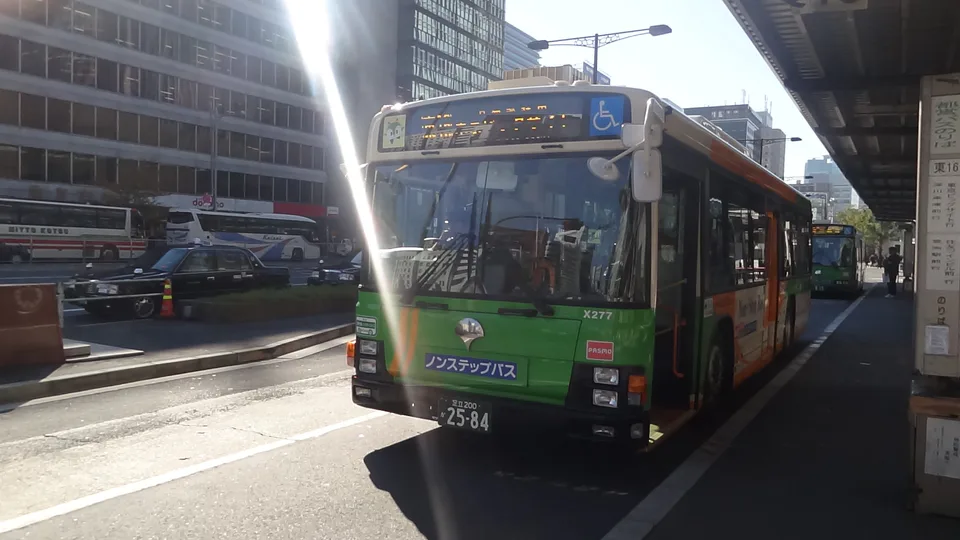
There is no single Japan-wide rule for boarding a local bus. Tokyo’s Toei buses inside the 23 wards generally board at the front and pay on entry; the same operator’s Tama-area buses board at the rear and pay on exit. Osaka Metro buses use rear boarding and payment on exit. Kyoto’s regular city-bus system still mainly uses rear boarding and front exit, while some services are exceptions. The useful skill is therefore not memorising one national rule. It is reading the actual bus in ten seconds.
If you remember only one thing, remember this: door, payment timing and fare system are separate questions. A rear-door bus does not automatically mean you tap an IC card when boarding. A flat-fare bus may need one tap; a distance-based bus may need two. Nara alone uses multiple boarding/payment patterns, which is why copying the habit from the previous city is unreliable.
The 10-second bus check before you step on
Find the entrance. Look for 入口 or 乗車口, or simply follow the boarding passengers.
Look for a numbered-ticket machine or IC reader at that door. If one is present, the bus may be recording your boarding point.
Watch one passenger. If people pay immediately at the front, it is a pay-on-entry system. If they walk in without paying and later use the front fare box, it is pay-on-exit.
Check the destination display before boarding. Correct payment on the wrong bus is still the wrong trip.
This method is safer than an east-versus-west shortcut because the same city can contain multiple operators and route types.
Tokyo proves why one-city rules can still be wrong
The Tokyo Metropolitan Bureau of Transportation currently states that Toei buses in the 23 wards use front-door boarding, payment on entry and rear-door exit. In the Tama area, the same operator uses rear-door boarding and payment on exit. That is already enough to break the idea that “Tokyo buses work one way.”
For a visitor, the practical implication is simple: do not panic if the procedure changes after you leave central Tokyo. Check the bus equipment, not your memory. If you are travelling with a stroller, Toei also has route-specific boarding guidance and may require folding or securing the stroller depending on available space.
Kyoto: learn the current system, but do not assume it is permanent
Kyoto City’s current riding guidance still describes the main regular pattern as rear boarding, front exit and payment when getting off, with exceptions including some front-boarding services. Kyoto has also announced a multi-year conversion programme for selected flat-fare routes, so a future visitor should not treat a 2026 article as a permanent operating manual.
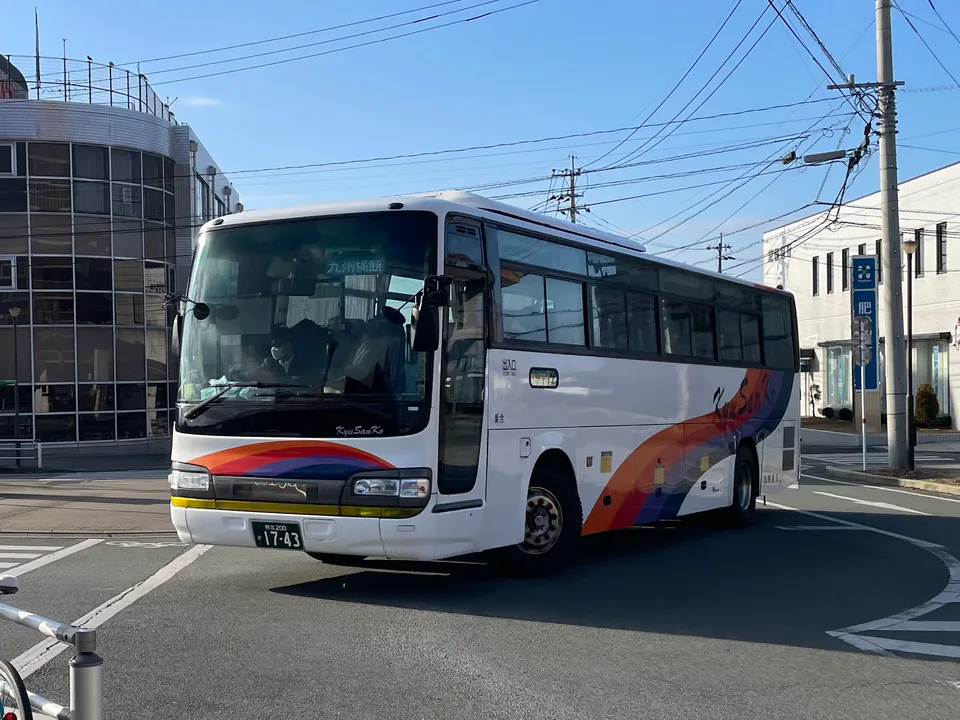
This is exactly the kind of information that should be checked on the travel date. If a Kyoto bus is crowded enough that you are more worried about luggage, children or a difficult transfer than the fare box, reconsider the route itself. Rail, walking or a taxi can be the better decision even when the bus is technically cheapest.
Osaka: rear boarding, pay on exit — and usually no entry tap
Osaka Metro’s current guidance says passengers board through the rear door and pay when getting off at the front. On the standard city-bus system, you do not take a numbered ticket or tap your IC card when entering. That detail matters because a traveller who learned a distance-based regional bus the day before may instinctively tap twice.
The lesson is broader than Osaka: do not infer payment timing from the door alone. Look for the reader and fare box. If there is no reason to interact with equipment when boarding, do not create one.
Nagoya and Nara are the best warning against memorising shortcuts
Nagoya City buses generally use front boarding, payment on entry and rear exit, but route exceptions exist. Nara Kotsu explicitly documents several different boarding and payment systems. That makes Nara a particularly poor place to assume the previous bus taught you the next one.
When the route is tourist-specific, check the operator page rather than a generic Japan guide. A museum shuttle, mountain bus, airport bus and ordinary city bus can all behave differently even if they stop on the same street.
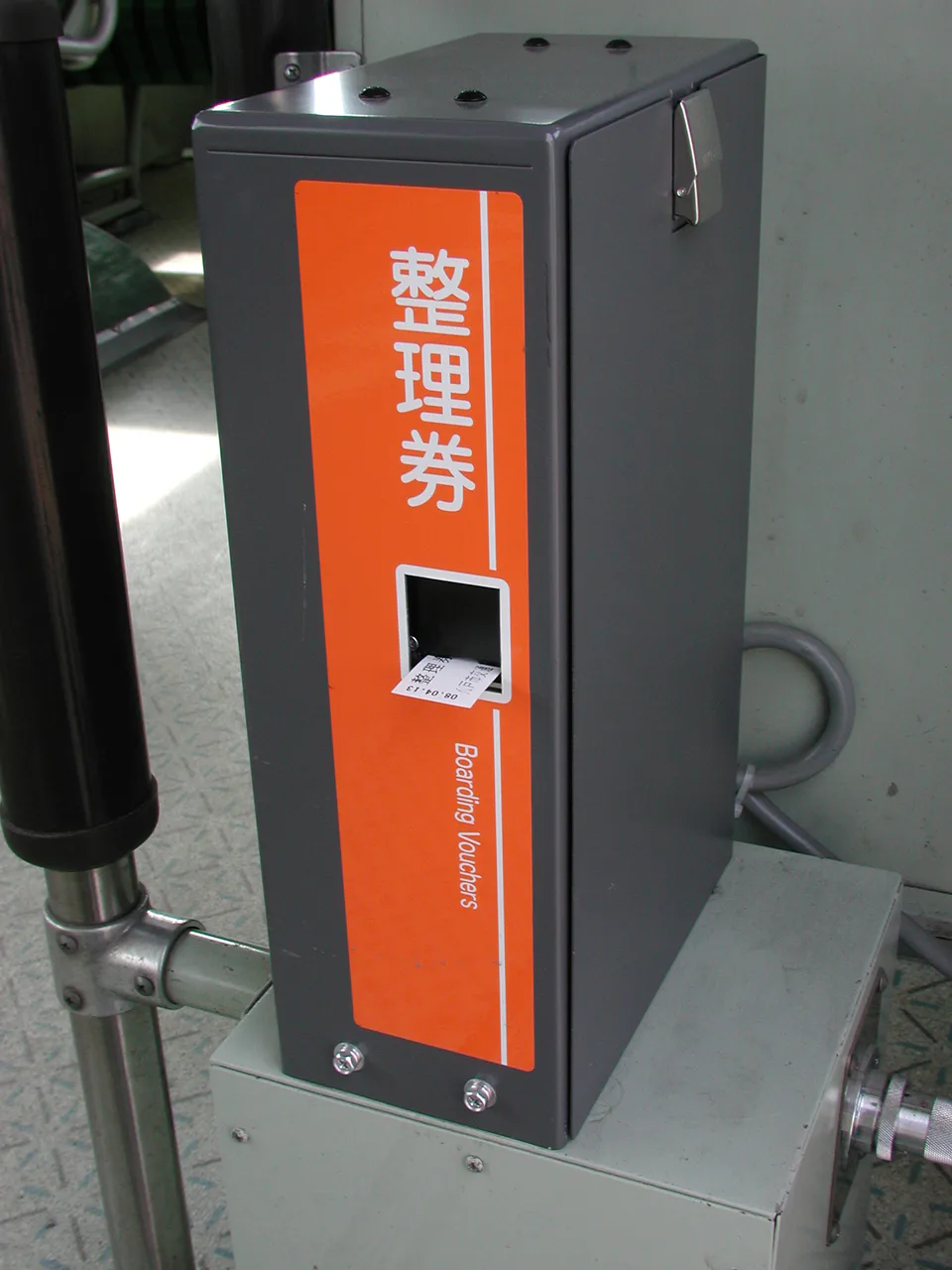
What is the numbered ticket for?
On many distance-based buses, the numbered ticket records the fare zone where you boarded. When you get off, the onboard fare display shows the fare corresponding to that number. If you use a supported IC card, tapping at boarding may replace the paper ticket by recording the boarding point electronically.
The failure mode is losing the ticket or forgetting to tap at entry. If that happens, do not guess the fare. Tell the driver where you boarded. A small communication problem is easier to solve than silently paying the wrong amount.
One IC-card tap or two?
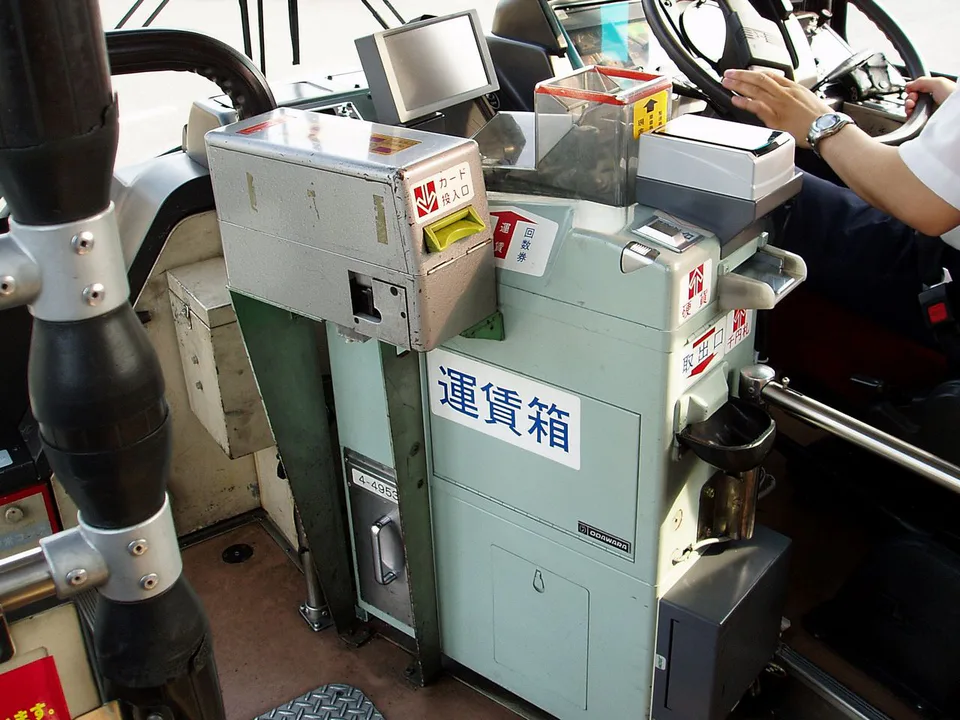
Use this rule of thumb, not as a guarantee: flat-fare, pay-on-entry buses often need one tap at boarding; distance-based buses often need a tap at boarding and another at exit. Osaka’s standard city buses are a useful exception because you board at the rear but normally pay or tap only when leaving.
IC acceptance also varies by operator and region. Major cards such as Suica, PASMO, ICOCA and others are widely interoperable, but not every rural bus accepts them. If there is no familiar IC logo, carry small cash rather than assuming your phone or card will work.
The bigger tourist mistake is often not payment — it is choosing the wrong bus
Visitors naturally focus on the unfamiliar fare box, but the more expensive mistake is boarding the correct route number in the wrong direction, taking a local service that terminates early, or assuming every bus at a shared stop reaches the same attraction. Before boarding, check route number, destination and—on rural routes—the final service you need for the return.
This matters much more in places such as the Fuji Five Lakes, Hakone, rural Kyushu and mountain onsen areas. A missed urban bus may cost ten minutes. A missed rural final bus can cost a taxi, an extra hotel night or the loss of a reserved dinner.
With large luggage, the right answer may be not to use the local bus
A bus can be the official route and still be a poor travel decision with two 28-inch suitcases. Local buses may have limited standing room and no dedicated luggage hold. Highway buses are different and often have underfloor storage, but even there capacity and baggage rules vary.
If the suitcase only needs to reach the next hotel, Japan luggage forwarding can remove the hardest part of the bus trip. For a family or older traveller, paying a little more for a direct train or taxi can also be rational if it removes repeated boarding, lifting and crowded aisles.
Cash failure: what to do when you only have a large note
Many fare boxes can change or accept a ¥1,000 note, but larger notes are much less useful. Do not board a rural bus with only a ¥10,000 note and assume the driver can solve it. Break a note at a convenience store or station beforehand when possible.
If the bus is pay-on-exit and you discover the problem late, speak to the driver before blocking the exit while searching through luggage. The social friction is lower when you explain the problem early.
Regional buses need a timetable check before a boarding-rule check
For rural trips, first confirm that the service runs on your date, that reservations are or are not required, and that the return connection exists. Only then worry about the door. Seasonal timetables, event changes and weather disruption can matter more than the normal boarding method.
This is why a transport guide such as the Kyushu Odan Bus route guide should be read as a specific route decision, not as proof that every Japanese bus works the same way.
Final verdict
Do not memorise one Japan-wide bus rule. Read the bus. Check the entrance, look for an IC reader or numbered-ticket machine, watch whether passengers pay on entry, and confirm the destination. Tokyo, Kyoto, Osaka, Nagoya and Nara all demonstrate why route-specific behaviour matters. If luggage, the last bus or a difficult rural connection is the real risk, solve that bigger transport problem first; the fare box is usually the easy part.
How Many Nights in Lake Kawaguchi? Fuji Weather, Autumn Leaves and Hotels
Kamikochi Autumn Leaves: Timing, Buses, Five Walks and Where to Stay
Nada Fighting Festival 2026: October 14 or 15 — How Much of the Festival Should You Actually See?