
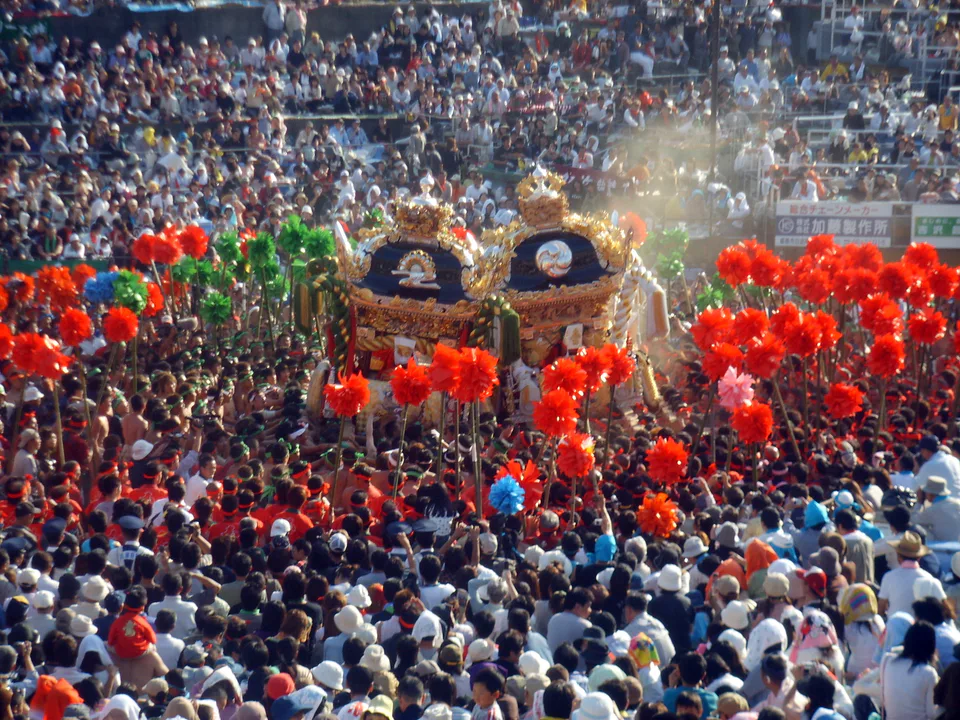
The hardest decision at the Nada Fighting Festival 2026 is not simply “October 14 or October 15?” It is deciding how much of the festival you are actually willing to commit to. October 14 is the yoimiya, built around seven districts bringing their ornate yatai floats to Matsubara Hachiman Shrine. October 15 is the honmiya, when the three mikoshi clashes that give the festival its famous “fighting” image become the main event and the procession later continues toward Mt. Otabi.
For most first-time visitors who have only one day and specifically want the famous mikoshi collisions, October 15 is the stronger choice. But there are three very different ways to do that day: watch only the shrine section, follow the procession toward Mt. Otabi, or commit almost the whole day to the moving festival. Those are not interchangeable experiences.
The ValueNavi commitment ladder: choose how much festival you actually want
↔ Scroll table left or right
| Plan | What you get | What it costs | Best for |
|---|---|---|---|
| Oct 14: Yoimiya | Seven yatai, shrine entry, decoration and performances | Lower time and walking commitment | Families, photographers, half-day visitors |
| Oct 15: Shrine only | Core mikoshi clashes around Matsubara Hachiman Shrine | Dense crowd, standing, but shorter day | Visitors with limited stamina or a fixed evening plan |
| Oct 15: Shrine + Mt. Otabi | Mikoshi clashes plus the moving procession and later Otabiyama/Hirohata sequence | More walking, more waiting, less predictable finish | First-timers who came specifically for Nada |
| Both days | Yatai-focused eve plus full honmiya contrast | Two travel days or a Himeji-area overnight | Festival-focused trips, not casual Kansai sampling |
This is the key distinction: October 15 is only “the best day” if you are prepared to give it enough of the day. Arriving, seeing one clash, then leaving for Himeji Castle or a fixed dinner is still a valid plan, but it is a deliberately shortened version—not the same experience as following the festival west toward Mt. Otabi.
ValueNavi Festival Fit Score
These are editorial fit scores for an international visitor choosing how to spend one festival day. They are not official ratings of the festival. A higher score means the option is easier to recommend for that specific travel pattern.
↔ Scroll table left or right
| Option | Money Cost | Time Cost | Booking Risk | Weather Risk | Crowd Risk | Route Fit | Uniqueness | Composite |
|---|---|---|---|---|---|---|---|---|
| Oct 14 Yoimiya | 9.0 | 8.0 | 9.0 | 7.0 | 7.0 | 8.5 | 7.5 | 8.0 |
| Oct 15 shrine only | 9.0 | 7.0 | 8.5 | 6.5 | 5.0 | 8.0 | 9.0 | 7.6 |
| Oct 15 full route | 8.5 | 4.5 | 7.5 | 5.5 | 3.5 | 7.0 | 10.0 | 6.6 |
| Both days | 6.5 | 3.5 | 6.5 | 5.5 | 4.5 | 6.0 | 10.0 | 6.1 |
The lower composite for the full October 15 route does not mean it is “worse.” It means its uniqueness is bought with more time, crowd exposure and uncertainty. If Nada is one of the main reasons you are travelling to Himeji, that trade is probably worth making.
October 14: choose it for the yatai, not as a weaker version of October 15
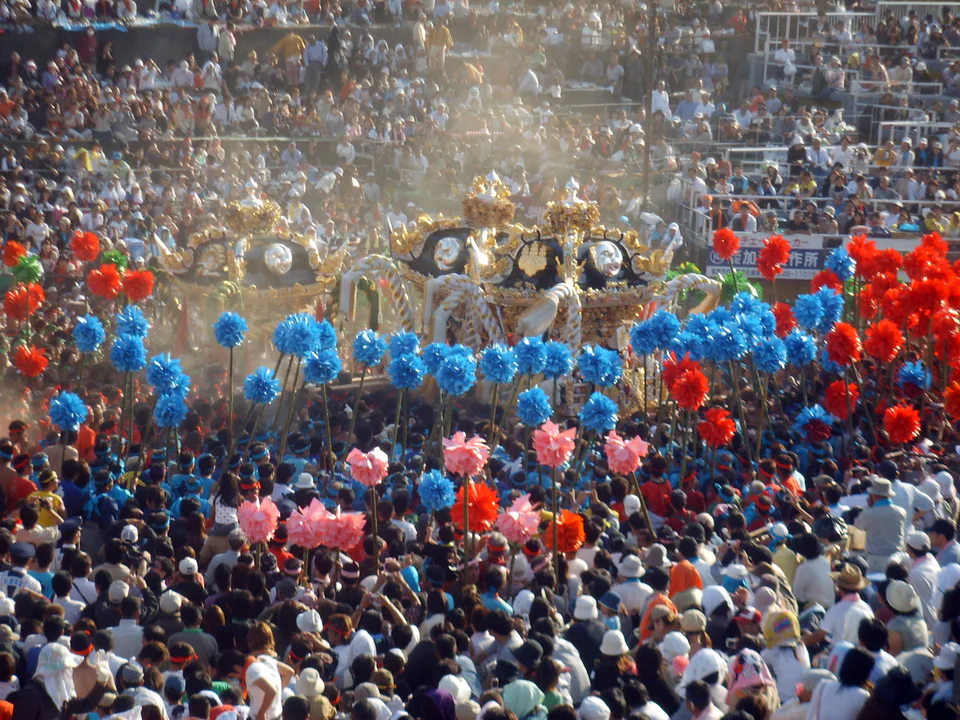
Himeji City’s official festival material identifies October 14 as the yoimiya. The seven districts’ yatai move toward Matsubara Hachiman Shrine and perform around the Romon gate, with an established order of shrine entry. This day is much more about comparing the floats—their decoration, proportions, movement and district identity—than waiting for the three mikoshi to collide.
That makes October 14 a particularly good choice if your real priority is visual detail rather than maximum impact. You can concentrate on the yatai around the shrine, avoid turning the visit into an all-day endurance event and still see a major part of the festival tradition.
If you are comparing this with another Kansai festival, the Kishiwada Danjiri Festival guide is useful because the same principle applies: the eve and main day should be chosen by the scene you want, not by assuming “main day = automatically better.”
October 15: the shrine clash is the start of the decision, not the end
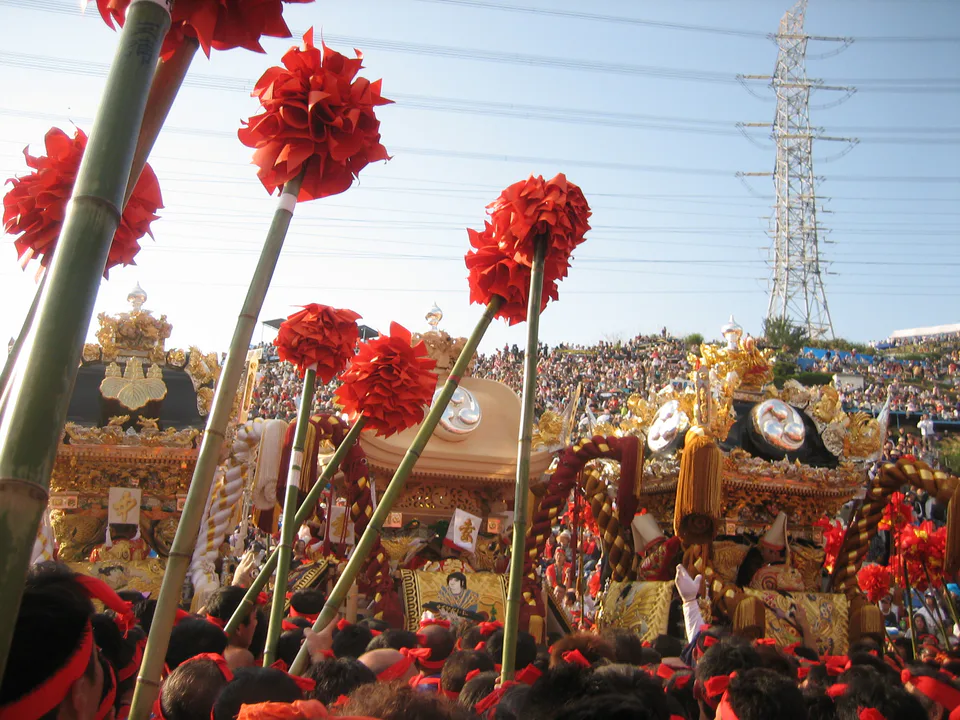
Himeji City’s cultural-property material describes the honmiya as a moving sequence. After the morning rites, the three mikoshi, banners, yatai and associated procession move toward the otabisho. The mikoshi collide around the shrine and later activity continues toward the Mt. Otabi side.
For a visitor, this creates a clean decision fork. If seeing the famous mikoshi clash once is enough, you can treat Matsubara Hachiman Shrine as the goal. If you want to understand why the festival occupies so much space and time, keep following the movement toward Mt. Otabi instead of treating the shrine as a static performance venue.
The deletion test: what are you willing to remove from the rest of Himeji?
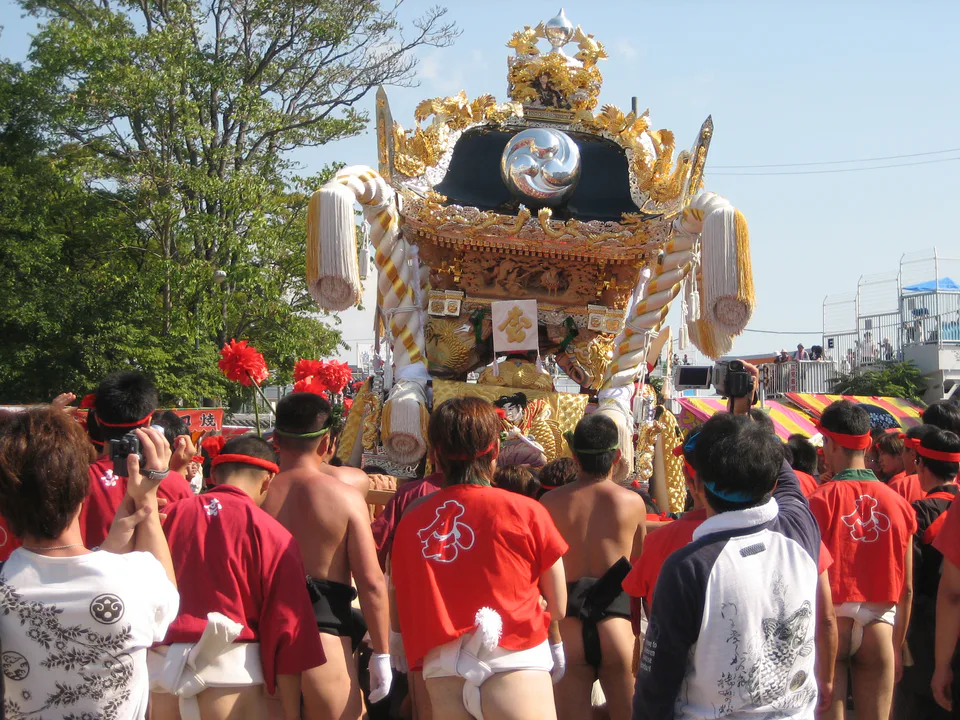
The biggest planning mistake is trying to keep every normal Himeji attraction on October 15. If the festival is the reason you are there, the day should not also carry Himeji Castle, Koko-en, a long lunch and a fixed evening reservation in Osaka.
↔ Scroll table left or right
| If you insist on adding... | What usually gets sacrificed first |
|---|---|
| Himeji Castle before the festival | Early shrine positioning or a relaxed arrival |
| Himeji Castle after the shrine clashes | The Mt. Otabi continuation |
| Fixed Kobe dinner | Your ability to follow the procession without checking the clock |
| Fixed Osaka evening | Late festival sequence plus dispersal buffer |
If you cannot name what you are willing to delete, you have not really chosen the festival as the day’s priority. For a broader Kansai comparison, use the Osaka day-trip comparison to decide whether Himeji belongs on a normal sightseeing day or deserves a dedicated festival day.
Shirahama-no-miya is the correct rail target; the hard part comes after the station
Regular access is via Shirahama-no-miya Station on the Sanyo Electric Railway. Sanyo Railway’s current station information places Matsubara Hachiman Shrine roughly 0.2 km southwest of the station. The station has elevators, an accessible toilet and tactile guidance.
That short station-to-shrine distance can be misleading. On October 15, the demanding part is not the first 200 metres. It is the combination of dense spectators, standing, procession movement and the decision to continue roughly west toward the Mt. Otabi side. An accessible station should therefore not be read as proof that the entire spectator route is step-free or easy with a wheelchair or large stroller.
2026 transport confidence ladder: what is fixed and what is still pending
There are two different kinds of information in circulation online. Treating them as equally certain is how old festival timetables get copied into new itineraries.
↔ Scroll table left or right
| Planning fact | Confidence for 2026 | What to do |
|---|---|---|
| Festival dates: October 14–15 | High — confirmed by current Himeji official material as the annual schedule | Lock the dates |
| Matsubara Hachiman Shrine / Shirahama-no-miya access | High — current railway/station information | Use Shirahama-no-miya as the rail target |
| Which trains make temporary festival stops | Pending — past years had special arrangements | Recheck Sanyo Railway near the festival |
| Exact temporary-stop minutes | Do not copy from 2025 | Wait for a 2026 notice |
| Bad-weather operating or postponement details | Pending unless 2026 notice says otherwise | Check official updates before travel |
In 2025, Sanyo Railway published temporary Direct Limited Express stops at Shirahama-no-miya for the festival. That proves special festival-day service has been used before; it does not make the 2025 stop window a 2026 timetable. As of August 27, 2026, I would not build a restaurant reservation, Shinkansen connection or late return around old screenshots.
Families: October 14 is easier to control, October 15 needs an exit rule
The official material does not make this a blanket “no children” event. The practical issue is crowd tolerance. October 15 combines loud activity, dense spectators and a festival that moves rather than staying inside one seated venue.
For a family, October 14 is easier to define: see the yatai, stay around the shrine, then leave when energy drops. On October 15, decide the exit rule before the crowd becomes the decision-maker. If a child becomes overwhelmed, a stroller can no longer move comfortably or your group loses the ability to change direction easily, give up the closest view and move out. You are not losing a paid reserved seat by retreating.
Older travelers and limited mobility: choose the festival layer, not the “best” day
For older travelers, “October 15 is better” is too simplistic. If the goal is to see the iconic mikoshi clash, a shrine-focused October 15 visit can still be worthwhile without following the whole route. If long standing and dense crowds are the bigger concern, October 14 may produce a better overall day even though it lacks the central mikoshi collision sequence.
The useful comparison is therefore uniqueness versus recovery cost. The best layer is the one you can leave safely and comfortably, not the one that looks most dramatic in a photograph.
Should you stay in Himeji?
You do not need to move hotels just because you are attending the festival. For October 14, a day trip from Osaka or Kobe is usually easy to justify because the commitment is more contained. For October 15, an Osaka or Kobe base can still work, but your return should stay flexible if you intend to follow the later sequence.
A Himeji-area night starts to make sense when the festival itself is one of the trip’s major objectives, you want both October 14 and 15, or you do not want the full October 15 experience controlled by a fixed long-distance return. Otherwise, keep the hotel that serves the rest of the Kansai trip. If you are already choosing between Kobe bases, compare Sannomiya vs Shin-Kobe before adding another hotel move.
Final verdict: choose the layer before you choose the day
Choose October 14 if you want ornate yatai, a more controllable visit and less commitment. Choose October 15 shrine-only if the famous mikoshi clashes are the goal but you cannot give the festival the whole day. Choose October 15 plus Mt. Otabi if Nada is the reason you are making the trip and you are willing to trade time, crowd exposure and a predictable finish for the most complete version.
The most useful planning rule is simple: do not ask how much of Himeji you can squeeze around Nada. Ask how much of Nada you actually want to see, then delete the rest.
Next decision|Decide whether Himeji deserves a dedicated festival day
Fukuoka Hotels With Public Baths: Will You Actually Use the Onsen, Spa or Sauna?
Okinawa Honeymoon Hotels: Don’t Upgrade All Four Nights — Spend More on the Two You’ll Actually Use
Sapporo Snow Festival: Odori vs Susukino — Where Should You Stay?
Sapporo Hotels for Couples: Choose the View, Bath or Winter Convenience You’ll Actually Use
Yamaga Lantern Festival 2026 Seats: Refund Deadline, Ticket Types and What You Get Back
Sources
Himeji City official festival and cultural-property information: annual October 14–15 schedule, seven yatai districts, October 15 mikoshi procession and Mt. Otabi sequence. Sanyo Electric Railway: current Shirahama-no-miya Station access and accessibility information; 2025 Nada festival special-stop notice used only as evidence of past temporary-stop practice, not as a 2026 timetable. Information rechecked August 27, 2026. Recheck Sanyo Railway and Himeji official notices close to the festival for 2026 temporary train stops, operating changes and weather-related arrangements. ValueNavi scores and the commitment-ladder analysis are editorial analysis, not official ratings.