
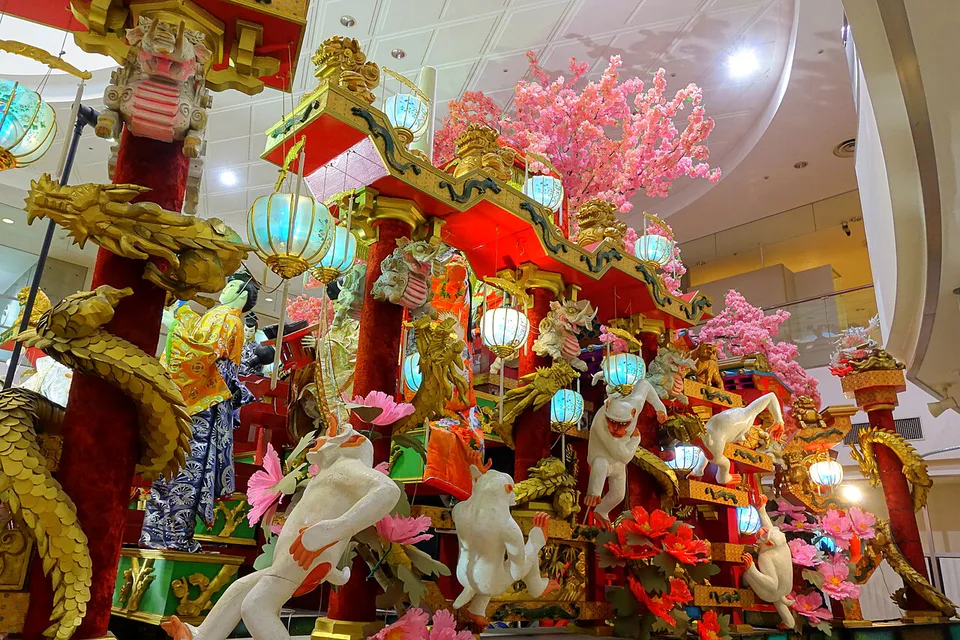
For a first Hachinohe Sansha Taisai visit, August 1 was the strongest all-round choice in 2026 because it showed the three-shrine procession and the giant dashi floats moving together. Choose August 2 instead when illuminated mechanical floats and the historic horseback dakyu event matter more than shrine-procession context. Choose August 3 when your Tohoku route reaches Hachinohe later: the return procession is still a full shrine-and-dashi event, not a diluted final day.
The important correction is that August 1, 2 and 3 were three different festival products. August 2 was not simply “the night version” of August 1: it had no shrine procession, added the Kagami-ryu horseback ball game in the afternoon, then ran the illuminated dashi-only procession from 18:00 to 21:00. Your best date therefore depends on whether you want history/context, night spectacle or route flexibility.
Historical reference: the 2026 festival ran July 31–August 4 and has ended. Reuse the decision logic below, not the exact dates, prices or routes, for a future edition.
↔ Scroll table left or right
Your priority | 2026 date I would choose | Why | Main trade-off |
First visit; understand the festival as shrine ritual + giant floats | August 1 | Joint shrine-and-dashi opening procession, 15:00–19:00 | No illuminated night procession |
Night photography / mechanical float spectacle | August 2 | Dakyu 14:00–16:00, then illuminated dashi-only procession 18:00–21:00 | No shrine procession; longest two-block festival day |
Arrive later in Tohoku but still want the complete moving format | August 3 | Joint shrine-and-dashi return procession, 15:00–19:00 | You miss the opening-day direction and August 2 night atmosphere |
Want to inspect dashi details without a moving parade | July 31 | All dashi displayed together during the pre-festival evening | Static exhibition; not a substitute for the main procession |
August 1: best first visit because the shrine procession explains what the floats belong to
The August 1 Otori opening day had a 13:30 departure ceremony and a joint shrine-and-dashi procession from 15:00 to 19:00. This is the clearest single-day explanation of Sansha Taisai because the giant floats are not operating as an isolated visual parade: they move with the traditional processions associated with the three shrines.
If you only know Aomori’s summer festivals through Nebuta, this distinction matters. Hachinohe’s appeal is not merely that the dashi are huge and mechanical. The combination of shrine history, traditional procession units and expanding floats gives the event a different structure.
I would therefore choose August 1 for a first visit unless night illumination is explicitly the reason for travelling to Hachinohe. It gives you the most context in one block and finishes early enough to leave the evening for dinner and recovery.
August 2: strongest spectacle day, but it is two separate experiences
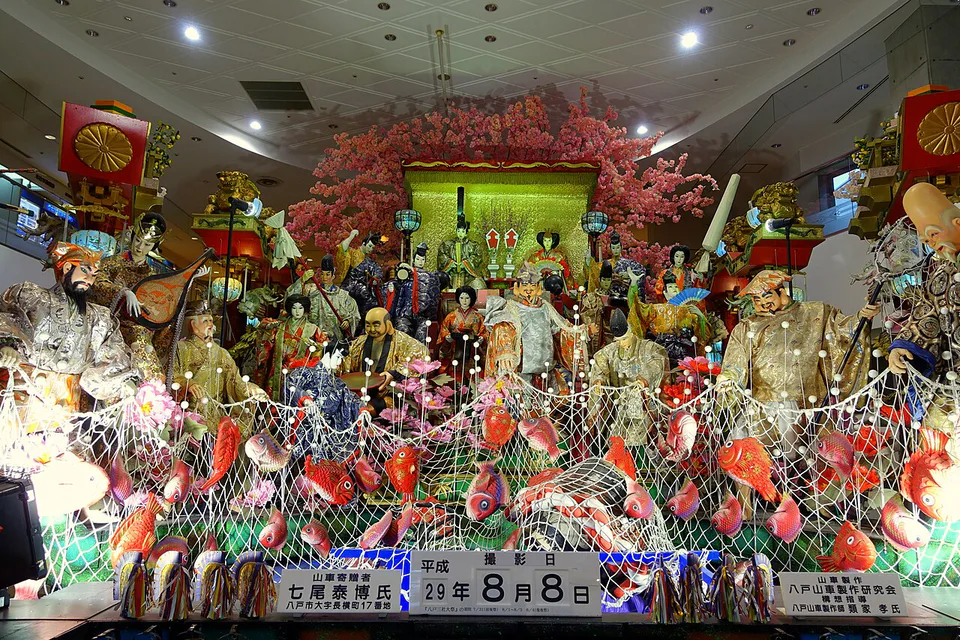
August 2 Nakabi is the day most likely to be misunderstood. At Chojasan Shinra Shrine, the Kagami-ryu Kiba Dakyu horseback ball game ran from 14:00 to 16:00. The night dashi procession then ran from 18:00 to 21:00.
The official guide is explicit that the night procession is dashi-only. There is no shrine procession on Nakabi. That makes August 2 better for a visitor who prioritises illuminated float mechanisms, night photography and the unusual equestrian tradition—not for someone trying to understand the complete shrine-and-float procession in one day.
The two-hour gap between dakyu and the 18:00 night procession should normally become food, cooling and hotel-reset time. Trying to add another attraction in that interval creates the same mistake seen in many festival itineraries: the calendar looks empty, but the body is already doing a long hot outdoor day.
August 3: do not call the return procession a consolation prize
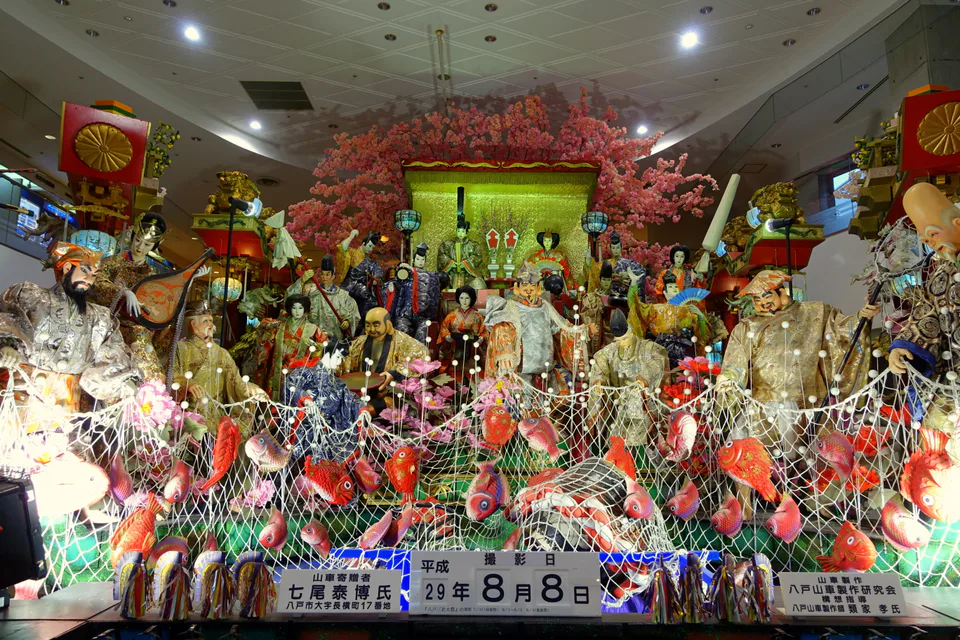
The Okaeri return procession on August 3 again combined shrines and dashi from 15:00 to 19:00. For someone arriving in Aomori Prefecture after Aomori Nebuta, Morioka or another fixed event, this is a genuine substitute for the August 1 moving format.
The direction and route flow differ from opening day, so it is not identical. But the core product—historical procession plus fully operating floats—remains. That makes August 3 the most useful route-flexibility day when your northern-Japan sequence cannot reach Hachinohe by August 1.
The planning lesson is broader: do not add an unnecessary hotel move or rush another festival merely to protect August 1 when August 3 gives you the same essential combination of shrine procession and dashi.
The main streets matter because they allow the floats to transform properly
Visit Hachinohe’s official local tips recommend the main streets around Nijusannichimachi, Jusan-machi and Mikkamachi when you want to see the dashi at full scale. The reason is physical, not prestige: in narrow streets the floats may not have enough room to fully expand their mechanical structures.
That changes how I would choose a free-viewing position. A narrower backstreet can feel closer, but proximity is not automatically better if the float has to reduce or pause parts of its transformation. On the main streets, you trade heavier crowds for a better chance of seeing the float use its width and height.
There is no single evergreen “best corner.” Routes differ by festival day, staff instructions change, and some floats may temporarily close or pause depending on the location. Choose a legal main-street section that also gives you a workable exit.
Reserved seats were cheap enough to be attractive—and scarce enough that waiting until arrival was not a strategy
The 2026 reserved seats for August 1–3 cost ¥3,000 per person, with the same price for adults and children. About 1,700 seats were available across all three days. They were assigned folding chairs, uncovered, and eventually sold out.
The organiser also stated that there were no planned same-day tickets or additional sales after sellout. That means the practical question was not “should I buy a seat when I get to Hachinohe?” but “is sitting certainty important enough that I should buy during the sales window?”
At ¥3,000, the paid seat was cheaper than many other major summer-festival reserved products. For an older traveller, family or one-night visitor, I would have treated that as a strong value when available. For a fit solo photographer, free viewing could still be better because movement and angle choice may matter more than sitting.
July 31 is useful for float detail, not for replacing the procession
The Zenyasai pre-festival on July 31 displayed the dashi together downtown from 18:00 to 21:00. The floats did not parade, which is exactly why paid spectator seats were not provided.
This is a good night for inspecting craftsmanship, themes and mechanical details at a slower pace. It is not the same product as seeing the float expand and move through the city. I would use July 31 as a bonus first evening before August 1, not as the only Hachinohe festival block unless fixed dates leave no other option.
Hipparitai changes the date decision because participation requires advance planning
Hachinohe’s 2026 float-pulling experience, Hipparitai, was offered on August 1 at 15:00, August 2 at 18:00 and August 3 at 15:00 for about two hours. Participation cost ¥5,000 for the first day, then ¥2,000 for each additional day.
This is fundamentally different from Aomori Nebuta’s Haneto model. Hipparitai required an application and closed when capacity was reached. Participants were assigned to a dashi group and received a rental set including a Happi coat and accessories.
If participation is the bucket-list goal, choose the date by the procession you want to pull in:
August 1: participate during the opening procession and get the full shrine/dashi context around you.
August 2: pull in the illuminated night dashi procession.
August 3: join the return procession.
Do not reserve a spectator seat for the same two-hour block unless someone else in your group will use it. Participation and fixed viewing are competing products.
The August 2 participation option had a harsher weather failure mode
The 2026 Hipparitai rain rules were asymmetric. If August 1 or August 3 was postponed because of bad weather, the participation could move to the next day or be cancelled by the participant. If August 2 was cancelled because of bad weather, the application was automatically cancelled.
That makes August 2 the most weather-sensitive participation choice. If pulling the float matters more than the illuminated-night setting, August 1 or 3 offered a more recoverable weather structure in 2026.
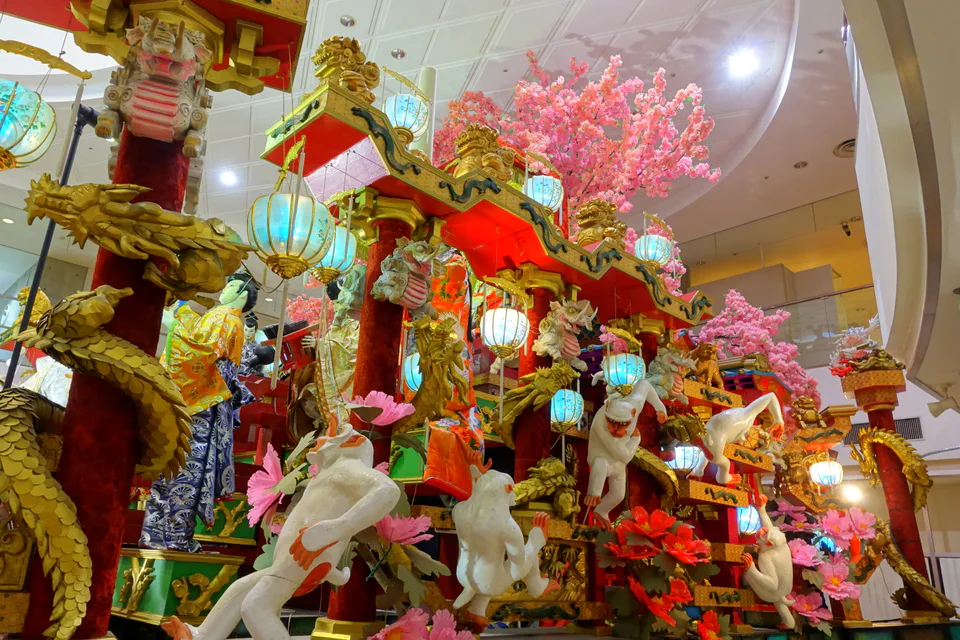
This is exactly the kind of rule that can reverse a date recommendation. “Best visual night” and “most resilient participation date” are not always the same thing.
Children: the paid-seat rule and participation rule solve different family problems
For the 2026 reserved seats, anyone occupying a chair needed a ticket regardless of age. For Hipparitai, a child in grade 6 or younger had to be accompanied by a guardian for safety; the accompanying guardian also paid the participation fee and wore the Happi set. Infants unable to wear a Happi were not charged.
So a family should decide first whether the child is watching or participating. A cheap reserved seat does not solve the physical demands of pulling a float; a participation slot does not guarantee the child will want to stay inside the moving procession for two hours.
My 2026 date choice by traveller type
First-time visitor, one day: August 1.
Night photographer / mechanical-float fan: August 2.
Late-arriving Tohoku route: August 3; do not rush merely to force August 1.
Float-pulling participation is the priority: choose by the procession format and application/weather rules, not by spectator advice.
Want to inspect every dashi before seeing them move: add July 31 before an August 1–3 main day.
Final verdict
August 1 was the best one-day first-visit answer because it explained the whole festival: shrine procession, historical context and giant moving dashi together. August 2 was the strongest spectacle day, pairing horseback dakyu with an illuminated dashi-only night. August 3 was the strongest route-friendly substitute because the full joint procession returned.
The most important ValueNavi rule is to choose the day by the festival layer you actually want. A reserved seat, a main-street position or a Hipparitai application cannot turn one programme into another.
Fujiya Hotel Hakone: Which Building and Room Should You Choose?
Kawagoe Festival 2026: Stay for Hikkawase or Make It a Day Trip?
Hakone Open-Air Museum 2026: 4:30 Is Last Entry, Not the Time You Should Arrive
One Day in Kyoto: Choose Fushimi Inari or Arashiyama Before You Build the Route
Dogo Autumn Festival 2026: October 7 at Dawn Is the Main Event
References
VISIT Hachinohe — official 2026 schedule, seats and Hipparitai rules · VISIT Hachinohe — official/local viewing guidance. Historical 2026 facts checked August 25, 2026; recheck the next edition before planning.