For a first Kawagoe Festival visit in 2026, choose the day by the experience you would regret missing rather than treating October 17 and 18 as interchangeable. The Kawagoe Tourism Association now confirms Yoiyama at roughly 18:00–19:00 on Saturday, October 17, while Sunday, October 18 includes the float procession in front of City Hall. More detailed programme and traffic-control information will still be released progressively.
For most Tokyo visitors, I would still make Kawagoe a long day trip rather than change hotels. Saturday is the stronger starting point if lantern light and evening float atmosphere are the priority; Sunday gets stronger if the City Hall float procession is the specific event you want to protect. Stay overnight only when the hotel buys a second distinct session, a slower family exit, or serious night photography without a return-train clock.
↔ Scroll table left or right
Your priority | My 2026 call | Main trade-off |
Lantern-lit float atmosphere / evening first visit | Saturday Oct 17 | Yoiyama is confirmed around 18:00–19:00, but detailed evening routing is still being released |
City Hall float procession is the must-see | Sunday Oct 18 | You may give up the cleanest Saturday-night atmosphere |
Want a guaranteed seated viewpoint and meal | Check the paid Resona Coedo Terrace seats now | You trade roaming flexibility for a fixed location and reservation |
First Tokyo trip, one festival day | Day trip from Tokyo | Keep the Tokyo evening flexible because post-festival exit time is variable |
Children, older travellers or low crowd tolerance | Consider paid seating or one Kawagoe night | You spend more money to reduce standing and return pressure |
What is now confirmed for October 17–18, 2026
The Koedo Kawagoe Tourism Association lists the festival for October 17–18, 2026. It now gives two useful day-specific anchors:
Saturday, October 17: Yoiyama, approximately 18:00–19:00.
Sunday, October 18: float procession in front of Kawagoe City Hall.
The association also says further details will be published progressively on the official Kawagoe Festival website. So the dates and these two anchors can now shape the trip, but you should still avoid copying a previous year’s traffic map, exact float positions or minute-by-minute hikkawase sequence into a 2026 plan.
This is a better planning position than the earlier version of this article: Saturday and Sunday are no longer merely two generic festival days.
Saturday vs Sunday: choose the irreplaceable scene first
Saturday wins when the evening itself is the purpose. The newly published Yoiyama window gives you a fixed reason to remain through dusk. Use daylight to inspect the float carving and the warehouse district, then protect the 18:00–19:00 period rather than filling the afternoon with ordinary Kawagoe sightseeing.
Sunday wins when the formal float procession is the anchor. The City Hall procession is a different product from casually encountering floats in the old town. If this is the scene you care about most, build the day around the City Hall area once the detailed 2026 route/timing is published.
If you have two festival days, do not simply repeat the same route twice. Saturday can be the evening-atmosphere day; Sunday can be the procession/second-look day. That is a stronger reason to sleep in Kawagoe than “the festival is crowded.”
Paid viewing seats now create a real third option between roaming and staying overnight
The tourism association has opened advance reservations for paid spectator seating at Resona Coedo Terrace on both October 17 and 18. The venue sits along the Kurazukuri old-town street, about a 12-minute walk from Hon-Kawagoe Station, and the package includes food.
This is not simply a premium ticket to “see the festival better.” It solves three specific problems:
long periods of standing;
finding a usable viewing position while crowds move around you;
having food and a fixed base during a very fluid street event.
The trade-off is equally important. A fixed seat reduces your ability to follow different floats or react to a better hikkawase encounter elsewhere. Photographers who want multiple angles may prefer to stay mobile.
As currently published, some Saturday-night seat categories are already full and another has only limited availability, while Sunday still has some space. That makes “I will decide in October” a weak plan if reserved seating is essential for an older traveller or family member.
Hikkawase is still the reason I would not leave before dark
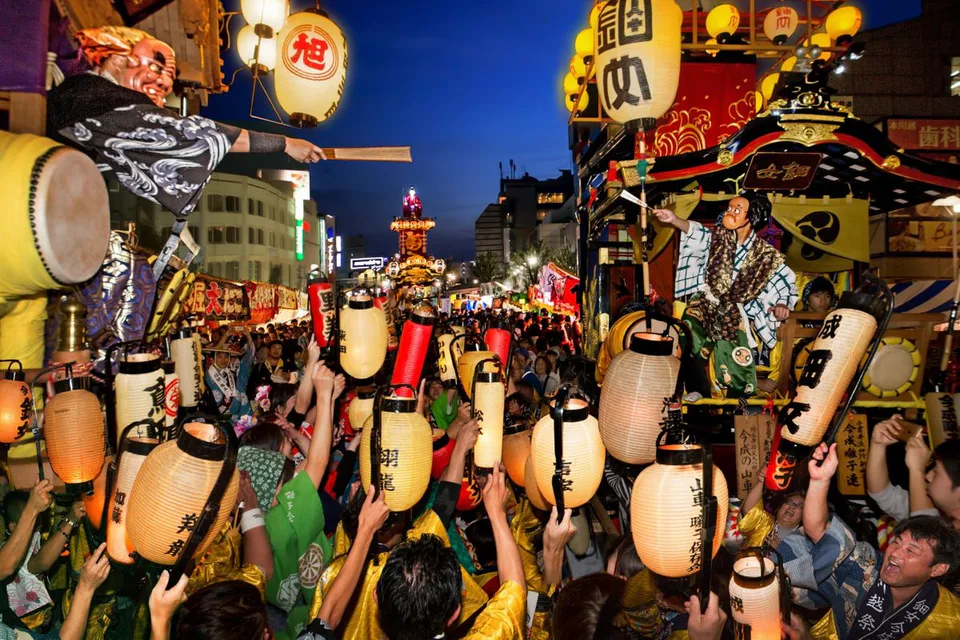
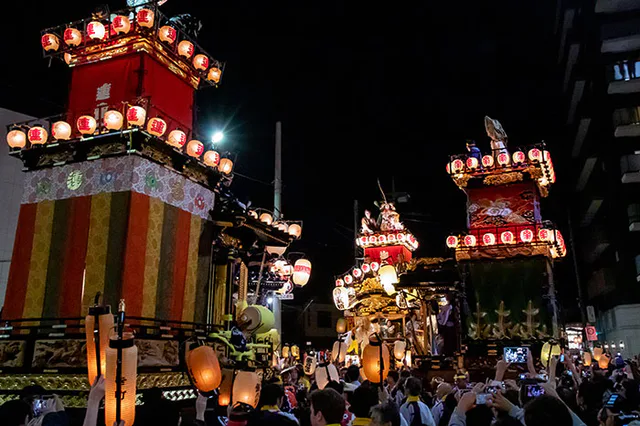
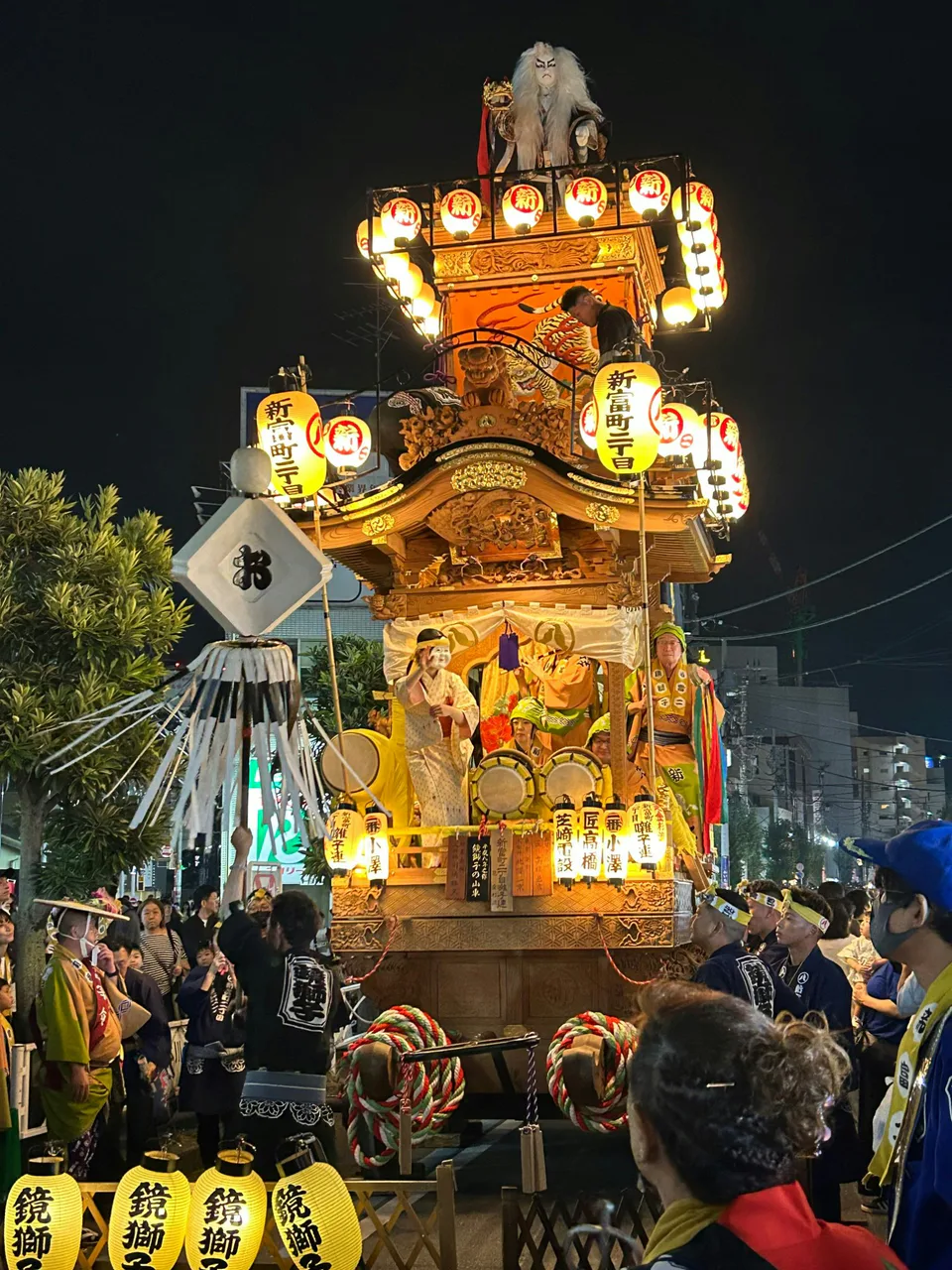
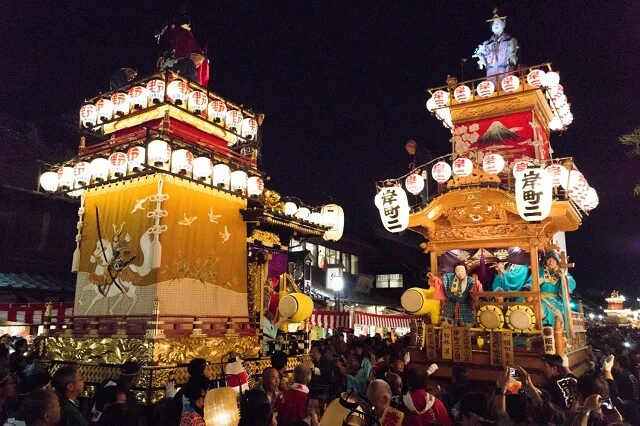
The defining Kawagoe Festival night experience is the encounter between floats: rotating hayashi stages, flutes and drums, lanterns and the reaction of the surrounding crowd. It is not a float-crashing contest. The best position is not automatically the point where the wheels are closest.
For a first visit, I would rather have enough side space to see the upper float, rotating stage and lantern response than fight for the densest centre. This is another reason the paid-seat product and free-roaming product should not be ranked as “better” and “worse”; they are different ways to consume the same festival.
Do not turn festival daylight into a normal Kawagoe checklist
On an ordinary day you might plan Hikawa Shrine, Kashiya Yokocho, Toki no Kane and every famous warehouse-street stop in sequence. Festival weekend changes the walking geometry. Floats, barriers and spectators occupy the same streets.
I would keep only two daytime anchors before switching into festival mode. For example: one warehouse-district block + one food/shrine stop. After that, let the floats decide the route. The festival itself is the attraction; normal sightseeing should not force you to leave the best float encounter because a checklist says the next temple is due.
Day trip or overnight? Use a two-session test
Tokyo access is good enough that most visitors do not need a Kawagoe hotel. The overnight has to create a second useful session.
Stay in Tokyo when: you only need one strong Saturday evening or one Sunday procession block; you are comfortable leaving with the crowd; and the next Tokyo morning matters.
Stay in Kawagoe when: Saturday night + Sunday procession are both priorities; you want long-exposure/night photography without a train deadline; or children/older relatives would benefit materially from avoiding the mass return.
The hotel is therefore an experience multiplier, not a transport requirement. One festival day → Tokyo default. Two different festival sessions → overnight becomes rational.
Kawagoe Station vs Hon-Kawagoe: solve the Tokyo end as well
Kawagoe Station connects to Tobu/JR; Hon-Kawagoe is the Seibu terminal. Choose from the full hotel-to-hotel journey, not the festival map alone.
An Ikebukuro-area Tokyo hotel usually aligns naturally with Tobu. A hotel convenient to Seibu-Shinjuku can make Hon-Kawagoe more logical. The 2026 traffic/pedestrian map can still change which station is easiest from a specific festival street, so keep both routes available until the final organiser instructions are published.
The return journey needs more margin than the outward journey
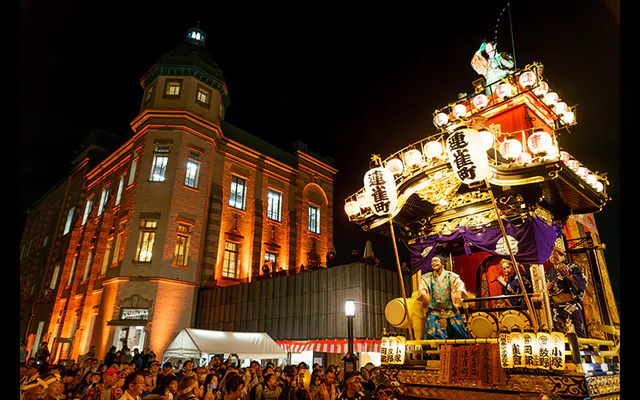
Tokyo → Kawagoe is the easy direction. Kawagoe → Tokyo after a popular night scene is the real planning problem. Build margin into:
street-to-station walking at crowd speed;
finding the usable entrance/platform after temporary controls;
waiting for a train that is comfortable enough for your group;
the Tokyo-side connection back to the hotel.
Do not book a non-refundable late Tokyo dinner or show immediately after the festival. If you have to leave hikkawase early to protect a dinner reservation, the second booking is controlling the more valuable event.
Driving is still the wrong default
The exact 2026 traffic-control map is still a later check, but the strategic answer is already clear. A huge street festival in the old-town core adds road controls, parking uncertainty and post-event traffic to a destination with strong rail access.
Use a car only when the wider trip has a mobility or routing reason that genuinely requires it. Do not rent or keep a car merely because Kawagoe is outside central Tokyo.
My 2026 first-timer plans
Saturday only
Arrive early afternoon → one old-town block → float watching → early meal/snack → position for the confirmed 18:00–19:00 Yoiyama window → stay for nighttime hikkawase → flexible return to Tokyo.
Sunday only
Use the eventual official detailed timetable to protect the City Hall float procession → leave ordinary sightseeing secondary → stay into the later float activity only if the group still has energy.
Two-day festival stay
Saturday = daylight craft + Yoiyama/night atmosphere. Sunday = procession/second festival angle. This is the version where a Kawagoe hotel has a clear job.
Final verdict
For 2026, Saturday and Sunday now have different planning value. Choose October 17 if the confirmed 18:00–19:00-ish Yoiyama and nighttime atmosphere are the priority. Choose October 18 if the City Hall float procession is the must-see. Most Tokyo visitors should still day-trip; stay in Kawagoe only when you will use a second festival session or materially benefit from avoiding the crowd exit.
Paid spectator seating at Resona Coedo Terrace is now a real alternative for people who value a fixed position, food and less standing, but some Saturday-night inventory is already full. Keep the final street and station plan flexible until the detailed 2026 programme and traffic controls are published.
Where to Stay for the Saga Balloon Fiesta 2026: Saga, Tosu or Hakata
Okutama Rafting 2026: Tokyo Full-Day Tour vs Local Half-Day — You're Paying for Transport
Where to Stay for USJ Halloween 2026: Universal City, Umeda or Namba
Hachinohe Sansha Taisai 2026: Aug 1, 2 or 3? Which Main Festival Day Should You Choose?
References
Koedo Kawagoe Tourism Association — 2026 Kawagoe Festival dates and current programme anchors · Koedo Kawagoe Tourism Association — 2026 paid spectator seating · Kawagoe Festival official site. Checked August 25, 2026. Detailed routing and traffic controls are still subject to later official publication.