
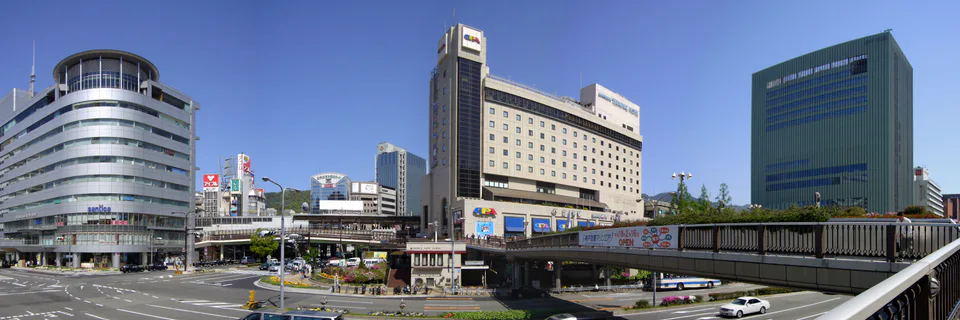
For most one- or two-night Kobe stays, I would choose Sannomiya unless the Shinkansen controls both ends of the stay. Shin-Kobe is only two scheduled subway minutes from Sannomiya, so its strongest advantage is not that downtown is far away. It is that a hotel beside Shin-Kobe can delete the extra transfer when you arrive late by Shinkansen, leave early by Shinkansen, or move heavy luggage through Kobe. Sannomiya wins when the repeated parts of the trip are dinners, Motomachi, the waterfront, JR/Hankyu/Hanshin journeys or Kobe Airport.
The useful way to decide is to count expensive edges. A late Shinkansen arrival and a 07:00 Shinkansen departure are two expensive Shin-Kobe edges. Two downtown dinners plus a waterfront evening are three Sannomiya edges. Put the hotel beside the edges that repeat or have the least timing margin.
↔ Scroll table left or right
Your Kobe pattern | Start with | Why | What reverses it |
Late Shinkansen in + early Shinkansen out | Shin-Kobe | Removes two luggage-bearing subway transfers at the most fragile times | The departure is actually late and both evenings belong downtown |
Shinkansen arrival, two nights, local Kobe sightseeing and dinners | Sannomiya, often | You pay one short arrival transfer, then stop repeating it every evening | The second morning is a hard early Shinkansen departure |
Kobe Airport arrival or departure | Sannomiya | Port Liner links Kobe Airport and Sannomiya in about 18 minutes | The other end of a one-night stay is a very early Shinkansen |
Nunobiki / Kitano morning is the main Kobe experience | Shin-Kobe gets stronger | Nunobiki and the upper Kitano side begin beside the Shinkansen station | You value downtown evenings and waterfront access more |
Two large suitcases, stroller or older travellers | Choose the hotel-door route, not the district name | One avoided lift/escalator hunt can matter more than two minutes of train time | A supposedly convenient hotel has a difficult final 500 metres |
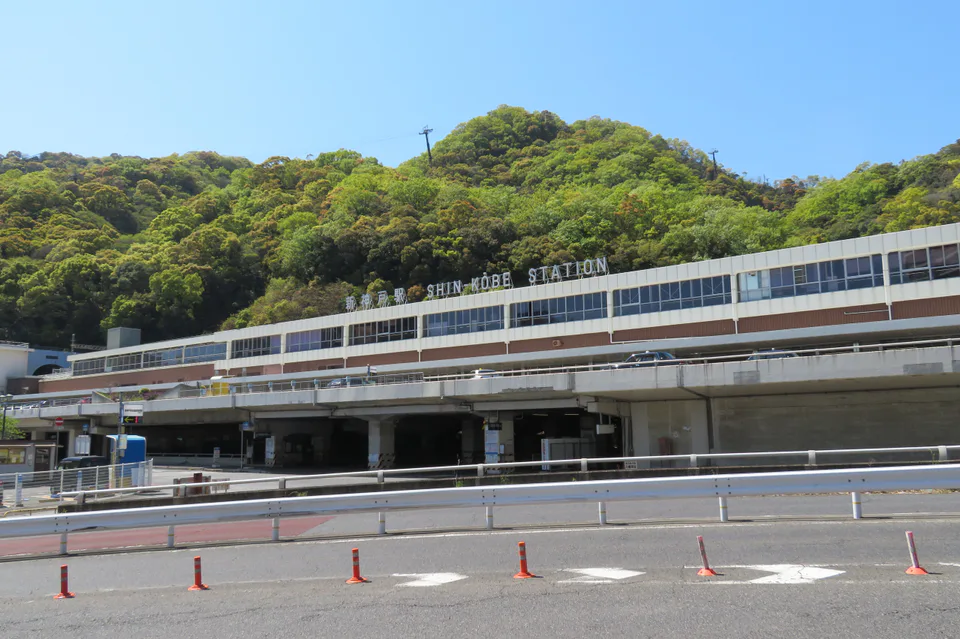
The two districts are only two subway minutes apart — which makes repetition the real issue
Kobe City’s current subway travel-time table gives Sannomiya ↔ Shin-Kobe as two minutes on the Seishin-Yamate Line. That number is useful precisely because it stops the comparison becoming exaggerated. You are not choosing between two distant cities. You are choosing which side of a very short transfer should carry your luggage and which side should carry your repeated evenings.
A two-minute ride still has fixed costs: reaching the platform, waiting, lifts or escalators, getting through gates and walking from the station to the hotel. Those fixed costs matter most when luggage is involved or the train you are connecting to is time-sensitive. They matter much less after a relaxed lunch.
This creates a clean ValueNavi rule:
Pay the short transfer once when doing so places the hotel inside the district you will use repeatedly.
Avoid the short transfer entirely when it sits immediately before or after a high-cost Shinkansen journey with luggage.
One Shinkansen arrival does not automatically justify sleeping at Shin-Kobe
A common first-trip pattern is Tokyo or Hiroshima → Shin-Kobe → two nights in Kobe. If you arrive at 15:00 or 16:00, taking the short subway ride to Sannomiya once is usually a small price for putting both evenings closer to restaurants, Motomachi and the waterfront.
The answer changes when the same arrival happens at 21:30 with two large cases and an older parent. Then Shin-Kobe is not saving “two train minutes.” It is removing the final navigation problem at the point when the group has the least energy.
Use arrival time as a multiplier:
Daylight / early evening: location over the next two days should dominate.
Late evening: the value of deleting one more transfer rises sharply.
Very late plus early Shinkansen next morning: Shin-Kobe is almost a transport product rather than a sightseeing base.
Sannomiya wins a Kobe Airport trip by geometry, not by reputation
Kobe Airport currently publishes about 18 minutes on the Port Liner between the airport and Sannomiya. The line terminates in the city-centre hub, so a Sannomiya hotel can turn an airport arrival into one main transport leg rather than Port Liner + subway + hotel walk.
This is especially important on a one-night stay. Suppose you arrive at Kobe Airport, spend the evening downtown and leave the next day by Shinkansen. Staying in Sannomiya means the airport arrival and evening are easy, then you pay the two-minute subway ride to Shin-Kobe only once on departure. Staying at Shin-Kobe does the opposite: it optimises tomorrow morning but adds a transfer immediately after the flight and again when you return from dinner.
Neither is universally right. The decision is which end has the harder deadline. A 07:00 Shinkansen can outweigh an easy evening. A 10:30 Shinkansen usually cannot.
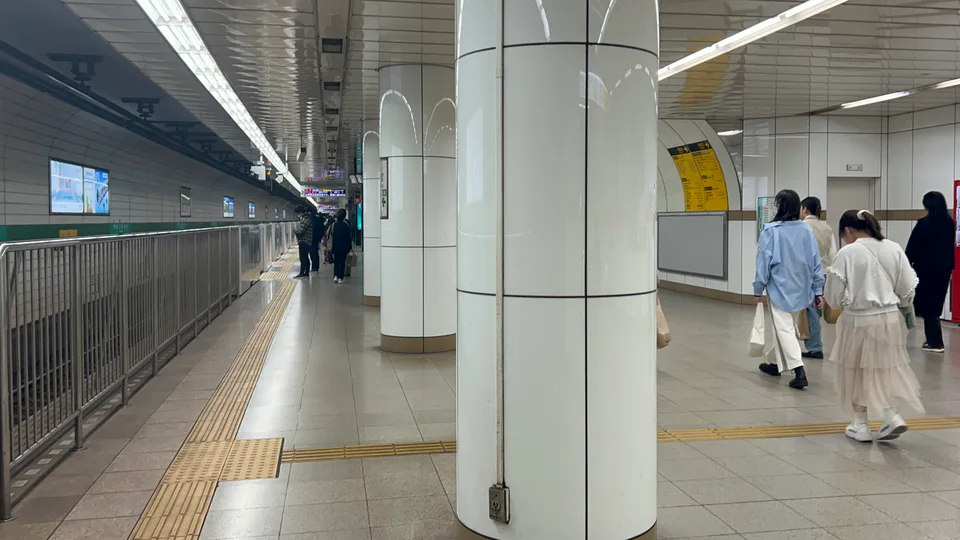
For two nights, count boardings instead of comparing one arrival
The cleanest derived test is to count how many times the hotel choice forces you onto the Shin-Kobe–Sannomiya link.
Example A: arrive and leave by Shinkansen, but spend both evenings downtown.
Shin-Kobe hotel: no subway with luggage on arrival/departure, but two downtown evenings can create four Sannomiya↔Shin-Kobe boardings.
Sannomiya hotel: one subway after arrival and one before departure — two boardings total.
If the Shinkansen times are ordinary daytime departures, Sannomiya can therefore create fewer total station transitions across the stay even though Shin-Kobe looks “better for the Shinkansen.”
Example B: arrive 21:30 by Shinkansen, leave 07:00 by Shinkansen, one full sightseeing day. Shin-Kobe can still win because the two transitions it deletes are far more expensive than an optional dinner commute. This is why a raw boarding count is not enough: weight the late/early, luggage-bearing boardings more heavily.
Shin-Kobe is a real sightseeing base when the first morning goes uphill
Shin-Kobe is not only a railway convenience. Visit Kobe’s current official guide notes that Nunobiki Falls is a short walk from the Shinkansen station, and the ropeway / Kitano side of the city naturally begins uphill from here. A good one-day line can start at Nunobiki or Kitano and then move downhill toward Sannomiya, Motomachi and Harborland.
That makes a Shin-Kobe hotel more defensible when the first morning itself uses the location. The hotel is then performing two jobs: protecting the intercity transfer and deleting a local morning transfer.
The opposite itinerary — shopping, Nankinmachi, waterfront, dinner and bars — gives Sannomiya more repeated work. Do not pay Shin-Kobe rates purely because your train arrived there if the hotel never earns another hour after check-in.
The final 500 metres can overturn the station-level answer
For large luggage, a stroller or older travellers, compare the hotel entrance route in addition to the station. Shin-Kobe sits against the Rokko foothills; a property that looks close can involve slope, road crossing or a route that is less pleasant in rain. Sannomiya is flatter in many directions but has a much more complex station stack: JR, Hankyu, Hanshin, subway and Port Liner do not share one compact platform.
Before paying, check:
which station exit or gate the hotel actually uses;
whether lifts cover the luggage route;
whether the hotel-door walk is sheltered;
whether tomorrow’s railway is the same operator or another part of the station complex.
A genuinely easy five-minute hotel can beat a nominally two-minute hotel if the latter route is awkward with bags.
Do not split a two-night Kobe stay between both districts
Because the scheduled subway ride is only two minutes, moving hotels to “experience both” has an extremely high burden of proof. Checkout, luggage storage, moving the cases and a second check-in will almost always cost more than simply taking the subway.
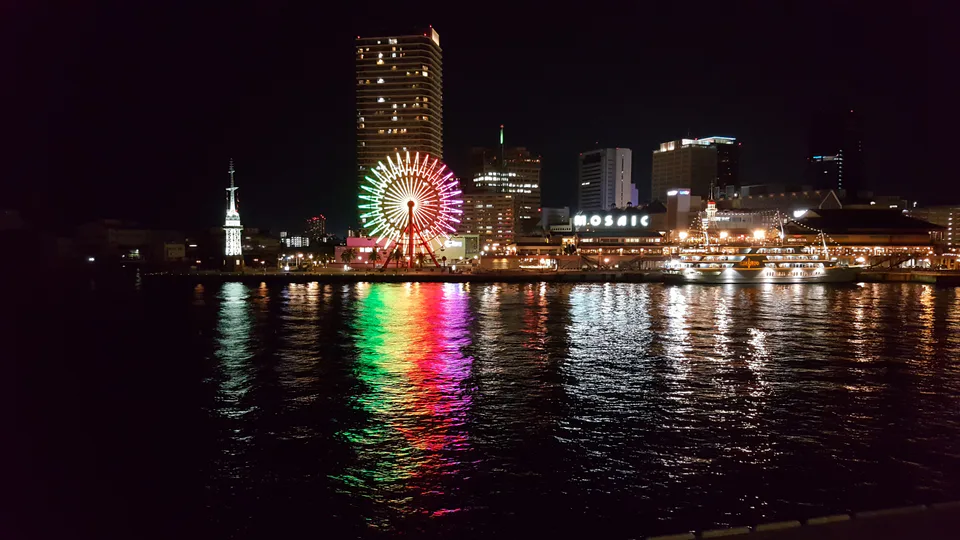
I would only consider a split when the first night is a genuine disruption-management night — for example, a very late Shinkansen arrival beside Shin-Kobe — and the rest of the Kobe stay is materially longer than one more night. For a simple two-night trip, pick one base.
If luggage itself is driving several hotel changes across Japan, use the luggage-forwarding guide rather than trying to solve every suitcase problem by moving the sleeper.
Five trip patterns and the base I would choose
↔ Scroll table left or right
Trip | My choice | Reason |
Tokyo → Kobe at 16:00, two nights, then Osaka | Sannomiya | Pay the short subway transfer once; use downtown repeatedly |
Hiroshima → Kobe at 21:30, one night, 07:00 Shinkansen onward | Shin-Kobe | The room deletes both fragile luggage transfers |
Kobe Airport arrival, two city nights | Sannomiya | 18-minute Port Liner arrival plus stronger evenings |
Two nights with Nunobiki/Kitano morning and early westbound Shinkansen | Shin-Kobe | The location earns value on sightseeing and departure |
Two nights focused on Motomachi, Harborland, food and Nada | Sannomiya | Shin-Kobe would mainly add repeated returns after the useful day is over |
Final verdict: Sannomiya is the default; Shin-Kobe needs a second job
Choose Sannomiya for the normal Kobe stay. It connects directly to Kobe Airport, sits inside the city’s dining and local-rail network, and usually reduces repeated evening movement. Choose Shin-Kobe when the station performs at least two jobs: late Shinkansen arrival + early Shinkansen departure, Shinkansen + Nunobiki/Kitano morning, or a luggage-heavy transit stay where one avoided transfer is worth more than downtown convenience.
If Shin-Kobe’s only argument is “my Shinkansen stops there once,” I would usually take the two-minute subway ride and sleep downtown. If Sannomiya’s only argument is dinner but the stay is bracketed by two difficult Shinkansen connections, I would stay uphill and let dinner travel instead.
Compare Kobe stays after choosing the base
Related planning
Use Nada Gogo for an east-Kobe day, Hiroshima or Miyajima if the route continues west, and Osaka–Kobe–Koyasan before adding another hotel change.
References
Kobe City Transportation Bureau — subway travel times · Kobe Airport — Port Liner access · Visit Kobe — Shin-Kobe, Nunobiki and nearby sightseeing. Checked August 25, 2026. Train operations, airport schedules and hotel access routes can change; verify the exact travel date and hotel entrance route.