
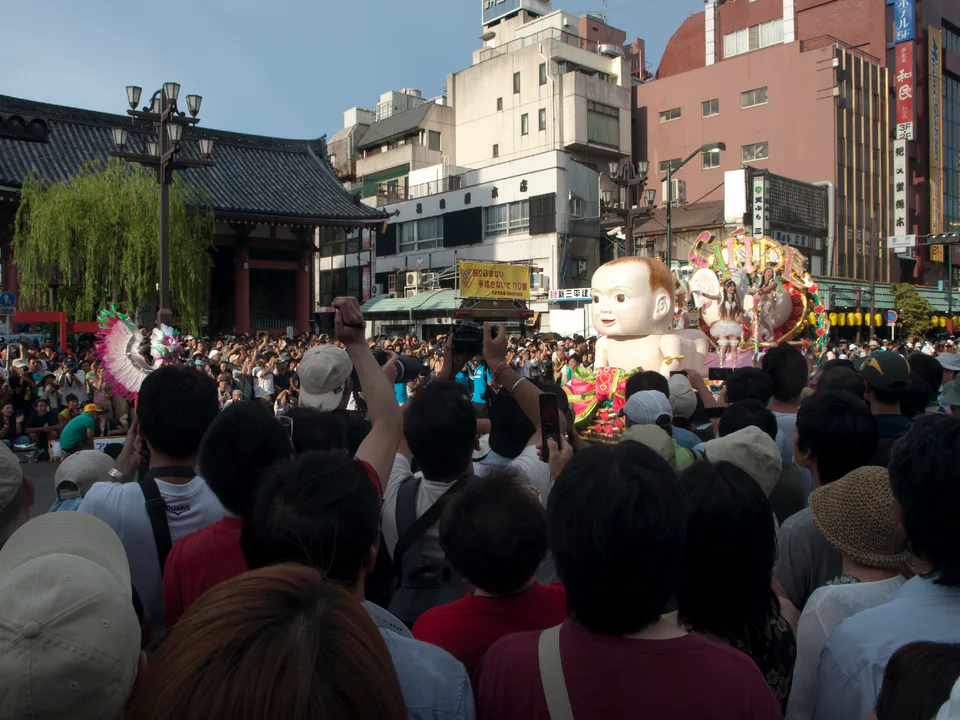
The 41st Asakusa Samba Carnival is scheduled for Saturday, August 29, 2026, with the parade contest starting at 13:00 on the Umamichi-dori to Kaminarimon-dori course. For most first-time visitors, I would aim to have food, a restroom break and water sorted by about 12:15 rather than treating the official 13:00 start as the time to arrive. If securing an early position matters more than reducing heat exposure, move that target closer to 11:30. If you reach Asakusa after 13:00, do not waste energy trying to reconstruct an early-arrival plan; choose a later part of the route and watch what remains.
Important distinction: 11:30 and 12:15 are ValueNavi planning windows, not organiser-designated admission times and not guarantees of a front-row view. The official facts are the August 29 date, 13:00 scheduled start, the Umamichi-dori–Kaminarimon-dori route, standing-only general viewing and the equipment restrictions below. The organiser also posted a specific heatstroke warning for 2026, saying extreme heat is expected and asking spectators to replenish fluids and salt frequently.
↔ Scroll table left or right
Your priority | ValueNavi arrival target | What you gain | What you pay for it |
See the opening teams and reduce last-minute uncertainty | About 11:30 | More time to choose a legal standing area and settle food, restroom and water first | Roughly 90 extra minutes of pre-start heat and standing exposure |
Best balance for a first visit | About 12:15 | Useful buffer without turning the whole midday period into waiting | Less choice of position than an earlier arrival; no front-row guarantee |
Asakusa morning already ran late | After 13:00 | You preserve the rest of the day instead of rushing through a dense crowd | You accept missing the first teams and watch a later section |
Child, older traveller or heat-sensitive group | Do not optimise for earliest arrival | Less stationary exposure before the parade even begins | Your viewing session may be shorter or farther from your ideal point |
Keep an indoor Tokyo fallback ready if the outdoor plan stops making sense
ValueNavi Crowd-and-Heat Score: the best viewpoint is useless if you spend your energy before 1 PM
This is an editorial planning score, not an organiser rating. It weights pre-start exposure 35%, positioning flexibility 25%, exit flexibility 20% and suitability for mixed-age groups 20%. Lower heat exposure and easier retreat improve the score; being earlier does not automatically win.
↔ Scroll table left or right
Plan | Position potential | Heat/stamina risk | ValueNavi fit |
11:30 + wait near route | High | High | 7.3/10 — best only when opening teams matter |
12:15 + one chosen section | Medium | Medium | 8.8/10 — default first-visit choice |
After 13:00 + later section | Low-to-medium | Lower pre-start exposure | 6.8/10 — sensible salvage plan, not a failure |
Heat-sensitive family insisting on 11:30 | Potentially high | Very high | 4.6/10 — the trade-off is usually wrong |
The useful insight is that an early arrival buys optionality, not comfort. The organiser’s 2026 heat warning changes the cost of that optionality. A solo photographer who can tolerate waiting may rationally pay it; a family with a young child may be better off accepting a weaker position and preserving enough energy to leave safely.
Standing-only viewing changes the plan before you even choose a street corner
General spectators are required to watch standing behind the course barriers. The organiser prohibits chairs, selfie sticks, monopods, ordinary tripods and drones. That removes a common festival strategy: arriving very early, placing a chair and treating the wait as seated downtime. In 2026, an 11:30 arrival should be understood as a standing-heavy afternoon plan unless you deliberately remain away from the barrier until closer to the start.
Carry only equipment you can legally and comfortably hold: water, sun protection, a small towel and a compact rain layer are more useful than gear you cannot deploy. If photography is the main goal, the decision is not “which tripod position?” but whether the extra pre-start exposure is worth a better chance at an unobstructed handheld angle.
Choose your section from arrival time and exit direction, not from a mythical perfect spot
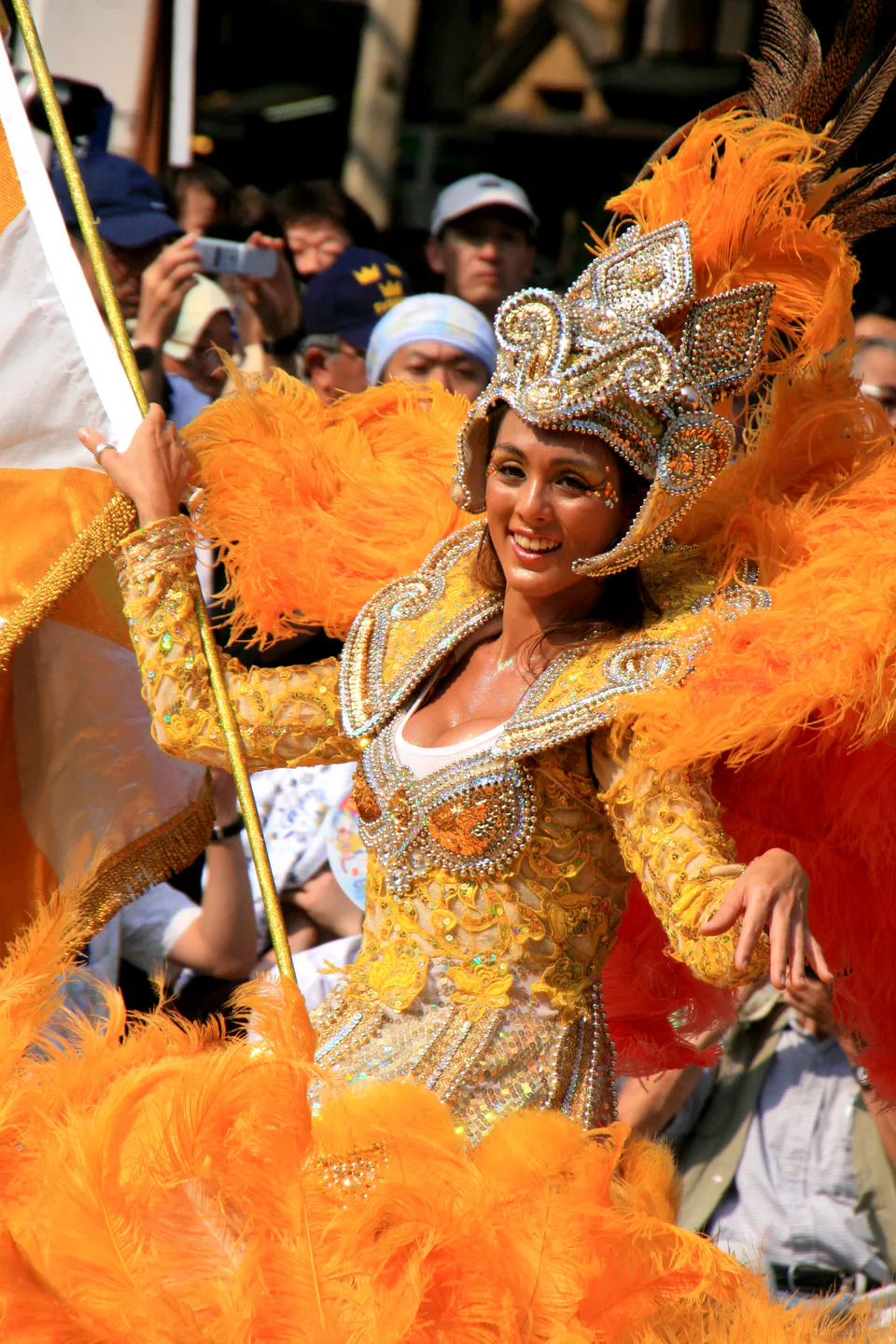
An opening-area position makes sense when the first teams matter and you are genuinely early. A middle section is the more forgiving default around noon because you are not betting the afternoon on one famous corner. A later section is the rational choice after the parade has started or when your next move is away from the densest Kaminarimon-side crowd.
No section guarantees a clean sightline. This is a moving parade with spectators shifting behind barriers. Repeatedly relocating once the route is dense can cost more visibility and energy than it gains. The better rule is: choose one section that matches your arrival, then decide in advance which direction you want to leave.
This is the same planning mistake that appears at Koenji Awa Odori: treating movement inside a festival crowd as if it were normal map walking. The hidden cost is not distance; it is how slowly that distance becomes when everyone else is also trying to move.
Families should choose the retreat rule before the viewing point
For children, older travellers or anyone sensitive to heat, decide what ends the session before you settle: someone stops drinking normally, the group needs an indoor break, a restroom becomes urgent, or the return trip is starting to look harder than the parade is worth. A forty-five-minute viewing window can be a successful festival visit. Staying another hour simply because the event continues is not automatically better value.
If the next day is already physically demanding, such as Tokyo Disney, count the carnival as a standing-heavy day rather than a light sightseeing stop. Two demanding days share the same legs even if they appear on different itinerary pages.
Which Asakusa station should you use? Start from the part of the route you want, not the word “Asakusa”
Tokyo Metro, Toei, Tobu and the Tsukuba Express use different station areas. The official course runs from Umamichi-dori toward Kaminarimon-dori, so the useful sequence is: choose the route section, choose your preferred exit direction, then choose the rail approach. “Meet at Asakusa Station” is too vague for a group unless you also specify the railway and exit.
If Asakusa is only one east-Tokyo afternoon, do not move hotels just for the carnival. If the surrounding days also include Ueno, Kappabashi, Tokyo Skytree or an east-side departure, then an east-Tokyo base starts earning its location repeatedly. Compare the broader Tokyo hotel-area guide before turning one festival into an accommodation decision.
Do not attach a hard evening deadline to an outdoor parade you do not control
A fixed dinner reservation, airport transfer or timed attraction changes the correct exit time. Leave before your margin becomes tight instead of assuming you can watch “until the end” and then move at normal Tokyo speed. The event page says the 13:00 time may change, and crowd dispersal is another variable that a timetable cannot eliminate.
If the carnival is your only east-Tokyo activity, a west-side hotel can still be the correct base. If your itinerary is already concentrated around Asakusa and Ueno, the geography may justify staying east. The important boundary condition is repetition: a hotel move should save friction on several days, not just on August 29.
Rain is not the only same-day reason to change the plan
Recheck the official site on the morning of August 29 for any time or operating update. But weather decisions should not be reduced to “rain or no rain.” The organiser has already warned about expected extreme heat. If conditions or your group’s health make a long standing period unreasonable, shorten the viewing window or switch to an indoor plan. That is not wasting the festival; it is refusing to let sunk time dictate the rest of the day.
Final call: 12:15 is my default, but 11:30 is justified for a specific reason
For a first visit, I would choose about 12:15 as the default planning target. It preserves a useful buffer before the scheduled 13:00 start without automatically adding ninety minutes of pre-parade exposure. Choose about 11:30 only when seeing the opening teams or maximizing position choice is important enough to justify the extra heat and standing. Arriving after 13:00 is still workable: choose a later section and accept that the first teams are gone rather than rushing through a dense crowd.
The recommendation reverses for a heat-sensitive group. In that case, I would sacrifice position before sacrificing stamina. The official 2026 heat warning makes that trade-off unusually concrete.
Yamaga Lantern Festival 2026 Seats: Refund Deadline, Ticket Types and What You Get Back
Hakone Open-Air Museum 2026: 4:30 Is Last Entry, Not the Time You Should Arrive
Kyoto Gozan Okuribi: What the 2026 Viewpoint and Exit Plan Teaches
Osaka Long-Stay Hotels for 5–7 Nights: Laundry, Kitchens and When Not to Change Areas
Japan Autumn Leaves Reservations 2026: What to Book Early and What to Keep Flexible
References
Asakusa Samba Carnival Executive Committee — 2026 event overview (August 29, 2026; scheduled 13:00 start; Umamichi-dori to Kaminarimon-dori; standing-only viewing and equipment restrictions) · 2026 heatstroke-prevention notice. Rechecked August 27, 2026.