
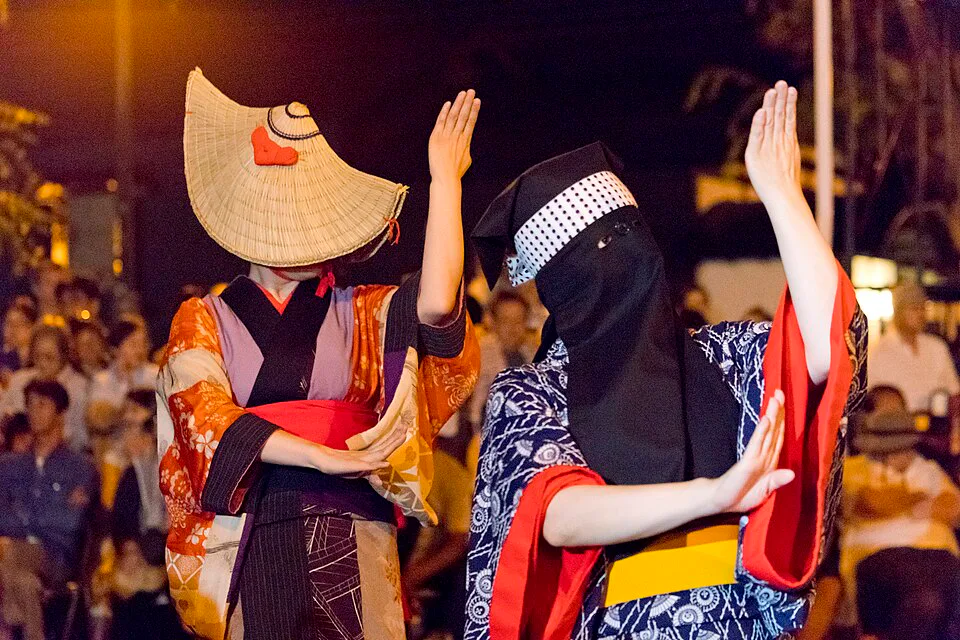
Nishimonai Bon Odori 2026 is over. The official 2026 street festival ran August 16–18, ending at 22:30 on August 16–17 and 23:00 on August 18. Do not use this page to book a 2026 festival hotel, shuttle or paid seat now. The useful purpose of the article after August 18 is different: preserve the accommodation logic that is likely to matter again, while clearly separating it from 2026-only transport, traffic and rain-plan details.
Ugo Town states that Nishimonai Bon Odori is held every August 16–18, but the next edition’s shuttle timetable, traffic restrictions, paid-seat procedure, rain venue rules and accommodation availability must be rechecked when the organiser publishes them. A future visitor can already understand the base trade-off—Ugo minimises late-night movement, Yuzawa is the practical rail base, Yokote is a directional fallback—but should not copy 2026 operating details into a 2027 booking.
↔ Scroll table left or right
Future planning question | Best starting answer | What must be reverified |
Want to stay until the adult dance is fully underway after 21:00 | Ugo gets the strongest first look | Actual room inventory, walking/taxi route and next-edition traffic controls |
Car-free visitor arriving by rail | Yuzawa is the logical transport base to test first | Next-edition festival shuttle times and last return service |
Yuzawa/Ugo rooms unavailable or next morning points north | Compare Yokote | The added late-night transfer and whether it still exists after the dance |
Visiting outside the main August festival | Consider the Bon Odori Hall regular performance | Current performance date before travel; it is not the street festival |
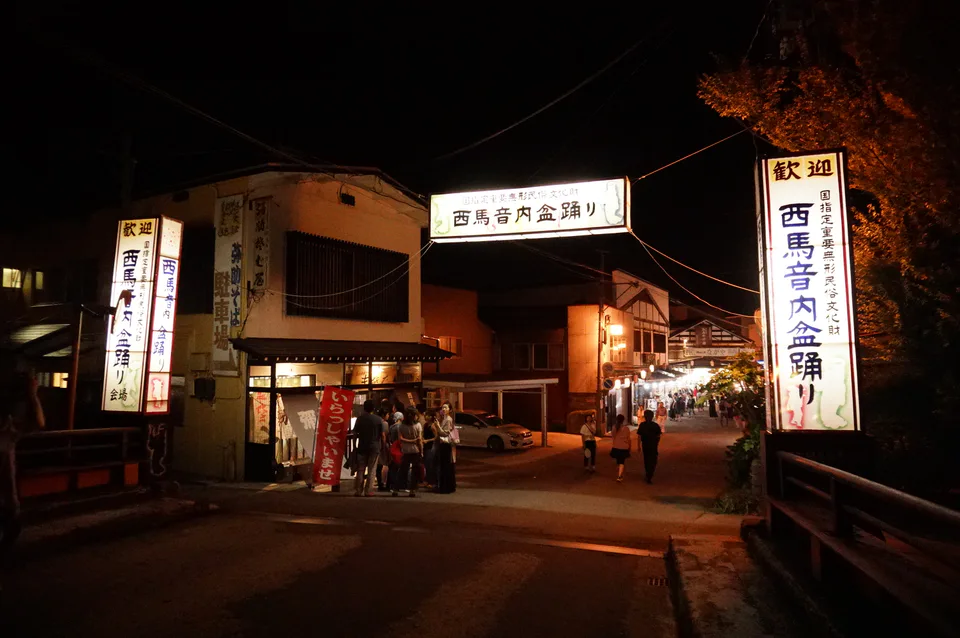
2026 festival image. Future operating details must be checked against the next official edition.
The strongest lesson from 2026 survives: choose the hotel from the end of the dance backwards
The 2026 official schedule is useful as evidence for why hotel geography matters. The first two nights ran to 22:30 and the final night to 23:00, while the organiser noted that adult dancers become fully assembled after 21:00. In other words, the most distinctive part of the evening happens late enough that a distant hotel can turn the festival into a transport deadline.
That principle is reusable even though the exact next-edition timetable is not. Do not begin with the cheapest hotel in Akita Prefecture and then ask how to return after the dance. Begin with the final hour you intend to stay, identify the confirmed late-night transport for that edition, then choose the hotel that remains reachable.
This is why Ugo, Yuzawa and Yokote are not three interchangeable price points. They solve different post-festival problems.
Ugo: best when the night itself is the main reason for travelling
Staying in Ugo is the cleanest operational answer because it removes the long post-festival transfer. In 2026, the tourism association said local accommodation capacity was only about 200 people. That historical figure shows why the local option can become scarce, but it should not be treated as a promise about future inventory.
Ugo is most valuable when you intend to stay through the late adult-dance period and want the freedom to stop when you are actually finished rather than when the bus requires it. The premium is not simply proximity. It is the ability to use the best part of the evening without converting every final dance into a countdown.
The red-team case is a property marketed as “Ugo” that still requires a car, an uncertain late taxi or a long transfer from Honmachi Street. For future editions, verify the exact hotel-to-festival route rather than booking by municipality name alone.
Yuzawa: the strongest car-free base only if the festival shuttle still solves the late return
Yuzawa is the natural base to test first for a rail traveller because it sits on the rail network and historically has been tied into festival transport. That does not mean the 2026 R8 shuttle should be copied into another year.
For a future visit, require four answers before booking:
Which Yuzawa stop serves the festival shuttle?
What is the final return departure after the dance?
Does the service run on all three festival nights?
Can the hotel still be reached from the drop-off point with luggage late at night?
If those four answers are strong, Yuzawa can provide the best balance of rail access and late-night practicality. If the last shuttle requires leaving before the part of the dance you came to see, the “convenient rail base” is solving the wrong problem.
Yokote: only move farther away when the next morning pays you back
Yokote is a fallback, not an automatic budget winner. The extra distance can make sense when Ugo and Yuzawa are full or when the next day already points toward Akita City, Omagari, Lake Tazawa or another northern route. In that case, the hotel may do two jobs: solve room scarcity and position the next morning.
It is weak when you add a longer late-night transfer only to save a modest room-rate difference. Compare the full chain—festival finish, transfer, hotel arrival, sleep and next-day departure—not the room rate in isolation.
Do not reuse the 2026 shuttle, traffic or rain plan as if it were permanent
The 2026 organiser published festival-specific shuttle links, traffic restrictions from 16:00 into late evening and an indoor rain procedure at Ugo General Gymnasium. Those details were real for 2026. They are now historical operating information, not a future timetable.
The same applies to paid seating. A future paid-seat sale can change price, quantity, application method and rain-day handling. Do not buy accommodation or intercity tickets based on a screenshot of the 2026 sales procedure.
The correct workflow for the next edition is:
confirm the official festival dates and nightly finish times;
open the new shuttle and traffic map;
identify the final service you are willing to rely on;
only then choose Ugo, Yuzawa or Yokote.
If you missed the 2026 festival, the regular performance is a different but useful fallback
Ugo Town currently lists regular Nishimonai Bon Odori performances at the Nishimonai Bon Odori Hall on the second Saturday of each month, with August using the first Sunday instead. The published performance time is 14:00–15:00 and admission is JPY 1,000 per person, with no advance reservation required.
This is useful for a traveller who wants to see the dance outside the three festival nights, but it should not be marketed as a substitute for the street festival. You lose the bonfire-lit Honmachi Street, the late-night crowd and the scale of the main event. What you gain is a much easier daytime visit with live accompaniment and no festival-night hotel problem.
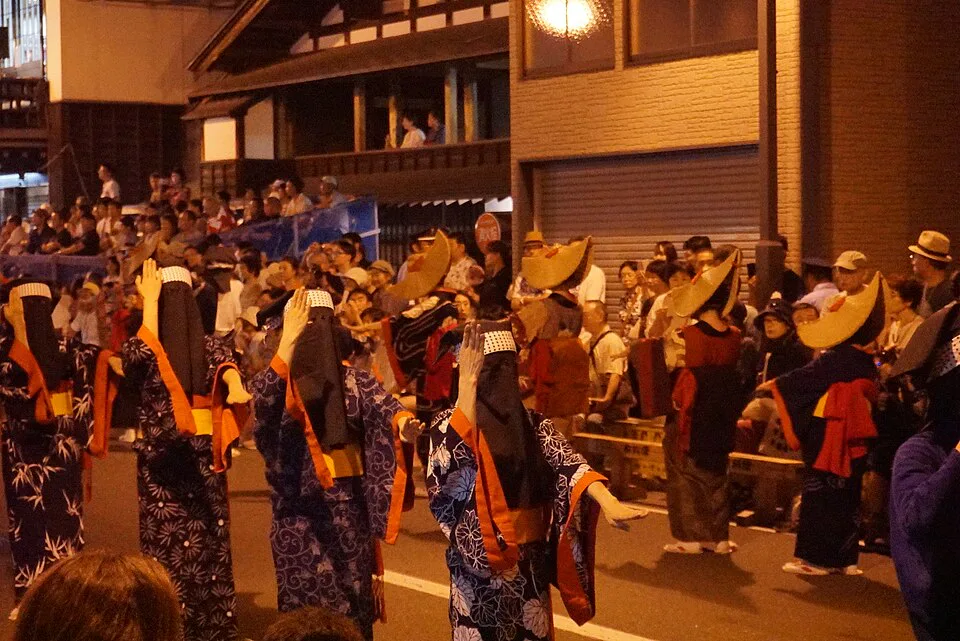
For someone travelling through Akita after August 18, that distinction can save an unnecessary overnight: go to the hall because you want to understand the dance, not because you expect the full Bon festival atmosphere.
Large luggage should stay out of the festival-night chain
The late finish makes full-size suitcases particularly costly. If you are returning to the same hotel, leave the bags there. If the festival sits between two hotel cities, use luggage forwarding when the sending and receiving properties can support the timing, or carry only an overnight/day bag.
A transfer-day itinerary can look elegant on a rail map and still fail when every shuttle queue and road closure has to accommodate a 28-inch suitcase. Future transport planning should protect the dance, not make the dance fit the luggage.
When 2027 information appears, do not book the room before checking the final return
Ugo Town describes the festival as an annual August 16–18 event, but this article does not treat the 2027 operating plan as published. The exact road closures, shuttle schedule, rain arrangement and accommodation situation are still future information.
When the next official page goes live, the first comparison should not be “which hotel is cheapest?” It should be:
planned dance finish
→ confirmed festival transport
→ hotel-door arrival
→ next-morning route
If the chain has a missing arrow, do not book around it yet.
Final verdict
For 2026, the booking decision is over: Nishimonai Bon Odori ended on August 18. Keep Ugo as the lowest-friction festival-night target, Yuzawa as the first car-free rail base to test and Yokote as a directional fallback—but treat every 2026 shuttle, traffic and rain detail as expired until the next organiser notice confirms a new version.
If you are in Akita outside the main festival and simply want to see Nishimonai Bon Odori performed, the Bon Odori Hall’s regular daytime performance is the current practical alternative. If what you want is the full fire-lit street festival, wait for the next edition’s official operating information before locking transport or accommodation.
Further planning
Japan Summer Festivals Compared · Where to Stay Near Nyuto Onsen · Japan Luggage Forwarding
References and status
Ugo Town Tourism Association — official 2026 festival page · Ugo Town — Nishimonai Bon Odori general information · Ugo Town — regular Bon Odori performances. Checked August 25, 2026. The 2026 festival has ended; do not reuse its shuttle, traffic or paid-seat details for a future edition without a new official notice.