
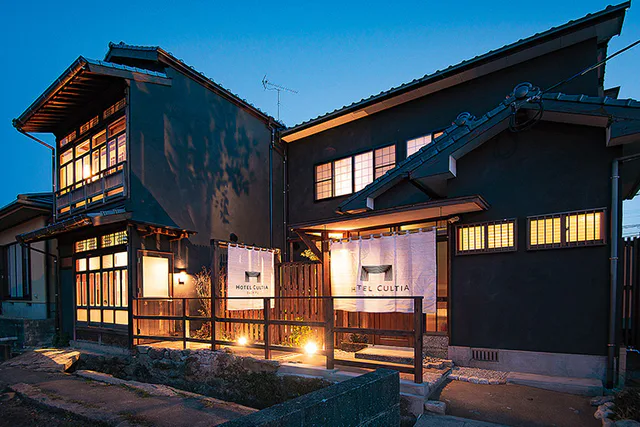
HOTEL CULTIA Dazaifu is worth one night only if you are buying a different use of Dazaifu, not just a different room. A normal Fukuoka-based visitor can see Dazaifu Tenmangu on a half-day or full-day trip. The overnight premium becomes defensible when you want the shrine town before the usual daytime flow, are willing to keep your evening in Dazaifu instead of returning to Tenjin or Hakata, and actually value sleeping in a restored historic building. If those three things do not matter, I would keep the city hotel and visit Dazaifu by day.
Fact-checked August 26, 2026. Yen is kept as the source currency; approximate US-dollar conversions use about ¥159 = US$1 as a working reference. Hotel rates and activity terms change by date.
If you are still deciding whether Dazaifu should be a half-day stop, a full day or a night, first fit it into the Fukuoka three-day itinerary. If the trip already has Yufuin, Beppu or Aso overnights, use the Fukuoka-to-Yufuin transport guide before adding another hotel move.
The 30-second decision: what are you actually paying the overnight premium for?
↔ Scroll table left or right
Your trip | ValueNavi call | Why |
You want Dazaifu Tenmangu, umegae mochi and the main approach, then dinner in Fukuoka | Day trip | The city base keeps more evening options and avoids repacking. |
You want the shrine around opening time, a slow morning and one evening that stays in Dazaifu | One night makes sense | The hotel changes when you experience the town, not just where you sleep. |
You value the historic room itself and will spend meaningful time in it | One night can justify a premium | The restored building becomes part of the itinerary rather than dead accommodation time. |
You still want Tenjin/Nakasu late at night and return to Dazaifu only to sleep | Skip | You are paying for a destination stay while continuing to use Fukuoka as the real destination. |
You need lifts, strong sound insulation, laundry and predictable modern-room circulation | Skip or verify a specific room | The hotel is deliberately non-standard because the historic buildings were preserved. |
ValueNavi overnight-premium test: HOTEL CULTIA should buy you at least two of these three things
I would not compare this hotel with a Hakata business hotel only by room rate. The products are too different. Instead, ask whether one night buys at least two of the following:
↔ Scroll table left or right
What the premium buys | When it is real value | When it is mostly marketing value |
Early Dazaifu | You will actually walk to the shrine around opening time before the normal visitor flow builds | You plan to sleep until 09:00 and leave after breakfast |
A Dazaifu evening | You stay in the shrine town, dine locally or at the hotel and stop commuting back to central Fukuoka | You return to Tenjin for dinner and come back late only to sleep |
The historic property | You care about the architecture, room layout, hinoki bath or the small-scale historic setting | You arrive late, shower, sleep and leave early |
If only one box is true, a day trip plus a central-Fukuoka hotel is usually the cleaner purchase. If two or three are true, the overnight begins to have a clear purpose.
The most defensible reason to stay is the morning: in summer you can buy roughly 2.5 hours before the usual visitor flow
Dazaifu Tenmangu currently opens at 06:00 from the spring equinox until the autumn equinox, then at 06:30 after the autumn equinox. The shrine’s own English FAQ says visitors typically begin arriving around 08:30, when morning prayers start at the main sanctuary. In June through August the shrine closes at 19:30; in April–May and September–November it closes at 19:00.
That creates a useful derived number: a summer overnight can give you about 2.5 hours between 06:00 and 08:30 when you are already in the shrine town and do not need to commute from Fukuoka. This is not a promise of an empty shrine. It is a time advantage. For photographers, repeat visitors, shrine-focused travellers or anyone who simply wants a slower morning, that is the strongest operational case for paying to sleep in Dazaifu.
The evening is less automatically valuable. The shrine approach’s shops and cafés generally close around dusk, so “staying after the crowds” does not mean Dazaifu turns into a late-night entertainment district. If your ideal evening is yatai, bars and late shopping, the Fukuoka yatai guide makes the opportunity cost obvious: you are giving up the exact hours when central Fukuoka becomes more useful.
A day trip already pays the transport fare; the hidden cost of the overnight is the hotel move
This is an easy comparison to get wrong. If you were going to visit Dazaifu anyway, the transport fare is not the full extra cost of staying overnight. A day-tripper also has to travel from Fukuoka to Dazaifu and back. The additional cost is mainly the hotel-rate difference, luggage handling, a checkout/check-in cycle and the loss of one central-Fukuoka night.
For reference, Nishitetsu’s 2026 Dazaifu Liner Bus “Tabito” fare table lists Hakata Bus Terminal to the Dazaifu area at ¥650 (about US$4.10), or ¥630 (about US$4.00) when the applicable IC/contactless discount is used on board. Fukuoka Airport International Terminal to Dazaifu is ¥700 (about US$4.40), or ¥680 (about US$4.30) with the applicable cashless discount. The hotel itself lists about 40 minutes from Hakata by the liner bus and about 25 minutes from Fukuoka Airport, followed by roughly a five-minute walk from Dazaifu Station to reception.
If you are carrying two large suitcases, that final sentence matters more than the cheap bus fare. The overnight is easiest when Dazaifu sits naturally between two itinerary blocks. It is least attractive when you must drag luggage out from Hakata, sleep one night, then drag it back to the same city hotel zone the next morning.
If you need to understand the city-side transfer chain first, use the Fukuoka transport guide.
What a high-value one-night stay looks like
↔ Scroll table left or right
Time | High-value use | Why it works |
14:30–15:00 | Arrive, leave luggage or check in from 15:00 | You avoid wasting the whole first afternoon on a late hotel move. |
15:00–18:30/19:30 | Shrine, approach, museum/café time according to season | You use the destination before it closes instead of arriving only for the room. |
Evening | Stay in Dazaifu; eat at the hotel or nearby if operating | You stop treating Tenjin as the real evening base. |
06:00/06:30–08:30 | Early shrine walk | This is the overnight-only convenience advantage most day trips do not reproduce easily. |
After 08:30 | Breakfast, another local stop, then check out by 11:00 | The morning feels like a destination stay rather than a rushed checkout. |
The low-value version is the reverse: arrive at 19:30, use almost none of Dazaifu, sleep, then leave at 08:00 for Hakata. In that schedule, the historic room has to carry almost the entire value proposition by itself.
The hotel is three historic buildings, so “which room?” comes before “which rate?”
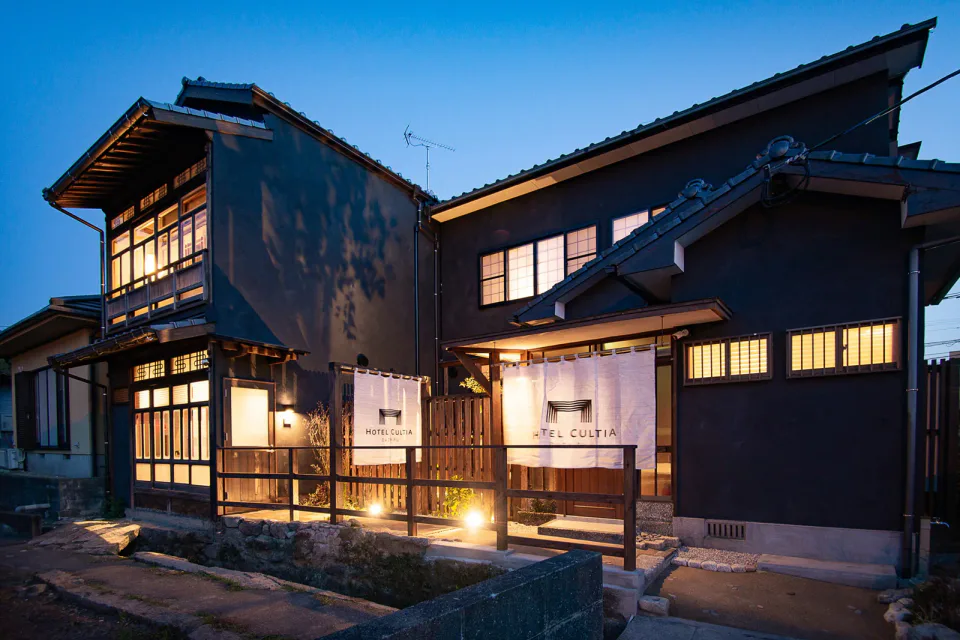
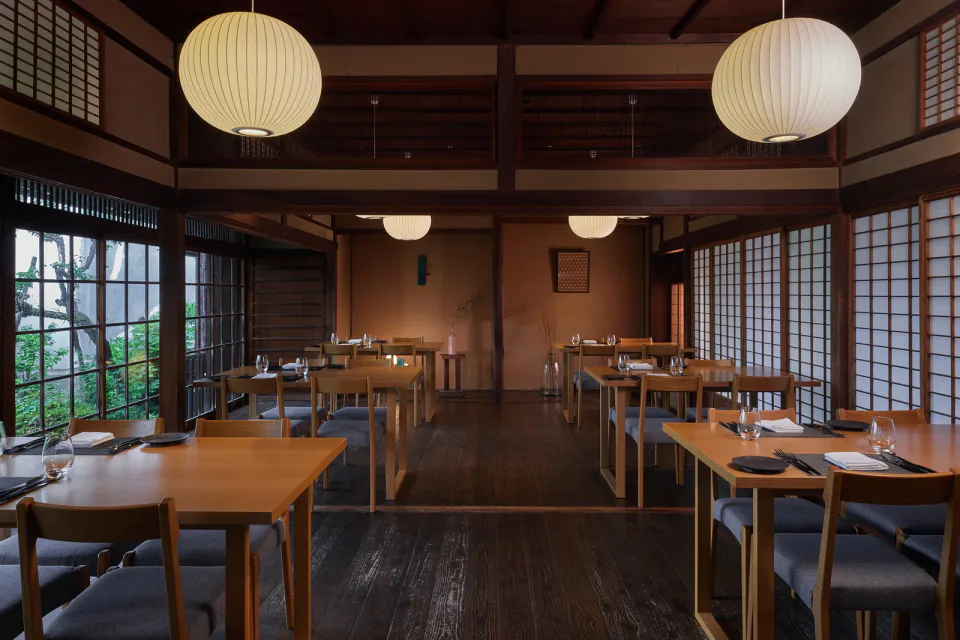
HOTEL CULTIA Dazaifu is a distributed hotel with 13 rooms across KOKOUAN, KOUKOTEI and BAIKA. Reception and the restaurant are in KOKOUAN. KOUKOTEI and BAIKA are separate buildings. The hotel promotes one accommodation building as being just ten steps from the west gate of Dazaifu Tenmangu, but that shortest distance is not the distance from every room.
↔ Scroll table left or right
Building | Official layout | ValueNavi interpretation |
KOKOUAN | 4 guest rooms; reception and restaurant in the same building | Best starting point if reducing building-to-building movement matters, but still confirm the exact floor and room layout. |
KOUKOTEI | 7 guest rooms; separate from reception | A one-minute outdoor move is trivial in dry weather, less trivial with rain, luggage, a stroller or an older traveller. |
BAIKA | 2 guest rooms; the hotel highlights its largest rooms, garden space and hinoki baths | Best fit when the room itself is part of the experience, not when you will be outside all day. |
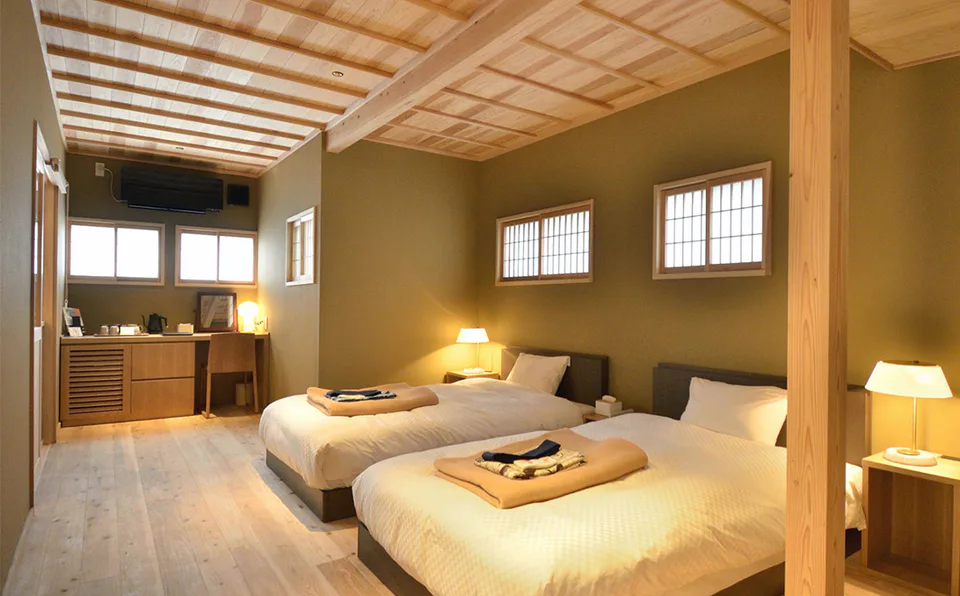
One current BAIKA room is listed at 62 m² with two beds and capacity for additional bedding. That kind of space can materially change the decision for a family or two adults with large luggage, but it can also become an expensive waste if you barely use the room. Compare room category, occupancy and building—not just the cheapest headline rate.
Historic-building charm has three real costs: stairs, sound and less standardisation
The property is officially not barrier-free. Historic buildings contain stairs and level changes, and some room layouts are maisonette-style. For an older parent, limited mobility, a stroller or heavy luggage, “five minutes from the station” does not answer the important question. You need the exact room and the path to it.
The hotel also explicitly warns that the traditional buildings do not have the insulation and airtightness of modern construction and that sound can carry through the wooden structure. A quiet shrine town does not guarantee a silent room. If you are a very light sleeper, that is a booking condition, not a minor footnote.
The same principle applies to facilities. The current hotel overview lists no laundry and no lounge. That is almost irrelevant for one night; it becomes increasingly annoying over three or four. This is another reason I would treat HOTEL CULTIA as a destination night rather than a long-stay Fukuoka base.
Meals matter more here than at a city hotel because the town closes earlier
On a central-Fukuoka stay, you can postpone the dinner decision until late. Dazaifu is less forgiving because many businesses around the approach close around dusk. That means the meal plan is part of the overnight logistics.
A recent official guest notice lists breakfast at ¥2,750 per person (about US$17), including consumption tax and service charge, for guests adding it to a room-only plan. For two adults, that is ¥5,500 (about US$35). If an OTA breakfast-included rate is more than ¥5,500 above the comparable room-only total for two adults, the premium needs another benefit to justify itself.
The hotel restaurant also operates dinner by reservation, and recent official notices used 18:00 or 18:30 dinner slots during a busy period. Do not assume you can arrive late and decide on dinner at 20:30. If your stay value depends on dining in the hotel, reserve it as part of the stay rather than as an afterthought.
For daytime food stops, the Dazaifu food guide is the better companion article.
Night worship is a potential reason to stay—but right now the official information itself needs verification
The hotel’s formal nighttime worship at Dazaifu Tenmangu is exactly the kind of experience that can make an overnight feel different from a normal day trip. It is limited to hotel guests and takes place after the shrine closes. But I would not add its value to the room until the hotel confirms your exact date and fee.
As of August 26, 2026, the official activity page is not internally consistent across its currently indexed and rendered versions. One current official rendering still states that applications are suspended from May through the end of August 2026 because of main-sanctuary repair work, with older terms showing ¥5,000 per person (about US$31) and ¥10,000 for a solo participant. A newer official search-crawled version lists September dates and a different fee structure. Because the first-party source itself is in transition, the safe decision is to treat the experience as unconfirmed until the hotel confirms the date, price and booking rule directly.
This is a good example of why old social posts are especially risky here. The activity is not a permanent room inclusion. It has operating dates, capacity, advance-booking rules and repair-related interruptions.
Parking is another case where the official page says two things at once
The current hotel overview labels parking as unavailable, but the same official access page tells drivers to notify the hotel in advance, come to reception first and then follow staff directions to an available parking area; it warns that some parking locations can be about a five-minute walk away. A July 2026 guest notice went further and said dedicated parking was being provided for each guest room during that period.
So I would not write “free parking guaranteed” or “no parking” as a universal fact. The useful instruction is simpler: drivers should contact the hotel before arrival and ask for the parking instructions attached to their specific stay date. The car does not remove the distributed-hotel friction—you may still unload at reception and walk back from the assigned parking area.
Fukuoka lodging tax is small, but compare the final total rather than the room headline
Dazaifu is in Fukuoka Prefecture but outside Fukuoka City and Kitakyushu. The current prefectural accommodation tax for hotels in that area is ¥200 per person per night (about US$1.30). For two adults staying one night, that is ¥400. It will not determine whether the hotel is worth it, but it is another reason to compare final totals rather than a pre-tax OTA headline.
At a property with materially different buildings and room layouts, make sure Booking.com, Trip.com and Agoda are showing the same room category, guest count, meal plan, cancellation deadline and taxes. A ¥3,000 cheaper quote is not a saving if it is a different building or excludes the meal plan you actually need.
Check bookable HOTEL CULTIA Dazaifu rooms for the same date
Booking.com: check HOTEL CULTIA Dazaifu rooms
Trip.com: check HOTEL CULTIA Dazaifu rooms
Agoda: check HOTEL CULTIA Dazaifu rooms
When does the recommendation reverse?
I would book one night when Dazaifu is a real destination in the itinerary, I want the early shrine window, I will keep the evening local, and I accept the quirks of a preserved wooden property. The recommendation becomes stronger on a repeat Fukuoka trip or a longer Kyushu trip where losing one Tenjin/Hakata night does not remove an essential city experience.
I would keep the city hotel on a first Fukuoka trip of only two or three nights if the main goal is food, nightlife, shopping and efficient day trips. You can still spend a full day in Dazaifu. Dazaifu Tenmangu itself explicitly says a full day is reasonable for the shrine and museums, and suggests an overnight mainly when combining nearby attractions such as Kamado Shrine and Kanzeonji.
I would also keep the city hotel if you are travelling with someone who needs barrier-free circulation or if the exact room cannot be confirmed. Historic charm is not a good trade if it creates avoidable mobility stress.
If the alternative is another destination hotel rather than Hakata or Tenjin, compare the same logic with seven x seven Itoshima: which overnight deletes more transport and creates more time you could not easily reproduce as a day trip?
Four booking checks that matter more than the star rating
1. Confirm the building and room layout. Ask whether the room is in KOKOUAN, KOUKOTEI or BAIKA and whether stairs or a maisonette are involved.
2. Decide whether the morning is part of the purchase. If you are not going to use the early shrine window, reduce the value you assign to the overnight.
3. Lock the evening meal plan. Dazaifu is not Tenjin after dark. If the hotel restaurant is part of the plan, book it rather than assuming late walk-in dining.
4. Reconfirm the two unstable details. Drivers should ask for current parking instructions, and guests interested in formal night worship should ask for the exact date, price and application rule before treating it as part of the stay.
Final verdict: HOTEL CULTIA Dazaifu is a one-night destination stay, not a Fukuoka base
The strongest version of this hotel is surprisingly specific: arrive early enough to use the first afternoon, stop commuting back to central Fukuoka, sleep in a building you actually care about, then use the 06:00/06:30-to-08:30 morning window before the normal visitor flow builds. That is a coherent one-night experience.
The weak version is equally clear: arrive late after dinner in Tenjin, sleep in a historic room you barely see, then leave early for Hakata. In that itinerary, the hotel has not changed Dazaifu at all. It has only added a hotel move.
For most first-time visitors with limited Fukuoka nights, I would keep Hakata or Tenjin and make Dazaifu a full day. I would choose HOTEL CULTIA for one night only when the extra morning, local evening and historic property together are worth more than one night of central-Fukuoka flexibility.
Hakone Loop Before Check-In or After Checkout? The Best Order for a One-Night Ryokan Stay
HIYORI Ocean Resort Okinawa: Is a 56m² Suite Worth It for a 3-Night Onna Stay?
RIHGA Royal Gran Okinawa: Is Asahibashi Worth It for Your First or Last Night?
Port of Nagoya Public Aquarium 2026: How Long to Spend and When Night Entry Is Worth It
References
HOTEL CULTIA Dazaifu — official hotel, access and facility information
HOTEL CULTIA Dazaifu — official room and building information
HOTEL CULTIA Dazaifu — formal nighttime worship activity page
Dazaifu Tenmangu — official opening-hours and visit-planning FAQ
Nishitetsu — current rail and bus information
Fukuoka Prefecture — accommodation tax
Room types, rates, activity availability and cancellation terms can change by date. This article may contain affiliate links; ValueNavi may earn a commission from qualifying bookings at no additional cost to you.