
For Namba, start with Nankai. For Tennoji, Osaka Station and Shin-Osaka, start with JR. For an Umeda hotel beside a limousine-bus stop, especially with several large bags, compare the bus with HARUKA before assuming rail is automatically easier.
The important part is where each option actually leaves you. Rapi:t can reach Nankai Namba in as little as 34 minutes, but that is not the same destination as JR Namba or OCAT. HARUKA reaches Osaka Station directly, but “Osaka Station” is still a large complex. At KIX Terminal 2, rail passengers must first take the free shuttle to the Aeroplaza / Terminal 1 station side. The ValueNavi rule is therefore: compare the whole arrival chain, not the branded train time.
↔ Scroll table left or right
Your Osaka base | ValueNavi first check | What makes it work | When the answer can flip |
Nankai Namba / south-east Namba | Rapi:t or Airport Express | Direct Nankai arrival points toward the hotel area | Your hotel is actually much closer to OCAT / JR Namba |
JR Namba / OCAT side | Compare OCAT limousine bus with Nankai | The bus can delete the cross-Namba suitcase walk | Traffic certainty matters more than the final walk |
Tennoji | HARUKA or JR airport service | No reason to detour through Namba for a famous airport train | Your exact hotel is materially closer to a different direct stop |
JR Osaka Station | HARUKA | Direct rail lands where you need to be | Your Umeda hotel is beside a useful limousine-bus stop and luggage friction dominates |
Umeda away from JR platforms | HARUKA vs limousine bus | The winner depends on the hotel-side stop, not the district name | A hard arrival-time commitment makes road variability undesirable |
Shin-Osaka | HARUKA | Direct airport train plus easy next-day Shinkansen logic | You are only using Shin-Osaka as a label but actually sleeping elsewhere |
Terminal 2 + late arrival | Check the full rail/bus chain before buying | T2 changes the transfer and last-service calculation | A direct T2 bus departure matches your hotel and time better |
ValueNavi Arrival Resilience Score: score the route-to-hotel chain, not the train brand
This is the Osaka version of the same ValueNavi proprietary model used in our late-arrival airport guides: last-service slack (30%), hotel-door fit (25%), luggage/hand-off burden (20%), next-morning positioning (15%), and fallback depth (10%). The score belongs to a route + hotel-area combination, not to Rapi:t, HARUKA or the limousine bus in isolation.
↔ Scroll table left or right
KIX → Osaka scenario | Arrival Resilience Score | Why it scores well | What lowers the score |
Nankai Namba hotel + direct Nankai train | 9.2/10 | Direct line-haul, strong hotel-door fit, few luggage hand-offs | The hotel is actually on the JR Namba / OCAT side |
JR Osaka Station hotel + HARUKA | 9.4/10 | Direct rail, predictable arrival and excellent next-morning positioning | The hotel entrance is materially easier from a limousine-bus stop |
JR Namba / OCAT hotel + OCAT limousine bus | 8.8/10 | Deletes the cross-Namba suitcase transfer | Road delay matters more than the final-walk saving |
Umeda hotel beside a useful daytime limousine-bus stop | 8.8/10 | Hotel-door fit can outweigh a slower road journey | Your actual departure does not use that stop or you have a hard arrival deadline |
Late-night 00:15 T1 bus to Hankyu Sanbangai | 7.2/10 | Keeps Umeda reachable after midnight without a rail chain | Single late option, cashless-only rule and no Herbis Osaka stop reduce fallback depth |
Terminal 2 rail route otherwise identical to a Terminal 1 route | −0.8 point T2 penalty | The rail product is unchanged | The extra shuttle and vehicle hand-off add 7–9 minutes plus transfer friction before rail starts |
ValueNavi True Arrival Time formula: terminal-ready time + terminal-access penalty + wait for the next usable service + line-haul time + final hotel walk/transfer. This is intentionally different from comparing “34 minutes Rapi:t” with “60 minutes bus.” The branded journey time is only one component of the trip.
The T2 penalty is not a claim that every Terminal 2 traveller should avoid rail. It is a standardized dataset adjustment: if two travellers have the same hotel and catch the same train, the T2 arrival has one extra vehicle and 7–9 minutes of scheduled movement before reaching the station side.
Namba is not one arrival point: Nankai Namba and OCAT can produce opposite answers
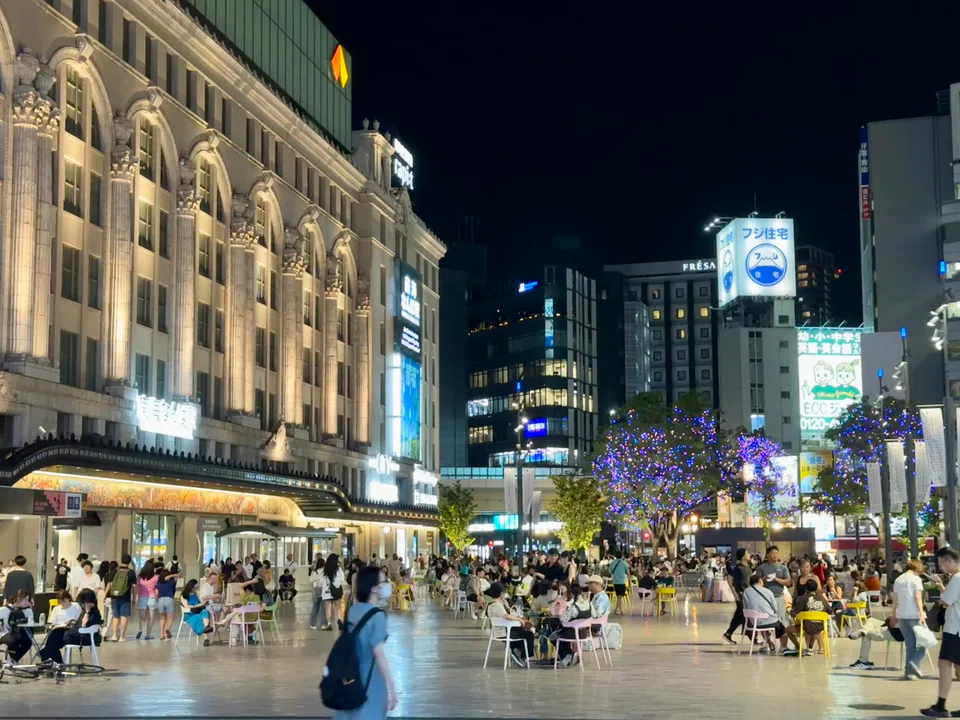
Nankai currently lists Limited Express Rapi:t at a minimum of 34 minutes between Kansai Airport and Namba, while the Airport Express takes about 45 minutes. Rapi:t is all reserved seating and requires the limited-express ticket; Airport Express needs only the normal train fare.
If your hotel is directly above or very close to Nankai Namba, that is an unusually clean airport chain. Swissôtel Nankai Osaka is the obvious example: the airport train and the hotel location are solving the same problem. In that scenario, I would choose between Rapi:t and Airport Express mainly on seat certainty, luggage comfort, waiting time and price.
But a hotel near JR Namba or OCAT is a different problem. Kansai Airport Transportation currently lists the KIX Terminal 1 → Namba OCAT bus at about 50 minutes and ¥1,400 (about US$8.80) one way. OCAT and Nankai Namba are both marketed as “Namba,” but they are far enough apart that the final suitcase walk can erase a small vehicle-time advantage.
That is the first hidden cost in this article: district name ≠ arrival point. Before comparing tickets, pin your hotel and then pin Nankai Namba and OCAT. If one arrival point removes a substantial luggage walk, it deserves to move up the shortlist even if its headline journey is slower.
If you are still choosing the base itself, decide that first with Namba vs Umeda. I would not let a discounted airport ticket choose four nights of accommodation for you.
Staying near Nankai Namba? Compare current Rapi:t e-ticket options
Rapi:t vs Airport Express: the premium buys seat certainty as much as speed
On paper, the difference is roughly a 34-minute minimum versus about 45 minutes to Namba. I would not reduce that to “pay extra to save around 11 minutes.” Rapi:t’s reserved seating and dedicated airport-train setup matter after a long flight or when you are carrying large luggage. Airport Express is more compelling when you arrive in daylight, travel light and would rather keep the airport leg simple and inexpensive.
The recommendation reverses when waiting time dominates. If you have just missed a Rapi:t and an Airport Express is about to leave, waiting for the “faster” train can destroy the theoretical time saving. Compare the next usable departure, not only each train type’s best published journey time.
That is also why I would not give Rapi:t a universal ValueNavi score. Its value depends too heavily on the hotel side of Namba, your luggage and the departure you can actually catch. The useful dataset here is conditional: route fit + seat certainty + final walk.
Umeda: HARUKA wins at JR Osaka Station; the bus can win at the hotel door
JR-West currently sells its HARUKA One-way Ticket to eligible overseas visitors at ¥1,800 (about US$11.30) for Osaka or Shin-Osaka. If your hotel is inside or immediately beside JR Osaka Station, HARUKA is difficult to beat: direct airport rail, no cross-city detour and relatively predictable timing.
Umeda is bigger than JR Osaka Station, however. The regular airport limousine-bus fare to the Osaka Station area is currently ¥1,800 (about US$11.30), with a typical Terminal 1 → Hankyu Sanbangai journey of around 60 minutes. Services use several Umeda stops, including Herbis Osaka and, on relevant trips, hotel / station-area stops. Not every service uses every stop, so the useful question is not “bus to Umeda?” but “does my actual departure stop beside my hotel?”
For Hotel Granvia Osaka, rail captures almost all the location benefit. For a hotel whose easiest suitcase approach is from a limousine-bus stop, the bus may remove more walking than HARUKA even when the road journey is slower. This is especially relevant with children, older relatives or two large cases.
Road traffic is the counterargument. If you have a fixed reservation shortly after arrival or are using the route to catch a flight home, rail’s timetable resilience may be worth more than the easier hotel-side drop-off.
For Tennoji, Osaka Station or Shin-Osaka: compare current HARUKA ticket options
Tennoji and Shin-Osaka: do not detour for the airport train everyone talks about
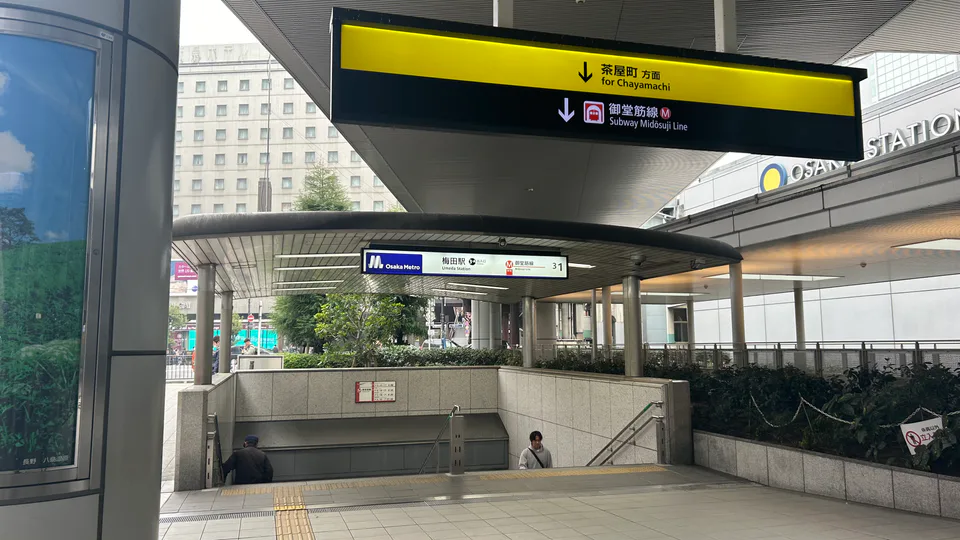
JR-West currently lists the overseas-visitor HARUKA One-way Ticket at ¥1,300 (about US$8.20) to Tennoji and ¥1,800 (about US$11.30) to Osaka or Shin-Osaka. HARUKA serves those areas directly from Kansai Airport. That makes the route logic unusually clean.
If you are staying in Tennoji, going to Namba first simply because Rapi:t is the most recognisable KIX train usually adds a transfer without solving another problem. Shin-Osaka is the same principle on a different itinerary: if you chose the area because you have an early Shinkansen the next morning, direct HARUKA access reinforces the reason you booked there.
The boundary condition is the hotel itself. “Tennoji” or “Shin-Osaka” on a booking page can still cover different walking approaches. Check the exact station side before treating “direct train” as “door-to-door easy.”
Terminal 2 adds a real transfer before any rail journey starts
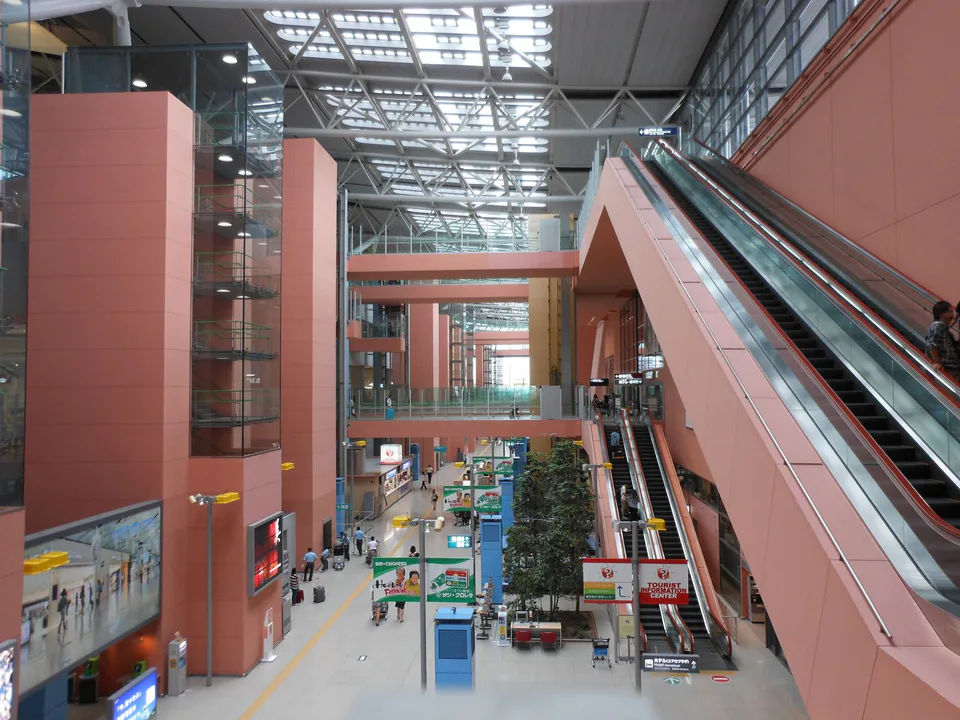
Kansai Airport Station is on the Terminal 1 / Aeroplaza side. KIX states that the free shuttle between Terminal 2 and Aeroplaza takes approximately 7–9 minutes. For a Terminal 2 arrival, that shuttle is part of the rail journey even though it never appears in the Rapi:t or HARUKA headline time.
ValueNavi’s “true arrival chain” for a T2 rail trip is therefore:
↔ Scroll table left or right
Step | Why it matters |
Immigration / baggage / customs | Determines when you are actually ready to leave the terminal; it cannot be predicted from landing time alone |
T2 → Aeroplaza shuttle | Adds a separate vehicle and 7–9 minutes of scheduled movement |
Walk to Kansai Airport Station | Moves you from the shuttle arrival to the rail platform |
Wait for the next useful train | A missed departure can matter more than the difference between two train types |
Osaka arrival point → hotel | The final walk or transfer decides whether the route was actually easy |
This does not mean Terminal 2 travellers should avoid rail. It means they should stop comparing a 34-minute or HARUKA ride time with a bus time as if both clocks start at the aircraft door.
Late arrival: the after-midnight Umeda bus is useful, but the details matter
As of August 26, 2026, Kansai Airport Transportation is continuing a late-night Osaka Station service: Terminal 2 at 00:02, Terminal 1 at 00:15, then about 60 minutes to Hankyu Sanbangai. The current adult fare is ¥2,700 (about US$17.00), it is cashless-only, and the operator explicitly says it does not stop at Herbis Osaka. The standard ¥1,800 (about US$11.30) Osaka Station ticket is not sufficient without paying the difference.
This is exactly the kind of detail that changes a hotel-side decision. “There is a late-night bus to Umeda” is not enough. If your hotel is beside Herbis Osaka, the late-night service does not preserve the same convenient drop-off you may have seen on a daytime timetable.
Namba has a different failure mode. The dedicated Nankai Namba late-night bus route is currently marked suspended. The regular OCAT route has its own final departures. If you are landing late and staying in Namba, do not build the plan around an assumed midnight-bus safety net.
My rule for late arrivals is to find the last two usable departures, not just the last one. If missing one connection leaves no sensible public-transport fallback, the plan is fragile. In that situation, a different first-night hotel, a different transfer mode or a larger time buffer may be more rational than optimising the fare.
With large luggage, count handling events before counting yen
For a solo traveller with a carry-on, changing trains may cost little more than a few minutes. For a family with a stroller and two large suitcases, one extra transfer can mean elevators, crowded concourses, platform changes and a longer hotel walk.
I would count three things before comparing a small fare difference: how many times the bags must be moved between vehicles, whether the interchange is in a large station, and how far the final arrival point is from the hotel. If one option clearly removes two of those three, it deserves a convenience premium.
This is why two Namba hotels can produce opposite airport recommendations. Hotel Royal Classic Osaka, the Namba family-hotel comparison and OMO7 Osaka vs Centara Grand Osaka show how room needs and station-side access can pull the decision in different directions.
Five airport-transfer mistakes that look rational on a map
Buying Rapi:t for an Umeda hotel because 34 minutes sounds fastest. The 34 minutes end at Nankai Namba, not your Umeda hotel.
Taking JR north for a Nankai Namba hotel because a HARUKA ticket looks attractive. A good ticket price does not compensate for sending yourself past the hotel area and back.
Treating every “Namba” hotel as equally close to Nankai Namba. OCAT / JR Namba and Nankai Namba can create very different suitcase walks.
Ignoring Terminal 2 before comparing journey times. Rail starts only after the 7–9 minute shuttle and station approach.
Using landing time to judge the last train. The useful clock starts when you are through the arrival process and ready to move, not when the aircraft touches down.
For the return to KIX, reliability matters more than it did on arrival
On arrival, a 15-minute mistake mostly costs time. On departure, the same mistake consumes flight margin. Work backwards from the terminal time you want, then include hotel-to-station walking, waiting time, any transfer and the airport ride.
Terminal 2 deserves special attention on the way back as well: KIX confirms the free shuttle takes about 7–9 minutes between Aeroplaza and T2. If your train reaches Kansai Airport Station with a narrow margin, the airport station is not your final destination.
For travellers moving between Osaka and Kyoto as part of the same trip, make the accommodation decision separately with Kyoto vs Osaka. Airport convenience should support the itinerary, not dictate it.
ValueNavi verdict: choose the arrival point that matches the hotel
Nankai Namba side: start with Nankai; choose Rapi:t when reserved seating and luggage comfort justify the premium, Airport Express when they do not. OCAT / JR Namba side: put the limousine bus into the comparison. Tennoji, JR Osaka Station or Shin-Osaka: start with JR / HARUKA. Umeda hotel beside a bus stop: compare the exact bus stop with the exact railway exit rather than comparing “bus vs train” in the abstract. Terminal 2: add the shuttle before comparing any rail time.
If two routes have similar total cost, I would choose the one that removes the awkward final transfer. The fastest airport vehicle is not necessarily the fastest way to finish travelling for the day.
Sources and what to recheck before travel
Nankai Electric Railway: current Rapi:t and Airport Express travel times
JR-West: HARUKA One-way Ticket destinations, eligibility and current prices
Kansai Airport Transportation: Namba OCAT timetable, travel time and fares
Kansai Airport Transportation: Osaka Station / Umeda timetable and fares
Kansai Airport Transportation: current late-night Osaka Station bus conditions
Kansai International Airport: Terminal 2 shuttle information
Verified August 26, 2026. Timetables, late-night operations, fares and service patterns can change; recheck the exact travel date before departure.
Osaka Shopping Hotels: Why the Last 10 Minutes Back from Dotonbori Matter More Than the Metro Map
Okinawa Guys’ Trip Hotels: The Best Base Is Where You Can Stop Driving at Night
Osaka Kuromon Market Food Tour 2026: You’re Paying for a Guide, Not the Food
Ryujin Bungy from Tokyo: The 100m Jump Is ¥19,000 — Day Tours Mostly Buy You Transport