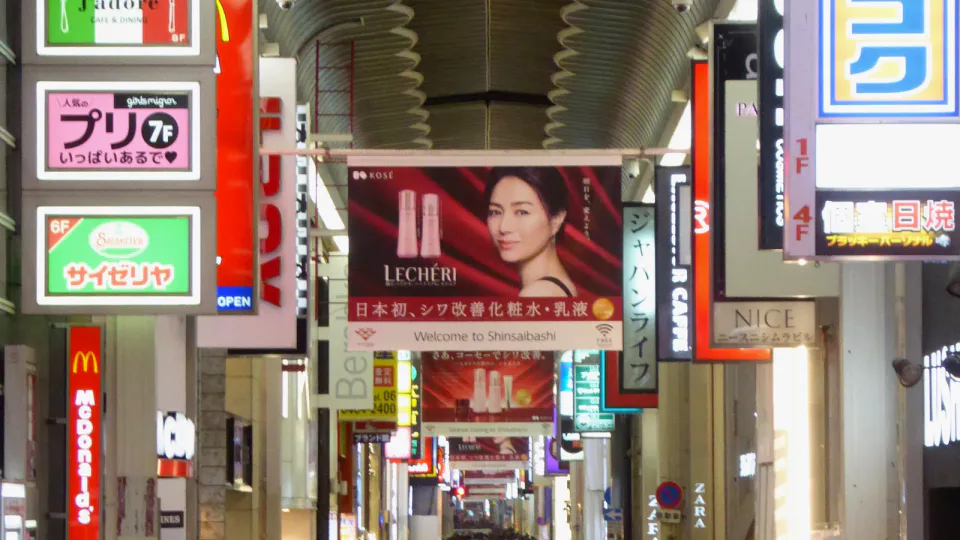
If your Osaka trip is built around Shinsaibashi, Dotonbori and Namba, the hotel decision changes after about 9 p.m. In daylight, an extra subway stop or a five-minute walk barely registers. At 11 p.m., with a pair of shoe boxes, tax-free drugstore bags and a suitcase that is already too full, the last stretch back to the room suddenly becomes one of the most important pieces of the itinerary.
This is not a ranking of the most luxurious hotels in Minami. It is a decision guide for four very different ways of buying convenience: staying almost inside Dotonbori, sleeping above the Nankai terminal, taking a larger twin room with balanced transport, or choosing a room type that can wash and dry clothes during a longer shopping stay.
30-second answer: pay for the part of the night you repeat
↔ Scroll table left or right
Your nights usually end here | Best first look | What you are paying for | Trade-off |
Dotonbori after dinner and shopping | Cross Hotel Osaka | About one minute to Dotonbori; 27 m² twin options and separate-style bathroom | Less useful if airport or JR access matters more than nightlife |
Namba shopping plus a heavy KIX departure day | Swissôtel Nankai Osaka | Nankai Namba access and the shortest luggage handoff to airport trains | Entry rooms can be smaller than the alternatives |
Namba base but you want more room to spread shopping bags | Hotel Royal Classic Osaka | 30–31 m² Standard Twin and easy Metro/Nankai access | A few more minutes back from Dotonbori |
Shinsaibashi/Namba for 4–5 nights with lots of clothing | Mercure Tokyu Stay Osaka Namba | Selected room types with washer-dryer | Not every room type has the laundry feature |
The key is repetition. A one-minute Dotonbori walk used on four nights can matter more than a glamorous lobby you barely see. A station-connected hotel can be excellent value if the final day involves two large suitcases and the Nankai airport train. A washer-dryer can be worth more than a view if you are staying five nights and buying clothes every day. None of those advantages is universally best.
If you have not yet decided whether Minami should be your base at all, start with Namba vs Umeda for first-time Osaka stays. This article assumes several of your evenings genuinely finish in Namba or Shinsaibashi.
Cross Hotel Osaka: the strongest case when Dotonbori is the real finish line
Cross Hotel Osaka makes the most sense when your day does not really end at a railway station. It ends after dinner, one more drugstore stop, a late dessert, maybe another lap through Dotonbori, and only then the walk back to the room. The value is that you do not need to mentally “leave” the neighborhood before you are ready.
Its Standard Twin is listed at 27 m², and Cross Hotel also lists separate-style bathrooms for these twin rooms. For two people returning late, that combination can be more useful than chasing a slightly larger room farther away: one person can deal with shopping bags while the other showers, without the whole room becoming a bottleneck.
The weakness is obvious too. Cross is not a Nankai-station-top product. If KIX luggage handling or JR day trips dominate your trip, the final few minutes around Dotonbori may be a luxury you do not repeat often enough. The full room-by-room trade-off is in the Cross Hotel Osaka location review.
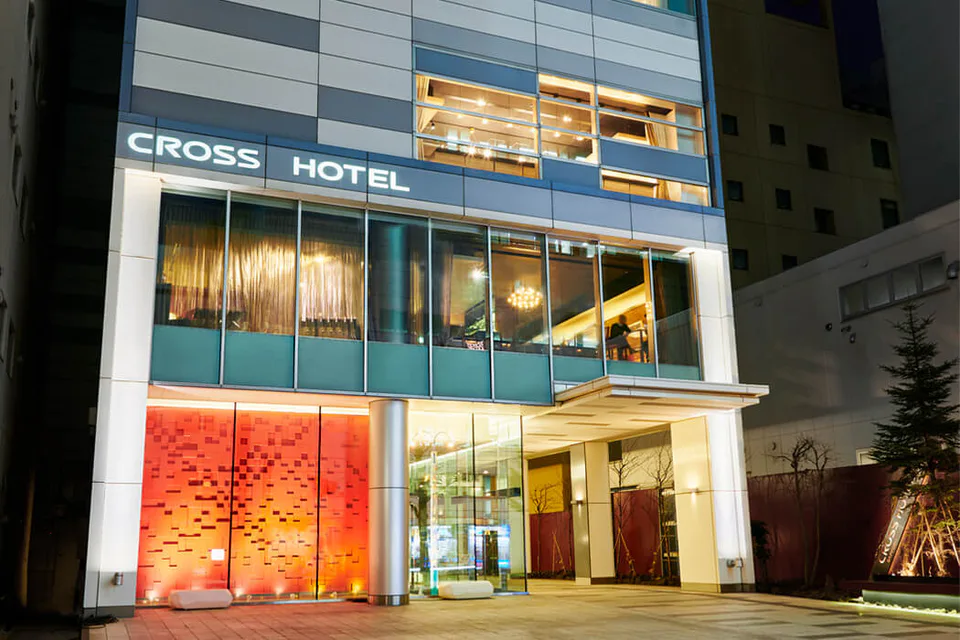
Cross Hotel Osaka is the clearest choice when the last useful distance of the day is Dotonbori to the room, not station to hotel.
Compare Cross Hotel Osaka rooms for your dates
Swissôtel Nankai Osaka: the shopping trip that ends with a very heavy airport day
Swissôtel solves a different problem. The hotel sits above Nankai Namba, and its own access guide puts the lobby about two minutes from the 3F North Ticket Gate. Nankai currently lists the fastest Rapi:t journey between Namba and Kansai Airport at about 34 minutes. That does not make Swissôtel the best nightlife hotel; it makes it a very clean luggage-and-airport hotel at the end of a shopping-heavy trip.
Imagine the final morning after four days of shopping. Both suitcases are full, the carry-on is heavier than planned and nobody wants another local train transfer. In that exact scenario, the station relationship becomes worth much more than it looked on check-in day.
But do not buy that convenience automatically. If you only return to Namba once at night and spend most days around Umeda, Kyoto or Kobe, you may be paying for a transport advantage that is used mainly on arrival and departure. The Swissôtel Nankai Osaka airport-access guide is the better follow-up if KIX is the reason you are considering it.
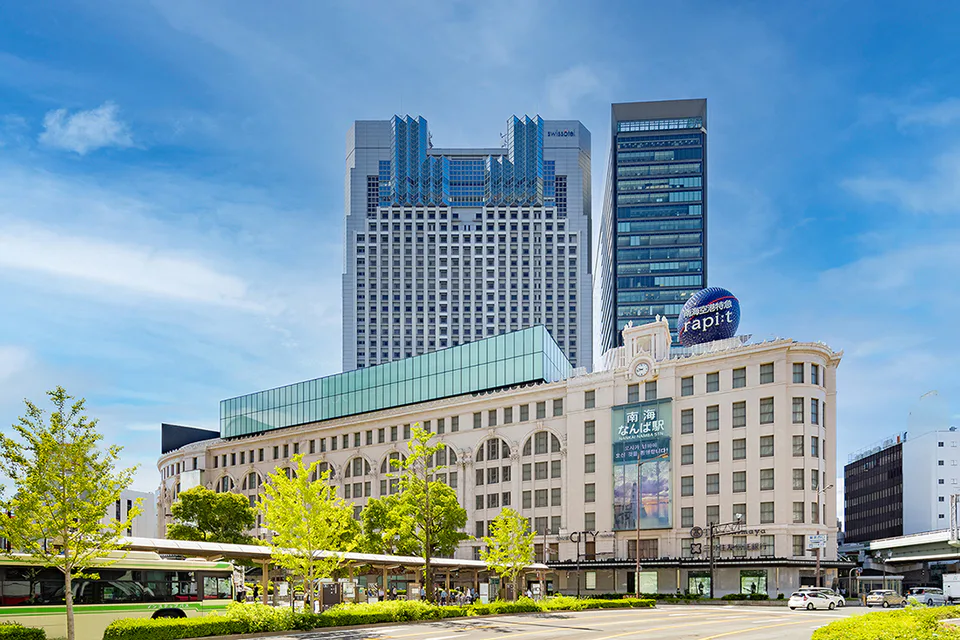
Swissôtel earns its premium most clearly when shopping creates heavy luggage and the final trip to KIX starts from Nankai Namba.
Compare Swissôtel Nankai Osaka room types
Hotel Royal Classic Osaka: trade a few night-time minutes for more usable room space
Royal Classic is the middle path. It is not as close to Dotonbori as Cross and it is not sitting directly over the Nankai platforms like Swissôtel. What it gives back is a larger standard twin: the hotel currently lists Standard Twin rooms at 30–31 m², with two 120 cm beds and a bathroom with a washing area.
That extra usable space becomes more valuable on shopping trips than it looks on a booking screen. Two open suitcases, paper bags along the wall, tomorrow’s clothes on a chair and tax-free purchases waiting to be repacked can make a “normal” hotel room feel much smaller after day three. A room that lets you leave both suitcases open without blocking the route to the bathroom may improve every evening.
Royal Classic therefore works well for travellers who want Namba to remain the base but do not need to be almost inside Dotonbori. It is also a good compromise when one person cares about room comfort and the other cares about Nankai/Metro access. See the Hotel Royal Classic Osaka access and room guide for the detailed arrival route.
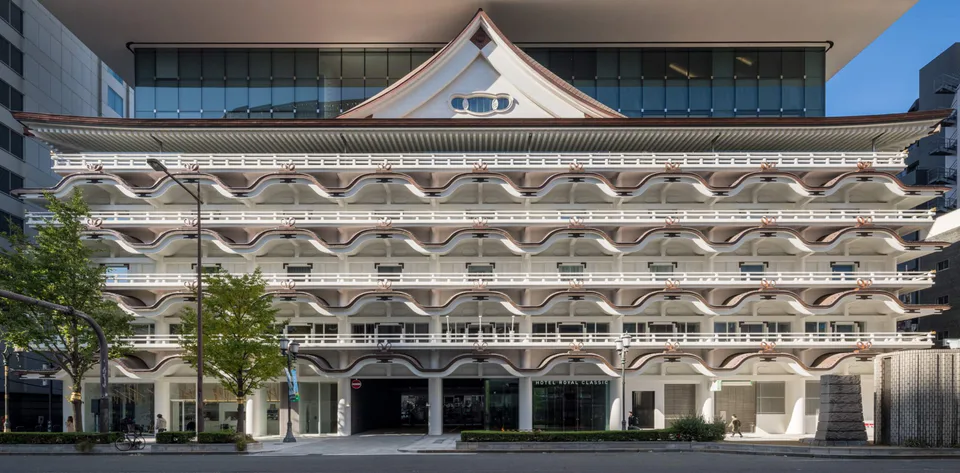
Hotel Royal Classic Osaka gives up a little Dotonbori proximity in exchange for a room that is easier to live in with two open suitcases and daily shopping bags.
Compare Hotel Royal Classic Osaka rooms
Mercure Tokyu Stay Osaka Namba: only pay for laundry if the room actually has it
Mercure Tokyu Stay Osaka Namba is the most feature-sensitive option in this comparison. Tokyu Stay’s current Osaka long-stay guide distinguishes standard rooms from the room types specifically sold with a washing machine. In other words, the hotel name itself is not enough. If you want the in-room washer-dryer, the exact room type matters.
That distinction is particularly useful for four- or five-night shopping trips. Buying clothes can reduce the amount you need to pack, but only if you are actually willing to wash what you brought. Being able to start a wash cycle after returning from Shinsaibashi is a real operational advantage; walking down to a shared laundry room late at night is a different proposition.
For a two-night trip, this can be overkill. You may get more value from Cross’s location or Royal Classic’s floor space. For a longer stay, the balance flips. Before booking, use the Mercure Tokyu Stay Osaka Namba washer-dryer guide and verify the room name rather than assuming every category includes laundry.
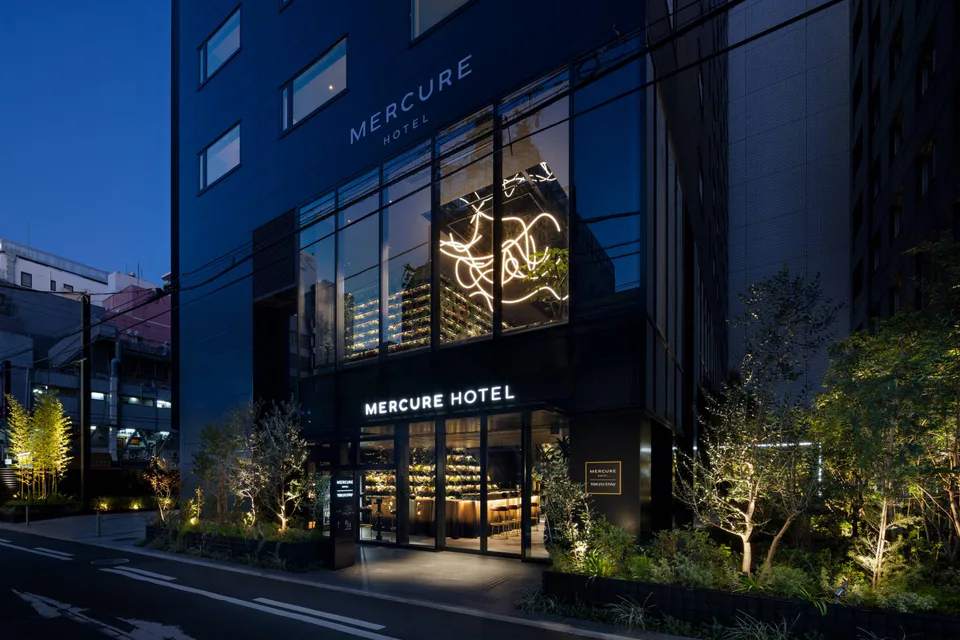
Mercure Tokyu Stay becomes a different product when the selected room includes an in-room washer-dryer. Check the room category, not just the hotel name.
Compare Mercure Tokyu Stay room categories
If your evenings do not end in Minami, stop paying for Minami
This entire comparison breaks if your actual evenings finish elsewhere. If dinner is usually in Umeda, two nights end after USJ, and another night is in Kyoto, the Dotonbori advantage is being used perhaps once. In that case, Namba can still be enjoyable, but it is no longer automatically the rational hotel base.
The better method is to write down the final meaningful stop of every day. If three or four nights finish around Dotonbori, Shinsaibashi or Namba, this article is relevant. If the pattern is mostly Umeda or intercity day trips, go back to where to stay in Osaka for first-time visitors and rebuild the base from the itinerary instead of the hotel list.
The “extra five minutes” changes after you start carrying bags
Five minutes on Google Maps is not a fixed cost. At 2 p.m. with empty hands, it may be irrelevant. At 11 p.m. after drugstore shopping, sneakers, clothes and convenience-store food, it can feel like the longest walk of the day. The physical distance did not change; the luggage load did.
That is why shopping-oriented hotel decisions should measure the route after the final purchase, not only the route from the railway station at check-in. Cross shortens the nightlife walk. Swissôtel shortens the station-to-airport handoff. Royal Classic gives more room to unload. Mercure can reduce the laundry burden. These are different conveniences, not four versions of the same one.
Count how many times you return to the room each day
Some travellers leave after breakfast and return once after dinner. Others shop in the morning, drop bags at the hotel, go back out for lunch, return again before dinner and then leave for the night. The second type can walk the hotel approach two to four times a day.
If you are a bag-drop traveller, location gains value quickly. If you are a one-return-per-day traveller, room size, price and facilities can take more weight. This is one reason a slightly farther but larger room can beat the closest hotel for some couples.
Shopping bags make room layout more important than the square-metre number
A shopping room is not used like a normal sightseeing room. Suitcases stay open. Paper bags accumulate. Tax-free items are separated. Shoes appear beside the door. Receipts, passports and packing cubes take over the desk. The useful question is not only “How many square metres?” but “Can two people still move around after both suitcases are open?”
This makes details such as a separate bathroom, floor space beside the bed and a usable table surprisingly important. If you are travelling as four adults, the problem becomes even bigger; the Swissôtel vs MIMARU Namba four-adult comparison is a better decision path than simply booking two small rooms by habit.
KIX only deserves more weight on the day all the shopping leaves with you
Airport access matters most when the luggage is heaviest. Nankai’s current station information confirms that Namba is the terminal for airport services and connects with the Midosuji, Sennichimae and Yotsubashi subway lines as well as Kintetsu and Hanshin. That makes Namba a powerful exit point, but it does not mean every shopping trip needs the hotel closest to the platforms.
Write the actual final day. If you check out, collect luggage and go straight to KIX, Swissôtel’s station relationship can be worth paying for. If you spend the day in Umeda before the airport, or ship luggage ahead, that advantage shrinks. Airport convenience should be weighted by your real departure sequence, not by the word “airport” on a transport map.
For a 2-night trip, proximity usually beats laundry
On a short stay, you will probably not wash clothes, cook, or spend much time reorganising the room. The decision becomes simpler: where are you going to be at 10:30 p.m., and how much do you care about the walk after that? This is where Cross and a Namba-station hotel can make the strongest cases.
Do not pay a long-stay premium for functions you will never switch on. A washing machine is only valuable if you use it; a station connection is only valuable if your daily pattern reaches that station.
For 4–5 nights, storage, laundry and repeated returns begin to win
By night four, the room has changed. There are more purchases, more dirty clothes, more charging cables and usually less discipline. This is when Royal Classic’s larger Standard Twin or a Mercure room with washer-dryer can become more comfortable than a hotel chosen purely for the shortest nighttime walk.
If your trip is even longer, compare this decision with the Osaka five-night long-stay hotel guide and ask whether an apartment-style room would solve more daily problems than a nightlife-first hotel.
The last night of a shopping trip is really a packing night
The final evening is often not the glamorous one. It is when you weigh bags, move liquids, protect fragile purchases, find receipts and discover that both suitcases need to be open at the same time. A large desk, clear floor area, washer-dryer and easy airport route can suddenly matter more than the bar or the view.
If you already know you shop heavily, plan for that night when you choose the room. Do not wait until checkout morning to discover that there is nowhere to repack without blocking the bathroom door.
Couples should decide whether the pain is walking or sharing space
Two people can disagree for perfectly rational reasons. One hates the last ten-minute walk after dinner. The other hates living around two open suitcases for four nights. Cross solves the first problem more aggressively; Royal Classic and selected Mercure rooms solve the second in different ways.
The right hotel is the one that removes the annoyance you repeat. If you cannot agree, list the recurring friction points instead of comparing stars, lobby design or review scores.
Families and parents should raise the cost of late transfers
Late-night walking is not just about distance when you are travelling with children or parents. Fatigue, escalators, toilet stops and who is carrying the bags all matter. A route that looks trivial for two adults may become the reason everyone wants to leave Dotonbori earlier.
For family trips, compare the Minami options with the Namba family hotel guide before assuming nightlife proximity should dominate the room decision.
Do not confuse “Namba” with one single location
Namba is a large transport and entertainment zone, not a single point. Nankai Namba, Osaka-Namba, JR Namba, Dotonbori and the Shinsaibashi side all create different final walks. Two hotels that both advertise “Namba” can solve different daily routes.
For shopping trips, pin the stores and restaurants you actually expect to use, then pin the hotel entrance. The final ten minutes are often more predictive than the generic neighbourhood label. The Namba hotel comparison is useful once you have decided that Namba itself is the right zone.
A simple decision rule: buy the convenience that happens most often
Choose Cross if multiple nights genuinely end inside Dotonbori and you want to keep the last walk tiny. Choose Swissôtel if Nankai Namba and the final heavy-luggage trip to KIX are central to the plan. Choose Royal Classic if you want Namba but value a 30–31 m² twin and easier room organisation more than the absolute shortest walk. Choose Mercure Tokyu Stay if a four- or five-night stay makes in-room laundry useful and you are willing to verify the exact room category.
Then sanity-check the result against your daytime itinerary. If the hotel wins only at night but loses every morning, it may still be wrong. The goal is not zero walking; it is to remove the most expensive repeated friction across the whole trip.
Early Shinkansen from Osaka: Should You Stay in Shin-Osaka or Move Only for the Last Night?
Early Flight or Late Arrival at KIX: Should You Move Hotels for the Last Night in Osaka?
Miyakojima Diving: One Dive, Two Dives or Three? Your Flight Home Matters More Than the Upgrade
Osaka Attractions Map: How to Group Namba, Umeda, Tennoji and the Bay Area
Japan August Weather: The Heat Changes Your Itinerary More Than Your Packing List
Sources
Room and access details checked against current official information from Cross Hotel Osaka, Swissôtel Nankai Osaka, Hotel Royal Classic Osaka, Tokyu Stay / Mercure Tokyu Stay Osaka Namba, and Nankai Electric Railway. Room equipment and transport timetables can change, so verify the selected room category and your actual travel date before relying on a specific feature or departure.