
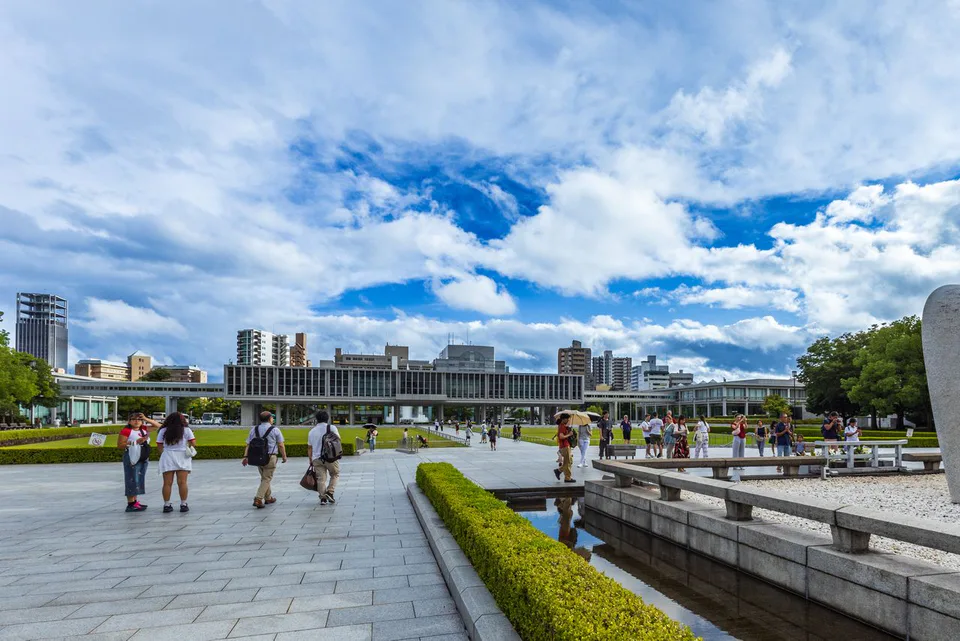
Hiroshima is worth adding to a first Japan trip when at least one of its two main anchors—the Peace Memorial Museum or Miyajima—is a genuine priority and the route is already moving west. It is much harder to justify when you travel from Kansai to Hiroshima only to reverse direction the next day. Trip length matters, but anchor count + route credit is a better decision rule than “Hiroshima belongs on every 12- or 14-day itinerary.”
My default is still to skip Hiroshima on a tightly packed 10-day Tokyo–Kyoto–Osaka trip unless one of those two anchors is among your highest priorities. Around 12 days, one night becomes strong when Hiroshima replaces a lower-priority Osaka day or sits on a westbound route. At 14 days or more, one to two nights are easier to justify if you want both the museum and Miyajima without turning them into one long checklist.
↔ Scroll table left or right
Your actual trip shape | Default call | Why |
10 days, Tokyo/Kyoto/Osaka still need time | Usually skip | Hiroshima normally costs a hotel move and a scarce full or half day |
12 days, Peace Memorial Museum is a top priority | One night can be worth it | The stop has a clear anchor instead of being added for completeness |
12–14 days, Osaka/Kyoto → Hiroshima → Fukuoka/Kyushu | Strong add | Hiroshima is on the direction of travel rather than an out-and-back detour |
12 days, Osaka → Hiroshima → Osaka | Conditional | You are paying almost all of the long-distance movement purely for Hiroshima |
14+ days, museum + Miyajima both matter | One to two nights | The two anchors can be separated instead of competing for the same afternoon |
You only want another castle/city checklist stop | Skip | Hiroshima Castle’s main keep has been closed since March 22, 2026, reducing the case for adding a generic extra urban sightseeing block |
Use route credit before you use trip length
The same Hiroshima night can have very different opportunity cost depending on what happens before and after it. Official Hiroshima tourism material puts Hiroshima Station at roughly 1 hour 20 minutes from Shin-Osaka by Shinkansen. Fukuoka City’s official guide puts Hiroshima → Hakata at roughly 1 hour 10 minutes.
That creates three different products:
Through-route: Kyoto/Osaka → Hiroshima → Fukuoka or Kyushu. The westbound train after Hiroshima is movement you were going to make anyway. Hiroshima earns substantial route credit.
Endpoint: Kansai → Hiroshima, then fly or continue from western Japan. The city can also remove a return to Kansai.
Out-and-back detour: Osaka/Kyoto → Hiroshima → Osaka/Kyoto. Almost the whole long-distance movement exists only because you added Hiroshima.
For the out-and-back version, Shin-Osaka–Hiroshima alone is roughly 2 hours 40 minutes of Shinkansen time for the return journey before station access, local transport, waiting and luggage are counted. For the through-route version, Hiroshima is breaking a journey that already points west. Those should not receive the same “worth it” verdict.
If you are deciding between continuing west to Fukuoka or stopping at Hiroshima, use Hiroshima vs Fukuoka: Where Should You Spend the Extra 2–3 Nights? after the route direction is fixed.
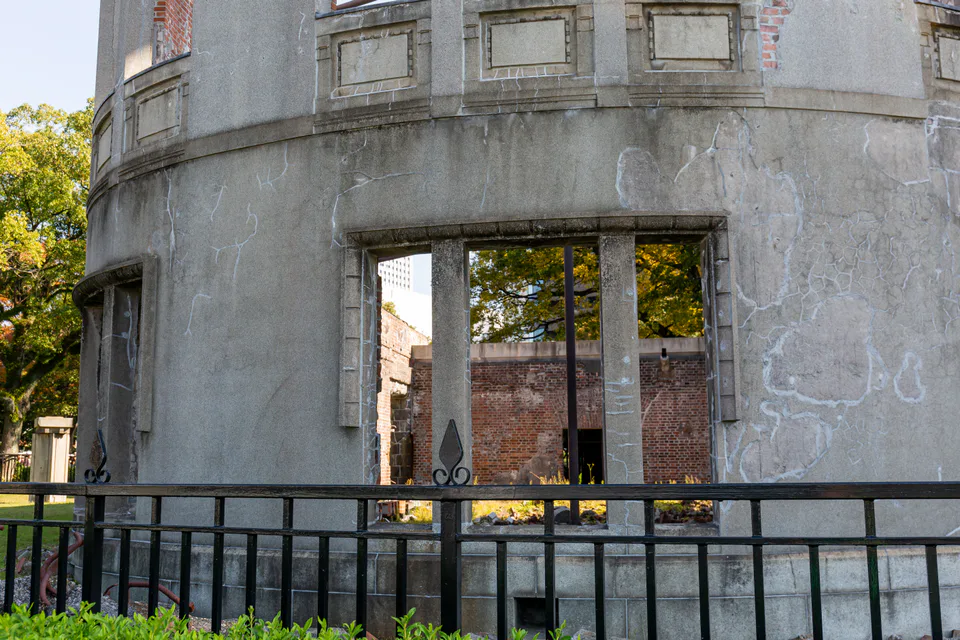
In 2026, Hiroshima Castle should no longer be used to inflate the city-day argument
One important current change makes older Hiroshima itineraries less reliable. Hiroshima Castle’s reconstructed main keep closed permanently to visitors on March 22, 2026 because of deterioration and safety concerns. The exterior remains visible, and the reconstructed Ninomaru buildings and Sannomaru area continue to operate, but the keep itself is no longer an indoor museum visit.
This matters to the first-trip decision because older itineraries often justify an extra half-day with a simple chain such as “Peace Park + Castle + Shukkeien.” Hiroshima still has plenty to do, but the castle keep should not be counted as the same full attraction it was before March 2026.
ValueNavi implication: if your only reason for a second urban half-day was “also see Hiroshima Castle,” reopen the allocation. That time may be better spent slowing the Peace Memorial Museum, adding Miyajima properly, or keeping the night in Kyoto, Osaka or an onsen destination.
The Peace Memorial Museum is one anchor, not a quick stop between trains
The Peace Memorial Museum is the strongest reason for many first-time visitors to add Hiroshima. Current official tourism information lists long opening hours—generally 07:30 to 19:00 from March to July and September to November, 07:30 to 20:00 in August, and 07:30 to 18:00 from December to February—but some time periods require advance online reservations. Hiroshima City also continues to recommend web tickets when heavy demand is expected.
The long opening hours create flexibility; they do not mean the museum should be compressed. A visitor can technically arrive from Kansai, enter the museum, cross Peace Memorial Park and catch a late train back. That is a transport solution, not automatically a good sightseeing rhythm.
I would treat the museum as a high-attention block. Do not schedule it with only the minimum published visit time plus a hard train immediately afterward. The material is substantial, queues can exist, and many travellers will want a pause after leaving rather than immediately starting another major attraction.
This is also one reason I do not automatically recommend combining the museum and a full Miyajima programme in a single rushed day. The issue is not only clock time; it is that both experiences deserve enough mental and physical space to be more than boxes checked on the same transfer day.
If the museum is your only Hiroshima anchor, the Hiroshima one-day itinerary is the relevant next page. Do not add Miyajima merely because it appears close on the map.
Miyajima is the anchor that most often turns a day trip into an overnight
Miyajima is not difficult to reach, but it is not “next to Hiroshima Station.” Hiroshima’s official guide gives roughly 30 minutes by JR from Hiroshima Station to Miyajimaguchi, followed by about a five-minute walk to the pier. The JR West ferry takes about 10 minutes.
The current JR Miyajima Ferry fare is JPY 180 one way for an adult, and Miyajima charges a separate JPY 100 visitor tax when entering the island. The money is minor. The decision cost is the chain: station → local JR → pier walk → ferry → island walk, then the same logic on the return.
That chain is exactly why Miyajima deserves to be planned as an anchor rather than a leftover afternoon. A fast Itsukushima Shrine visit is one thing. Mt. Misen, Momijidani, a slow lunch, sunset or quieter island hours are a different product.
The ferry timetable is broad enough that staying on the island is not compulsory: current JR ferry service runs into the evening, with the last listed Miyajima departure at 22:14 under the regular timetable. The overnight therefore has to buy something more specific than “otherwise I cannot get back.” It should buy a quieter evening, an early island morning, a ryokan experience or enough time to stop watching the clock.
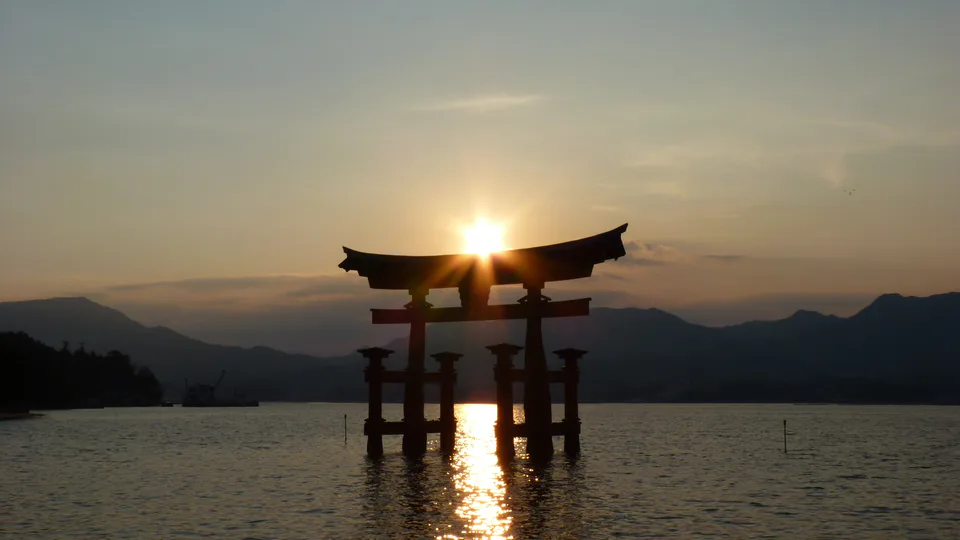
Count anchors, not attraction names
A simple first-trip framework is to count how many Hiroshima-region experiences are genuinely non-negotiable:
One anchor: Peace Memorial Museum or Miyajima. A day trip or one night can be enough depending on route direction.
Two anchors: Peace Memorial Museum and Miyajima. One night is the strongest default; two nights become reasonable when the island or museum is deliberately slow.
Three real anchors: museum + substantial Miyajima day + another specific Hiroshima/Setouchi purpose such as an event, baseball game, Okunoshima/Onomichi continuation or a deliberately slow city day. Two nights have a much clearer job.
Do not count “Hiroshima Castle because it is there” as a third anchor in 2026. The keep is closed. Do not count a generic shopping afternoon simply to justify the hotel nights either. The second night should beat the best thing it is replacing elsewhere in Japan.
For a 10-day first trip, Hiroshima needs to outrank something—not merely fit on the map
On a 10-day Tokyo–Kyoto–Osaka trip, the problem is not whether the Shinkansen can physically reach Hiroshima. It can. The problem is what gets cut.
I would normally keep Hiroshima out unless the Peace Memorial Museum or Miyajima is one of the trip’s defining experiences. If adding Hiroshima reduces Kyoto to one usable day, makes Tokyo a collection of partial days around Disney or Fuji, or creates several consecutive one-night stays, the itinerary has become less resilient.
The answer can reverse when Hiroshima has personal importance. A traveller whose strongest historical interest is the Peace Memorial Museum should absolutely be willing to delete a generic Osaka shopping day or secondary Tokyo attraction. “First trip” does not mean every traveller must have the same priority list.
For 12 days, route shape matters more than the number 12
This is the length where generic advice becomes least useful.
12 days with Osaka → Hiroshima → Fukuoka: I would strongly consider one Hiroshima night because the stop fits the direction of travel and can separate the museum from Miyajima or provide a proper museum block before continuing west.
12 days with Osaka → Hiroshima → Osaka: I would be more selective. One night may still be worth it, but the stop has to justify the westbound and eastbound movement plus another hotel change.
12 days with Hiroshima replacing a low-priority Osaka day: usually a better trade than cutting the only full Kyoto day.
This is why “one night is the default on a 12-day trip” is too crude. The night is good when the route and the anchor justify it.
For 14 days or more, two nights are still not automatic
Fourteen days gives Hiroshima room to breathe, but it does not mean every first-timer should spend two nights there. One night remains efficient when you arrive early, cover one anchor, sleep, cover the second anchor and continue west.
Two nights become materially better when at least one of these is true:
you want Mt. Misen or a slower Miyajima afternoon rather than only the shrine;
you want the Peace Memorial Museum without attaching a hard departure to the same afternoon;
you deliberately want an evening or early morning on Miyajima;
the trip continues west so the second night does not create backtracking;
a real third anchor has already earned the calendar time.
If none applies, the second Hiroshima night should compete honestly with another Kyoto morning, an onsen night, Himeji, Kinosaki, Kanazawa or the next Kyushu stop.
If you only stay one night, decide which side of the night deserves the quiet hours
Once one night is justified, the next question is not “which hotel is cheaper?” but where should the non-day-trip hours happen?
Stay in Hiroshima city when the museum is the time-sensitive anchor, you arrive or depart by Shinkansen with luggage, or dinner/transport flexibility matters more. It is the more resilient one-night base.
Stay on Miyajima when the island after day visitors leave and before they return is the whole reason you accepted another hotel change. The trade-off is ferry dependence and more luggage handling.
Use Hiroshima or Miyajima for One Night once the overnight itself is already decided. Do not use a romantic island hotel to solve a city-museum timing problem.
Large luggage makes a through-route much more attractive than an out-and-back detour
With two large suitcases, every hotel change adds station navigation, storage, check-in timing and another packing cycle. That does not mean “skip Hiroshima.” It raises the amount of value the stop must create.
The cleanest luggage-heavy pattern is linear: Kyoto/Osaka → Hiroshima → Fukuoka/Kyushu, with the main cases forwarded where practical and only an overnight bag used for the short stop. The weakest pattern is often Osaka hotel → Hiroshima hotel for one night → back to another Osaka hotel, especially when the same luggage is moved the whole way.
Use the Japan luggage-forwarding guide before assuming a one-night western stop requires dragging every case through every station.
The 2026 accommodation and visitor taxes are real, but they should not decide the trip
Since April 1, 2026, Hiroshima Prefecture charges an accommodation tax of JPY 200 per person per night when the underlying accommodation charge is JPY 6,000 or more per person per night before tax. Miyajima separately charges its JPY 100 visitor tax on entry.
These are useful for an accurate budget, especially for families, but they are not the real reason to choose or reject an overnight. The dominant cost is still opportunity cost: another hotel move and the day or half-day removed from somewhere else.
When I would actively skip Hiroshima
I would skip Hiroshima on a first trip when two or more of these are true:
Tokyo or Kyoto already has too few full days;
neither the Peace Memorial Museum nor Miyajima is a top-tier personal priority;
the route must return east immediately afterward;
the trip already contains several one-night hotel changes;
the main extra attraction you expected was Hiroshima Castle’s keep, which is now closed;
you are adding Hiroshima mainly because a sample itinerary says a two-week Japan trip “should” include it.
The red-team case against skipping it is equally strong: if the museum has deep historical or educational importance to you, a first trip is exactly when it may deserve priority. The correct edit is then to remove a weaker stop, not to compress Hiroshima into a rushed checkbox.
Final verdict: Hiroshima earns its place through anchors and route direction
One anchor + out-and-back route: day trip or skip.
One anchor + westbound through-route: one night can be excellent.
Peace Memorial Museum + Miyajima: one night is the strongest default; two nights when one anchor is deliberately slow.
10 days: usually skip unless Hiroshima is personally high priority.
12 days: route shape decides more than the calendar number.
14+ days: one to two nights are easy to justify when the city is part of a westbound sequence rather than a return detour.
The useful question is not “Is Hiroshima famous enough to include?” It is: which irreplaceable experience does Hiroshima add, and how much of the journey were you already going to make anyway?
Biei Day Trip or Overnight? When Staying One Night Is Worth It
teamLab Borderless Tokyo Review: Is It Worth 2–3 Hours of Your Tokyo Trip?
Hakone vs Kawaguchiko: Which Is Better for Your First Japan Trip?
Nara Ikimono Museum Is Great With Kids — But It Can Hijack a First-Time Nara Day Trip
References
Hiroshima official tourism — access · Hiroshima Peace Memorial Museum visitor information · Hiroshima Castle — current closure and remaining facilities · JR West Miyajima Ferry — timetable · JR West Miyajima Ferry — fares and visitor tax · Hiroshima Prefecture — accommodation tax · Fukuoka City official tourism — Shinkansen access. Checked August 25, 2026. Opening hours, reservation periods, ferry schedules and train times can change; verify the exact travel date.