
One day is enough for Hiroshima city if you protect the Peace Memorial Museum and park first, then treat Hiroshima Castle and Shukkeien as layers rather than mandatory boxes. My default order is museum → Peace Park and Atomic Bomb Dome → lunch → castle grounds/Ninomaru → Shukkeien. If the museum runs long, the day starts late or weather turns, cut the castle before you rush the historical core. If the destination itself is still optional, begin with Is Hiroshima Worth Visiting? before building the clock.
A same-day trip from Osaka is realistic when you leave early and keep the route inside Hiroshima city. From Kyoto, the longer Shinkansen journey leaves less margin for a slow museum visit or dinner. If the national route is already crowded, use the 10-, 12- or 14-day Japan itinerary before turning Hiroshima into a dawn-to-night endurance trip.
Hiroshima one-day itinerary at a glance
↔ Scroll table left or right
Time | Plan | If behind |
08:00–10:00 | Peace Memorial Museum | Do not shorten this to save the castle |
10:00–11:00 | Peace Park and Atomic Bomb Dome | Keep the historical block together |
11:15–12:15 | Lunch around Hondori / Hatchobori | Choose a shorter queue |
12:45–13:45 | Hiroshima Castle grounds / Ninomaru | First major cut |
14:15–15:30 | Shukkeien | Skip if less than a real hour remains |
These are planning blocks, not reservations. The museum controls the clock. If you read more slowly, travel with children or older relatives, or simply need time after the exhibits, let the afternoon move. A good day does not protect a 13:00 castle visit by compressing the reason you came to Hiroshima.
Start with the Peace Memorial Museum
The museum is the one stop I would not compress to save the afternoon. Entering early creates resilience for the rest of the day and reduces the chance that queueing or a long visit forces you into a rushed final hour. If you are staying overnight, the Hiroshima Station vs Peace Park guide helps decide whether the museum should be walkable from the hotel or reached after arrival by tram.
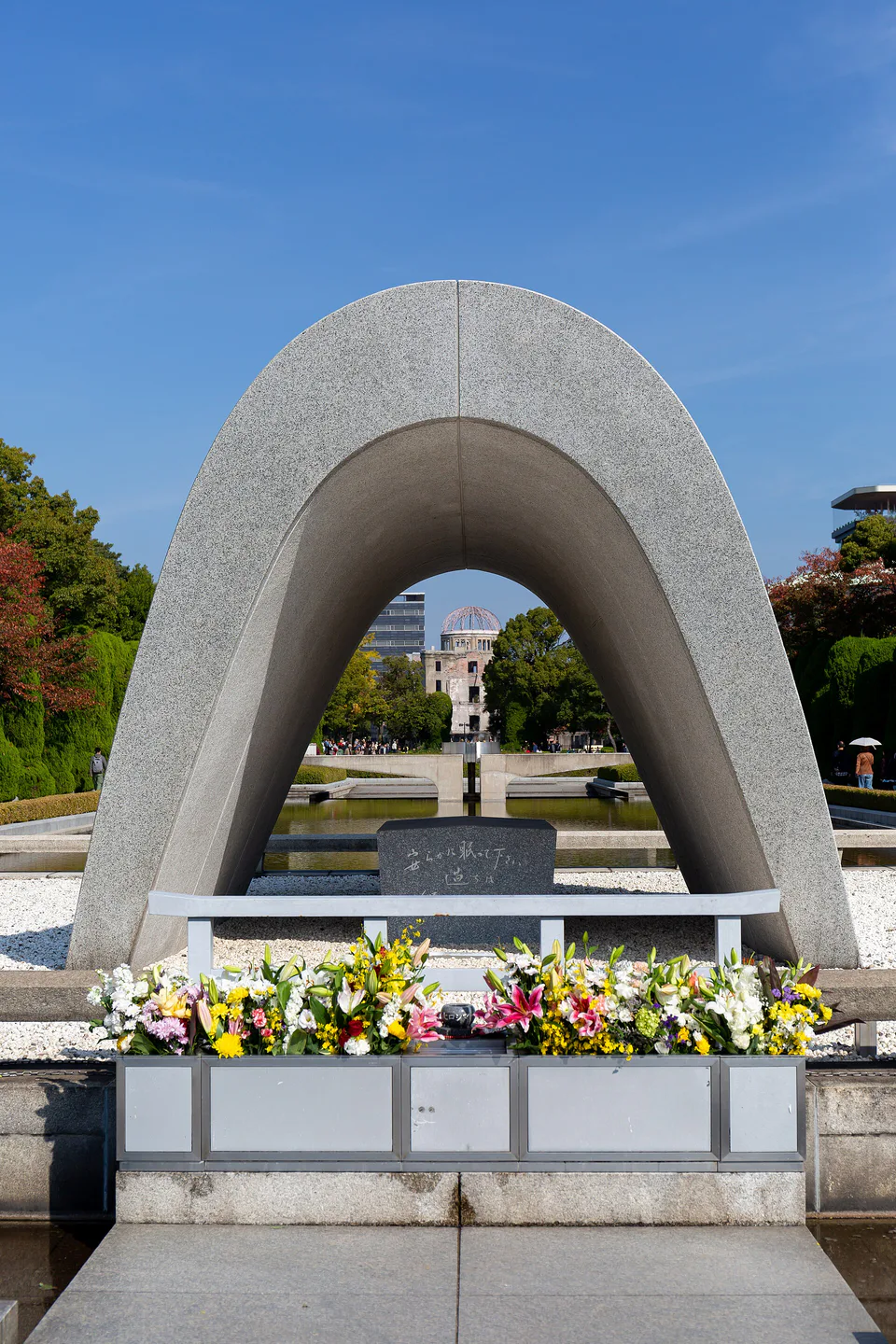
After the museum, keep the Cenotaph, Children’s Peace Monument and Atomic Bomb Dome in one continuous historical block. Leaving the area for lunch and returning later wastes time and breaks the sequence. If the day is already late by this point, the castle becomes optional immediately.
Do not schedule the next hard deadline immediately after the museum
The museum is not the sort of stop where every visitor will emerge ready to sprint to the next attraction. Some people read slowly, some need a quiet drink or a few minutes outside, and groups rarely finish at exactly the same pace. Build a buffer after the historical core instead of attaching a non-refundable lunch or timed activity immediately to the exit. That buffer protects the quality of the visit and gives the rest of the day somewhere to absorb delay.
If the route is a family trip or the wider Japan schedule already has several intense museum days, use How to Plan a Trip to Japan to space major days rather than making Hiroshima carry every remaining attraction because it is geographically possible.
Hiroshima Castle changed in 2026, so older itineraries overvalue the tower
The main keep closed in March 2026 because of deterioration and aging equipment, while exterior views, Ninomaru and surrounding areas remain useful. That makes the castle a more conditional one-day stop than older itineraries suggest. Go when the moat, exterior and Ninomaru context matter; skip when you mainly expected a tower interior or panorama. This is why the castle is my first major cut when the museum runs long.
If the trip is already split between Hiroshima city and the island, use the Hiroshima–Miyajima two-day itinerary rather than preserving every castle stop in a city day that is already too dense.
Shukkeien is worth keeping only if you still have a real hour
Shukkeien is a good final major stop because it changes the pace after the museum and castle. It becomes poor value when you arrive just before the gate closes and speed-walk the garden. If the remaining margin is too small, use the time for Hondori, the riverfront, an earlier dinner or a calmer return to the station. For food planning, the Hiroshima and Miyajima food guide is more useful than waiting for one famous counter.
If the final meal needs to happen beside the Shinkansen, use the Hiroshima Station food guide after the timetable has already pushed you back toward the station.
Pair this with
Pair this city day with Hiroshima or Miyajima for one night and Hiroshima 3 Days: Add Onomichi?. If large luggage is forcing the route back to the station, add Japan luggage forwarding instead of allowing bags to decide every sightseeing hour.
10:30 start: protect the museum and accept a shorter afternoon
A 10:30 start is not a failed Hiroshima day; it is a different product. Go straight to the museum and Peace Park, take lunch without a long queue, then choose either the castle grounds or Shukkeien—not both by default. If you arrive after noon, keep the Peace Memorial area and one meal as the core, then use the remaining daylight as optional time. The mistake is pretending a late start still supports the same checklist and then rushing every stop.
If the late start comes from a previous-city transfer, compare Where to Stay in Hiroshima: Station or Peace Park before repeating the same arrival friction on a second day.
Osaka and Kyoto day trips need different margins
From Osaka, an early Shinkansen start can still leave a substantial Hiroshima day. From Kyoto, the longer intercity journey makes the same plan more deadline-sensitive. If you are choosing the Kansai base around several day trips, compare Kyoto vs Osaka before assuming the Hiroshima round trip should start from whichever hotel you already booked.
If a same-day return forces you to watch the clock from lunch onward, one Hiroshima night may buy more value than another expensive Kansai night. Compare Hiroshima vs Fukuoka for extra nights when the western-Japan segment still has flexibility.
17:00 departure or dinner in Hiroshima? Decide before the afternoon slips
A 17:00 departure pushes the afternoon toward Shukkeien or an early station return and makes a long okonomiyaki dinner difficult to justify. Staying for dinner changes the day: you can let the garden finish naturally, eat centrally and travel later, but the return to Osaka or Kyoto becomes the last task of a long day. Decide this before lunch. Otherwise every afternoon stop becomes a negotiation against a train time nobody has consciously chosen.
If dinner is part of the reason to stay, use the Hiroshima food guide to choose the district first. If the route continues west instead of returning to Kansai, the Hiroshima vs Fukuoka guide may make the overnight more rational than the round trip.
Do not combine Hiroshima city and Miyajima just because transport allows it
A same-day city-and-island sprint is technically possible by shortening the museum, skipping the castle and garden and treating Miyajima as a focused shrine visit. The problem is what disappears. On a first visit, I would rather give the Peace Memorial area enough time and move Miyajima to another day than collect both with a stopwatch.
If Miyajima is non-negotiable but only one night exists, compare the one-night Hiroshima vs Miyajima decision instead of trying to solve both areas inside one daytime schedule.
Half-day version: protect the reason you came
With only half a day, keep the Peace Memorial Museum, Peace Park, Atomic Bomb Dome and one meal. Remove Hiroshima Castle first and Shukkeien second. A half-day beginning after lunch should be built from the museum’s current closing time backward, not from a list of attractions forward.
If rain disrupts the walking sequence, use the Japan rainy-day backup guide rather than rushing outdoor stops between showers. If the following day starts the Shimanami Kaido, use Onomichi or Fukuyama to decide whether the hotel should move east after the city day.
Final verdict
A good Hiroshima one-day itinerary is the version that gives the Peace Memorial Museum and park enough time, then spends the remaining afternoon intelligently. In 2026, the closed castle tower makes the cut order clearer: protect the museum, keep Shukkeien only with a real time margin, and treat the castle grounds as optional when the day slips.
Ishigaki, Taketomi and Iriomote: A Flexible 4-Day Island Itinerary
Miyakojima 4-Day Itinerary: Turtle Snorkeling, SUP, Pumpkin Cave and Bridges
Osaka Itinerary With Friends: 7 Days of USJ, Sumo, Food and Kobe — Without Moving as One Group
14-Day Japan Autumn Leaves Itinerary: Six Routes, Flights and Hotels
5- or 7-Day Kyushu Autumn Leaves Itinerary: Fukuoka, Yufuin, Beppu and Mountain Routes
Sources
Hiroshima Peace Memorial Museum, Hiroshima Castle and Shukkeien official visitor information were used for the 2026 operating context and cut rules. Opening times, ticketing and transport can change; verify the current date before travel.