
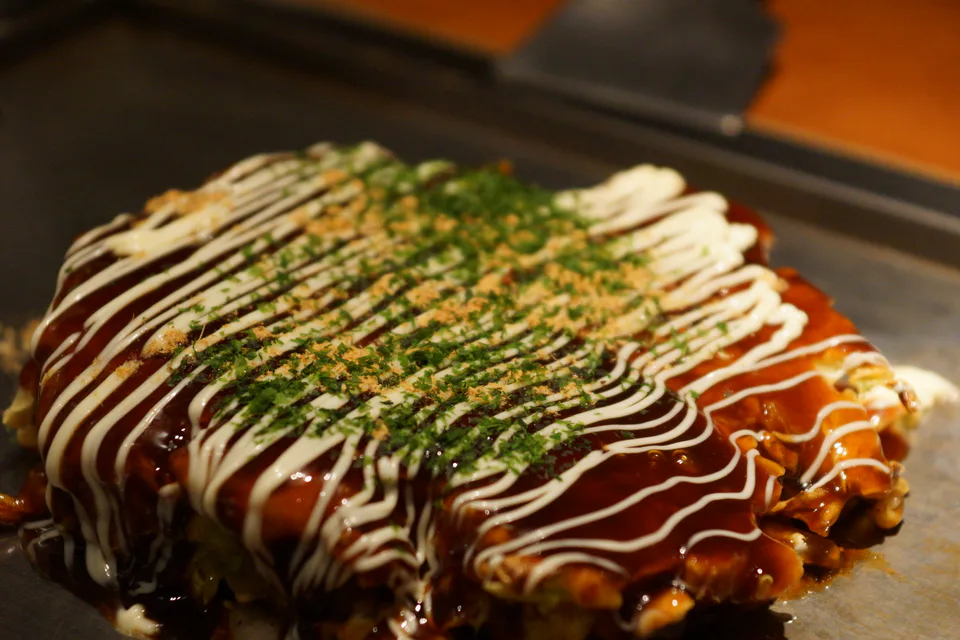
For most first-time visitors, Hiroshima Station restaurants should be chosen by timing, luggage and the next train—not by trying to identify one absolute winner. Reichan and Mitchan solve the same first-okonomiyaki problem; Musubi Musashi solves the early-train or takeaway problem; Onomichi Ramen Maruboshi solves the “I already ate okonomiyaki” problem. The useful question is what the meal needs to do for the rest of your day.
One correction matters before anything else: Onomichi Ramen Sanko is no longer a Hiroshima Station restaurant. It moved to Pacela B1 near Kencho-mae, so older station food lists that still send travelers there from the platforms are stale. At the station complex, Maruboshi is the more relevant ramen option.
Last checked: August 25, 2026. Store hours, last orders and closures can change, so confirm the current minamoa/ekie listings before travel.
Hiroshima Station restaurants: the 30-second decision
First Hiroshima-style okonomiyaki: check Reichan and Mitchan, then choose the queue you can actually afford.
Morning train or food to carry: use the Musashi takeaway function rather than assuming every Musashi outlet opens at the same time.
Already had okonomiyaki: choose Maruboshi or Musashi instead of repeating the same signature meal by obligation.
Large suitcase or hotel check-in pending: store the bag first; convenience disappears if luggage follows you through the queue.
Reichan vs Mitchan: the live queue matters more than a theoretical winner
Reichan and Mitchan Sohonten both work because they let a short-stay traveler eat Hiroshima-style okonomiyaki without creating another cross-city restaurant mission. That matters after a Shinkansen arrival, before an early Miyajima day, or when your hotel is already near Hiroshima Station. The station location is part of the product: you are buying less travel friction as well as dinner.
I would not make both compulsory. Okonomiyaki with noodles, cabbage, egg and pork is already a full meal for many travelers. If one shop has a line that costs forty minutes and the other can seat you much sooner, the shorter realistic wait is often the better decision unless one restaurant is specifically the reason you came. The time difference comes out of hotel check-in, an evening walk, packing, sleep, or the next morning’s start.
Families should care about seating more than restaurant folklore. A hungry child changes the value of a twenty-minute queue; older travelers may value a place to sit and a shorter walk more than a small difference in reputation. Solo travelers have the most freedom to switch lines and should use it. Station food is supposed to remove friction, not recreate a destination restaurant detour inside the station.
Musashi has two different jobs, and the outlet matters
The practical mistake is saying “eat at Musashi” without specifying the travel moment. A takeaway counter and a sit-down restaurant solve different problems. If you have an early Shinkansen, want to reach Miyajima before the largest crowds, or need food you can carry, takeaway is the value. It lets the meal move with your schedule rather than forcing the schedule around a table.
A sit-down Musashi meal makes more sense when you genuinely want a rest. Rice balls and udon can be useful after a heavy okonomiyaki dinner the night before, or before a train when you still have enough margin to eat calmly. The brand name does not make one outlet automatically better; the next fixed commitment does.
Maruboshi is useful when okonomiyaki already had its place
If you already ate a full okonomiyaki dinner, repeating the same heavy meal the next day should be a preference, not a rule created by a “must-eat Hiroshima” list. Maruboshi or Musashi gives you a different hot meal while keeping the route inside the station complex. Variety is not automatically better, but it often fits the appetite and schedule better on a second meal.
This is especially useful after a long city day when your appetite is smaller than expected, or after returning from Miyajima late enough that a long hotplate queue feels irrational. The point is not that ramen beats okonomiyaki. It solves a different travel problem with less repetition and potentially less waiting.
Use a queue budget, not a restaurant ranking
Before joining a line, calculate the time you can safely spend on the whole meal rather than the time until the train leaves. Start with your fixed commitment, subtract the platform walk, toilet stop, ticket or seat check, and a recovery buffer, then divide what remains between waiting and eating. This turns a vague “the queue looks long” judgment into a usable rule.
↔ Scroll table left or right
Time until your fixed departure | What I would do | Why |
Under 45 minutes | Takeaway or the shortest reliable option | There is too little margin for an uncertain queue plus a hot meal. |
45–75 minutes | Join only a visibly short queue | You can eat properly, but one slow seating cycle can consume the buffer. |
75–120 minutes | Reichan or Mitchan is realistic if the line is moving | You have room for a proper meal without making the train the final gamble. |
More than 2 hours | Choose by food preference, not urgency | The station restaurant can finally behave like a destination meal rather than logistics. |
These are planning thresholds, not restaurant service-time guarantees. A party of four can wait longer than a solo traveler, a sudden group arrival can change the line, and a griddle meal is inherently less predictable than buying a bento. The point is to protect the fixed commitment first. If the restaurant queue exceeds the budget you calculated, switch immediately rather than waiting ten minutes and then feeling too invested to leave.
This framework also changes arrival night. If the only fixed commitment is hotel check-in and you have already stored the luggage, a forty-minute queue may be perfectly acceptable. The same forty minutes before a reserved Shinkansen is a bad trade. Queue length has no meaning without an opportunity cost.
Arrival and departure time should decide the meal before rankings do
Arrive around 5:00–7:00 p.m.: drop or store the luggage, inspect the okonomiyaki queues, choose one workable option, and keep the rest of the evening free. Arrive around 8:00–9:00 p.m.: stop treating dinner as a pilgrimage. Check current last orders and choose the option that still leaves margin for hotel check-in, a shower and sleep.
Leave between roughly 8:00 and 10:00 a.m.: the early-opening takeaway function matters more than the sit-down experience. If your train departs before the featured shops open, use another station counter rather than waiting for a famous recommendation. A useful guide should tell you when its own recommendation stops applying.
Large luggage and one-night stays make queue time more expensive
A station restaurant is most valuable when it removes friction. A family of four with two large suitcases should not turn dinner into an obstacle course. Leave the bags at the hotel or storage first. The same meal becomes easier to enjoy, and you are not using aisle space or worrying about luggage while the line moves.
On a one-night Hiroshima stay, an hour in a dinner queue has a larger opportunity cost than it does on a three-night stay. You may be packing, checking tomorrow’s ferry or train, and trying to sleep early. The “best” restaurant can therefore be the one that returns thirty minutes to the rest of the trip.
Departure-day food should be planned backwards from the Shinkansen
With a reserved Shinkansen, set the restaurant-departure deadline first. Then see how much time is left for waiting. Do not join a popular line and only later calculate the platform walk. Missing a reserved train can affect a Kyoto, Osaka or Tokyo hotel check-in and may be far more expensive than choosing a less famous lunch.
If only thirty or forty minutes remain, change the goal from “best known” to “reliably fed.” Takeaway rice balls, a bento or a low-queue hot meal can be a better station decision than one final okonomiyaki line. Food is flexible; the train is not.
Do not return to Hiroshima Station purely for dinner if your hotel is elsewhere
Station restaurants are strongest when the station is already part of your route. If you stay near Peace Memorial Park, Hondori or Kamiyacho, traveling back to Hiroshima Station just to eat can erase the convenience you were trying to gain. A city-centre restaurant may be the better choice because it keeps dinner close to your hotel and evening walk.
This is why accommodation and food should not be planned separately. A station hotel makes station dining more valuable on arrival and departure nights. A city-centre hotel makes central dining more valuable. Do not choose a hotel for one restaurant, but do use the hotel location to break a close restaurant decision.
Bad weather can make a longer station meal more valuable
Rain, summer heat or simple fatigue changes the value of sitting down. If the outdoor plan is already being shortened, a longer station meal can become useful recovery time rather than a delay. The key is whether that time replaces a low-value or cancelled activity. A long dinner is sensible when the alternative is wandering in heavy rain; it is less sensible when it makes you miss a reserved train.
For older travelers and families, this distinction matters more than restaurant rankings. A seated meal with toilets and easy hotel access can be the right choice after a demanding Miyajima day even if another restaurant has stronger reviews.
Three station-food plans I would actually use
Arrival night: hotel or luggage drop first, then Reichan or Mitchan if the queue is reasonable. Early Miyajima day: use a lighter breakfast or Musashi takeaway, then save the larger meal for the island. Departure day: if okonomiyaki already had its place, use Musashi or Maruboshi and protect the Shinkansen instead of chasing one final famous meal.
The pattern is simple: a station meal should reduce decisions. If choosing the restaurant creates another transfer, another bag problem or another timing risk, you have moved away from the reason station dining was attractive in the first place.
Final verdict
For a first Hiroshima Station dinner, Reichan or Mitchan is the default and the shorter realistic queue is usually the better choice. For an early train or takeaway, use the Musashi takeaway function. If okonomiyaki already had its place in the trip, Maruboshi or Musashi gives you a different meal without leaving the station. Before any departure-day meal, set a queue budget from the train backwards: under roughly 45 minutes, reliability beats reputation; with more than two hours, preference can finally outrank logistics.
Related: Miyajima Food Guide: Oysters, Anago Rice and Momiji Manju
Related: Things to Do on Miyajima: Shrine, Mount Misen, Kayaking and Food
Related: Where to Stay in Hiroshima: Station or Peace Park?
Related: Hiroshima or Miyajima: Where to Stay for One Night
Related: Onomichi Day Trip from Hiroshima: Is It Worth Adding in 3 Days?