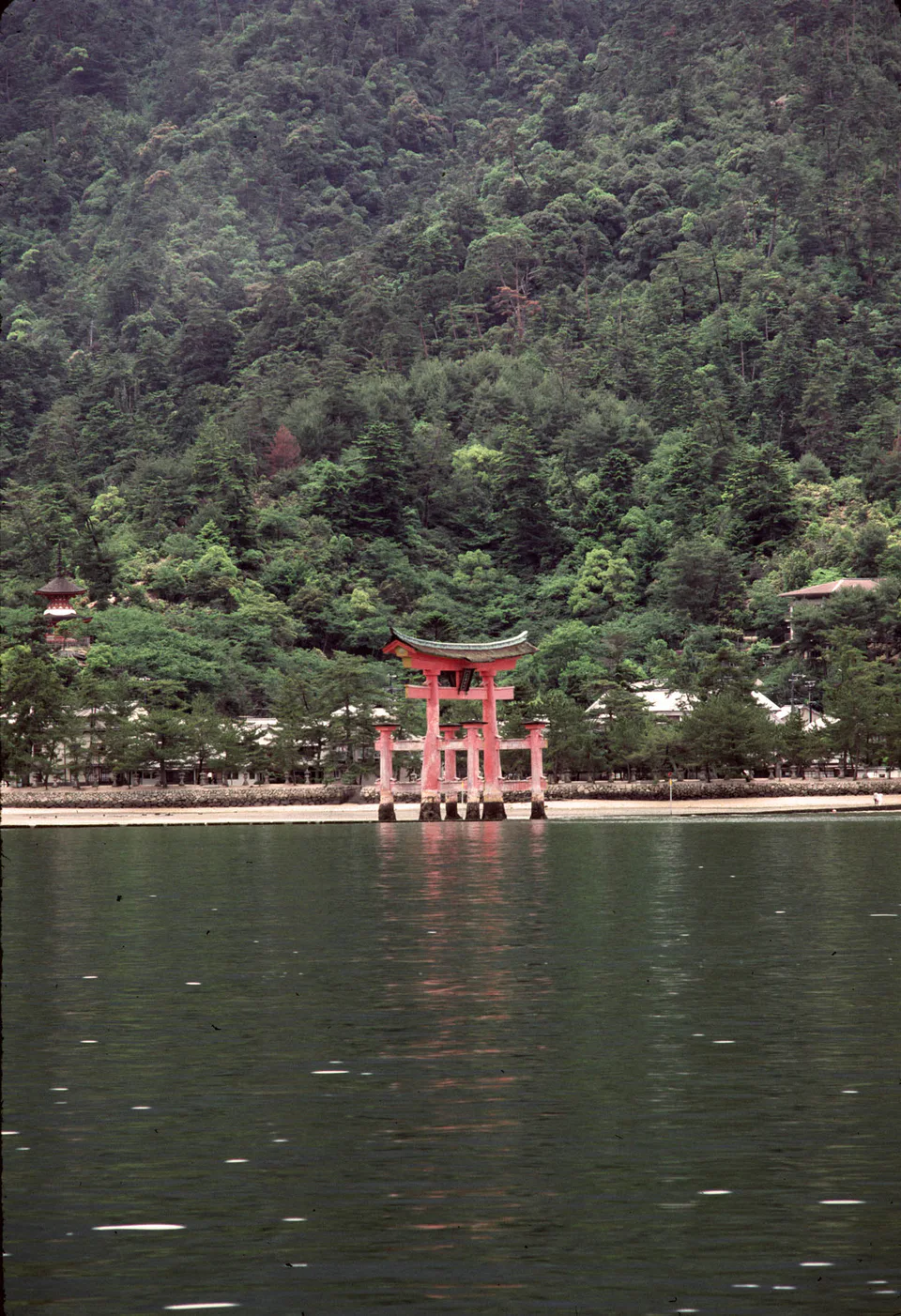
For a first full day on Miyajima, treat Itsukushima Shrine as the fixed anchor, then choose only one high-variance activity: Mount Misen or sea kayaking. Add Daisho-in, one proper meal and Omotesando only around that choice. With four to five hours on the island, stay low around the shrine, temple and waterfront. An overnight is worth paying for only when the quiet evening, ryokan dinner or early island morning is part of the product—not because the regular ferry stops early.
The reason to limit the day is operational rather than aesthetic. Mount Misen has a hard ropeway clock and weather risk. Sea kayaking depends on tide, wind and operator judgement. Tide can materially change how Itsukushima Shrine and the Great Torii look. If you make all three non-negotiable, the itinerary becomes fragile before lunch.
↔ Scroll table left or right
Your usable island time | Best first-trip plan | Do not force |
4–5 hours | Itsukushima Shrine + Daisho-in + one meal + Omotesando | Misen summit or a timed kayak session |
7–9 hours, good mountain weather | Shrine + Mount Misen + one meal | Kayak as a second major activity |
7–9 hours, booked sea kayak | Shrine + kayak + Daisho-in / food | Misen unless the schedule still has several hours of slack |
Hard Shinkansen or hotel check-in later | Choose one major activity and reverse-plan the ferry | Starting Misen late because the ropeway is still technically open |
Rain, strong wind or low energy | Shrine + Daisho-in + food + compact waterfront route | Water activity or exposed mountain plan |
Overnight | Use the extra hours for evening/early morning, not a bigger checklist | Adding both kayak and summit merely because you slept on the island |
Use a one-fixed, one-variable, one-flexible framework
Miyajima works better when the day has three layers:
Fixed anchor: Itsukushima Shrine and the waterfront. This is the experience almost every first-time visitor came for.
High-variance anchor: Mount Misen or sea kayaking. These consume several hours or depend on weather/tide.
Flexible layer: Daisho-in, food, Omotesando, Momijidani or a slower waterfront walk. These can expand or contract if the day moves off schedule.
This structure prevents the most common failure: treating every famous Miyajima activity as if it were a 45-minute stop. The island is compact at street level, but the mountain, water and ferry chain make some experiences much less compressible than the map suggests.
If Hiroshima itself is competing for the same day, solve that first with the Hiroshima + Miyajima two-day itinerary. If the overnight is already under consideration, use the Hiroshima vs Miyajima one-night comparison rather than adding an island hotel simply to make an overloaded day look possible.
Tide is a modifier, not the master of the whole itinerary
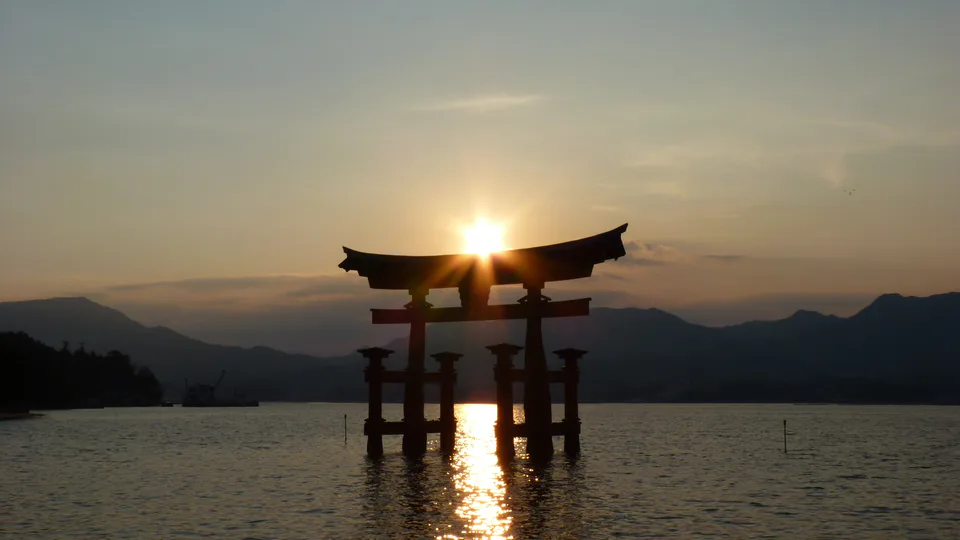
“High tide” and “low tide” are too vague for useful planning. Miyajima Tourism Association’s current tide guidance uses specific water-level thresholds: when the tide is above roughly 250 cm, Itsukushima Shrine can appear to float on the sea; when it is below roughly 100 cm, conditions can allow visitors to walk closer to the Great Torii across the exposed shore.
Those thresholds are more useful than obsessing over the exact clock time of high or low tide. Check the dated tide table, identify whether the visual condition you want happens during your visit, then fit the shrine around the day’s harder constraint. If the only 250 cm-plus window collides with a booked kayak or the ropeway cutoff, decide which experience matters more instead of making the entire day wait for one photograph.
This matters even more for kayaking. Miyajima’s official tourism site specifically describes sea kayaking under the Great Torii at high tide, but the actual route still depends on operator judgement and conditions. A tide window can make a route possible; it does not guarantee that every session will pass under the gate.
For a first visit, I would only let tide dominate the schedule when photography is one of the trip’s main purposes. Otherwise, let tide improve the shrine visit without sacrificing the one activity that justified the rest of the day.
Mount Misen is at least a two-hour mountain block before queues and lower-island walking
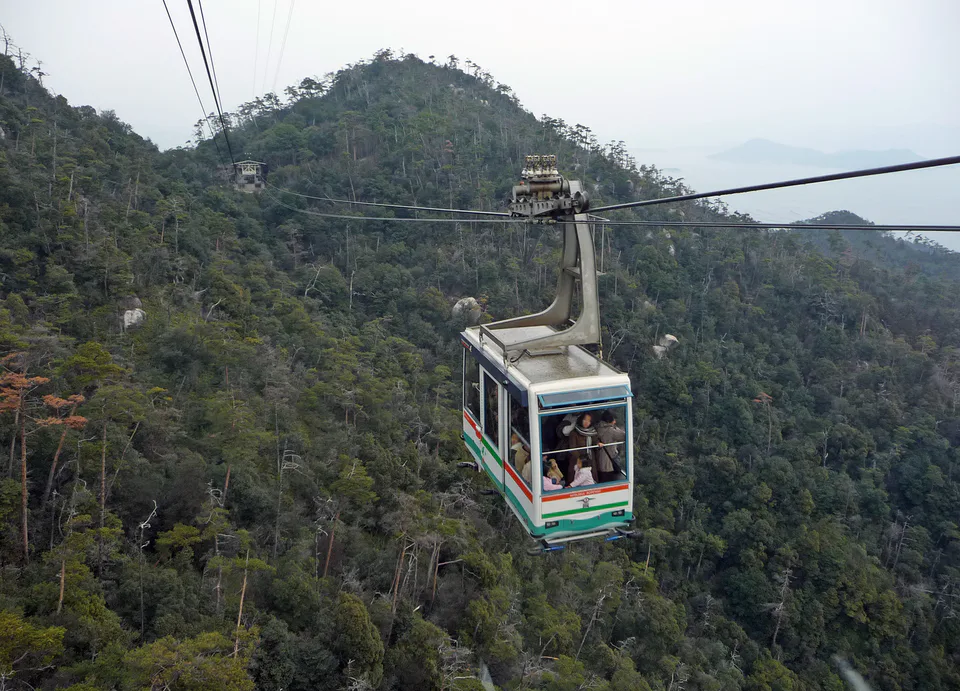
The current Miyajima Ropeway timetable is a hard planning edge. Official operating hours are 09:00–16:00, with the final return departure at 16:30. The adult fare is currently JPY 2,000 round trip or JPY 1,100 one way. Service can be suspended for strong wind, thunderstorms and periodic maintenance.
The operator also publishes a useful time breakdown that makes “quick Misen stop” unrealistic. It estimates roughly one hour for ropeway sightseeing round trip, while going on from Shishiiwa to the Mount Misen summit adds roughly another one-hour round trip. That is already about two hours before you count getting from the shrine area to Momijidani Station, queues, toilet stops, photography, heat or slower walking.
So use three different Misen products rather than one:
Shishiiwa only: strongest when views matter but the group has limited time or mobility.
Ropeway + summit: a genuine half-day component once access and buffers are included.
Full hiking route: a different itinerary entirely; do not combine it casually with a timed water activity.
If you reach the lower island late and the only way to “fit Misen” is to start the mountain section against the last useful ropeway window, cut the mountain. A closed or suspended ropeway should not trigger a frantic search for another exposed activity; Daisho-in, food and a slower lower-island route are the cleaner recovery plan.
Choose sea kayaking when the water perspective is worth giving up the mountain
Sea kayaking earns the high-variance slot when the experience you want is Miyajima from the water rather than another viewpoint from above. The official tourism site promotes sea kayaking as a seasonal activity and notes that high tide can allow routes close to or under the Great Torii.
The trade-off is control. A booked kayak session gives your day a fixed meeting time but still sits under tide and weather conditions. Do not place a non-negotiable Misen summit immediately before or after it. If the session changes or is cancelled, the strongest fallback is not to replace it with another rushed operator booking. Keep the day on Miyajima and use the time for shrine, Daisho-in, food and a more relaxed waterfront route.
For travellers who only kayak because it appears on a “top things to do” list, I would choose Misen instead on a clear day. Choose the kayak when the water-level perspective is itself the reason you are excited about the island. That distinction keeps the activity from becoming an expensive checkbox.
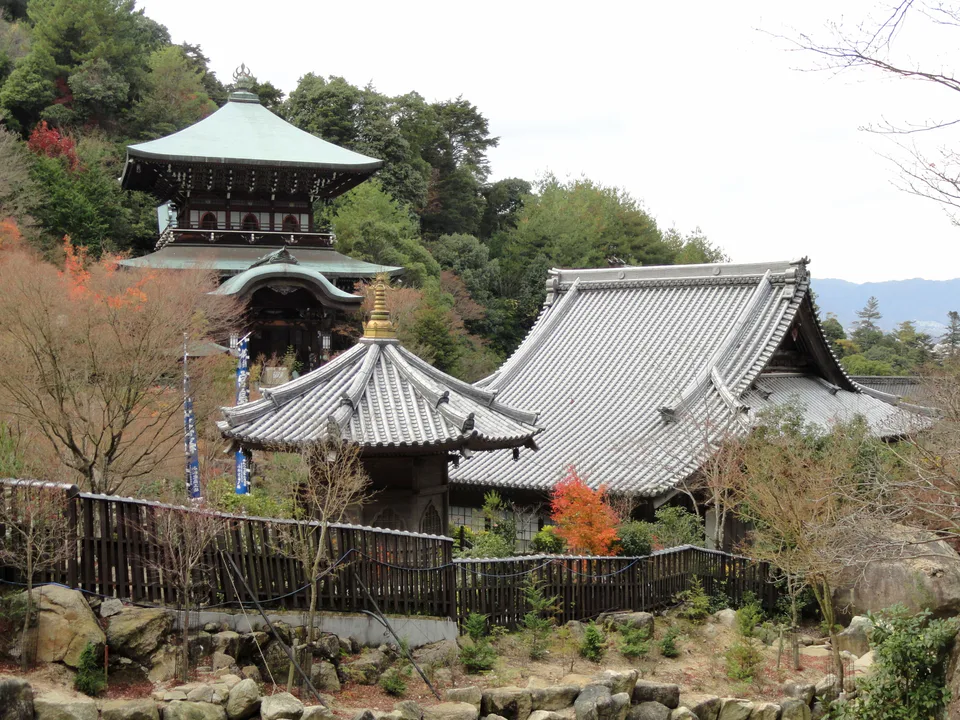
Daisho-in is valuable because it has a different failure profile
Daisho-in is not merely filler between the shrine and the mountain. It is the low-risk piece that keeps the day coherent when the group is behind schedule, the ropeway is suspended or the weather makes exposed activity less attractive.
It also sits well between the main shrine area and Momijidani. That lets you postpone the mountain decision until you know how the morning has actually gone. If energy is good and the ropeway is operating, continue upward. If not, Daisho-in can become the meaningful second anchor without requiring another cross-island transfer.
This is the kind of flexibility that makes a first trip more resilient. You do not need a second “headline” experience simply because the original high-variance plan disappeared.
Food should protect the activity schedule, not become a second attraction list
Anago rice, oysters and momiji manju are part of Miyajima, but trying to queue for every famous food item can quietly consume the slack needed for the mountain or the return trip. Choose one proper meal and let snacks remain opportunistic.
If Misen is the main activity, I would keep lunch timing flexible and avoid building the ropeway around a restaurant queue. If kayaking is fixed, use the meal before or after the booked session rather than treating noon as sacred. On a rainy day, food can expand into a bigger part of the experience because it is replacing outdoor exposure rather than competing with it.
The Miyajima food guide is most useful after the activity structure is fixed. The meal should fit the island day you chose, not choose the island day for you.
The ferry is easy; the hard part is protecting the connection after it
JR West Miyajima Ferry’s regular crossing takes about 10 minutes, and the current regular timetable lists a final Miyajima departure at 22:14. That is why a Miyajima overnight should not be sold as necessary merely because “the last ferry is early.” For most visitors, the overnight buys quieter island hours, a ryokan dinner or a deliberately slow morning.
The more important timing problem is what happens after the ferry. Miyajima’s official tourism site gives roughly 27 minutes by JR between Hiroshima Station and Miyajimaguchi, before the walk between station and pier, waiting and the ferry itself. A visitor with a reserved Shinkansen from Hiroshima should therefore work backward from the train, not forward from whatever activity is still open on Miyajima.
ValueNavi buffer: for a hard reserved Shinkansen, airport transfer or non-refundable dinner after the island, I would normally aim to board a Miyajima ferry around 75–90 minutes before the Hiroshima Station deadline. That is an editorial safety margin, not an operator guarantee. It gives the ferry, pier walk, JR ride and a missed local connection some room to breathe.
If that buffer starts to disappear, cut in this order: extra shopping, second snack, optional temple/viewpoint, then the unstarted Misen block. Protect the transport commitment before protecting an optional activity.
Current ferry fare: use JPY 200, not the stale JPY 180 English page
There is a first-party source inconsistency worth making explicit. JR West Miyajima Ferry’s current Japanese, Traditional Chinese, French and Korean fare pages show the adult standard fare as JPY 200 one way, and the operator’s published October 2023 fare revision changed the adult fare from JPY 180 to JPY 200. A separate JPY 100 Miyajima Visitor Tax is charged when entering the island for most visitors.
However, the operator’s English fare page still displays the old JPY 180 figure. For 2026 planning, use the current JPY 200 fare shown on the operator’s updated non-English pages and fare-revision notice, and recheck the live fare before travel. This is a small amount of money, but it is exactly the kind of stale official-language page that gets copied into travel articles for years.
Half day, full day and overnight are three different products
Four to five hours: keep the day low
Itsukushima Shrine + Daisho-in + Omotesando + one meal is enough. Do not force the Misen summit merely because the ropeway exists. A timed kayak can consume too much of a short visit unless kayaking itself is the main purpose.
Seven to nine hours: choose one high-variance anchor
This is the strongest first-time format. On a clear mountain day, shrine + Misen gives the best contrast between waterfront and Seto Inland Sea views. If a kayak session is the reason you chose Miyajima, replace Misen with the water activity rather than stacking both.
Overnight: buy the hours day-trippers do not use
An overnight makes sense for a ryokan dinner, quieter streets, a night walk or an early island start. It also creates more room for Misen or a timed activity, but that is not the main reason to pay for the hotel. If you do not care about the evening or morning, keep the Hiroshima hotel and use the late ferry timetable.
Use the Hiroshima or Miyajima overnight guide to decide whether those quiet hours justify the luggage move.
Families and older travellers: the mountain decision should be made after the morning, not before the trip
A family can pre-book a restaurant or kayak, but it cannot pre-book everyone’s energy after a long travel day. Mount Misen is the easiest major item to downgrade without ruining Miyajima: Shishiiwa instead of the summit, or lower island instead of the ropeway entirely.
For older travellers, heat and wet stone can matter more than the nominal distance. The ropeway removes much of the ascent but not the walk to the summit. If mobility is a concern, treat Shishiiwa as a legitimate endpoint rather than a failed summit attempt.
For children, one headline activity plus food and deer sightings usually creates a better day than an adult checklist with three timed objectives. The island is most enjoyable when there is still some unallocated time.
Weather red-team: when does the recommendation reverse?
The default “Shrine + Misen” answer reverses when the ropeway is suspended, strong wind makes the mountain unpleasant, or the group does not have the physical margin for the summit. In that case, stay low and let Daisho-in and food absorb the time.
The “Shrine + kayak” answer reverses when the operator changes or cancels the session, the tide no longer supports the expected route, or the activity forces a dangerously tight ferry/rail connection afterward. In that case, do not try to rescue the booking by compressing the rest of the island.
If several outdoor days in the Japan itinerary depend on good weather, use the Japan rainy-day backup framework to decide which day can move rather than making every destination carry its own emergency plan.
Final verdict: one major activity is enough
For a first full day on Miyajima, pair Itsukushima Shrine with Mount Misen or sea kayaking—not both by default. Use tide to improve the shrine experience, not to control the entire day. Treat Daisho-in, food and Omotesando as flexible value that expands when weather or timing removes the high-variance activity.
For a half day, stay low. For an overnight, pay for the island’s quiet hours rather than a bigger checklist. And if a reserved Shinkansen, airport transfer or next-city check-in follows Miyajima, build the island backward from that hard deadline. The best Miyajima plan is the one that still feels complete after you remove one optional activity.
Niseko Food Guide: Restaurants, Ski Lunches, Dinner Bookings and Groceries
Osaka Itinerary With Friends: 7 Days of USJ, Sumo, Food and Kobe — Without Moving as One Group
Kyoto Kibune Kawadoko 2026: Prices, Rain, Bus 33 and Shrine Plan
References
Miyajima Ropeway — current hours, fares and operating limits · Miyajima Tourism Association — current tide tables and water-level thresholds · JR West Miyajima Ferry — current Japanese fare table · JR West Miyajima Ferry — current regular timetable · Hatsukaichi City — Miyajima Visitor Tax · Official Miyajima tourism — sea kayaking and seasonal activities. Checked August 25, 2026. Tide, weather, ropeway operation, ferry schedules and activity availability can change; verify the actual date before locking a timed plan.