
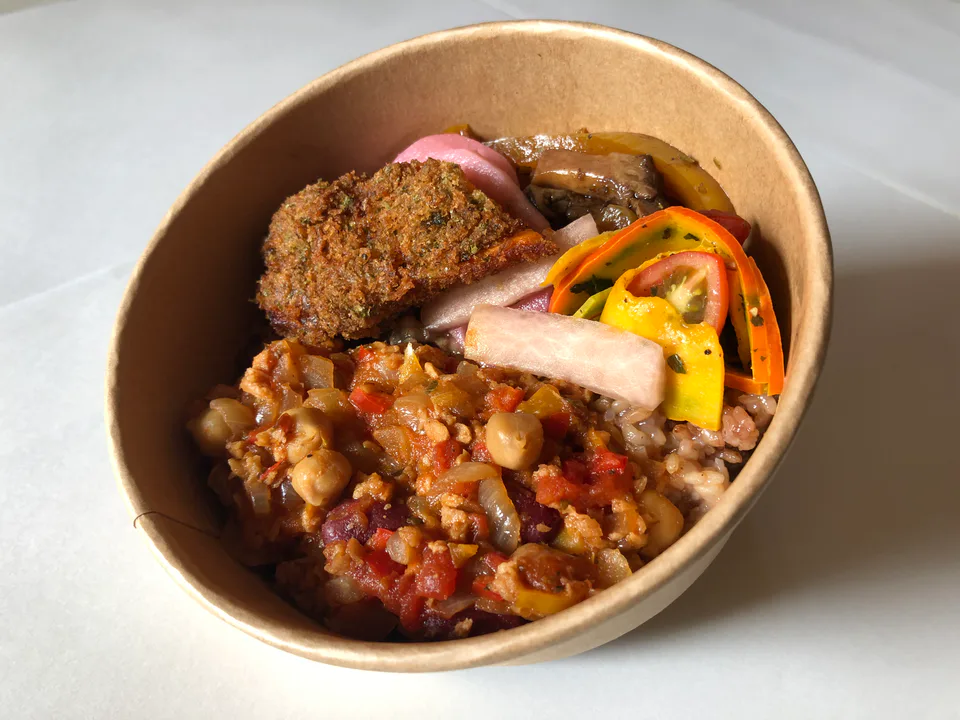
The best Okinawa food plan is not a list of famous restaurants. It is a decision about which meals deserve scarce driving time. I would make only one meal per day a true destination meal. Put Okinawa soba into a day already going north, taco rice into a central-Okinawa route, and Makishi Market or steak into a Naha day. Treat pork-tamago onigiri, Agu pork, sea grapes and goya champuru as flexible foods unless a specific shop or dining experience is itself one of the reasons for the trip.
This matters because Okinawa Main Island is long enough for a “must-eat” list to quietly become a transport itinerary. A bowl of soba is not better because you drove an extra hour for it, and a famous taco-rice stop is not free if it pulls a Naha-only day into Kin. Build the route first with the Okinawa 5-day self-drive itinerary and the Okinawa car-or-no-car decision guide; then give the meals jobs inside that route.
↔ Scroll table left or right
Food decision | When I would make it a destination meal | When I would keep it flexible |
Okinawa soba | You are already in Motobu, Nago or northern Okinawa and a known shop fits the sightseeing line | You are in Naha and the restaurant would create a major northbound detour |
Taco rice / King Tacos | Kin or central Okinawa is already on the route, or taco-rice history is genuinely one of your interests | You would cross the island only to reproduce a dish available elsewhere |
PO-TAMA | You want a branch-specific limited item or it fits an airport, Makishi, Chatan or Motobu transfer | You only want the standard pork-tamago onigiri and another branch is already on your route |
Makishi Market seafood | The buy-on-1F / cook-on-2F system is part of the experience and you can arrive before the cooking cutoffs | You only want seafood and would rather have a simpler fixed-price meal |
Agu pork | A specific shabu-shabu or yakiniku dinner is a planned evening experience | You simply want to try Agu once; it is available widely enough that the hotel area can choose the restaurant |
Steak | A classic Naha steakhouse is one of your cultural food priorities and you have queue/time flexibility | You have a hard flight, ferry or tour deadline and cannot tolerate an unpredictable wait |
First decide which meals are route-locked and which foods are portable
The most useful distinction is not “famous versus local.” It is route-locked versus route-flexible.
A route-locked meal is valuable partly because of where it sits. King Tacos in Kin makes sense on a central-east-coast day because Kin is the birthplace of taco rice. A Motobu soba shop makes sense when Churaumi Aquarium, Bise or Nakijin already puts you in the north. Makishi Market makes sense when you are already doing Kokusai Street, Tsuboya or a car-free Naha block.
A route-flexible food can move around the trip without losing much value. Agu pork is an Okinawan speciality, but you do not need to cross the island to prove you ate it. Sea grapes and goya champuru can be folded into dinners near the hotel. PO-TAMA now has Okinawa branches in Makishi, Naha Airport, Chatan and Motobu, so the standard product no longer needs to dictate one particular morning.
ValueNavi rule: a famous meal should earn the detour by being geographically meaningful, operationally convenient or genuinely unique. If the same food can be eaten later without damaging the rest of the itinerary, protect the sightseeing day.
If you have only five memorable meal slots, spend them on five different jobs
A five-day Okinawa trip can contain many more than five meals, but not every meal needs to become a research project. If I were choosing only five slots to plan deliberately, I would give them different jobs:
One northern lunch: Okinawa soba or a local set meal on the Motobu/Nago day.
One central-Okinawa lunch: taco rice when Kin, Chatan or the east/central route already makes geographic sense.
One portable breakfast or transfer meal: PO-TAMA at whichever branch naturally intersects the itinerary.
One Naha food experience: Makishi Market when the market system itself interests you, or a classic steakhouse if that history matters more.
One slow dinner: Agu pork, Okinawan dishes and awamori after the driving for the day is finished.
The remaining breakfasts, lunches and dinners can be chosen for convenience. This prevents the common failure mode where every famous food is treated as compulsory and the road trip starts serving restaurants instead of beaches, museums and marine activities.
King Tacos is worth the stop when Kin is part of the day—not because every Okinawa trip needs the same branch
Kin Town’s official tourism site identifies taco rice as a local speciality born there in 1984 at Parlor Senri. It also lists the King Tacos Kin main branch as carrying on that original lineage and explicitly describes the portions as large. That gives the Kin stop something a generic “best taco rice in Okinawa” list misses: the place and the food are connected.
I would therefore score King Tacos Kin highly on a day already using central Okinawa—Kin, Kaichu Road, an east-coast drive or a route between Onna and the central/eastern side. I would score it much lower on a two-day Naha city stay where reaching Kin would consume a large piece of the day only for lunch.
Portion size is also part of the route decision. Kin’s tourism material specifically warns you to expect a hearty serving and notes takeaway is possible. Do not order by social-media appearance and then discover the group is too full for the activity that follows. If a fixed marine check-in comes next, the activity time wins; lunch can move.
If the group simply wants to understand taco rice rather than visit its birthplace, other central-Okinawa options can do the job. The official Okinawa tourism guide, for example, includes taco rice as a normal Chatan/American Village lunch option. The point is not that King Tacos is “the only authentic choice.” The point is that Kin is the version where the detour itself has context.
PO-TAMA is now a route tool, not a Makishi-only pilgrimage
PO-TAMA’s current official shop list includes five Okinawa locations: Makishi Market, Naha Airport Domestic Arrivals, Naha Airport International Food Court, Chatan American Village and Motobu. That changes how I would plan it.
If you only want the standard pork-tamago onigiri, use the branch already on the route. An airport arrival, Chatan morning or Motobu day can absorb the stop without costing another cross-city movement. The Makishi branch becomes more compelling when you specifically want its location-only menu rather than simply the brand.
The company’s current menu lists branch-specific limited items. Makishi, for example, has local variations such as fried gurukun, fu champuru and brown-sugar-braised cartilage soki; Chatan, the airport and Motobu have their own branch-specific items. This is the better reason to choose one shop over another.
There is also a 2026 pricing reason not to rely on an old blog screenshot. PO-TAMA raised prices this year: the basic pork-tamago item moved to JPY 450, standard versions to JPY 550 and many special items to JPY 750, with limited products varying by branch. The Makishi shop currently lists 07:00–20:00 and supports mobile ordering. If a morning queue would interfere with a tour or car pickup, use the route flexibility the brand now gives you instead of treating one storefront as mandatory.
Makishi Market is worth planning only if you understand the two-stage bill
The most important Makishi Market fact is not the opening time. It is the official mochiage system: you can buy eligible seafood or meat on the first floor and have a second-floor restaurant cook it.
That means there can be two separate payments. The market’s official guide says the ingredient is paid to the first-floor shop and the cooking fee is paid to the restaurant. It also says the cooking charge varies with the preparation method. A fish price on the first floor is therefore not the total meal price.
Before buying, ask three things: the ingredient total, the cooking fee for the preparation you want, and the approximate finished portion. If the answer is unclear, do not let the excitement of choosing seafood turn the meal into an open-ended bill.
Timing is another hard boundary. The market currently lists general building hours of 08:00–22:00, but the first-floor lift-up ingredients have a cooking last order at 19:45 and the second-floor restaurants at 20:00. Arriving at 20:30 because “the market closes at 22:00” is the wrong interpretation of the product you came to use.
The market also has no dedicated parking. It is about a ten-minute walk from Makishi or Miebashi Station, and nearby roads can have traffic restrictions. That makes it an unusually good car-free Naha meal. If you already returned the rental car, combine it with Kokusai Street/Tsuboya rather than keeping a car purely to eat downtown.
On typhoon days, treat the market as a weather-sensitive plan. Its August 2026 notice says it can close one hour before local buses suspend service, and if buses remain suspended at noon after a morning shutdown, the market can stay closed for the day. Use the Okinawa typhoon backup guide rather than making a seafood dinner the one irreplaceable plan on a disruption day.
Okinawa soba belongs on a northern day because the drive is already expensive
The Motobu Peninsula is not a quick food suburb of Naha. Okinawa’s official tourism guide gives roughly 90 minutes by car from Naha to Motobu under normal conditions, and public transport can take considerably longer. That is exactly why a famous soba shop in Motobu should be attached to Churaumi Aquarium, Bise, Nakijin or another northern objective.
If the restaurant queue is long, do not sacrifice Kouri Island daylight or a booked aquarium/boat slot simply because one name was on the food list. Northern Okinawa has multiple soba and local-meal options. The itinerary value comes from eating the regional food while already there, not from proving that you completed one exact shop.
This rule gets stronger with children or older travellers. A “20-minute restaurant detour” on a map can mean parking, queueing, toilets, getting everyone back into the car and then rejoining the main road. If lunch turns into the most complicated transport event of the day, the famous shop has stopped doing useful work.
Agu pork is a dinner experience, but it rarely needs to choose the hotel
Okinawa’s official tourism guide identifies Agu pork as a speciality meat and highlights shabu-shabu as one of the clearest ways to appreciate it. That makes Agu a good candidate for one deliberate dinner.
But Agu is also available across the island in multiple formats. Unless a particular restaurant is itself one of your trip priorities, I would let the hotel area choose the dinner. Onna resort stay? Eat nearby after the car is parked. Naha final night? Put the Agu meal after the rental is returned and pair it with awamori if you want. Chatan stay? Keep the evening walkable.
The trade-off is simple: chasing a remote dinner may buy a more famous restaurant, but it can cost the relaxed evening that a resort stay was supposed to provide. A food upgrade is weak when it destroys the hotel time you already paid for.
Jack’s Steak House is a Naha experience with queue risk, not a timed reservation
Jack’s Steak House is useful because it connects Okinawa’s postwar food history with a real current restaurant, but its operating model should shape the plan. The official site currently lists opening from 11:00, accepts customers until 22:00, closes every Wednesday, takes no reservations and accepts cash only.
That makes it a poor hard anchor immediately before a flight, ferry or timed show. If there is a wait, you cannot protect the schedule with a reservation. Put it on a Naha night where the only job after dinner is getting back to the hotel.
It is also a good example of why food articles need dates. Jack’s announced a menu price revision from April 1, 2026. An old “cheap Okinawa steak” post can therefore be directionally right but numerically stale. Compare the current menu, not a viral bill photo from several years ago.
If the group wants steak but not the queue uncertainty, choose a restaurant near the hotel that accepts your required payment method and fits the evening. The cultural goal is “Okinawa steakhouse night,” not necessarily one waiting room.
Marine days should control lunch, not the other way around
A Blue Cave boat, Kerama departure or diving check-in is a hard appointment. A restaurant is usually not. On those days, protect the operator’s meeting time and use food as the flexible layer.
If the activity is in the morning, make breakfast simple and put the destination meal after the fixed block. If the marine activity is in the afternoon, eat close to the route rather than adding a cross-island lunch. The Blue Cave guide and Kerama Islands guide should therefore sit above the food list when timing conflicts.
This is one reason the “one destination restaurant per day” rule works. Weather-sensitive activities already consume enough schedule flexibility; meals should not use the same buffer twice.
Families should compare failure cost, not just menu appeal
A restaurant can be famous and still be the wrong family stop if parking is uncertain, the queue has no easy exit or the portion strategy does not fit the children. Use the Okinawa family road-trip guide to keep naps, toilet stops and drive length ahead of a food checklist.
For families, I would give extra value to three things: a nearby backup restaurant, a parking/transport plan known before arrival, and a meal that can be shortened if energy collapses. That is why PO-TAMA on a transfer morning and local soba on a Motobu day can outperform a more famous restaurant that forces the whole family to wait.
Parking and alcohol are the two constraints that should never be “optimized” away
For destination restaurants, identify legal parking before arrival. Makishi Market itself has no parking, and central Naha roads can have traffic restrictions, so rail/taxi/walking can be the better dinner transport even on a trip that uses a rental car during the day.
The driver should not drink. Put awamori on a night when the rental car has already been parked for the day, use a designated non-drinking driver, or switch to safe local transport. A cheaper restaurant is not a saving if it turns dinner into a driving problem.
A practical 5-day food sequence
This is not a restaurant reservation list. It shows how food can sit inside a common main-island route without creating extra geography.
↔ Scroll table left or right
Day shape | Food job | Why it fits |
Naha arrival / city day | PO-TAMA or Makishi; Naha dinner | No need to start the rental only for food |
Chatan / central Okinawa | Taco rice | Central location makes the food part of the road rather than a detour |
Onna marine day | Flexible lunch + Agu dinner near hotel | Boat/check-in time gets priority; dinner uses the resort evening |
Motobu / Churaumi day | Okinawa soba | The northern drive is already being paid for by sightseeing |
Final Naha night | Steak or another slow city dinner | Return the car first; no need to combine alcohol, parking and departure logistics |
If the actual itinerary is different, move the food rather than forcing this sequence. That is the whole point of a route-based food plan.
What I would skip before I would add another restaurant detour
I would skip a second famous taco-rice stop before cutting a beach or museum. I would skip a remote Agu dinner before giving up a resort sunset. I would skip a 40-minute queue for a standard PO-TAMA if another branch is already on tomorrow’s route. And I would skip Makishi’s buy-and-cook system if the group only wants a quick seafood meal and does not care about choosing ingredients downstairs.
Those are not statements that the food is unimportant. They are the opposite: the best meals are easier to remember when they are not surrounded by avoidable transport stress.
Final verdict: protect the route, then spend food detours selectively
For a first Okinawa Main Island trip, I would deliberately plan only three to five food moments and let the rest stay local to the day. Put soba in the north, taco rice in central Okinawa, one PO-TAMA where its branch fits naturally, one Naha food experience, and one slow Agu or Okinawan dinner after the driving is finished.
King Tacos Kin is strongest when Kin itself belongs in the route. Makishi Market is strongest when the two-stage buy-and-cook experience is what you want, not when you only need seafood. Jack’s is strongest on a flexible Naha evening, not before a hard departure. PO-TAMA is now distributed widely enough that the route can choose the branch.
The red-team condition is simple: if a restaurant is so important that you would happily give up an hour of sightseeing and restructure the day around it, make it the destination. If not, choose the best version already on the road.
Okinawa Hotels With Babies and Toddlers: Naps, Strollers and Laundry Come Before the Pool
Niseko Food Guide: Restaurants, Ski Lunches, Dinner Bookings and Groceries
Osaka Itinerary With Friends: 7 Days of USJ, Sumo, Food and Kobe — Without Moving as One Group
Southwest Grand Hotel Okinawa Review: Is a 45 m² Room and Pool Worth the Urban-Resort Premium?
References
Kin Town Tourism — taco rice history · Kin Town Tourism — King Tacos and taco-rice stops · PO-TAMA — current Okinawa shop list · PO-TAMA — branch-specific menu · First Makishi Public Market — buy-and-cook system · First Makishi Public Market — current hours and access · Jack’s Steak House — current hours, closures and payment · VISIT OKINAWA JAPAN — Agu pork. Checked August 25, 2026. Restaurant hours, prices, queues and weather-related closures can change; recheck the exact location before making a time-sensitive detour.