

Okinawa hotels with babies and toddlers need to solve a different trip from hotels for school-age kids. The easiest thing to underestimate is not the number of “family” facilities, but how often a young child creates a hard reason to return to the room: a nap, diaper change, stained clothes, warming baby food, a bath, or simply reaching the point where the day needs to stop. Once those returns are part of the schedule, an in-room washer-dryer, a confirmed crib and a room you can realistically get back to can matter more than an ocean view, an infinity pool or another five square metres.
This is not another generic Okinawa family-hotel roundup. If your child can stay out all day, start with the broader Okinawa family hotels guide. This guide is specifically for infant-to-preschool travel, especially when naps, a stroller, bottles or baby food, diapers and frequent clothing changes still shape the day.
30-second decision: if naps still matter, choose a room you can actually get back to
↔ Scroll table left or right
Family situation | What to prioritize first | More sensible direction |
0–2 years; still using a crib, sterilizing bottles or carrying lots of diaper supplies | Confirm age limits, quantities and reservation rules before paying for a view | A hotel with specific baby support beats one that simply looks family-friendly |
2–5 years; still naps or crashes in late afternoon | Work out whether you would really return to the room at midday and go out again | Keep the room inside your daily activity loop, not just close on a map |
Multiple outfit changes, wet swimwear, bibs and towels every day | Washer-dryer, microwave and simple food prep move up the list | Apartment-style or extended-stay rooms can be more useful than another pool |
One or two full resort days are genuinely in the plan | Only then give Onna resorts, pools and kids’ facilities more weight | The hotel needs real daytime use, not an 8 a.m. departure every day |
You are moving north–central–south and changing hotels repeatedly | Reduce the number of bases first | A hotel move costs much more with a stroller, diapers and sleep gear than with older children |
First narrow Okinawa to one or two realistic bases
ValueNavi Toddler Friction Score | Do not average away the one thing your child cannot tolerate
This is an editorial planning model, not a hotel-star rating. Each dimension is scored from 1 to 5 for a specific use case, with 5 meaning the setup removes more repeated friction. I do not turn the columns into one overall score because toddler travel has veto conditions: a perfect pool does not compensate for a sleep setup you cannot safely use, and an in-room washer does not compensate for a base you would never return to for the nap.
↔ Scroll table left or right
Setup | Nap-return fit | Sleep-equipment clarity | In-room chore capacity | Evening reset | Main reason to choose it | Do not choose it just because… |
Vessel Hotel Campana Okinawa, Chatan | 5/5 if afternoons and evenings are already around American Village | 5/5 | 2/5 | 5/5 for Chatan-centred days | Specific baby gear plus a base that can keep nap, dinner and evening walking in one small loop | “Children stay free” sounds cheap; bed-sharing still uses the existing bed and does not create another bed |
Hyatt Regency Seragaki Island Okinawa, Onna | 5/5 on a deliberate resort day; much lower on all-day sightseeing days | 5/5 if reserved in advance | 3/5 | 4/5 on stay-in days | A planned slow day where crib and baby-support requests can be fixed before arrival | You are leaving the resort after breakfast every day |
Tokyu Stay Okinawa Naha Residential Family Room | 5/5 for Naha / final-night routines; poor for Onna sightseeing loops | 2/5 | 5/5 | 5/5 for laundry, reheating and packing | Washer-dryer, kitchenette, microwave and separate bath/toilet in the exact 31m² family room | The equipment list makes Naha the right base for an Onna-heavy trip |
Kafuu Resort Fuchaku Condo Hotel, exact room checked | 5/5 on Onna stay-in days; lower on long north/south drives | 4/5 | 4–5/5 depending on room type | 5/5 when kitchen/laundry functions are in your booked room | Apartment-style functions plus a broad baby-support list can keep chores inside the room | One room photo with a kitchen or washer means every room has the same equipment |
The useful pattern is that the same hotel can score very differently when the itinerary changes. An Onna resort can be a 5/5 nap base on a pool day and a poor nap base when the family spends the whole day in Naha. That is why “best family hotel” is less useful than “which repeated friction does this hotel remove on my actual days?”
The real difference from ordinary family travel is how often the room re-enters the day
A school-age child may make a small room slightly inconvenient. A two-year-old can turn that same choice into a repeated transport problem: drive back for a nap, park again, unload the stroller, reset the room, then rebuild the entire evening trip. The hotel is no longer just where the day ends; it may need to function as a midday base.
That is why the broader family-hotel selector and this infant/toddler version should not be merged. The first asks which family conveniences matter. This one asks how many times a day your child forces the hotel back into the itinerary.
Start with the “nap-return radius” — not kilometres, but whether you would really go back
Do not stop at “the hotel is 10 minutes from the attraction.” The useful question is what happens at 1 p.m. when your child falls asleep. Would you really drive back, find parking, unload a sleeping child and walk the final outdoor stretch? If the answer is no, the theoretical distance is irrelevant; the nap will happen in the car or the whole family will push through until late afternoon.
A useful ValueNavi calculation is to separate map time from return cost. For illustration, a 12-minute drive back to the hotel is not a 24-minute interruption if each end also requires parking, unloading or reloading a stroller and settling the child. If those transition steps add roughly eight minutes each way for your family, the theoretical 24-minute round trip becomes about 40 minutes before the nap itself. The eight-minute assumption is deliberately illustrative, not an Okinawa transport fact; replace it with your own parking and child-handling reality.
For many two-to-five-year-old families, a better model is “return to the room, reset, then go out again for dinner.” A hotel that sits inside the dinner-and-evening loop can therefore be more valuable than one that is closer to one headline attraction.
Why Chatan can feel closer than the map suggests for preschool families
If two evenings are already built around American Village, Chatan can compress nap, clothing changes, dinner and an evening walk into the same base. That is where the Chatan hotel comparison becomes useful: the gain is not another attraction, but the ability to return to the room without rebuilding the transport chain.
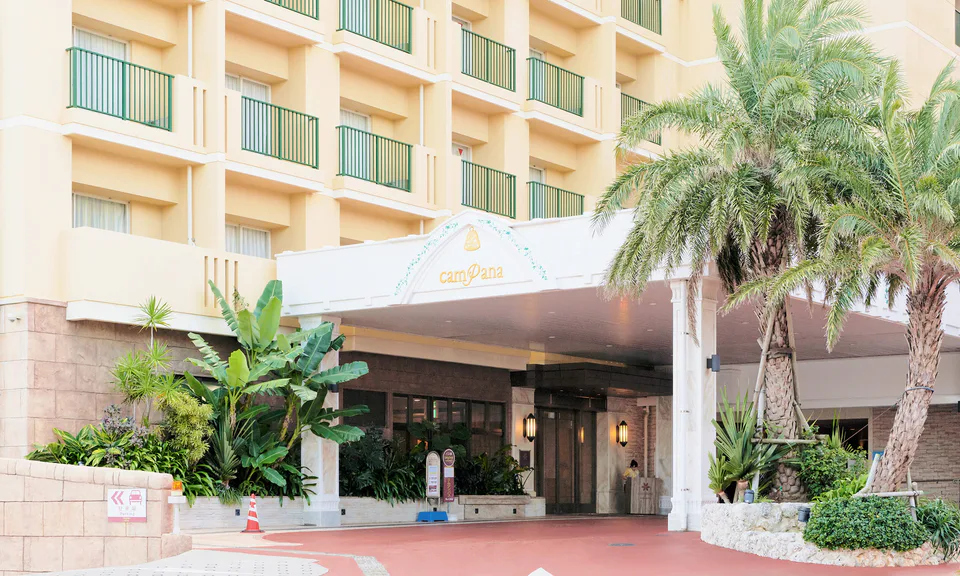
Vessel Hotel Campana Okinawa is a concrete example. Its current official information lists baby beds for children under two, strollers for children under three, diapers, wipes, a diaper pail, a bottle-sterilizing set, a baby bath for children under one, high chairs and other loan items. Those are practical details, not a vague “kid-friendly” badge. If this type of support matters to your trip, continue to the Vessel Campana family room guide after you have fixed the base.
Free bed-sharing is not a free extra bed | Decide who sleeps where before comparing the family rate
Vessel Hotels currently advertises free bed-sharing for children under 18 when they share the existing room and bed setup with a parent or grandparent. That can be excellent value, but it is easy to misread. If the child needs a separate bed, Vessel says the child should be booked at the adult rate. The policy also tells guests to pay attention to the number and width of beds in the room.
This is the hidden-cost question to settle before comparing rates: are you actually comfortable with the proposed adult-plus-child sleeping arrangement for every night? “Two adults + two children allowed” does not tell you whether four sleepers have enough usable bed width. If a toddler moves constantly or one adult cannot sleep with a child beside them, a larger room or another formal bed can be worth more than the headline bed-sharing saving.
“Crib available” is not enough: check age, quantity and reservation rules
Cribs are one of the easiest hotel amenities to misunderstand. Vessel Campana currently labels its baby bed for children under two. Hyatt Regency Seragaki Island Okinawa currently lists cribs for children up to 24 months and says the relevant loan items require advance reservation and are limited in quantity. Neither should be treated as guaranteed simply because a booking page says “crib available.”
If you are considering Hyatt Regency Seragaki Island Okinawa, put the child’s age, actual sleeping arrangement and any need for a bed guard, diaper disposal bin, bottle-sterilization set or microwave on the pre-payment checklist. Hyatt currently lists those items and specifically notes that the borrowable equipment should be reserved in advance.
Hyatt also states that only one child may share each existing bed, excluding sofa beds, extra beds and daybeds. That is the kind of occupancy detail that can overturn an apparently valid family booking even before room size becomes relevant.
A bed guard is not a substitute for a crib — and age restrictions matter
Families often treat a bed rail as the universal backup plan. It is not. Vessel Campana currently states that children under 18 months may not use the listed bed guard. Kafuu’s current family guidance says its bed guards are available for children from one-and-a-half to five years old. Those restrictions are enough to show why you should decide the real sleep setup before arrival rather than asking for “some kind of rail” at check-in.
If a child rolls heavily, needs an independent sleep space or cannot safely use a specific rail, ask the hotel to confirm the equipment and conditions for the exact stay. Do not assume pushed-together twins, a sofa or an extra bed is automatically appropriate for an infant or toddler.
With a stroller, the last 300 metres often matter more than the station-to-hotel minute count
If you are not driving for the entire trip, first settle the broader transport question in the Okinawa family road-trip guide. With a stroller, a “five-minute walk” can be transformed by where the elevator is, slopes, rain, heat, road surface and how many bags are already hanging from the handles.
The practical check is the final stretch from the station or bus stop, parking area, convenience store and dinner options to the hotel entrance. When a child is asleep after dinner and you are pushing a stroller plus shopping bags, the last 300 metres can cost more energy than adding one daytime transit stop.
Washer-dryers, microwaves and simple food prep can outrank the pool by night three
Young children can produce multiple clothing changes in a day, before adding swimwear, bibs, towels and sleepwear. Once the trip reaches three nights, putting laundry into the bedtime routine can materially change how much you pack and whether an adult has to leave a sleepy child to queue for a shared laundry room.
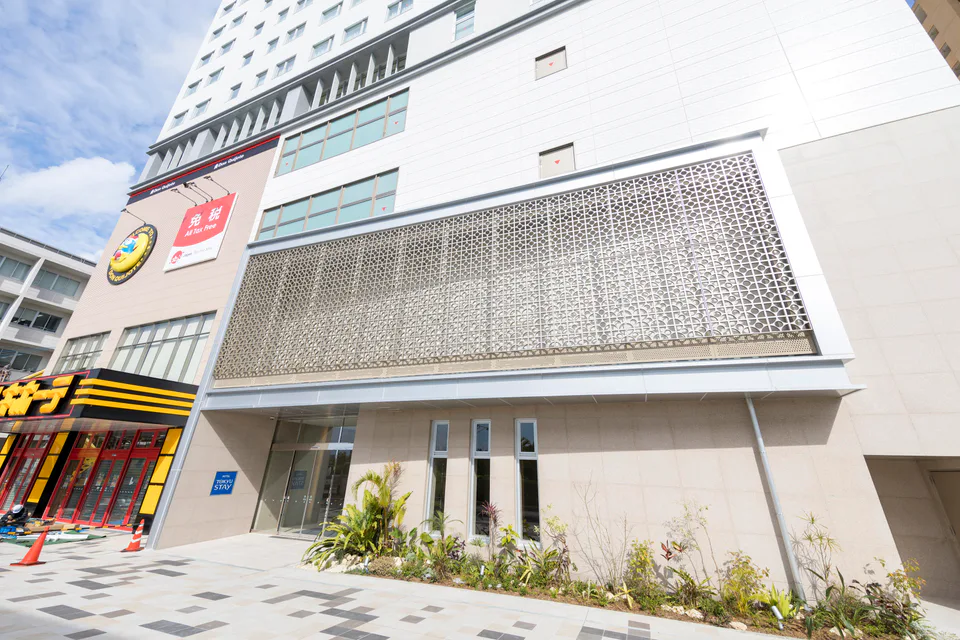
Tokyu Stay Okinawa Naha’s current room page lists a 31m² Residential Family Room for two to four guests with an in-room washer-dryer, kitchenette, microwave and separate bath/toilet. That combination matters because four chores can stay inside the room while a child sleeps: washing, drying, reheating simple food and bathing without sharing the toilet. See the Tokyu Stay Okinawa Naha final-night guide if that matches your route.
That does not mean every family with a toddler should stay in Naha. If your daytime plans and dinners are in Onna or Chatan, returning to Naha just because the room has a washer-dryer is another mismatch. Useful equipment only becomes valuable when it sits in the right base.
Should you stay at an Onna resort? With very young children, decide the stay-in day first
Travelling with a baby or preschooler does not automatically make a resort better value. If you leave after breakfast every morning and return around 5 or 6 p.m., the pool, kids’ activities and ocean-view room can still have a low usage rate.
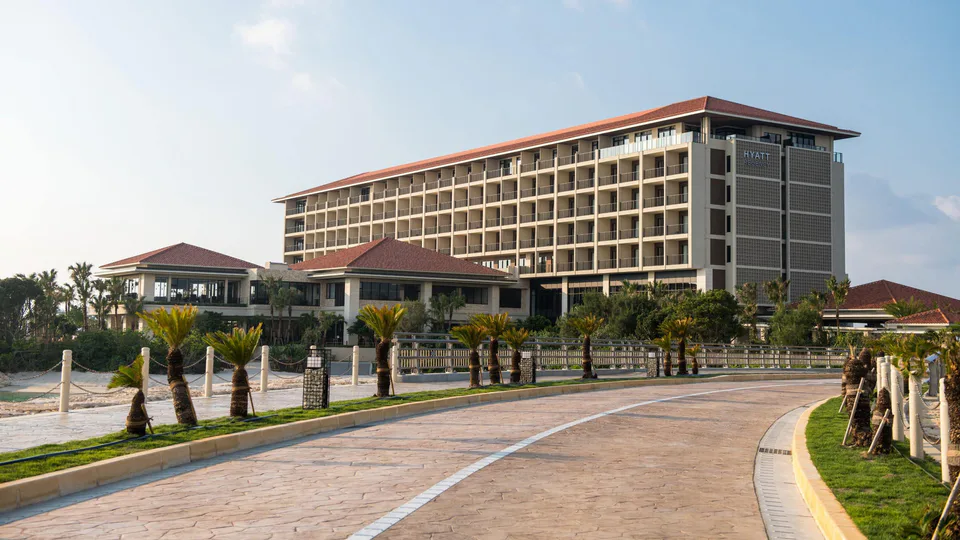
The logic changes when you deliberately keep a slow morning, return for a nap and spend the afternoon swimming or walking near the hotel. That is when an Onna resort can work. If you are comparing resort options, start with Hyatt Seragaki as a two-night stay rather than assuming every night needs an upgrade.
Apartment-style value is not “a bigger room” — it is keeping family chores inside the room
Kafuu Resort Fuchaku Condo Hotel is useful as a functional example, but it also shows why room-by-room checking matters. Current official information says many room types have kitchens or washing machines and lists advance-reservable support items such as strollers, diaper pails and bed guards. Its family guidance also says two beds can be pushed together. The value of this style of stay is not floor area on its own; it is being able to wash clothes, prepare something simple and reorganize bags while a child sleeps.
Do not see one room with a washer or kitchen and assume the entire property has the same equipment. Kafuu itself says it has rooms with washing machines rather than saying every room has one. For young-child travel, the exact room name and included equipment matter more than the hotel-level amenity list.
Breakfast is not automatically better because the buffet is bigger
Breakfast value is unusually unstable with preschool children. One child wakes at 6:15 and eats immediately; another refuses food until 9. If most mornings are early starts toward northern Okinawa, an expensive prepaid breakfast can be difficult to use well.
Plan two kinds of morning first: a slow resort morning and an early departure day. Only if the slow mornings dominate should breakfast move near the top of the hotel decision. On faster days, a convenience store, an in-room microwave or a more flexible meal setup may solve the actual problem better.
Is a separate bath and toilet worth paying more for? Look at the bedtime bottleneck
When a child still needs hands-on help bathing, bathroom layout can directly change the evening. A separate bath and toilet can let one adult bathe the child while another uses the toilet or packs for the next day. But that value exists only if you repeatedly use the room for a full bath-and-bedtime routine.
Do not treat a separate wet area as an automatic upgrade. Compare the room-rate difference on your date, then ask whether it removes a queue you will face every night. The same feature is worth much less on a one-night airport stay than on four nights of 19:30 bath-and-bed routines.
Hotel changes cost far more with a baby or toddler than with older children
An adult hotel move may be one suitcase. With a very young child, it is the stroller, diapers, bottles, snacks, spare clothes, sleep items and whatever is currently wet or in use. Each move adds another pack-up, checkout, storage or car transfer, check-in window and room reset.
The right comparison is not “Hotel B saves 25 minutes of driving tomorrow.” It is whether that saving survives the cost of packing, checking out, moving all child gear and rebuilding the sleep setup. A move that removes repeated backtracking for two or three days can still be rational; a move that saves one short drive usually has a much weaker case.
For a five- or six-night trip, use the Okinawa area guide to reduce the trip to one or two bases before you optimize individual drives. Only move when a northern block genuinely removes repeated backtracking, or when moving to Naha for the final night solves both the car-return and flight problem. The Onna vs Naha final-night guide is the more useful next step in that case.
Do not force a late-arrival first night into a resort
If the flight lands late, treat the first night as a separate logistics decision. The late-arrival / early-flight Okinawa guide is more relevant than the resort view. With a baby or toddler, the job of night one is to finish airport transport, bathing and sleep with as little friction as possible.
The same applies before an early flight. Waking a child, packing bottles and stroller gear, returning a rental car and then reaching the airport concentrates every fragile part of the morning into one chain. For very young families, final-night location can be more valuable than the final-night view.
Four NO-GOs: hotels that look family-friendly but can still be the wrong choice
First, choosing a resort only because it has a children’s pool while leaving early and returning late every day. Second, reading “crib available” without confirming age, reservation requirements and whether quantity is limited. Third, treating free bed-sharing as if the child receives a separate bed. Fourth, changing areas every night to reduce one drive, then packing a stroller, diapers and wet clothes every morning.
None of these make the hotel bad. They are mismatches between an amenity that exists and an amenity or location you will actually use. The best infant/toddler hotel is usually the one that removes repeated family friction, not the one with the longest list of children’s facilities.
10 questions before you pay for an Okinawa hotel with a baby or toddler
① Does your child still need a fixed nap? ② Would you actually return to the room for it? ③ What age is the crib or bed guard approved for? ④ Must it be reserved, and is quantity limited? ⑤ Is laundry in the room or shared, and does it dry? ⑥ Can you use a microwave or prepare simple food? ⑦ How do formal beds and bed-sharing count toward occupancy? ⑧ Is the stroller route from parking or transit to the room straightforward? ⑨ Does breakfast timing fit the child’s real routine? ⑩ Does this hotel remove a move, or create another one?
If those ten answers are clear, you can usually cut the shortlist in half before comparing views, pools or breakfast photos. Reverse the order and you are more likely to buy the photogenic hotel that makes everyday family chores harder.
Final verdict: with babies and toddlers, “most family-friendly” is the wrong target
For ages 0–2, put crib rules, bed-sharing width, sterilizing, diaper logistics and sleep setup first. For ages 2–5 with naps, move the return-to-room radius and stroller last mile to the top. On stays of three nights or more, raise laundry, microwave access and simple food preparation. Only when you have deliberately kept resort time in the itinerary should pools and children’s facilities move ahead of those basics.
My default is not “book the resort with the most family amenities.” It is choose the base that survives the child’s hardest daily reset, then choose the room that solves the sleep and chore bottlenecks inside that base. The answer flips when the child no longer naps, bed-sharing is easy and the family can stay out all day; at that point, location for adult sightseeing and resort quality can move back up the ranking.
If you still have not settled on Naha, Chatan or Onna, return to the Okinawa hotel decision guide and choose the base by your last stop, driving frequency and who you travel with. The hotel name comes after the repeated daily friction has been reduced.
Driving with a young child? Check car seats, pace and hotel logistics
Staying in Chatan? Check Vessel Campana beds and child equipment
Fukuoka Hotels With Public Baths: Will You Actually Use the Onsen, Spa or Sauna?
CANDEO HOTELS Osaka The Tower Review: SkySpa, Rooms and Access
Okinawa Guys’ Trip Hotels: The Best Base Is Where You Can Stop Driving at Night
Sources
Child-equipment, room-function and occupancy facts rechecked on August 27, 2026. Loan-item inventory, child-age rules and room equipment can change, so reconfirm the exact room and stay conditions before payment.
Vessel Hotel Campana Okinawa | Official kids amenities and loan items
Vessel Hotel Campana Okinawa | Official bed-sharing and family policy
Hyatt Regency Seragaki Island Okinawa | Official children and loan-item policies
Tokyu Stay Okinawa Naha | Official room equipment
Kafuu Resort Fuchaku Condo Hotel | Official family guidance
Kafuu Resort Fuchaku Condo Hotel | Official support-item list