
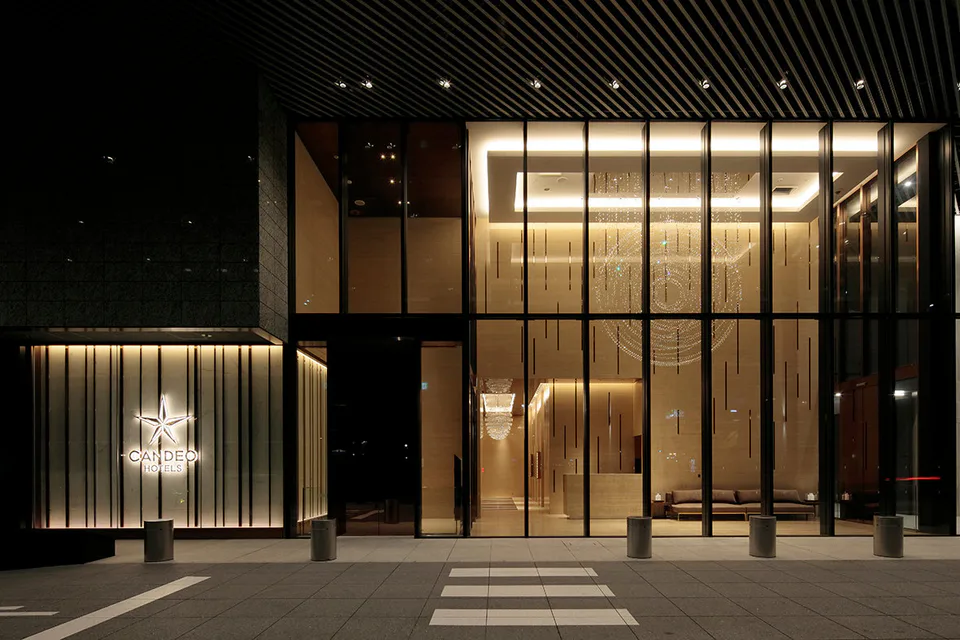
CANDEO HOTELS Osaka The Tower is worth paying for when you will repeatedly use its two distinctive advantages together: the Yodoyabashi/Midosuji location and the 31st-floor SkySpa. If the spa is only something you might photograph once, or if your trip repeatedly returns to JR Osaka Station and you dislike the final walk from Yodoyabashi, I would compare another hotel before paying a tower premium.
The most useful room decision is also different from the usual “bigger is better” comparison. The 24 m² Deluxe rooms have shower booths, while the 26 m² Executive rooms add a private bathtub and separate washing area. That is only about 8.3% more published floor area. The Executive premium is therefore mainly a private-bathing upgrade, not a meaningful space upgrade. If you will use the SkySpa most days, the cheaper Deluxe can be the more internally consistent choice.
↔ Scroll table left or right
Your actual stay | Start with | Why |
1–2 adults, short stay, will use SkySpa at least twice | 24 m² Deluxe | You are not paying twice for bathing; the shower room is enough when the public bath is part of the stay |
1–2 adults, dislike public bathing or need privacy | 26 m² Executive | The real upgrade is the bathtub and separate washing area, not the extra 2 m² |
Two large suitcases, 3–5 nights | 31 m²+ or compare another hotel | Published room area matters every night; do not keep upgrading only because you already like the hotel |
Three adults | 43 m² Premium Triple | Three 1,100 mm beds and more usable room area solve a different problem from a standard room’s legal capacity |
Most days use Yodoyabashi/Honmachi/Shinsaibashi/Namba | Hotel gets stronger | The Midosuji corridor repeats often enough to justify the location |
Most days revolve around JR Osaka Station and you return midday | Compare Umeda / Osaka Station hotels | The final Yodoyabashi walk repeats without enough offsetting location value |
The hotel premium should be measured in usable SkySpa sessions
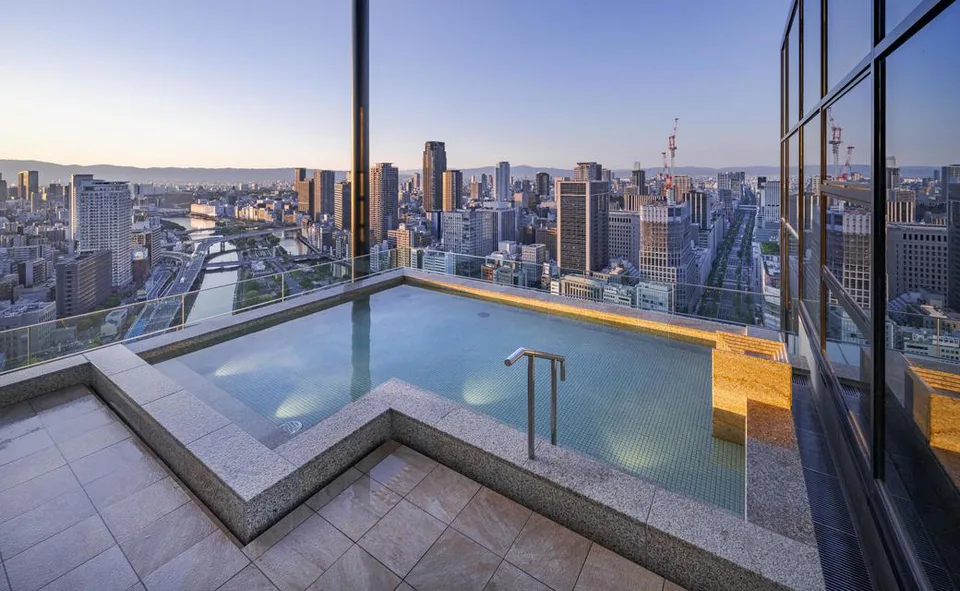
The official SkySpa is on the 31st floor and is open from 15:00 until 11:00 the following morning. The sauna is unavailable from 02:00 to 06:00. Hotel guests use the facility without a separate admission charge.
Those hours create several possible use windows, but only the ones in your itinerary should count:
arrival afternoon: useful only if you check in early enough and actually spend time at the hotel;
after-dinner evening: the strongest normal use case;
late night: possible, but sauna availability changes after 02:00;
departure morning: useful because the bath remains open until the standard 11:00 checkout.
I would use a simple ValueNavi test: count the sessions you realistically expect to use before comparing the room rate. Zero sessions means the SkySpa should contribute zero to your hotel premium. One session during a three-night stay is a weak reason to accept a less convenient location. Two or more deliberate sessions make the hotel’s signature facility much more defensible.
This also prevents a common hotel-comparison error: treating an included amenity as “free value.” It is already built into the product you are choosing. If you do not use it, the room and location must justify the rate on their own.
Three SkySpa rules can completely change the booking value
The Osaka The Tower property currently states that guests with tattoos are welcome to use the SkySpa. That is property-specific and should not be copied to every CANDEO branch. Children still wearing diapers are not permitted in the baths, and swimwear is not allowed because this is a Japanese public bath rather than a swimming pool.
There is also a weather boundary that matters for anyone booking primarily for the skyline bath: the hotel says the outdoor bath closes when wind speed exceeds 8 metres per second. That does not mean the whole SkySpa disappears, but it means the outdoor experience should be treated as weather-sensitive rather than guaranteed.
For a family with a diapered child, the calculation changes sharply. One adult may still use the spa while the other stays with the child, but the facility is no longer a shared family amenity. In that case, compare the room, location and adult-only spa value rather than pricing the stay as though everyone benefits equally.
Deluxe vs Executive: +2 m² is not the reason to upgrade
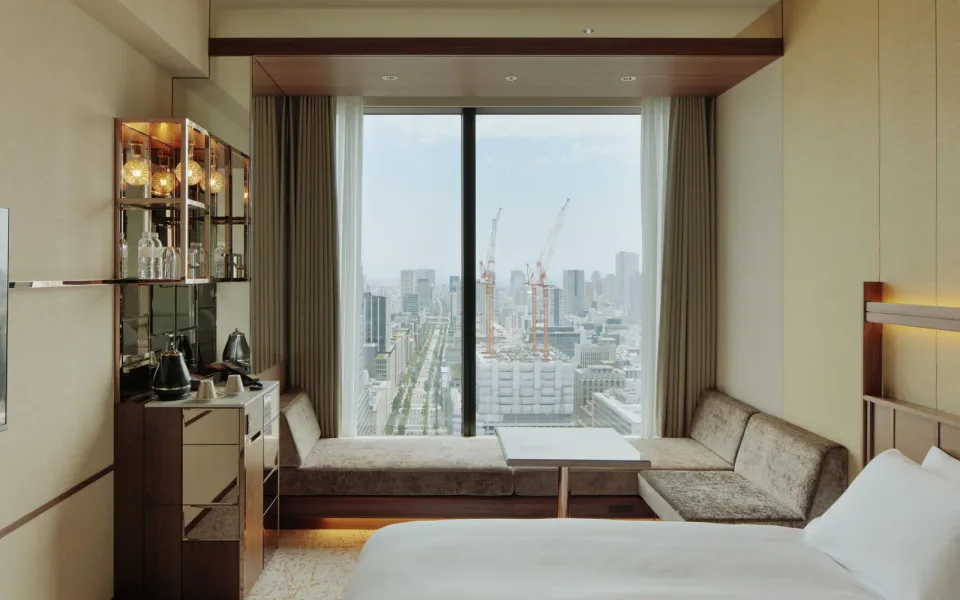
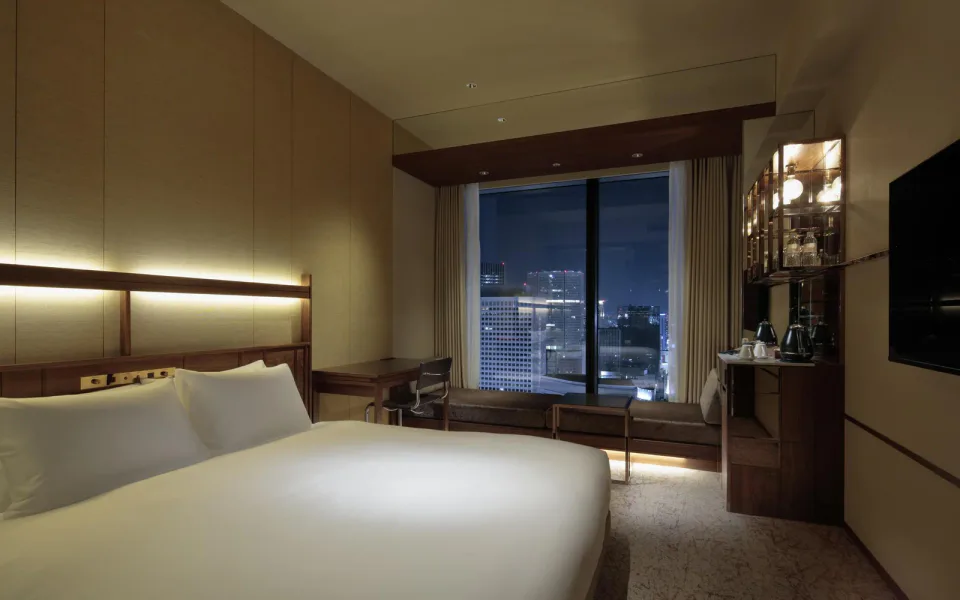
The official room list currently gives Deluxe King and Deluxe Twin as 24 m² with shower rooms. Executive King and Executive Twin are 26 m² and add a bathroom with a separate bathtub and dedicated washing area.
The difference from 24 to 26 m² is 2 m², or about 8.3% more published area. That is too small to treat the Executive tier as the obvious luggage-space solution. The functional upgrade is bathing privacy and bathroom concurrency.
Choose Deluxe when: you are one or two travellers, luggage is manageable, and SkySpa is part of the daily routine. Paying more for a private tub can duplicate a function you intentionally booked the hotel to use upstairs.
Choose Executive when: one traveller avoids communal baths, a child or mobility need makes in-room bathing more important, or two people benefit from a separate washing area during a longer stay.
Do not stop at Executive when the real problem is floor space. The Luxury Corner King is 31 m². The Premium Twin Universal is 41 m², and the Premium Triple is 43 m² with three 1,100 mm beds. If luggage circulation or a genuine three-person setup is the constraint, move to the room category that solves that constraint—or reopen the hotel comparison entirely.
↔ Scroll table left or right
Room | Published size | What the premium mainly buys |
Deluxe King / Twin | 24 m² | Lowest-cost route into the tower product; shower-only bathroom |
Executive King / Twin | 26 m² | Private bathtub + separate washing area |
Luxury Corner King | 31 m² | A more meaningful increase in living/packing space |
Premium Triple | 43 m² | Three real beds and group circulation |
The hotel does not publish a guarantee for how two open 28-inch suitcases fit around the furniture. Treat total area as a useful comparison number, not a floor-clearance promise.
The six-minute Yodoyabashi walk is a repeated cost, not a deal-breaker
CANDEO’s official access page lists Yodoyabashi Station Exit 7 as the closest station access, about six minutes on foot. It also quotes about ten minutes from Shin-Osaka by Osaka Metro before the final walk.
The useful question is how often that final leg repeats. A traveller who leaves once in the morning and returns once at night may barely care. A traveller who comes back to the hotel after lunch, leaves again for dinner and repeats the pattern for four days pays the same ground-level walk many more times.
With large luggage, the shortest exit is not automatically the best exit. If elevators are required, check Osaka Metro’s current accessible route and accept a slightly longer ground-level path rather than treating Exit 7 as mandatory. A six-minute marketing figure is not the same as platform-to-room time.
This is why I would not call the hotel an “Osaka Station substitute.” It is stronger as a Yodoyabashi/Midosuji base for travellers who return once in the evening and then use the hotel facilities.
Where the location actually earns its keep
Yodoyabashi sits on the Midosuji Line, with Umeda to the north and Honmachi, Shinsaibashi and Namba farther south. That makes the hotel useful for an itinerary spread along central Osaka rather than concentrated in one station complex.
Umeda + central Osaka mix: good fit. You retain straightforward north-south access without sleeping inside the Osaka Station complex.
Shinsaibashi / Namba-heavy stay: workable, but compare a southern hotel because the same southbound journey repeats.
JR-heavy regional day trips: conditional. The Midosuji route to Shin-Osaka is simple, but an Osaka Station-connected hotel may remove more station friction if JR is the dominant daily task.
USJ-heavy stay: weaker. The SkySpa can be excellent after a long park day, but the late return includes more transfer and walking than a Universal City hotel.
If Osaka is only one base inside a wider Kansai route, use the Osaka, Kobe and Koyasan itinerary to test how often the Midosuji corridor actually appears. If the whole problem is large luggage rather than location, solve that separately with the Japan luggage-forwarding guide.
Breakfast can cancel the early-start benefit you thought you were buying
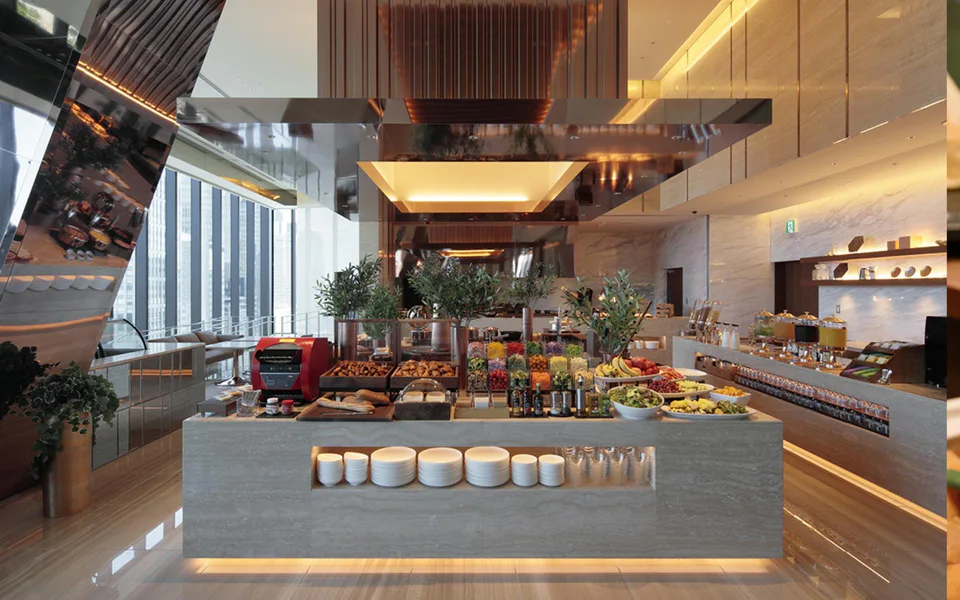
The current official breakfast hours are 07:00–10:00, with last entry at 09:30. The listed adult price is JPY 3,800 before tax / JPY 4,180 including tax; children aged 6–11 are listed at JPY 1,900 before tax / JPY 2,090 including tax, while children under six are free.
The decision is mainly about time, not the buffet menu. If the next morning is a normal Osaka city day, breakfast can fit naturally. If you want an early Shinkansen, Kyoto start or USJ opening strategy, the buffet competes with the buffer that justified the early departure.
Schedule the first hard commitment first. Then decide whether breakfast is a benefit or an obligation you paid yourself to wake up earlier for.
One night and four nights have different break-even points
One night: the hotel can be difficult to justify purely for SkySpa if arrival is late and departure is early. Count the actual bath window before paying a premium.
Two nights: this is a stronger use case when you have one normal Osaka day and can use the SkySpa at least twice. A 24 m² Deluxe room is easier to accept if the room itself is mostly for sleeping.
Three to four nights: the repeated Yodoyabashi walk and room circulation matter more. If you have two large cases, compare 31 m²+ categories or another hotel. Do not let a signature spa trap you in a room layout that is wrong every day.
Longer stay with little SkySpa use: reopen the whole hotel decision. The longer you stay, the harder it is for one spectacular facility to compensate for a location or room compromise that repeats daily.
Compare the same room, not the same hotel name
When checking Booking.com, Trip.com or Agoda, freeze the same dates, guest count, room category, breakfast, taxes and cancellation deadline. A 24 m² Deluxe rate should not be compared with a 26 m² Executive or 31 m² Corner room and described as a platform price difference.
Verify CANDEO HOTELS Osaka The Tower rooms for your dates
Compare the same room on Trip.com
Compare the same room on Agoda
Final verdict: count spa sessions before paying the tower premium
I would book CANDEO HOTELS Osaka The Tower when the Midosuji corridor fits the itinerary, I expect one main hotel return per day, and I can name at least two SkySpa sessions I will genuinely use. In that case, the 24 m² Deluxe room can be a coherent purchase because the hotel’s public bath replaces the need to pay automatically for a private bathtub.
I would choose Executive when private bathing is a repeated need, not because 26 m² sounds materially larger than 24 m². I would move to 31 m²+ or reopen the hotel comparison when luggage or group space is the real constraint.
I would compare a different hotel when SkySpa use is zero, Osaka Station is the repeated daily hub, or accessibility and the shortest possible station-to-room route matter more than the tower experience. The hotel is strongest when its location, room and spa are all solving the same trip—not when one photogenic facility has to justify everything else.
10 Days in Japan: Tokyo, Kyoto and Osaka Without Turning the Trip Into a Transfer Marathon
Lake Kinrin Autumn Leaves Guide: Morning Mist, Fukuoka Access and Yufuin Hotels
Osaka Shopping Hotels: Why the Last 10 Minutes Back from Dotonbori Matter More Than the Metro Map
The Naha Terrace: Are 35m² Rooms and 12:00 Check-Out Worth a 15–20 Minute Station Walk?
References
CANDEO HOTELS Osaka The Tower official site · official room list · official SkySpa rules and hours · official breakfast information · official access information. Checked August 25, 2026. Rates, room inventory and operating conditions can change; verify the live stay date.