
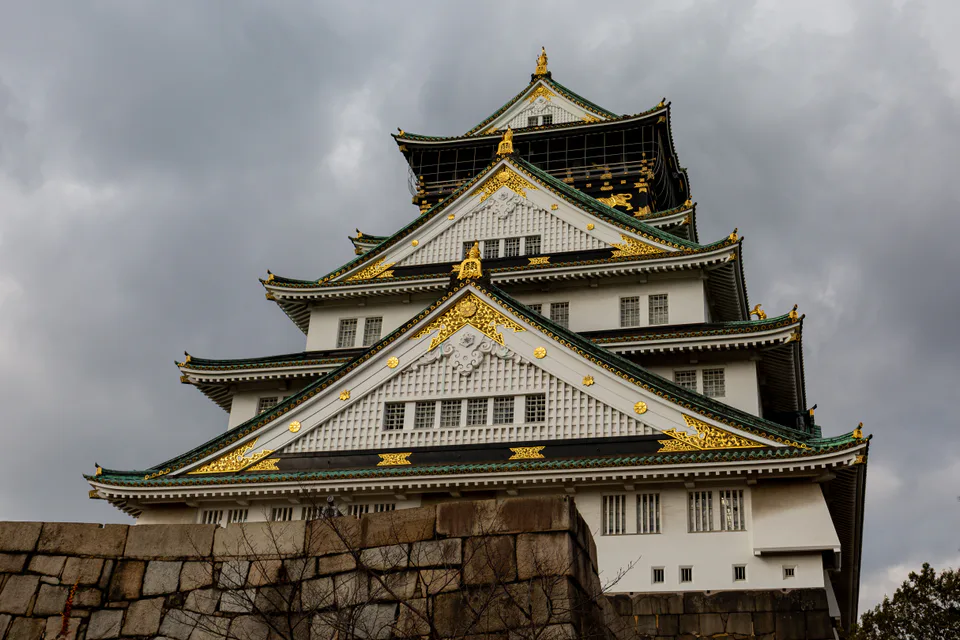
Ten days is enough for Tokyo, Kyoto and Osaka. The harder decision is whether those three cities need three hotels. For many first-time trips, my default is four nights in Tokyo plus five nights in one Kansai base, visiting the other Kansai city as a day trip. I would only add an Osaka hotel after Kyoto when Osaka earns the move through something a day trip handles badly: a full USJ day, two late Osaka evenings, or a departure schedule where sleeping farther east creates real morning risk.
The familiar four-Tokyo / three-Kyoto / two-Osaka split is still a strong itinerary, but it is a conditional recommendation rather than the automatic answer. A 35-minute-looking intercity ride does not make a hotel change free. Packing, checkout, station access, luggage storage, hotel check-in and learning a new local station all consume usable travel time. The third base should buy back more convenience than that move costs.
If you are still deciding whether 10 days is the right trip length, start with our 10 vs 12 vs 14 day Japan comparison. This guide assumes a 10-day, nine-night trip and focuses on the route decision.
The 30-second decision: two bases or three?
↔ Scroll table left or right
Your trip | Best starting structure | Why | Main trade-off |
Kyoto is the main Kansai priority; Osaka is one sightseeing/food day | Tokyo 4 nights + Kyoto 5 nights | Protects early Kyoto mornings and removes one hotel move | Osaka nightlife ends with a return trip to Kyoto |
USJ, Osaka nightlife and food matter more than quiet Kyoto mornings | Tokyo 4 nights + Osaka 5 nights | Keeps the expensive/late Osaka days beside your hotel | Kyoto becomes one or two commuter-style day trips |
Both early Kyoto and late Osaka are non-negotiable | Tokyo 4 + Kyoto 3 + Osaka 2 | Each city gets the part of the day it is best at | You pay one extra hotel-move tax |
Family with stroller, older travellers or two large suitcases | Prefer two bases unless the third base solves a major problem | Every luggage hand-off magnifies the cost of a short hotel stay | You accept longer Kansai day-trip travel |
Very early KIX departure | Consider Osaka for the final nights | A shorter or simpler airport morning may justify the move | Kyoto already has direct HARUKA access to KIX, so airport access alone is not an automatic reason to move |
The hidden cost is the hotel move, not the Kyoto–Osaka train
Kyoto and Osaka are close enough that route planners often look only at train time. That is the wrong unit. The real comparison is day-trip commute versus hotel-move friction.
A day trip asks you to travel out and back with a small day bag. A hotel move asks you to pack everything, check out, move the bags, either store them or reach the new hotel, then check in and learn another station/exit pattern. The rail ride can be short while the travel day still loses its clean morning.
I use a simple ValueNavi test: the third base should solve at least two meaningful problems, not one cosmetic inconvenience. Osaka earns two nights much more easily when it gives you a USJ morning and a late Dotonbori/Umeda evening. It earns them less easily if the only argument is “Osaka is closer to KIX,” because JR West still sells HARUKA products linking Kyoto and Kansai Airport directly.
If your Kansai priorities are still fuzzy, use Kyoto vs Osaka for first-time visitors before booking individual hotels. Choose the base from the hours you most want to protect, not from the midpoint of a map.
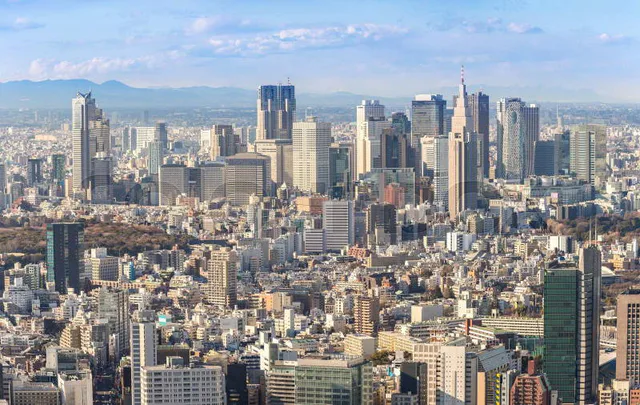
Days 1–4: keep Tokyo as one stable base
Whichever Kansai structure you choose, I would still give Tokyo four nights on most first trips. That creates one arrival night plus roughly three full-use days without forcing the first Shinkansen move too early.
Day 1: arrival day should fail gracefully
Do not put a hard timed attraction on the first evening unless your arrival is very early and you are comfortable with the airport route. Immigration, baggage and the ride into Tokyo can move. The best first night is intentionally local: check in, eat near the hotel, learn the nearest station and recover.
If the Tokyo base is still undecided, start with where to stay in Tokyo for first-time visitors. For this route, Tokyo Station vs Shinjuku matters because airport arrival and the eventual Shinkansen departure pull in different directions.
Day 2: east Tokyo — Asakusa and Ueno
Keep one geographic spine. Asakusa, Ueno and optionally Akihabara fit far more naturally than Asakusa in the morning and Shibuya in the afternoon. The point is not that crossing Tokyo is difficult; it is that repeated station entries, long concourses and direction changes quietly consume the margin that makes a first trip pleasant.
Day 3: west Tokyo — Meiji Jingu, Harajuku, Shibuya and Shinjuku
This is the natural west-side contrast day. If one observation deck matters, choose one. Do not add a second skyline stop simply because it is open late. Evening time is useful precisely because you can let dinner, shopping or jet lag decide how long the day lasts.
Day 4: one flex day — Disney, Kamakura, museums or unfinished Tokyo
This day is where the itinerary becomes yours. Disney consumes the day if it is a top priority. Kamakura replaces a Tokyo city day. Shopping or museums can stay in Tokyo. The mistake is treating the flex day as a container for two destinations you could not fit elsewhere.
Our Tokyo stay-length guide is useful here: if you keep adding Tokyo priorities, the right answer may be to preserve Day 4 in the city instead of forcing another day trip.
Day 5: Tokyo to Kansai is the only unavoidable hotel move
The Tokyo-to-Kansai transfer is different from Kyoto-to-Osaka. You have to change regions anyway, so this move earns its place. Treat it as a transfer day with a light sightseeing block rather than pretending the Shinkansen ride is the only time cost.
SmartEX remains the official online reservation service for the Tokaido, Sanyo and Kyushu Shinkansen. One 2026 change worth correcting from older guides is that the old smartEX round-trip discount product ended for journeys after March 31, 2026. For a Tokyo → Kyoto or Tokyo → Shin-Osaka route, price the current one-way and advance-purchase products that actually fit your date rather than searching for the retired round-trip product.
Large luggage can also change the transfer design. SmartEX’s current English guidance says a reservation for a seat with an oversized baggage area is required for baggage with total dimensions of 160 cm or more and 250 cm or less. If you are travelling with two very large cases, the question is not only “which train?” but also whether the cases should travel with you at all.
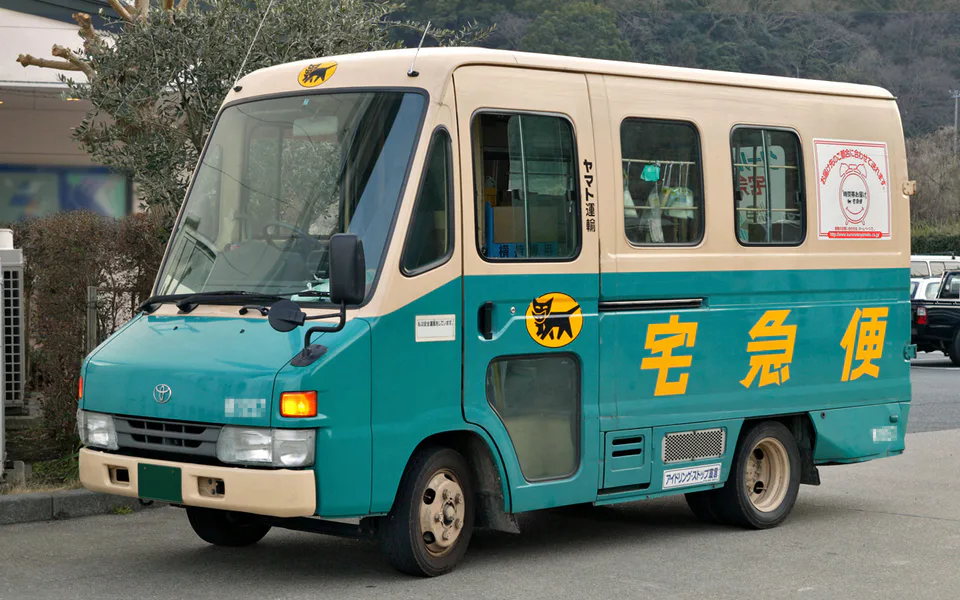
If dragging a large case through stations is already the part of the trip you dread, luggage forwarding can be more valuable than shaving minutes off a connection. It becomes especially useful if you choose the three-base route: forward the main luggage to the final Kansai hotel and use a small overnight bag in between when the delivery timing works for your hotels.
Version A — two-base default: Tokyo 4 nights + Kyoto 5 nights
This is my default when Kyoto is the stronger Kansai priority and Osaka is mainly one day of food, shopping and nightlife. It gives Kyoto the morning advantage without turning every suitcase into a three-city passenger.
↔ Scroll table left or right
Day | Plan | Why it works |
1–4 | Tokyo | One stable arrival base + three usable Tokyo days |
5 | Tokyo → Kyoto; light Gion/Higashiyama evening | Transfer day has a graceful failure mode |
6 | East Kyoto | Protects an early temple/old-street start |
7 | West/central Kyoto or Nara | One full-day priority, not two |
8 | Osaka day trip | Food, shopping and one evening without moving hotels |
9 | Second Kyoto day / Nara / weather buffer | Keeps one recoverable day instead of pre-booking every slot |
10 | Kyoto → KIX | Direct HARUKA access means an Osaka hotel is not mandatory for every KIX departure |
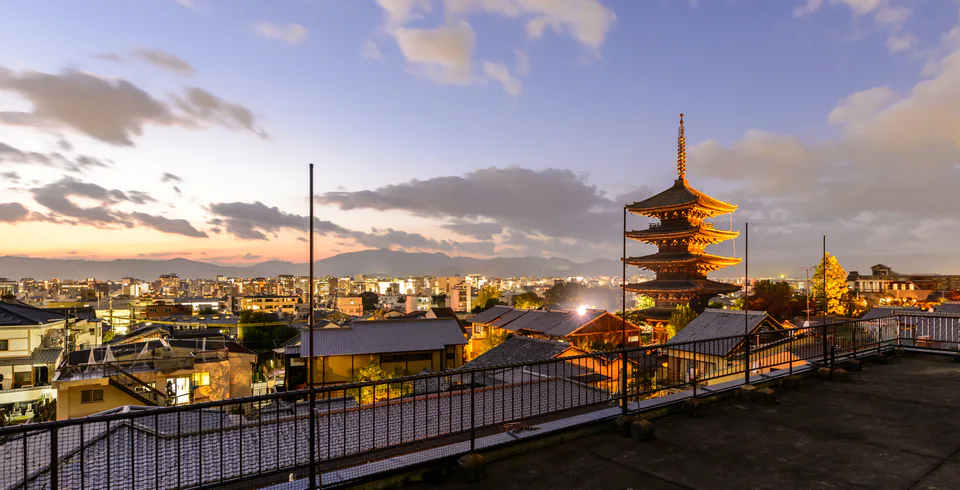
Who should choose the Kyoto base?
Choose it when Kiyomizu-dera/Higashiyama mornings, Arashiyama, temple time and a quieter evening rhythm matter more than being able to stay in Osaka until very late. It is also the cleaner choice when you have large luggage and only one real Osaka sightseeing day.
The trade-off is the Osaka evening. A day trip is easy while your Osaka plan ends at a normal hour. It becomes weaker when “Osaka day” really means dinner, bars, late shopping and another evening the next night. At that point, the return to Kyoto is not just transport; it is a curfew shaping the experience.
Version B — two-base alternative: Tokyo 4 nights + Osaka 5 nights
This is stronger than the Kyoto-base version when USJ is one of the reasons for the trip, Osaka nightlife matters, or your Kansai days are more urban than temple-heavy. Use Osaka as the hotel and treat Kyoto as one or two deliberate day trips.
I would choose this structure for a first trip where the Kansai priority list is something like: USJ, Dotonbori, Umeda, shopping, one Kyoto temple day and maybe Nara. I would not choose it just because Osaka hotels look cheaper on one search result. The cost saved on the room can be offset by early commuting on the mornings when Kyoto matters most.
The hidden cost appears at sunrise rather than midnight. If you want to be in Higashiyama or Arashiyama before the busiest part of the day, sleeping in Osaka makes that early start a cross-city commute. If you only want one broad Kyoto highlights day, that trade may be acceptable. If Kyoto is one of the emotional centrepieces of the trip, it usually is not.
For the Osaka days themselves, use the Osaka 3, 4 or 5 day itinerary framework to group areas rather than bouncing from Namba to Osaka Castle to Umeda and back south.
Version C — three bases: Tokyo 4 + Kyoto 3 + Osaka 2
The original 4/3/2 route becomes the best choice when both sides of Kansai have time-sensitive value. Kyoto wants mornings. Osaka often wants late evenings, and USJ can want an early start plus enough energy for a full park day. When you genuinely want both, one extra hotel move can buy back hours that matter.
I would add the Osaka hotel when at least two of these are true
USJ is a top-three trip priority and owns a full day.
You want two separate Osaka evenings rather than one dinner-and-return day trip.
Your final flight makes the Kyoto-to-KIX morning uncomfortably early or fragile after checking the current timetable.
You have enough Osaka-specific sightseeing for Day 8 plus Day 9, not just Dotonbori for dinner.
You can reduce luggage friction through small bags, forwarding or a simple station-adjacent hotel transfer.
If only one weak reason applies — for example, “Osaka is closer to the airport” — I would keep the Kyoto hotel and avoid the move. JR West’s current HARUKA products connect Kyoto with Kansai Airport, so the airport argument has to be tested against your actual flight time, not assumed from geography.
Day 8: the Osaka move should immediately pay you back
If you choose the three-base version, make Day 8 a deliberate transfer-and-Osaka day. Pack, move once, drop the bags, then stay in one side of Osaka. Namba/Shinsaibashi/Dotonbori makes sense if the payoff is food and nightlife. Umeda makes sense if the hotel, shopping and north-Osaka transport are the priority.
Do not move hotels in the morning and then take a day trip to Kobe or Nara. That is the worst of both systems: you pay the hotel-move tax without using the new base.
Day 9: USJ or Osaka city — not both
If USJ is the reason you moved, give it the full day. If USJ is not important, use the day for Osaka city and let the second Osaka evening justify the hotel. A theme-park day followed by an Osaka hotel is a coherent reason for the third base; a two-hour Dotonbori dinner usually is not.
Nara is a replacement day, not a free fourth city
Nara fits best when it replaces one Kansai day. If you are Kyoto-based, it competes with a second full Kyoto day. If you are Osaka-based, it can replace an Osaka city day. It usually does not justify another hotel move for a first visit focused on Nara Park, Todaiji and the central historic area.
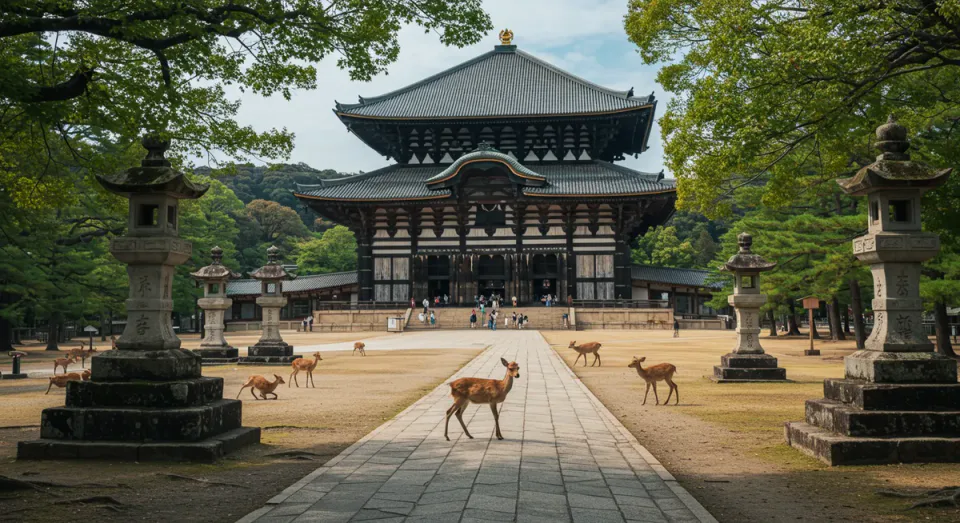
Use Nara from Kyoto or Osaka after you know which city is your Kansai base. The best departure city depends on the rest of the day, not just rail minutes.
What should Disney, USJ, Fuji and Hiroshima replace?
↔ Scroll table left or right
Priority | My call in 10 days | What it should replace | Failure mode |
Tokyo Disney | Add if it is a genuine priority | Day 4 general Tokyo / another Tokyo day | Treating a park day as a bonus and then taking a late transfer |
USJ | Add if it is a genuine priority | One full Osaka/Kansai day | Trying to do Osaka Castle or Dotonbori before the park |
Nara | Usually easy to justify | One Kyoto or Osaka day | Adding a Nara hotel for a standard first-visit loop |
Hakone / Kawaguchiko | Only if Fuji/ryokan is more important than city depth | One Tokyo day or one night from the Tokyo allocation | Calling it an “on-the-way” stop while dragging luggage through a weather-sensitive day |
Hiroshima / Miyajima | Usually save for 12–14 days | At least one Kansai night and substantial sightseeing time | Adding Hiroshima because the Shinkansen is fast, then giving Miyajima only a rushed fragment |
The rule is replacement, not accumulation. A 10-day itinerary becomes rushed when famous places are treated as zero-cost add-ons. If Hiroshima is non-negotiable, rebuild the route around it rather than squeezing it between Kyoto and Osaka. If Disney and USJ are both non-negotiable, accept that you are giving two of the trip’s limited full days to theme parks.
Families and large luggage change the two-vs-three-base answer
A hotel move that feels minor for one adult with a carry-on can become a poor trade for two adults, children, a stroller and two 29-inch suitcases. The train is still fast; the hand-offs are not.
For that group, I would require a stronger reason before adding the Osaka hotel. One USJ day alone may not be enough if the Kyoto hotel is convenient and the family can tolerate the commute. USJ plus two Osaka evenings and an early KIX flight is a much stronger case.
The answer can reverse if luggage forwarding removes the cases from the Kyoto → Osaka transfer. Then the family is moving people rather than inventory, and the third base becomes easier to justify. This is why “how many hotel bases?” is partly a luggage question.
Late nights are the hidden reason Osaka can deserve a hotel
Day-trip comparisons usually focus on morning travel time. For Osaka, the more important question may be what happens at 21:30 or 22:30. If your ideal Osaka day ends after dinner, bars, shopping or a show, returning to Kyoto can make you watch the clock during the part of the day you came to Osaka to enjoy.
One late evening is usually not enough to justify repacking the trip. Two late evenings can be. That is a good example of a decision gap that a pure transport table misses: the value of the hotel is not “saving 30 minutes in the morning.” It is removing a recurring end-of-night constraint.
KIX departure: work backward from the flight before moving hotels
Do not automatically move to Osaka on the final night because your flight leaves from Kansai Airport. JR West currently offers HARUKA travel between Kyoto and KIX, so Kyoto remains a viable final base for many departure times.
The decision changes when the flight is early enough that your preferred Kyoto hotel creates a very early start, extra local transfer risk or no comfortable railway option after you check the current timetable. Then an Osaka hotel — or in extreme cases an airport-area hotel — can buy real departure reliability.
Use Kansai Airport to Osaka for the airport leg, but work backward from the airline check-in target. “Closer to KIX” is not valuable unless it protects something you actually need: sleep, a simpler transfer, or a safer departure buffer.
Do you need a nationwide JR Pass for this route?
Usually not for the basic Tokyo → Kansai structure. Price the long-distance journeys you will actually take, then compare the current rail products. Do not buy a nationwide pass first and let it pressure you into adding Hiroshima or extra long-distance trips just to “get value.”
The same logic applies to the two-base versus three-base decision. Moving Kyoto → Osaka does not become a good hotel strategy merely because a ticket or pass covers the train. A covered journey still costs packing time and energy.
If you add Hiroshima, a return to Tokyo or several other expensive JR sectors, recalculate from scratch rather than importing a pass verdict from someone else’s itinerary. The dedicated JR Pass vs individual tickets guide explains the break-even logic in more detail.
Five failure modes that make 10 days feel shorter
1. Making Osaka a hotel because it is famous. A city can deserve a full day without deserving a hotel. Give the Osaka base a job: USJ, late nights, airport logistics or enough Osaka-specific days to repay the move.
2. Counting arrival and departure as normal sightseeing days. If Day 1 lands late and Day 10 flies early, your “10-day trip” has closer to eight usable planning days. Do not spend those fragments on timed attractions.
3. Treating Kyoto and Osaka as one frictionless metro area. They are easy to connect, but early Kyoto and late Osaka pull in opposite directions. Choose which end of the day you want to protect.
4. Letting luggage decide the worst possible route. If large cases make the third base miserable, remove the base or remove the cases through forwarding. Do not keep both and pretend the train time solves it.
5. Adding one more city because the Shinkansen is fast. Hiroshima, Hakone and other detours can be excellent. Their cost is the sightseeing day they replace, not only the train fare.
Red-team: when is the 4 + 3 + 2 route actually better?
If I argue for two bases as the default, the strongest counterargument is a traveller who cares deeply about both Kyoto mornings and Osaka nights. In that case, forcing one Kansai base creates repeated commute friction at exactly the hours they value most.
For that traveller, Tokyo 4 nights → Kyoto 3 → Osaka 2 is not unnecessary complexity. It is a deliberate exchange: one packing event in return for two different daily rhythms. The same is true when USJ plus a late Osaka evening and a difficult KIX morning all point toward Osaka.
The two-base recommendation is therefore not “never change hotels in Kansai.” It is: do not pay the hotel-move tax unless the third base buys back high-value hours more than once.
Final verdict
For most first-time 10-day trips, start with two hotel bases, not three: four nights in Tokyo and five nights in either Kyoto or Osaka. Choose Kyoto if temple mornings and a slower Kansai rhythm matter more; choose Osaka if USJ, nightlife and urban evenings dominate.
Upgrade to the three-base 4/3/2 route only when Osaka earns it. My threshold is usually two strong reasons: USJ, repeated late Osaka evenings, a difficult KIX departure, or enough Osaka-specific sightseeing to use both nights. If the only reason is “Osaka is close to the airport,” keep Kyoto and check the current HARUKA timetable first.
That is the central trade-off: fewer hotels protect time and luggage; more bases can protect early mornings and late nights. The best 10-day itinerary is the one that spends hotel changes only where they buy back hours you actually care about.
Sources to re-check before booking
SmartEX — current Tokaido/Sanyo/Kyushu Shinkansen products and baggage rules. JR West HARUKA — current Kansai Airport connections and visitor ticket information. Checked August 25, 2026. Train products, timetables and operating rules can change, so re-check your exact travel date before purchase.
Osaka for Couples: A 7-Day Itinerary That Saves the Best Nights for Kyoto, Kobe and One Big View
Tokyo Attractions: Stop Counting Sights and Start Assigning Whole Days
Osaka Girls Trip Hotels: Count Beds, Sinks and Shower Queues Before Square Metres
Tokyo Autumn Leaves Day Trip by Train: Gardens, Ginkgo and Evening Foliage
Tokyo to Kyoto or Osaka Same-Day Luggage Delivery: Is It Worth ¥13,200?