
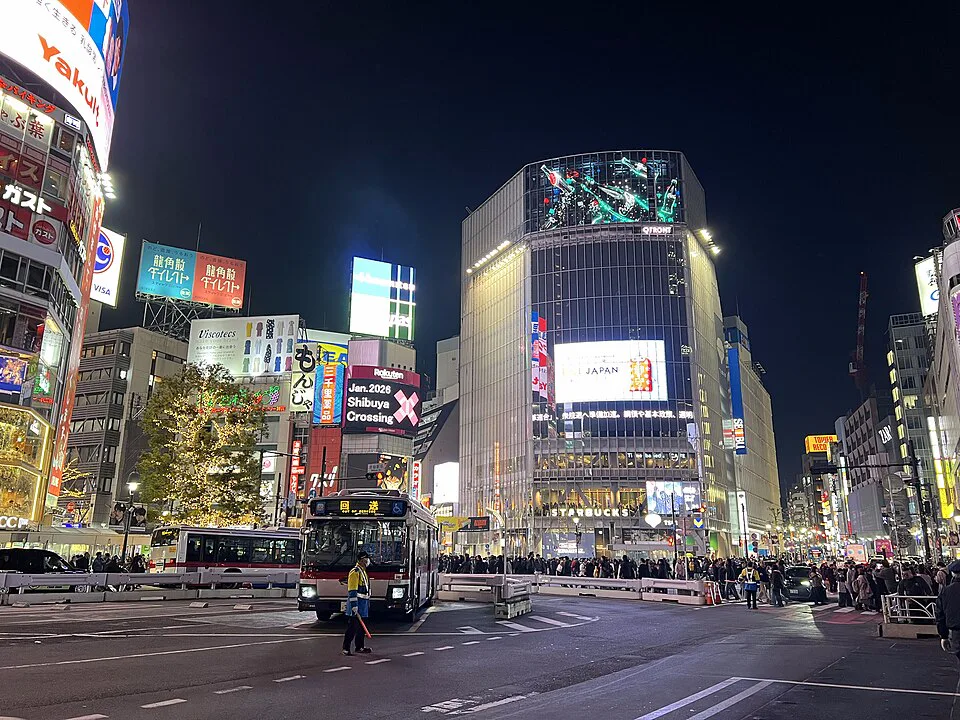
For a first Tokyo trip, stop asking how many attractions fit and ask how many day-sized experiences deserve your limited days. With three full Tokyo days, I would protect one East Tokyo day, one West Tokyo day and one flexible day for your strongest personal priority. With four days, add either a theme day or one day trip. With five days, you can add both without turning the city into a series of station transfers.
The main waste is duplication. Tokyo Skytree and SHIBUYA SKY can both be excellent, but they often perform the same “paid skyline” job. Disney is not an East Tokyo add-on; it is a full-day product. Odaiba is not automatically worth half a day because many pins appear on the map. The useful question is what each attraction owns in the itinerary.
ValueNavi decision table: what deserves one of your Tokyo days?
↔ Scroll table left or right
Your available time | Protect first | Add only if it is a priority | Cut first |
3 full days | East Tokyo + West Tokyo + one flexible theme day | Disney, Fuji/Kamakura, or Bay area — choose one | Second observation deck and extra day trips |
4 full days | East + West + Central/Bay + one theme day | One day trip or Disney | Trying to do both Disney and a long day trip without sacrificing a city zone |
5 full days | East + West + Central/Bay + one theme day | One day trip and one slower museum/shopping block | A second long day trip unless Tokyo itself is no longer the priority |
Family trip | One low-friction zone per day | Bay area when indoor family attractions justify it | Cross-city evening “catch-up” plans |
Photography / skyline priority | One best-fit observation deck at the right light | A second deck only if it creates a genuinely different shot | Collecting Skytree + SHIBUYA SKY + Tokyo Tower by default |
ValueNavi Day Ownership Score: which Tokyo experiences deserve a half or full day?
This is a ValueNavi editorial model, not an official attraction ranking. We score uniqueness (25%), route density around the anchor (20%), minimum useful dwell (15%), substitution difficulty (15%), weather resilience (10%), booking resilience (10%) and recovery flexibility (5%). Higher means the experience more convincingly deserves to own a large block of a short first trip.
↔ Scroll table left or right
Experience / zone | Day Ownership Score | Why it earns time | When to downgrade it |
West Tokyo: Meiji Jingu + Harajuku + Shibuya | 9.2/10 | High contrast, dense route, easy evening extension | Shopping and nightlife do not interest you |
East Tokyo: Asakusa + Ueno | 8.9/10 | Strong traditional/cultural contrast with flexible museum depth | You dislike temples and museums |
Tokyo Disney Resort | 8.6/10 if Disney matters; 3.0/10 if it does not | The ticket, travel and park scale make it a true theme day | You are adding it only because it appears on first-timer lists |
Toyosu + Odaiba | 7.2/10 with teamLab/family anchor; 5.3/10 without one | Strong indoor density once a real Bay-area anchor exists | You are crossing Tokyo only for a bridge view or mall |
Central Tokyo: Marunouchi + Ginza | 7.6/10 | Excellent flexible half-day and strong arrival/departure fit | Your short trip has stronger east/west priorities |
One long Tokyo day trip | 6.0–8.5/10 depending destination and trip length | Can add a landscape or cultural experience Tokyo cannot reproduce | You only have three full Tokyo days |
The Disney score is intentionally conditional. A scoring system that calls Disney “9/10 for everyone” would be useless. Day ownership measures how rational it is to surrender scarce Tokyo time for your trip objective.
East Tokyo: Asakusa and Ueno can share a day — until a museum becomes the anchor
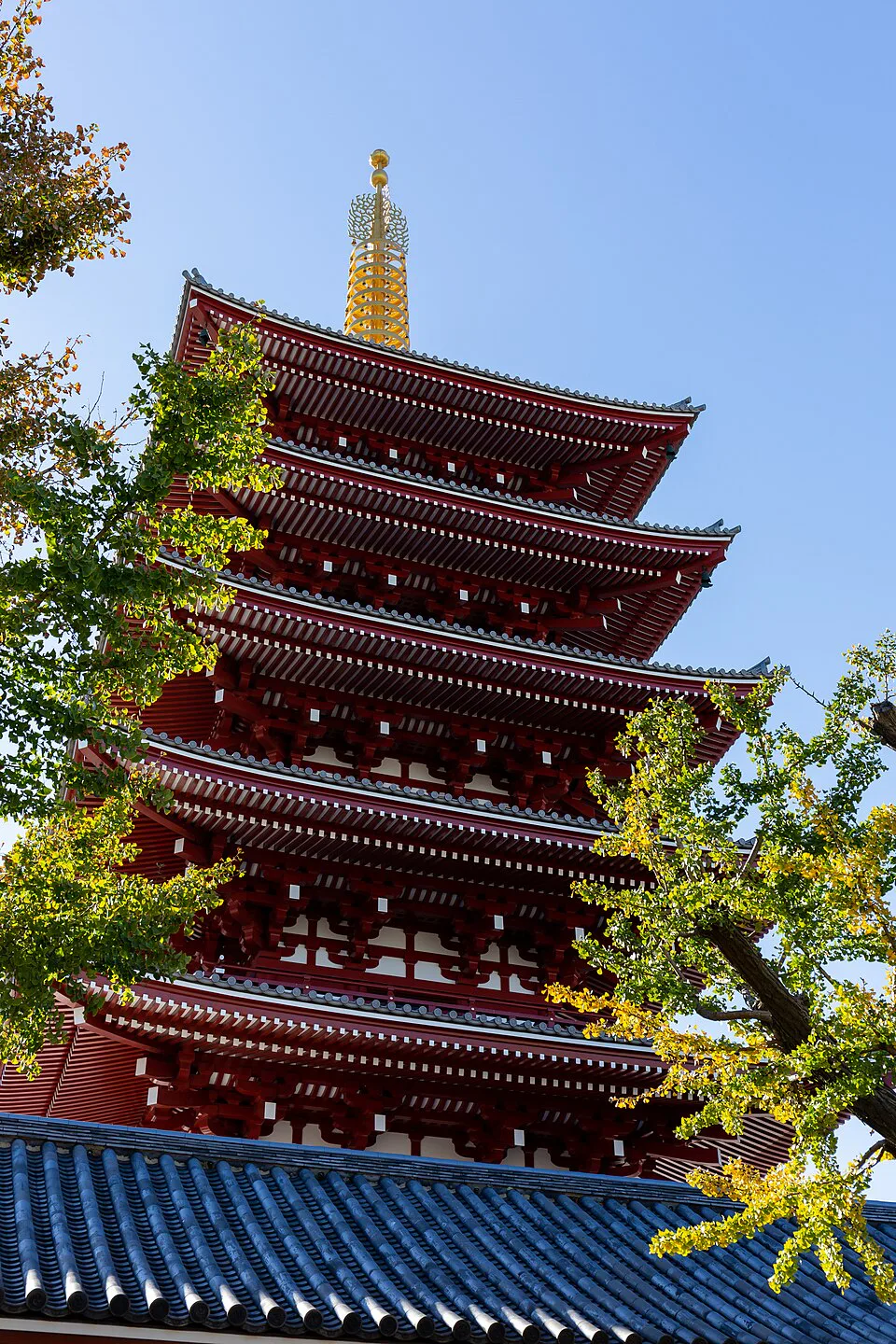
Asakusa is the easiest traditional-Tokyo anchor: Kaminarimon, Nakamise, Senso-ji and the Sumida River can expand or shrink without a timed ticket. Ueno can either be a light park/market stop or a deep museum half-day. Those are different itineraries.
Tokyo National Museum currently charges ¥1,000 (about US$6.30) for adult Collection Exhibitions. If Japanese art and history are a genuine priority, give the museum two to three hours and stop treating Ueno as a quick waypoint. If not, Ueno Park + Ameyoko can remain flexible and pair much more easily with Asakusa.
West Tokyo: the train is easy; browsing time is the real bottleneck
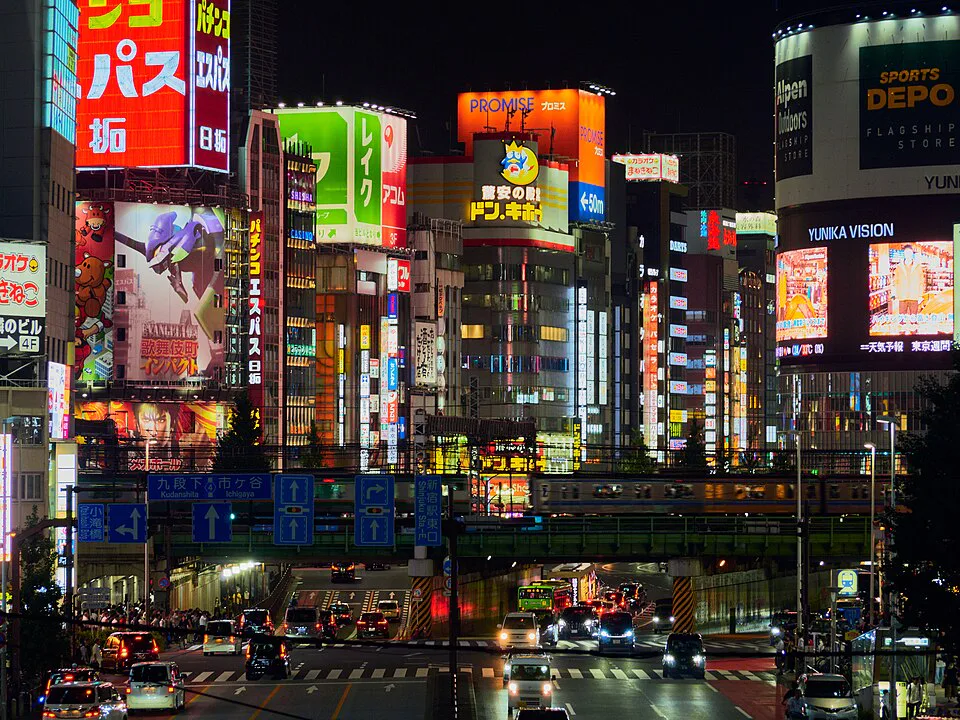
Meiji Jingu, Harajuku, Omotesando, Shibuya and Shinjuku sit on a coherent western axis. The trap is assuming coherence means unlimited capacity. Shopping, cafés and evening streets can each absorb hours.
If SHIBUYA SKY is your skyline choice, make that timed slot the hard anchor and let the rest of the afternoon bend around it. Current web admission is ¥2,700 (about US$17) for entry by 14:59 and ¥3,400 (about US$21) from 15:00. The later tier is not a guaranteed sunset product, so choose the actual entry time from the sunset on your date.
Use SHIBUYA SKY Tickets 2026 for the ValueNavi sunset and weather-risk model.
ValueNavi Duplicate-Job Matrix: delete attractions that perform the same role
↔ Scroll table left or right
Job in the trip | Common candidates | Default rule |
Paid skyline | SHIBUYA SKY / Skytree / Tokyo Tower / Tokyo City View | Pick one unless a second deck produces a materially different landmark or weather function |
Immersive digital art | teamLab Planets / teamLab Borderless | Pick one on a short first trip unless digital art is a core interest |
Big indoor museum block | Tokyo National Museum / science museums / major temporary exhibitions | One large museum per day; let it own the half-day |
Theme day | Disney / Warner Bros. Studio Tour + surrounding plans | Do not attach a full central-Tokyo checklist afterward |
Old-town atmosphere | Asakusa / Yanaka / Kawagoe day trip | Do not add all three simply because each is labelled “traditional” |
Deletion rule: when two paid attractions solve the same trip job, keep the one with better route fit and delete the other before adding another day.
Central Tokyo: use it for flexibility, not for filling every gap
Tokyo Station, Marunouchi and Ginza are especially valuable on arrival, departure or Shinkansen days because they are easy to shorten. The Imperial Palace area adds a free historic/green-space block when its opening calendar works. What Central Tokyo should not become is a bridge that justifies zigzagging between Asakusa and Shibuya on the same day.
For flight days, use Tokyo First & Last Day Itinerary and calculate the real luggage-free window rather than counting scheduled flight hours as sightseeing time.
Tokyo Bay: go when the Bay area has a real anchor
Toyosu and Odaiba deserve a half-day when teamLab, a family attraction, an exhibition or the waterfront evening is actually a priority. teamLab Planets currently lists adult Entrance Pass tickets from ¥3,600 (about US$23). After a timed teamLab visit, Odaiba works well because malls, food and waterfront time can absorb delay without another hard booking.
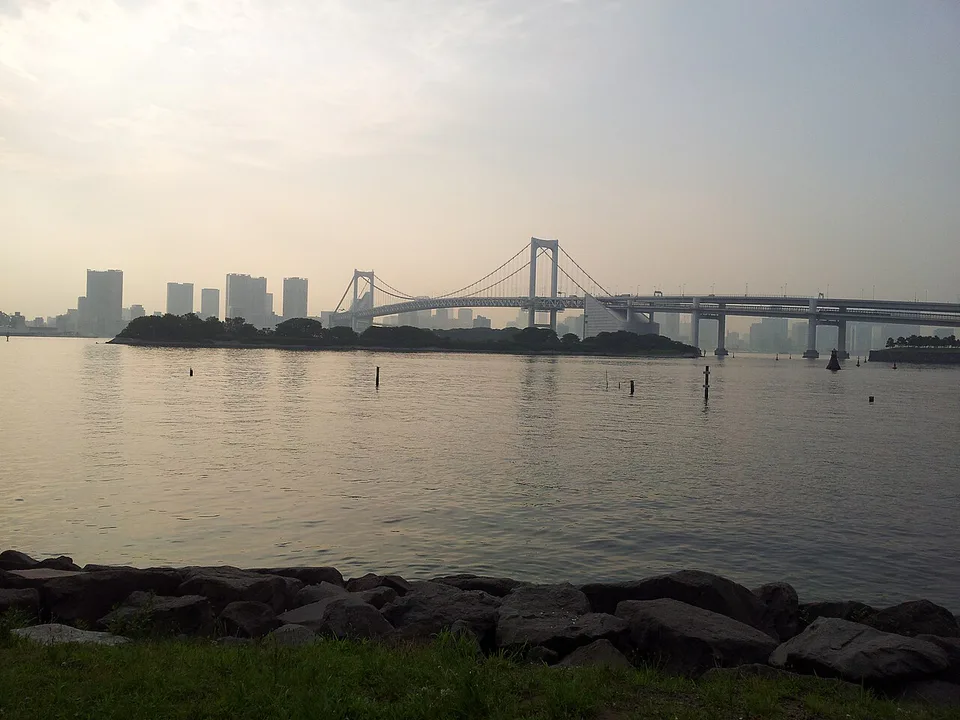
If your only reason is “there are lots of things in Odaiba,” the area has not yet earned the time. Choose the anchor first.
Disney: price the whole day, not just the ticket
Tokyo Disney Resort uses date-specific pricing. Current 2026 calendar examples show adult 1-Day Passport prices around ¥8,900–¥12,400 (about US$56–78) depending on date. That is only the entry cost; the real itinerary cost is a full day plus transport and the energy that remains afterward.
If Disney is a priority, give it the day. If it is not, skip it entirely. The worst compromise is paying for a park and then deliberately arriving late because you wanted to squeeze in central Tokyo first.
1 or 2 Days at Tokyo Disney? is the next decision if both parks interest you.
ValueNavi Tokyo-Day Budget: attractions are competing for hours, not only yen
Use a simple planning unit:
Day Share = attraction block + required local travel + queue / entry margin + recovery time
A two-hour museum that sits inside the day’s zone may use less of the day than a 90-minute attraction that requires a cross-city detour and a timed entry. This is why headline duration is a poor way to compare Tokyo attractions.
ValueNavi threshold: once an attraction consumes more than about one-third of a usable sightseeing day after transport and booking margin, treat it as an anchor. Do not hide it inside the words “and then.”
What I would cut first from an overloaded Tokyo plan
Second observation deck. Keep the one that fits the correct side of the city.
Long Bay-area detour without a real anchor. Odaiba is optional, not compulsory.
A third day trip. Three “easy trips from Tokyo” can quietly remove most of Tokyo.
A second major museum on the same day. Museum fatigue is real even when the buildings are adjacent.
Post-Disney city checklist. Leave the evening flexible.
Final verdict
For a first Tokyo trip, allocate days before attractions: East Tokyo, West Tokyo, then use the remaining days for Central/Bay, Disney or one day trip according to your priorities. Choose one attraction per day that is allowed to control the clock. Delete duplicates before extending the trip. A missed attraction is usually cheaper than turning every Tokyo day into a cross-city transfer chain.
If you already know which attractions survive the cut, use Tokyo Attractions Map next. That article answers a different question: which surviving places can actually share the same day without paying a hidden routing tax.
References
Verified August 26, 2026. USD conversions use approximately ¥1 = US$0.00629 and are planning aids only; use the current yen price on the official booking page.