
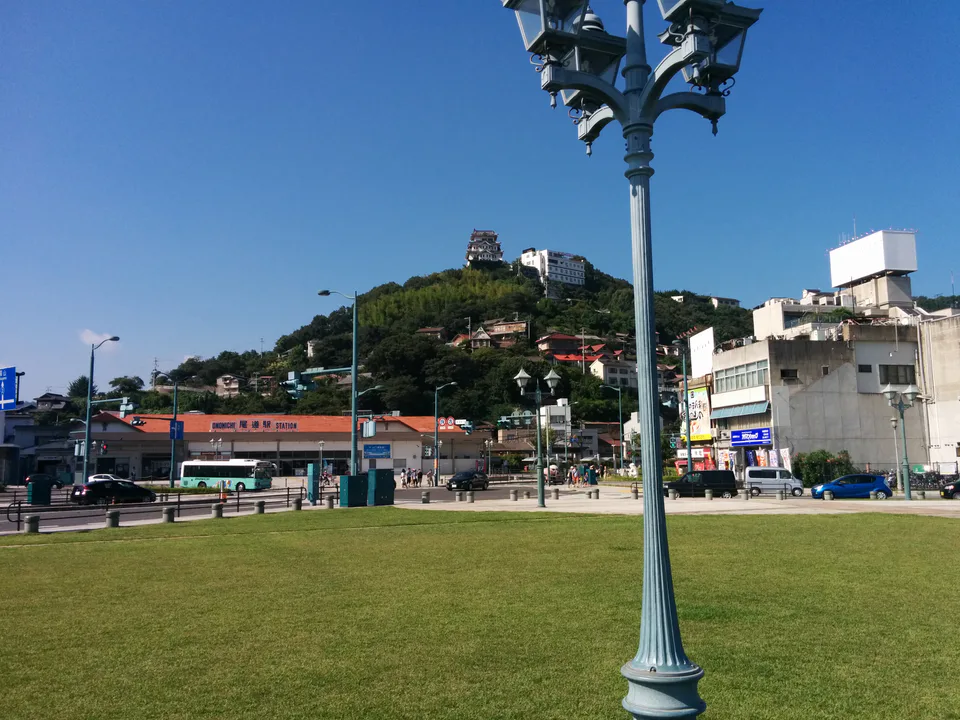
Stay in Onomichi when the Shimanami Kaido is the next morning’s main event. Stay in Fukuyama when the fragile part of the itinerary is the previous night—usually a late Shinkansen arrival, a missed local connection or a group that is not yet committed to riding. The 2025 move of Shimanami Japan’s main rental terminal into the Onomichi Station area makes the morning advantage of Onomichi stronger than older guides suggest: bike pickup, English-language help, lockers and luggage forwarding now sit directly beside the JR station.
The decision can be reduced to one question: which uncertainty do you want to remove? Onomichi removes the positioning train, station transfer and luggage setup from the cycling morning. Fukuyama removes the need to force one more local-rail leg after a tiring long-distance arrival. If you can reach Onomichi comfortably the night before, I would normally keep going and sleep there.
Checked August 27, 2026. Visit Shimanami still gives Fukuyama → Onomichi at about 20 minutes by local train and Shin-Onomichi → Onomichi at about 10 minutes by taxi or 15 minutes by bus. Shimanami Japan currently lists adult cross/city bikes at ¥3,000 per day, electric-assist bikes at ¥4,000 per day and E-bikes at ¥8,000 per day. Recheck the live rental page for the ride date because pricing and terminal operations can change.
↔ Scroll table left or right
Your real situation | Start with | Why | What can reverse it |
Full 70 km ride or early rental pickup | Onomichi | Main rental terminal opens at 08:00 and is now at Onomichi Station; you can turn checkout directly into bike pickup | Your Shinkansen arrives too late for a comfortable onward local train the previous night |
Late long-distance Shinkansen arrival | Fukuyama | Major Shinkansen stop; you can end the fragile travel day instead of betting on another connection | You still have an easy local connection and a confirmed Onomichi hotel with late check-in |
Large luggage + one-way ride to Imabari | Onomichi | The station cycle terminal now integrates luggage forwarding and lockers; public rental bikes can be returned at other terminals when the bike type allows it | Your luggage delivery timing does not fit the destination or you need the main suitcase that same day |
Mixed group, one person may not cycle | Depends on the non-rider | Fukuyama is a stronger rail hub; Onomichi gives a much better independent harbour-town day | The non-rider’s onward train/flight or sightseeing plan changes the value |
Shin-Onomichi Shinkansen looks convenient | Do not confuse it with the waterfront start | Official Shimanami guidance puts Shin-Onomichi about 10 minutes by taxi or 15 minutes by bus from Onomichi Station | A taxi is deliberately part of your plan and saves a late-night local connection |
ValueNavi Pre-Ride Base Score: the winner changes with the fragile edge of the trip
This is an editorial planning model rather than an official hotel ranking. The score weights morning route fit 25%, arrival resilience 20%, luggage friction 15%, weather flexibility 15%, non-rider flexibility 10%, cost efficiency 10% and operational simplicity 5%. A high score means the base fits that specific scenario with fewer failure points; it does not mean the city is “better” in general.
Scenario | Onomichi | Fukuyama | Why the score moves |
|---|---|---|---|
Normal evening arrival + full one-day crossing next morning | Onomichi removes the positioning train from the most time-sensitive morning | ||
Very late Shinkansen arrival + two large suitcases | Fukuyama protects sleep and removes the risk of forcing one more connection at the end of a long travel day | ||
One-way ride + luggage forwarding | Station-side bike and luggage services let the whole next day point in one direction | ||
Uncertain weather + non-rider needs long-distance rail | Fukuyama has the stronger Plan B when the group may split and the ride may be cancelled | ||
Two-day ride + normal arrival | The early-start pressure is lower than a one-day crossing, but Onomichi still removes an unnecessary morning transfer |
The red-team result is important: Onomichi is not the universal winner. Its advantage comes from moving friction out of cycling morning. When the previous evening is already the riskier part of the itinerary, Fukuyama can rationally score higher.
The 2025 terminal move changed the Onomichi morning calculation
Older Shimanami planning advice often assumes that arriving at Onomichi Station is only the first step before walking to a separate waterfront rental facility. That is outdated for the main public rental operation. Shimanami Japan’s new Onomichi Station Rental Cycle Terminal opened in October 2025 in the station-front area.
The current terminal listing gives 08:00–19:00 opening from March through November and 08:00–18:00 from December through February. Visit Shimanami describes the terminal as directly beside JR Onomichi Station, with around 350 rental bicycles, English-speaking staff, lockers and luggage-forwarding functions.
This makes an Onomichi hotel particularly valuable before a one-day ride. The morning chain can be:
hotel checkout → Onomichi Station terminal → luggage handoff → bike pickup → short waterfront roll → Mukaishima ferry.
A Fukuyama hotel adds a local rail leg before that chain begins. Current Visit Shimanami access guidance puts Fukuyama to Onomichi at about 20 minutes by local train. Twenty minutes is not a major journey, but on a full 70 km cycling day it is paid during the most valuable daylight and energy window.
Fukuyama is not “better connected”; it is a late-arrival buffer
Fukuyama’s advantage is specific. It is a major Sanyo Shinkansen station, so many long-distance itineraries naturally pass through it. If your train reaches Fukuyama late in the evening, ending the travel day there can be more resilient than insisting on another local connection simply to wake up in Onomichi.
That is especially true when the arrival includes:
two large suitcases;
children or older travellers;
a train arriving close to the last useful local connection;
uncertainty about the bike ride because of weather;
or a non-rider who may continue independently the next day.
But do not turn the buffer into a default. If you arrive at Fukuyama at a comfortable hour and the local ride to Onomichi is still easy, another 20 minutes of rail tonight can save a much more valuable 20-plus-minute positioning exercise tomorrow morning.
ValueNavi rule: use Fukuyama to protect a genuinely late or fragile arrival, not because the Shinkansen station sounds more convenient on paper.
Shin-Onomichi Station is not the same thing as staying at the cycling start
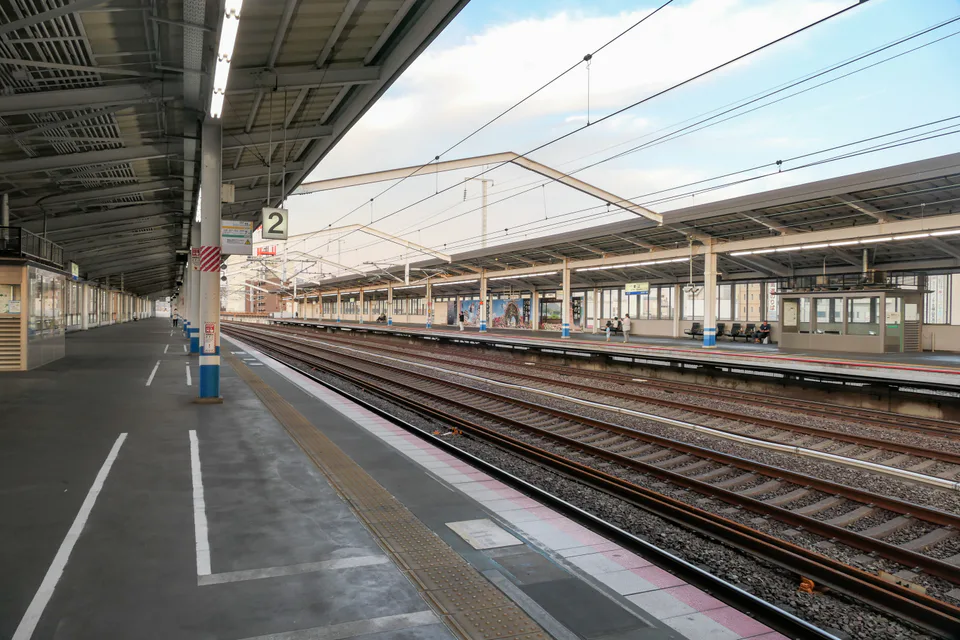
There is a tempting third option: take a Shinkansen to Shin-Onomichi and assume you are already at the Shimanami start. Current Visit Shimanami access guidance says otherwise. Shin-Onomichi Station is roughly 10 minutes by taxi or about 15 minutes by bus from JR Onomichi Station.
That can still be a useful late-arrival route, especially if a taxi removes a difficult connection. But the hotel decision should distinguish Shin-Onomichi access from Onomichi waterfront access. The new public rental terminal, luggage services and the practical ferry start are concentrated around Onomichi Station.
If your morning begins with the main rental terminal, sleeping beside Shin-Onomichi Station does not create the same checkout-to-bike sequence as a central Onomichi hotel.
Large luggage now strengthens the case for Onomichi more than it used to
The new Onomichi Station cycle terminal is also a luggage hub. Visit Shimanami currently lists luggage-forwarding and pickup functions at the terminal, while its wider baggage guidance describes same-day delivery between participating accommodation and multiple locker options around Onomichi Station.
Separate station lockers remain useful for travellers returning to Onomichi. Visit Shimanami currently lists more than 100 lockers at Onomichi Station, including extra-large units. Current listed daily locker prices range from ¥400 (about US$2.50) for small to ¥1,000 (about US$6.30) for extra-large.
This changes the overnight calculation. A traveller riding one way to Imabari no longer has to treat the suitcase as a reason to stay in Fukuyama. The more useful sequence can be:
sleep Onomichi → hand off the large bag → ride light → receive or collect the bag later.
The boundary is delivery timing. Same-day services have cutoffs and participating-destination rules. If the luggage cannot reach the hotel you need, do not design the ride around a service that does not fit. Use the Japan luggage-forwarding guide for the wider transfer logic.
A one-way ride makes Onomichi the stronger pre-ride base
Shimanami Japan’s public rental system currently allows cross/city bikes and electric-assist bikes to be returned at other eligible terminals under the published conditions. The official rental page lists 10 rental/return terminals along the route. E-bikes also allow returns at all listed terminals but must be returned the same day.
That means a one-way Onomichi → Imabari ride does not need a morning repositioning trip from Fukuyama and does not need to return to Onomichi simply for the bike. Sleeping in Onomichi lines up the whole day in one direction.
For a full one-day crossing, Visit Shimanami describes the Blue Line as roughly 70 km and advises starting early because stops and breaks consume time quickly. This is exactly the traveller profile for whom the Fukuyama morning rail leg has the highest opportunity cost.
If you are splitting the ride over two or three days, the pressure is lower. In that case Fukuyama can be acceptable after a late arrival because the first cycling day is deliberately shorter.
ValueNavi bike-day cost floor: the rental choice moves the budget more than the first ferry
Current Shimanami Japan public-rental pricing gives a useful minimum cost before accommodation, food and optional luggage services. Add the usual Onomichi → Mukaishima ferry at ¥100 per person plus ¥10 per bicycle and the first morning looks like this:
↔ Scroll table left or right
Bike type | Current rental | Rental + first ferry | What that means |
Cross / city bike, adult | ¥3,000 (about US$18.80) | ¥3,110 (about US$19.50) | Lowest public-rental cost floor for a typical adult ride |
Electric-assist bike | ¥4,000 (about US$25.10) | ¥4,110 (about US$25.80) | Pay roughly ¥1,000 more than a cross bike for assistance and route flexibility |
E-bike | ¥8,000 (about US$50.20) | ¥8,110 (about US$50.90) | Much higher equipment cost; current public-rental rules require same-day return |
FX assumption: ¥1 ≈ US$0.00627 (¥1,000 ≈ US$6.27), checked August 27, 2026. USD figures are rounded planning equivalents, not guaranteed card or cash exchange rates.
This table is deliberately modest: it does not pretend the ferry fare decides where you should sleep. A ¥110 cyclist-and-bike crossing is operationally important but financially tiny. The accommodation decision should be driven by the morning time you remove, the room price difference and whether Fukuyama is buying you a safer arrival—not by saving coins on the first ten minutes of the route.
The Mukaishima ferry is a tiny cost but a real morning step
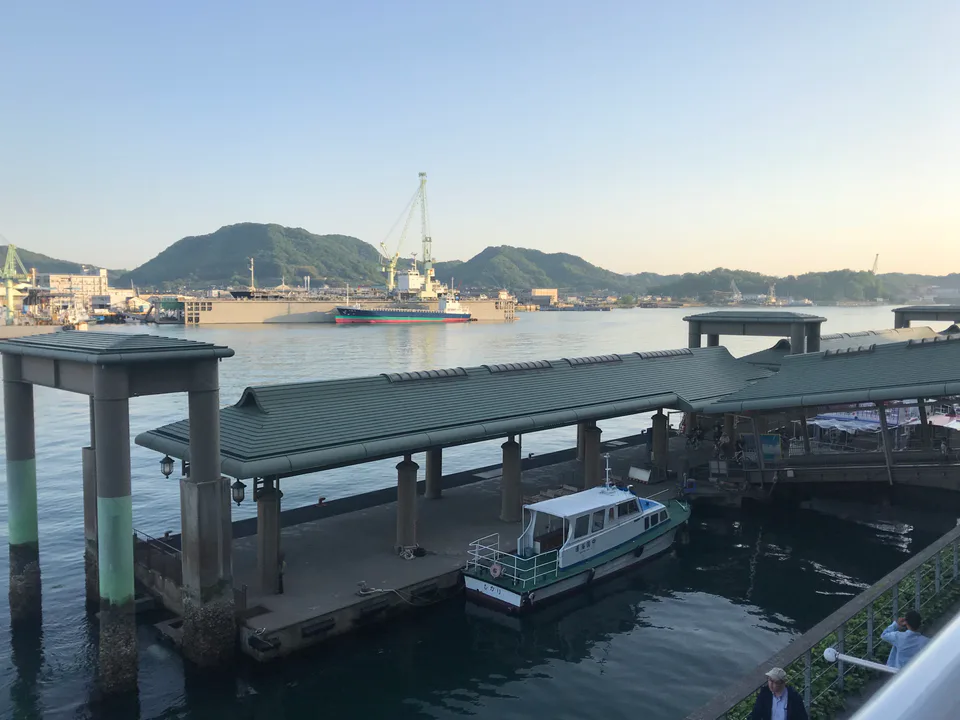
From central Onomichi, the usual first crossing to Mukaishima is short. Current Visit Shimanami guidance gives the visitor-friendly ferry at ¥100 per person (about US$0.63) plus ¥10 per bicycle (about US$0.06), cash, with the crossing taking about 10 minutes.
The fare itself is irrelevant to the hotel choice. The operational point is that Onomichi lets the cycling morning begin with the enjoyable part of the route rather than with a rail transfer. You pick up the bike, roll to the waterfront and cross to Mukaishima.
For a first-time rider, that cleaner sequence reduces the number of things that must go right before the actual cycling starts.
Weather changes the value of the two bases in opposite directions
Bad weather makes Fukuyama attractive when the ride is not yet committed: you can remain at a major rail hub and change the next day more easily. But once you have decided to attempt the ride and need to make a go/no-go call in the morning, Onomichi has a different advantage—you can wait longer before committing because you do not first have to travel from Fukuyama.
This creates a useful asymmetry:
Forecast already poor the night before: Fukuyama’s rail flexibility gets stronger.
Forecast uncertain and you still want to try: Onomichi lets you decide later and start immediately if the weather window improves.
Do not force a prepaid full crossing in unsafe wind or rain simply because the hotel was chosen around cycling. Use the Japan rainy-day backup guide and the live route/weather information before starting.
A non-rider is not automatically a reason to choose Fukuyama
Fukuyama is better when the non-rider needs the Shinkansen network: they are continuing to Osaka, Hiroshima or another long-distance destination while the cyclist goes south.
But if the non-rider wants a pleasant independent day rather than a transport hub, Onomichi can be much better. The waterfront, hillside temples, cafés and Senkoji area create a full local day without following the cycling party. Visit Shimanami currently lists the Senkoji Ropeway as operating 09:00–17:15, giving non-riders an easy way to reach the hilltop without walking every steep stair.
Ask what the non-rider does after breakfast. “Catch a Shinkansen” favours Fukuyama. “Spend a slow day waiting for the riders” favours Onomichi.
One night versus two nights
One night before a full ride: Onomichi is the default. The station terminal makes the cycling morning unusually efficient.
One late-arrival night: Fukuyama wins when continuing to Onomichi would make the arrival fragile. Move to Onomichi early the next morning and accept that the ride starts later.
Two nights with only a partial ride: keep both nights in Onomichi unless Fukuyama serves another real route need. One hotel gives you time for cycling plus Onomichi’s hillside/waterfront without repacking.
One-way ride to Imabari: sleep Onomichi, send the luggage forward where the service fits, and keep travelling west/south rather than returning to Fukuyama just because the Shinkansen brought you there the previous night.
Three traveller profiles
Tokyo/Kyoto arrival at a normal evening hour, full 70 km ride next day
Stay in Onomichi. The extra local train from Fukuyama is a small cost tonight compared with giving up the first part of the cycling morning. The 08:00 public rental opening and station-side luggage services make this the cleanest start.
Shinkansen reaches Fukuyama very late, family with two large suitcases
Stay in Fukuyama. Protect sleep, then take the local train in the morning. This is one of the few cases where the slower cycling start is rational because the alternative makes the previous night unnecessarily fragile.
One cyclist, one non-rider, uncertain weather
Choose by the non-rider’s Plan B. If they need long-distance rail, Fukuyama is stronger. If they are happy spending the day in Onomichi, sleep in Onomichi so the cyclist can make a later weather decision without a positioning train.
Final verdict
Choose Onomichi whenever you can reach it comfortably the night before. The station-based rental terminal, 08:00 opening, luggage services and direct path to the Mukaishima ferry make it the more efficient Shimanami start than older guides imply.
Choose Fukuyama when the previous evening is the hard part. A late Shinkansen, exhausted family or uncertain cycling plan can justify ending the travel day at the major rail hub and paying the roughly 20-minute local-train positioning cost the next morning.
The mistake is using Fukuyama for a normal arrival because it is a Shinkansen station, then spending the most valuable part of the cycling morning completing a transfer you could have finished the night before.
Where to Stay in Kamakura or Fujisawa: The Best Base for Two Nights, With Enoshima as the Wild Card
Where to Stay in Fukui: Keep the Dinosaur Museum and Eiheiji Near the Rails, or Sleep in Awara Onsen
Tokyo Disney Split Stay: Move the Night Before or After Your First Park Day?

References
Visit Shimanami — access to Onomichi from Fukuyama and Shin-Onomichi · Shimanami Japan — current rental terminal locations and hours · Visit Shimanami — Onomichi Station Cycle Terminal · Shimanami Japan — current public rental prices and return conditions · Visit Shimanami — bike rental and luggage information · Visit Shimanami — one-day Blue Line route and ferry fare. Checked August 27, 2026. Train times, bike availability, rental prices, ferry service and luggage cutoffs can change; recheck the actual ride date.