
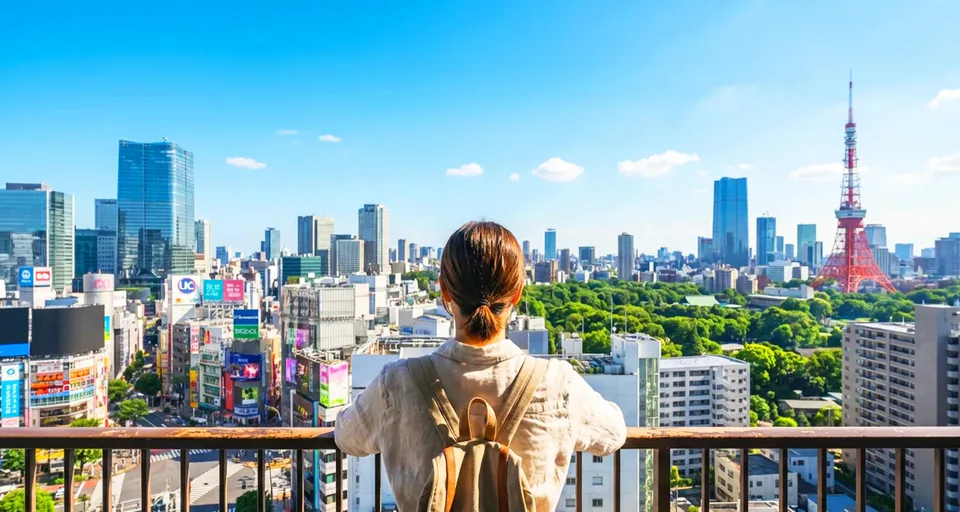
If this is a normal first Tokyo trip with no concert, no two-day Disney block and no unusually early departure, my default is one hotel, not a split stay. I would shortlist Ueno, Shinjuku, Tokyo Station and Shibuya only after looking at where the trip repeatedly pulls you. The best base is not the district with the most train lines. It is the one that removes the piece of friction you would otherwise pay for again and again.
That distinction matters because Tokyo makes almost every major district look “convenient” on a map. The real differences appear at 22:30 with shopping bags, at 07:00 with two suitcases, after a concert crowd empties into the station, or on the fourth night when a room that technically sleeps four no longer works for four people. My rule is simple: choose the hotel around the most expensive recurring mistake, not the most impressive single advantage.
Transport assumptions were rechecked on August 25, 2026 against JR East, Keisei, Tokyo Monorail and Keikyu information. Timetables and service patterns can change; the recommendations below are my editorial judgment built on those transport facts, not operator recommendations.
My Tokyo default: which base would I choose before comparing hotels?
↔ Scroll table left or right
Your trip shape | My starting choice | Why | When I would reverse it |
Narita arrival + east-Tokyo sightseeing | Ueno | I value a simpler airport-to-base transition and easy access to Asakusa, Akihabara and the east side more than having every west-Tokyo line at the door. | If three or more major days are centred on Shinjuku, Shibuya, Harajuku or a westbound day trip, I would move the shortlist west. |
West-Tokyo-heavy trip, nightlife, Hakone direction | Shinjuku | The repeated west-side journeys can outweigh the station complexity when you use that geography every day. | If you dislike giant stations, travel with older relatives, or most days are east of the Imperial Palace, I would not pay the Shinjuku friction just for theoretical connectivity. |
Several intercity rail days | Tokyo Station area | I would pay more for a calmer morning when Shinkansen departures genuinely repeat. | If there is only one long-distance train in the whole trip, I would usually keep a better daily sightseeing base and travel to Tokyo Station once. |
Shibuya/Harajuku nightlife and shopping dominate | Shibuya | A short final return is worth more when the same west-side evenings repeat. | If the trip is luggage-heavy, Narita-heavy or mostly traditional east-Tokyo sightseeing, I would not choose Shibuya just because it is fashionable. |
This is not a ranking. It is a set of starting positions. If none of those patterns clearly describes the trip, use Where to Stay in Tokyo for First-Time Visitors to compare the wider area options. If two of them compete, that conflict is the decision: airport convenience versus nightlife, intercity rail versus daily sightseeing, room practicality versus location.
I would not let the airport choose all five nights
Narita is the stronger reason to think about Ueno or Tokyo/Shinjuku because the airport rail choices pull in those directions: Keisei’s Skyliner serves Keisei-Ueno and Nippori, while JR East’s Narita Express serves Tokyo and continues on selected services toward Shibuya and Shinjuku. Haneda is different. Its rail access feeds into central Tokyo through multiple corridors, so I treat airport convenience as a tiebreaker more often than a primary hotel rule.
The mistake is turning a one-hour arrival problem into a five-night accommodation penalty. If you arrive at Narita once but spend four full days around Shinjuku, Shibuya and Harajuku, I would not choose Ueno purely to make the first evening easier. Equally, if you arrive at Narita with two large suitcases and the itinerary is mostly Asakusa, Akihabara, Ueno Park and Tokyo Station, I would not drag the whole trip west just because Shinjuku appears on more “best area” lists.
Late arrival is a separate problem. The first night does not have to be the main base. If the flight timing creates genuine last-train or exhaustion risk, use the Haneda late-arrival decision or Narita late-arrival decision first. I would rather accept one deliberate hotel move after breakfast than force every later day around a bad first-night compromise.
One fixed event can matter more than the neighbourhood ranking — but only if it creates repeated friction
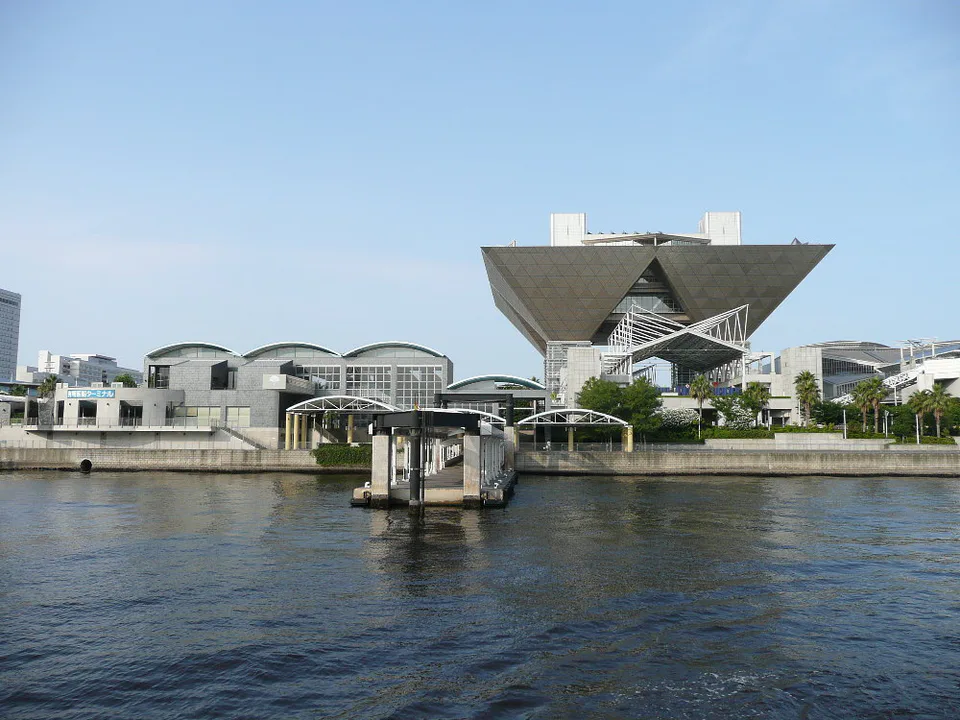
A fixed anchor is an activity that cannot simply be moved to another afternoon: a concert, two consecutive Disney days, a 07:00 departure, a late international arrival. These events deserve more weight than generic area advice because they create hard timing constraints. But I still would not automatically move hotels for a single awkward night.
For one concert night, I usually keep the existing base
My threshold is not “the venue is far.” It is whether the post-show journey becomes the hardest hour of the trip. Rain, merchandise bags, a standing-room crowd and one unnecessary transfer can make a route much worse than the same route at 15:00. If the event is only one night and the trip otherwise has a strong base, I would usually stay put. If the concert is the reason for the trip, ends late, or there are events on consecutive nights, I would let the venue shape the hotel choice.
The Tokyo Dome hotel comparison is useful only after you decide the post-show hour is important enough to influence the whole stay.
For Disney, one day and two consecutive days are different hotel decisions
For one Disney day, I would normally keep the city hotel. A split stay adds check-out, luggage handling, a second check-in and a period when you do not have a room. That cost is real even when the train ride looks longer on paper.
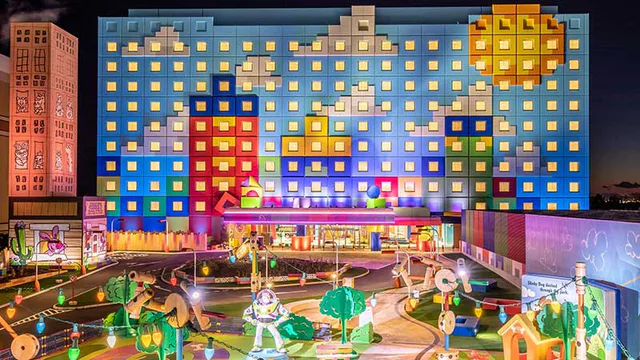
Two consecutive park days can reverse the answer because the benefit repeats: two early starts, two late finishes and less energy spent commuting before the park even begins. The case becomes stronger with younger children. My own rule is that a Tokyo hotel move should solve at least two recurring problems; “being closer to Disney” is not enough by itself. The Tokyo Disney split-stay guide tests that trade-off in more detail.
Do not choose “family-friendly”; choose the room failure you want to avoid
For a family, I would rank the room before the lobby. “Sleeps four” is a capacity statement, not a comfort statement. My first checks are whether the extra guests get real beds, whether luggage and a stroller can stay in the room without blocking movement, and whether the bathroom arrangement creates a queue every morning and night.
This is one place where I deliberately give room practicality more weight than a few minutes of transport. A couple can tolerate a compact room if they return only to sleep. A family of four can lose more time inside the room than they saved outside it. For four to seven nights, laundry and a microwave also become more meaningful because repeated use can reduce packing volume and food logistics. They are still not automatically worth a worse location; frequency decides the value.
If Disney is not the main purpose, compare those family constraints against the geography in the first-time Tokyo area guide. If Disney is the anchor, treat it as a Disney accommodation problem instead of mixing two different decisions.
With older relatives, I would pay for the final 500 metres before paying for a view
A hotel that is “three minutes from the station” can still be tiring if those three minutes begin after a long walk through the station, use the wrong side of the tracks, or involve stairs and repeated level changes. With older parents or anyone who tires easily, I would value the final return route more than a higher-floor view, a stylish lobby or one exceptional breakfast.
This is why I do not treat Shinjuku as the automatic first-timer answer. Its network is powerful, but a large station is useful only if the traveller can use it without turning every return into navigation work. If the trip is Narita-heavy and east-Tokyo-heavy, I would often choose Ueno over Shinjuku for an older-traveller trip even if Shinjuku offers more theoretical connections. If west Tokyo dominates, the answer can reverse.
The useful comparison here is Ueno vs Shinjuku, because the decision is really about airport direction, sightseeing geography and evening behaviour.
For couples, I would not upgrade every night just because it is a special trip
A skyline, onsen or lounge is only valuable if the itinerary leaves time to use it. If four nights are packed until late, upgrading all four can mean paying a premium for facilities you experience for 20 minutes before sleeping. I would rather identify the one evening that is deliberately left open and spend the premium there.
That changes the hotel search. Instead of asking “What is the best honeymoon hotel in Tokyo?”, I would ask: what should one special night buy? A view? A bath? A terrace? A quieter room? A late breakfast? Once that answer is clear, the premium becomes measurable against an experience you actually plan to use.
Solo travellers can trade room size for location — but only if the room is genuinely low-use
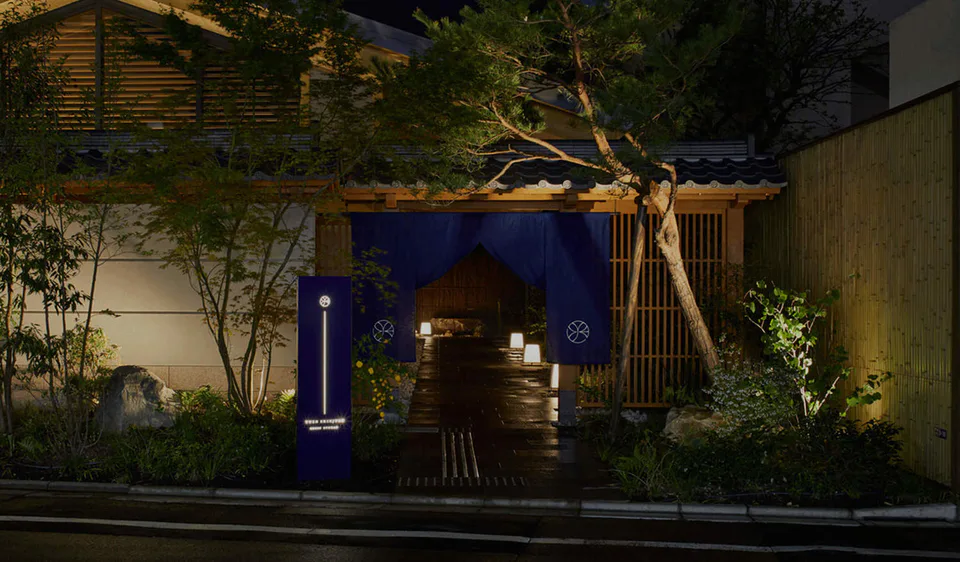
I am more willing to accept a small room for a solo Tokyo trip than for a couple or family, but I still want a reason for the sacrifice. If the room is only for sleeping and showering, a compact room can be an excellent trade for a shorter late-night return. If you work from the room, sort photos every night, carry large luggage or shop heavily, the same room can become the most annoying part of the stay.
The decision is not “Is 18 m² enough?” It is “What did I buy with the space I gave up?” A central compact room such as the one discussed in the Hotel Niwa Tokyo room-size guide only makes sense if the location or hotel setup removes a problem that matters more to you.
The hidden cost of a cheaper Tokyo hotel is usually repeated, not dramatic
Tokyo hotel decisions are easy to distort because the room rate is visible and the friction around it is not. A hotel that saves a modest amount each night can still be a poor buy if it adds a transfer, a long station walk or a difficult final return every day.
My way of testing the trade-off is to multiply the inconvenience by frequency. A hypothetical extra 10 minutes each way over five sightseeing days is roughly 100 extra minutes of travel. That does not automatically mean the more central hotel is worth paying for, but it turns “a little farther” into something you can compare with the total price difference. The same logic works in reverse: paying a large nightly premium to save one transfer on only one day is usually weak value.
For a budget-first trip, I therefore compare the full stay under the same conditions: same occupancy, equivalent room type, similar cancellation flexibility and the same meal assumptions. Only then do I ask what the cheaper option makes me give up. A compact room can be rational. A cheaper room with five days of avoidable commuting can be false economy.
A split stay inside Tokyo needs to solve two problems, not one
I am sceptical of moving from Ueno to Shinjuku just to “experience both sides of Tokyo.” A hotel move creates check-out, luggage storage or forwarding, another check-in and a chunk of the day when you do not have a room. That is a real transaction cost even when both hotels are good.
I would split only when the move improves at least two high-impact parts of the second half of the trip. For example, several west-Tokyo days plus an early departure toward Hakone can justify moving west. One night in a different neighbourhood because the area looks interesting usually does not.
This rule also stops a common planning error: using hotel moves to compensate for an unfocused itinerary. If the days themselves zigzag east-west-east-west, fixing the route is often better than adding another hotel.
When two hotels look equal, compare the worst day — not the best photo
At the final two, I stop collecting amenities and run a stress test. I imagine the hardest realistic version of the trip: heavy rain, one exhausted child, two suitcases, a late event finish, or an early train. Which hotel still works better then?
↔ Scroll table left or right
Compare | What I ignore first | What I actually test |
Location | “3 minutes from station” | Which exit, how much station walking, and which direction I return from most nights. |
Room | Guest capacity alone | Whether luggage can stay open, whether extra guests get real beds, and whether the bathroom flow works. |
Facilities | A long amenity list | How many times I will use the washer, bath, lounge or breakfast during the actual itinerary. |
Price | Lowest displayed nightly rate | Total stay cost under equivalent booking conditions and the repeated friction bought by the cheaper option. |
This stress test is deliberately subjective. That is the point. Public sources can tell you the route, room type and facilities. The editorial job is deciding which disadvantage matters more for this trip.
My final rule for where to stay in Tokyo
For a first Tokyo trip, I would keep one base unless a hotel move removes at least two recurring problems. With no special anchor, I would choose the area by repeated direction: Ueno for a Narita/east-heavy trip, Shinjuku for a west-heavy trip, Tokyo Station when intercity rail genuinely repeats, and Shibuya when west-side evenings dominate enough to justify the luggage and airport trade-offs.
I would change that answer for families who need a more practical room, older travellers who need a simpler final walk, two consecutive Disney days, a concert-centred trip, or a late arrival that makes the first night a separate transport problem. Those are not exceptions to the method; they are the method. The hotel should solve the hardest recurring part of the trip.
The best Tokyo hotel is therefore not the property with the longest amenity list or the neighbourhood with the most train lines. It is the option whose disadvantages you are least likely to pay for repeatedly.