
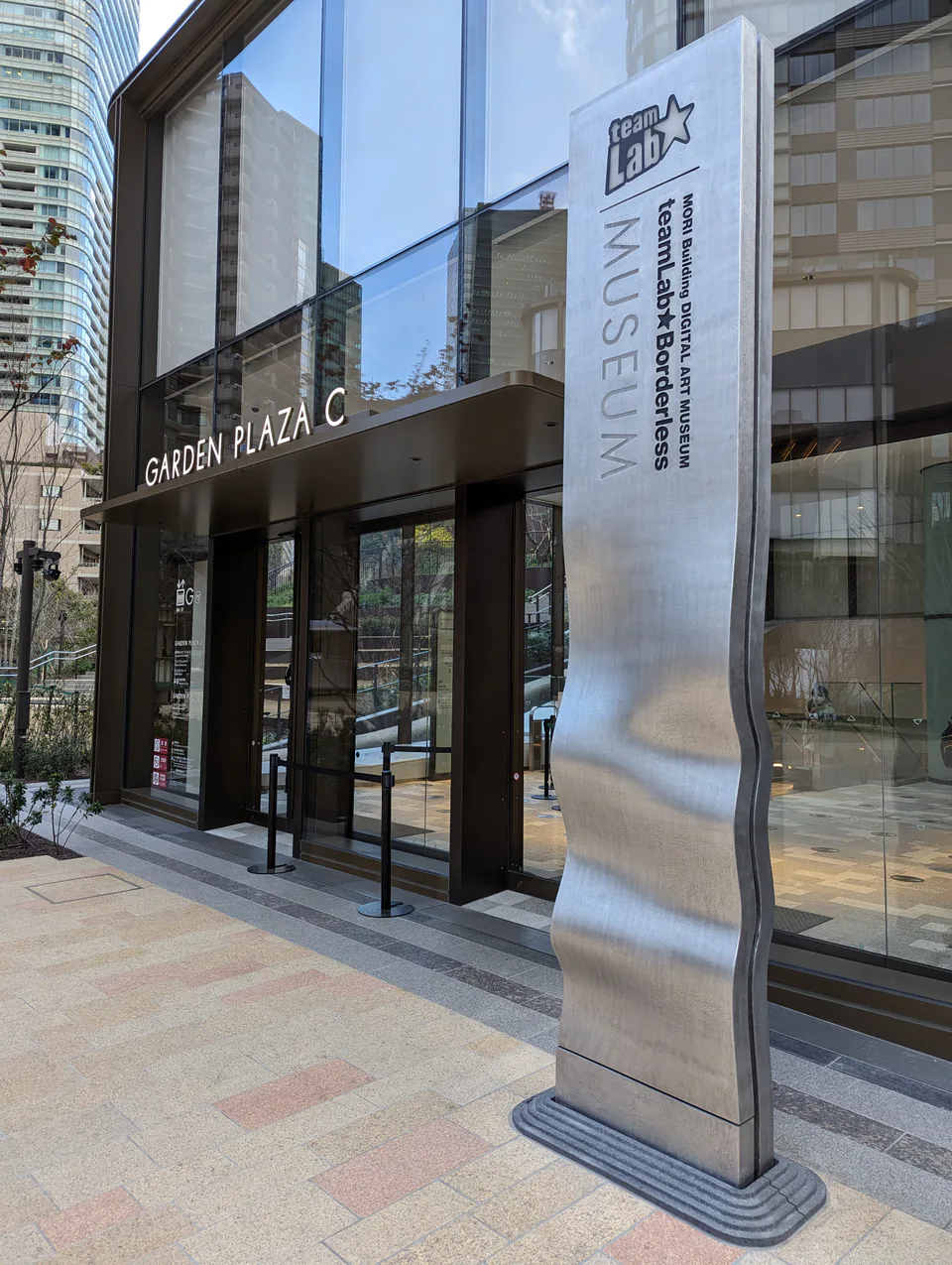
teamLab Borderless is worth the ticket when you want immersive digital art but do not need a fixed route or a promise that you “completed” the museum. The official adult Entrance Pass currently starts at JPY 3,600 (about US$23). For most first-time visitors, the stronger argument is not the ticket price but the Azabudai location: Borderless can sit inside a Roppongi / Tokyo Tower / Toranomon day without creating a separate Toyosu-style detour.
I would protect roughly 2–3 hours as the inside planning block, then add admission and onward-transport margin. That is ValueNavi planning rather than an official visit-time guarantee. The museum is deliberately mapless and has no conventional “finish every room” logic, so the wrong approach is booking another hard reservation exactly when you hope to walk out.
Checked August 26, 2026. The official adult Entrance Pass starts at JPY 3,600; the date-specific Flexible Pass is JPY 12,000 (about US$75). Approximate USD conversions use the August 25 ECB reference rates, implying about JPY 159.2 = US$1.
ValueNavi Decision Table: who should actually book Borderless?
↔ Scroll table left or right
Your trip | ValueNavi call | Why | What reverses it |
You enjoy wandering without a checklist | Strong go | The no-map format is the product rather than a navigation defect | You need a clear beginning-to-end route to feel satisfied |
You only have 60–90 minutes | Usually skip | Entry, exploration and exit leave too little margin | You consciously accept a selective visit and do not need to “see everything” |
Azabudai / Roppongi / Tokyo Tower is already in the day | Excellent route fit | The transport cost is already absorbed by the district plan | Another timed booking makes the day too rigid |
You want teamLab but dislike barefoot water | Borderless first | You keep immersive art without Planets’ water sequence | The body/water element is exactly why you want teamLab |
Young child who dislikes darkness / flashing light / unpredictable spaces | Check sensory fit | Free/cheap child admission does not solve a bad sensory match | The child actively enjoys exploratory dark environments |
Need fully predictable level flooring or complete accessibility | Check before buying | Some works have access limitations or unusual floor conditions | The affected works are not central to your group’s goals |
ValueNavi Score: route fit and uniqueness are the two strongest reasons to go

This is ValueNavi editorial analysis, not an official rating. Higher is more favourable to the traveller.
Dimension | Score | Interpretation |
|---|---|---|
Money Cost | The base ticket is reasonable for a flagship attraction; Flexible weakens value sharply | |
Time Cost | Strong when Azabudai is already useful; weaker as a dedicated cross-city detour | |
Booking Risk | Timed tickets can sell out, though eligible official tickets may be changed under conditions | |
Weather Risk | Excellent indoor resilience on wet or very hot Tokyo days | |
Crowd Risk | Crowds affect flow and photo outcomes but do not erase the concept | |
Route Fit | Azabudai can be combined cleanly with Roppongi, Toranomon and Tokyo Tower | |
Uniqueness | The moving, room-crossing art and mapless structure are difficult to substitute |
The absence of a map is the first purchase test
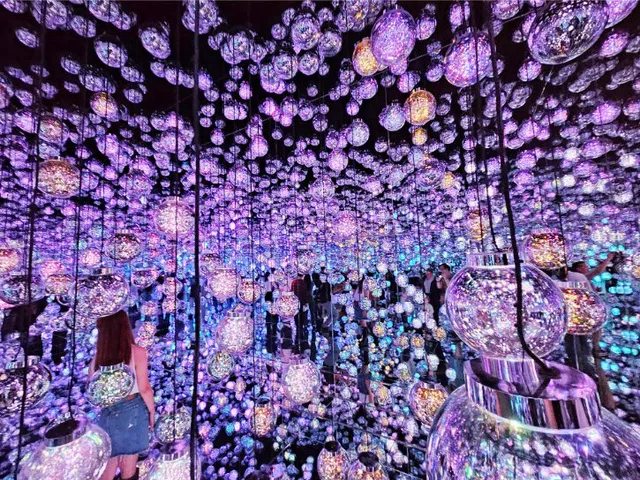
teamLab explicitly describes Borderless as a museum without a map. No conventional facility map is provided because artworks move across spaces and the exploration itself is part of the concept.
That creates a clear veto. If you would feel frustrated after twenty minutes of wandering without finding a room you saw online, Borderless is a weak fit. If discovering something unplanned is part of the pleasure, the same lack of route becomes a competitive advantage.
Do not turn the official app into a substitute GPS. It can identify nearby artworks and provide context, but the strongest use is understanding what you encounter rather than forcing the museum into a numbered checklist.
ValueNavi True Time Cost: the 2–3 hour block competes with another Tokyo district
↔ Scroll table left or right
Block | Planning allowance | Why |
Travel to Azabudai | Low if already in central Tokyo | Kamiyacho and Roppongi-Itchome integrate with major central districts |
Admission / entry margin | 20–30 min | Timed ticket, possible queue, belongings |
Inside | 2–3 h | ValueNavi exploration block, not an official completion guarantee |
Exit / next move | 20–40 min | Regroup and move toward Roppongi, Tokyo Tower or dinner |
Real planning block | roughly 2.5–4 h | This is the unit that should compete with another major Tokyo stop |
The strong version is Azabudai → Borderless → Tokyo Tower/Roppongi → dinner. The weak version is leaving a coherent Asakusa or Shinjuku day, crossing Tokyo for one ticket and immediately crossing back.
Entrance Pass vs Flexible Pass: JPY 8,400 (~US$53) buys schedule insurance
The official adult Entrance Pass currently starts at JPY 3,600 (~US$23). The Flexible Pass is JPY 12,000 (~US$75). At the minimum price, the flexible premium is JPY 8,400 (~US$53).
Flexible removes the fixed admission time on the specified date; it does not create a private visit or remove the need to queue at the venue. Most tourists should therefore use a standard ticket plus buffer.
Flexible becomes defensible when your arrival time is genuinely unstable: same-day flight, intercity transfer, business commitment or another activity whose finish time cannot be controlled. “I like flexibility” is not enough reason to spend more than three times the base adult price.
The official ticket system currently lets eligible tickets be changed up to three times, with Entrance Pass changes required at least two hours before the booked time and subject to availability. That already provides meaningful schedule insurance.
Azabudai location lowers the opportunity cost
The official access page puts Borderless at Azabudai Hills Garden Plaza B B1, around two minutes from Kamiyacho Station Exit 5 and about six minutes from Roppongi-Itchome Exit 4, with underground connections reducing weather exposure.
That geography is one of the strongest reasons Borderless works on a short first Tokyo trip. The attraction does not need a remote half-day if the rest of the day already belongs to the same central corridor.
Families: cheap admission is not the right decision variable
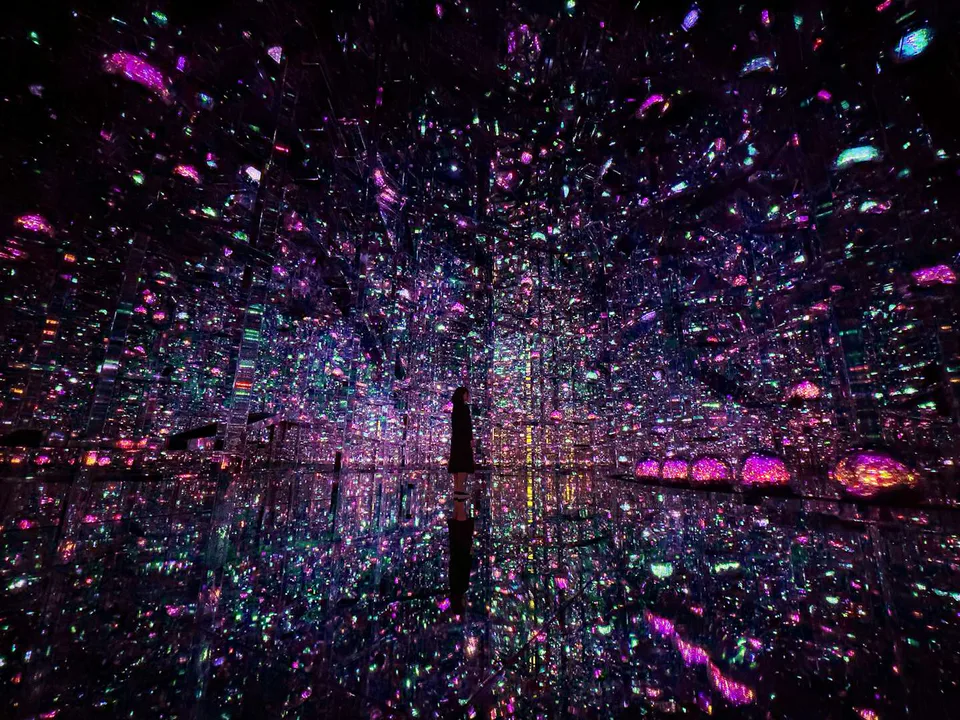
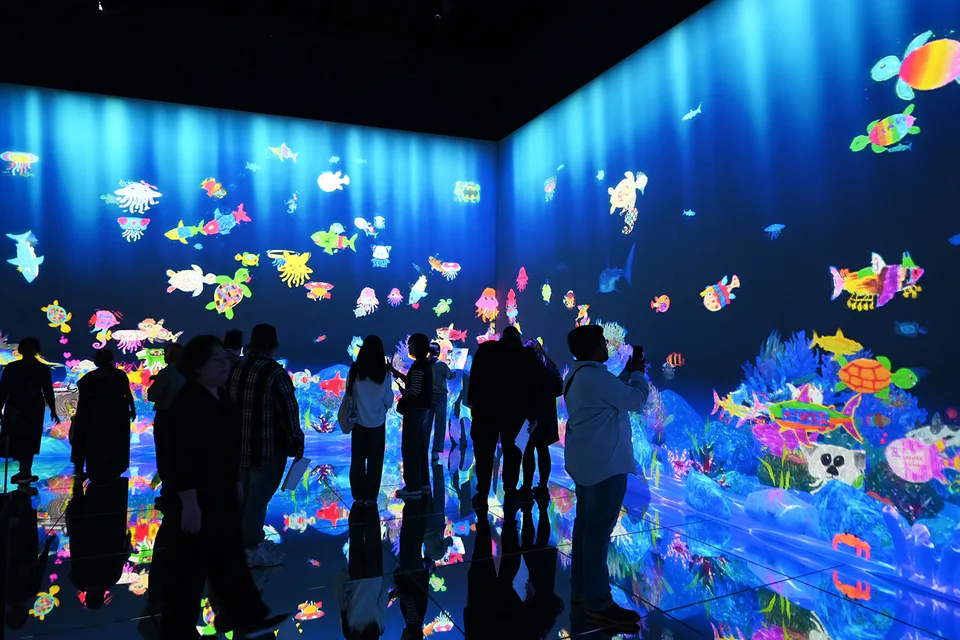
Children three and under currently enter free. The more important issue is sensory fit: dark rooms, mirrored surfaces, changing floors, strong light and sound. Strollers are stored rather than used throughout the exhibition.
For one child, that is discovery. For another, it is two hours of friction. The correct family question is not “is Borderless child-friendly?” but does the most sensitive child in the group enjoy this sensory format?
Borderless vs Planets: choose the friction you actually want
Choose teamLab Planets when barefoot water, textures and body immersion are the reason you want teamLab. Choose Borderless when you want immersive digital art but would rather stay dry, when central Tokyo routing matters, or when the idea of wandering without a fixed route appeals more.
Do not buy both automatically on a four- or five-day first Tokyo trip. The second teamLab ticket competes with another neighbourhood, museum or major attraction. Both only make sense when immersive digital art is a genuine trip theme.
ValueNavi Last-Minute Card
↔ Scroll table left or right
Question | Action |
Rain today? | Borderless gets stronger; keep the day clustered around Azabudai/Roppongi |
Only 90 minutes? | Skip or consciously accept a selective visit; do not chase “completion” |
Large luggage? | Store it before the visit rather than turning Borderless into a transfer-day stop |
Running late? | Check your ticket-change rules immediately rather than assuming staff can solve it |
Hard dinner / observatory booking next? | Leave real buffer; there is no reliable “finish line” inside the museum |
Choosing Planets too? | Only buy both when two immersive-art half-days beat the other Tokyo experiences you would remove |
Final verdict
teamLab Borderless is a strong Tokyo ticket when you can give it an unhurried 2–3-hour exploration block and keep the rest of the day around Azabudai/Roppongi. Its route fit and mapless format are the proprietary value drivers; the ticket price is only part of the decision.
Start with the standard JPY 3,600+ (~US$23) Entrance Pass. Pay JPY 12,000 (~US$75) for Flexible only when schedule uncertainty is a real financial or logistical risk. Skip Borderless when you need a linear museum, only have an hour, or know that dark and changing spaces will reduce the usable experience for someone in your group.
References
teamLab Borderless official venue, ticket and visitor information · ECB reference rates for approximate USD conversion. Checked August 26, 2026.