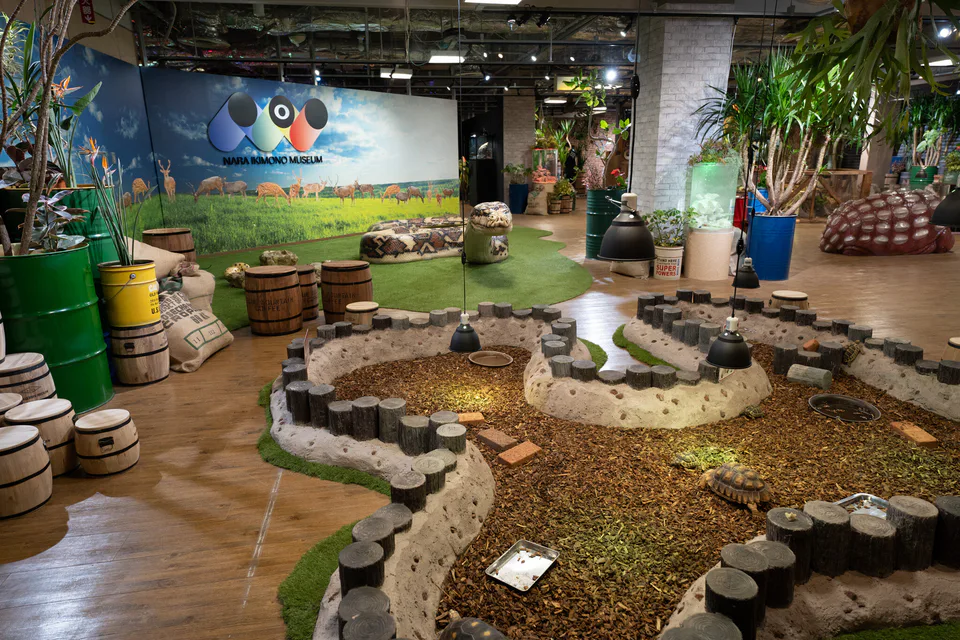
Nara Ikimono Museum is a strong family attraction when Mi Nara already fits your day, and a much weaker default on a first-time Nara day trip. The adult ticket is ¥1,300 (about US$8.15), but the more important number is time: the museum says the average visit starts around one hour, while visitors who take photos slowly can stay two hours or more. Add the official 15-minute bus ride each way between Kintetsu Nara and Mi Nara and the bare arithmetic is already about 90 minutes for a baseline visit or 150 minutes for a slow one—before waiting for a bus, walking through the station or finding the fourth-floor entrance.
That is why the museum can feel excellent with children on a rainy afternoon and still be the wrong choice when Todaiji, Kasuga Taisha and Nara Park are competing for the same six-hour day. The attraction is not the problem; the route is.
ValueNavi route-cost table: the “one-hour museum” can consume 90–150+ minutes
↔ Scroll table left or right
Starting point | Published bus time each way | Museum baseline | Bare minimum arithmetic before waits/walking |
Kintetsu Nara Station | About 15 min | About 60 min average starting point | About 90 min |
Kintetsu Nara Station, slow photos/animal watching | About 15 min | 2h+ | About 150 min+ |
JR Nara Station | About 9 min | About 60 min | About 78 min |
JR Nara Station, slow visit | About 9 min | 2h+ | About 138 min+ |
These are not door-to-door guarantees. They deliberately exclude bus waiting, the walk to and from the stop, the fourth-floor approach inside Mi Nara and any food or restroom stop. Their purpose is to expose the hidden cost: a compact museum can still become a two-hour itinerary decision when it sits off the classic sightseeing axis.
ValueNavi decision table: who should give Mi Nara the detour?
↔ Scroll table left or right
Your situation | ValueNavi call | Why | Main trade-off |
Animal-loving children + rain/heat + car | Strong yes | Indoor, compact, two hours of parking are free and the museum is easy to leave when children are done | It is still a focused living-creature museum, not a destination-scale zoo |
First Nara trip, only 5–6 hours, Todaiji/Kasuga/deer all non-negotiable | Usually skip | The Mi Nara out-and-back can consume 90–150+ minutes before other friction | You miss a good family attraction but protect the reason most first-timers came to Nara |
Overnight in Nara or repeat visitor | Good fit | The museum can move to arrival afternoon, a wet morning or the gap before dinner | You still need to decide whether one museum or the two-museum combo fits the group |
Children frightened by reptiles, dark areas or strong lighting/sound | Skip | The official visitor information warns that some areas use darkness, strong light and sound | “Indoor family attraction” does not automatically mean calming |
You only want the combo because it saves money | Buy the single ticket | The adult combo saves only ¥200 versus buying both museums separately | You lose the small discount but protect the family’s attention span |
ValueNavi Attraction Score: 8.6/10 when Mi Nara already fits, 6.8/10 as a first-Nara detour
This uses ValueNavi’s standard positive-direction attraction model: uniqueness 25%, time efficiency 15%, route fit 15%, weather resilience 10%, booking flexibility 10%, crowd resilience 10% and value for money 15%. A higher score is better. It is editorial analysis built from verified facts and itinerary friction, not an official rating or a claim of first-hand testing.
Dimension | Mi Nara already in route / car | First-time Nara Park detour | What changes |
|---|---|---|---|
Uniqueness | Close-range reptile/amphibian/fish presentation remains distinctive | ||
Time efficiency | A 1–2 hour indoor visit works well once you are there; the Nara Park detour changes the equation | ||
Route fit | Driving/Mi Nara plans remove the route penalty; classic Nara sightseeing does not | ||
Weather resilience | The core attraction is indoors year-round | ||
Booking flexibility | Same-day admission exists and there is no priority-entry reservation system | ||
Crowd resilience | Officially identified busy periods can lead to admission controls | ||
Value for money | ¥1,300 is reasonable; the opportunity cost is higher when the detour displaces first-time sights |
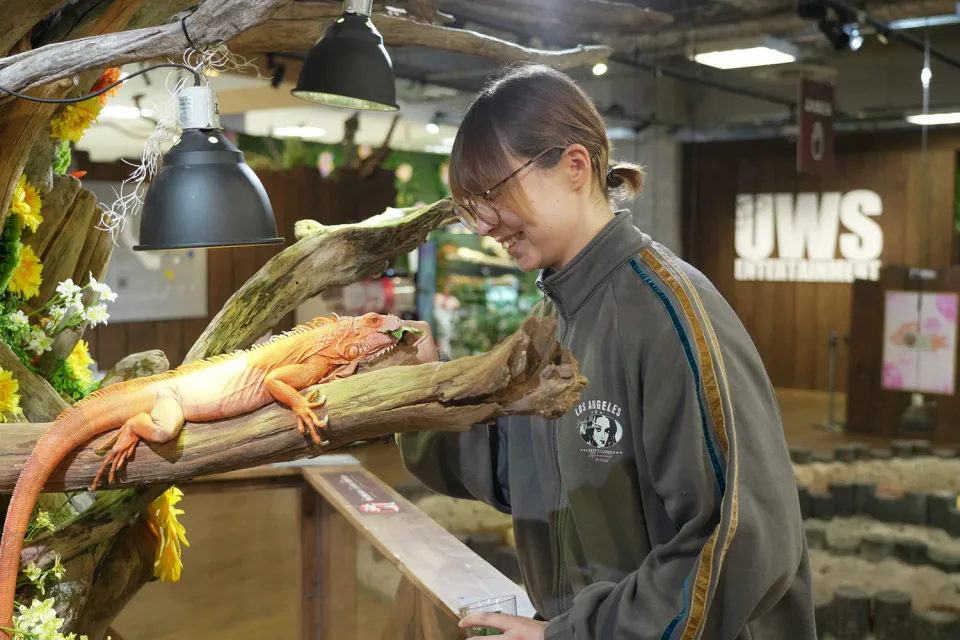
The ¥1,300 ticket is not expensive; the family total and second museum matter more
Current official admission is ¥1,300 for adults aged junior-high school and above (about US$8.15), ¥800 for elementary-school children (about US$5.02), ¥300 for ages four to preschool (about US$1.88), and free for most children aged three and under. The NARA KINGYO MUSEUM joint ticket is ¥2,400 / ¥1,400 / ¥500 for those same age bands.
↔ Scroll table left or right
Example | Ikimono only | Both museums bought separately | Joint ticket | Joint-ticket saving |
1 adult | ¥1,300 (US$8.15) | ¥2,600 (US$16.30) | ¥2,400 (US$15.05) | ¥200 (US$1.25) |
2 adults + 2 elementary children | ¥4,200 (US$26.33) | ¥8,400 (US$52.67) | ¥7,600 (US$47.65) | ¥800 (US$5.02) |
The family saving looks more meaningful than the adult saving, but the logic stays the same: spending ¥7,600 is not a saving compared with spending ¥4,200 and visiting only the museum everyone actually wants. A bundle is cheaper than buying two products separately; it is not cheaper than declining the second product.
The better combo question: is the second museum worth its marginal price?
For an adult who already wants Ikimono Museum, upgrading from the ¥1,300 single ticket to the ¥2,400 combo costs another ¥1,100 (about US$6.90). For an elementary-school child, the marginal cost is ¥600 (about US$3.76); for a preschool child, ¥200 (about US$1.25).
That is a more useful way to decide than staring at “¥200 saving.” Ask whether NARA KINGYO MUSEUM is worth another ¥1,100 per adult and another block of family attention. If yes, the combo is the correct purchase. If no, a discount cannot make the second museum free.
The current common-ticket rules say there are no changes or refunds after purchase, each person gets one entry to each venue, the ticket is valid only for its stated date/time, and re-entry is not normally allowed. Decide the two-museum plan before checkout rather than letting the bundle create it afterward.
Single or combo already decided? Check the current e-ticket on KKday
What children are actually paying for: proximity, not zoo scale
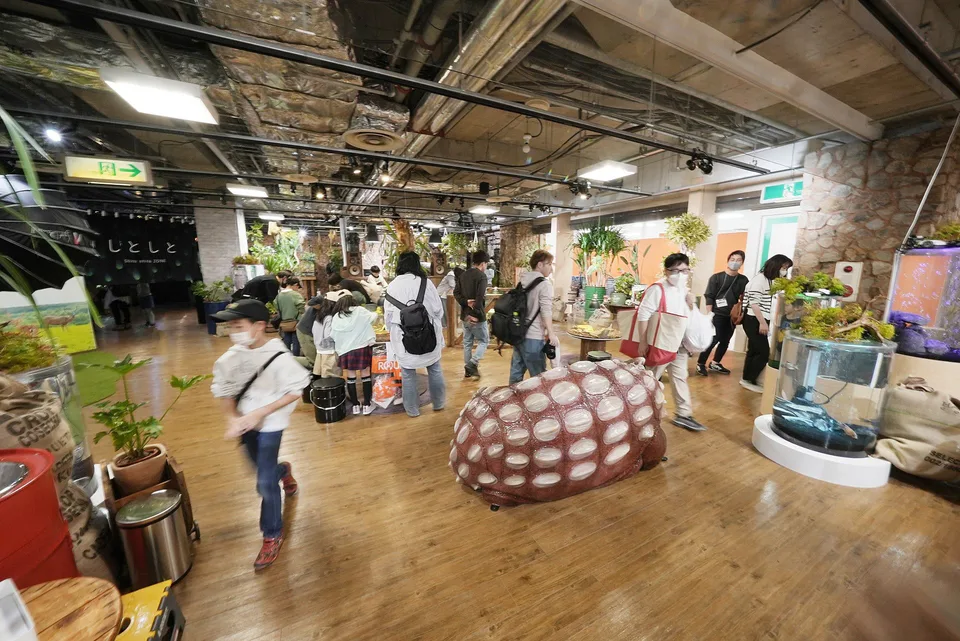
This is not a conventional zoo and it is not a giant aquarium. The appeal is close observation in a roughly 300-tsubo indoor space, with reptiles, fish, amphibians and other small living creatures presented in themed zones. For a child who likes pointing, comparing and revisiting tanks, that can deliver more engagement per hour than a huge attraction where half the visit is walking.
The same compactness creates the main expectation risk. The official FAQ says average stays begin around one hour; visitors taking photos slowly may spend more than two. That is a feature for a tired family and a disappointment for someone expecting a half-day zoo.
The feeding experience is currently ¥200 per session (about US$1.25), following a price change from ¥100 in December 2025. If “feeding an animal” is part of what you have promised a child, count it as an optional extra rather than assuming it is included in admission.
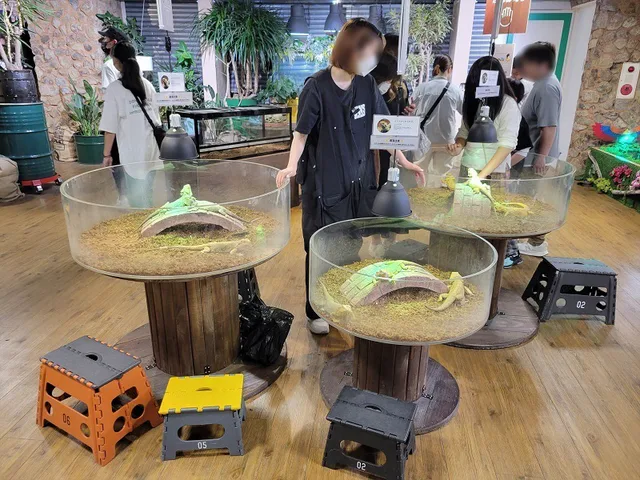
Rainy day? Go early rather than assuming “indoor” means no queue
The museum is open 10:00–18:00 with last admission 30 minutes before closing and currently operates year-round subject to Mi Nara closures or temporary changes. Its FAQ identifies weekends, holidays and school vacation periods as busy, with crowd peaks roughly around 11:00–12:00 and 13:00–16:00 depending on the season. It also warns that admission can be restricted when the museum is very busy.
That makes 10:00 opening a sensible rainy-day target when the attraction matters to the family. This is an inference from the museum’s own crowded-time guidance, not a guarantee of an empty first hour. The important point is that “we’ll go there if it rains” can become the same plan chosen by many other families.
If the weather is good and the trip overlaps autumn foliage, protect the outdoor advantage instead. A Nara autumn-leaves day trip has a much stronger reason to stay on the classic sightseeing axis than a wet midsummer afternoon does.
The restroom rule is more nuanced than “no re-entry”
There are no restrooms inside the museum, so the best family move is still to use Mi Nara’s facilities before scanning in. The official FAQ now says general re-entry is not allowed, but visitors who need the restroom may be permitted to leave and return if they speak to reception. Outside food and drink remain prohibited inside.
That exception is useful, but it should not become the plan. With small children, bathroom first, snack second, ticket scan third remains the lowest-friction sequence.
Driving removes most of the route penalty — and two hours of parking are free
Nara Ikimono Museum visitors currently receive two hours of free Mi Nara parking. Standard parking is ¥300 per 60 minutes after the free benefit is exhausted, with separate daily maximums by lot. That aligns unusually well with the museum’s one-to-two-hour visit pattern.
If you are driving and visiting Ikimono only, parking can effectively disappear as a cost. If you add NARA KINGYO MUSEUM, food and shopping and turn Mi Nara into a three-hour block, the first extra parking hour is ¥300 (about US$1.88). That is still small, but it is another reason the combo should be planned as a longer Mi Nara stop rather than treated as a free extra.
By public transport, the museum still works; it simply needs to earn the extra leg. If you are already travelling into Nara from another Kansai city, Nara from Kyoto or Osaka helps decide how much transit friction the day already contains.
Overnight Nara changes the answer more than any ticket discount
Once you sleep in Nara, Mi Nara no longer has to compete with every first-time sight on the same day. You can place it after arrival, before dinner, during a rainy morning or on the second day after the park. If you are still deciding whether Nara should stay a day trip or become an overnight stop, make that decision before buying a fixed-date combo ticket.
Travellers squeezing Nara into an Osaka-and-Kyoto four-day itinerary should be stricter. In that kind of schedule, a 90–150-minute side trip has to replace something; it cannot simply be added to Todaiji, deer, Kasuga Taisha and every Kyoto/Osaka priority without lowering the quality of the whole day.
NO-GO: four travellers who should skip it without feeling they missed essential Nara
Skip it if you have only five or six hours on your first Nara visit and reptiles are not a special interest; if your children are uncomfortable with reptiles or the museum’s dark/bright sensory design; if you are buying the combo solely because the word “discount” feels efficient; or if you expect a destination-scale zoo rather than a compact close-observation museum.
If another paid indoor attraction such as the Nara Prison Museum is already in the plan, do not stack them automatically. Choose the one that solves the group’s actual problem—animals and family engagement, history and architecture, or bad-weather shelter—rather than collecting admissions.
Verdict: great when Mi Nara is already logical; weak as a default Nara Park add-on
Nara Ikimono Museum earns its place for animal-loving families, repeat Nara visitors, rainy/hot weather and car-based trips. At ¥1,300 (about US$8.15), the admission is reasonable and the compact one-to-two-hour format is often an advantage.
The strongest counterargument is that the official bus ride from Kintetsu Nara is only about 15 minutes. True. But a one-way timetable number is not the itinerary cost. The return bus motion alone is about 30 minutes, and the museum itself says one hour is only the average starting point. Once waiting and walking are added, treating the attraction as a tiny detour is what creates disappointment.
Use this order: first decide whether Mi Nara belongs in the day; second decide whether the family wants one museum or genuinely wants both; third check the current crowd situation and transport; only then buy the single or joint ticket. If Mi Nara does not fit the day, skipping it is not missing “essential Nara”—it is protecting the route you came to Nara for.
Next decision | Should Nara be a day trip or an overnight stay?
Sources and verification
Nara Ikimono Museum — current admission, joint ticket, access, parking and visitor rules · official FAQ — visit length, crowd periods, entry, restroom exception and facility details · official feeding-experience price change · NARA KINGYO MUSEUM — current individual and joint-ticket prices.
Facts and prices checked August 27, 2026. USD conversions use approximately ¥1 = US$0.00627 and are rounded for planning. Operating hours, shuttle schedules, crowd controls, feeding availability and ticket-platform conditions can change.