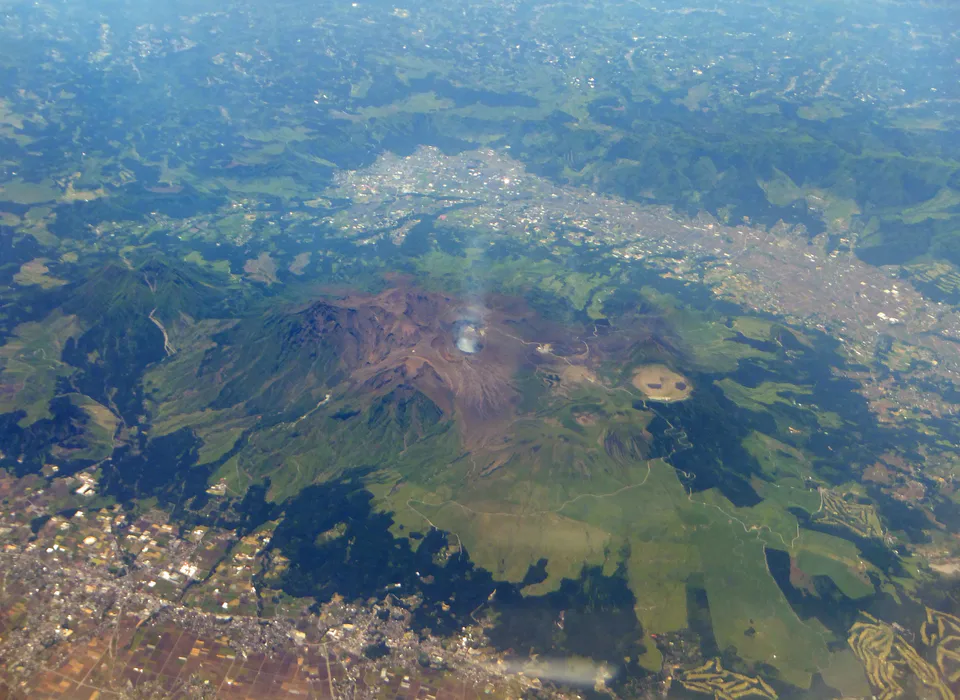
For five days in Kyushu, choose one geographic spine and finish it properly. For most first-time visitors travelling without a car, that means Fukuoka → Yufuin → Beppu, with Hita only as an optional stop when the luggage problem is already solved. Do not also squeeze Nagasaki, Aso and Takachiho into the same four hotel nights.
Seven days buys one directional extension, not permission to collect three more regions. Add Nagasaki on the Fukuoka side of the route; add Aso/Kumamoto after Beppu because JR's Kyushu Odan Tokkyu creates a real east-to-central rail corridor; or make Takachiho the overnight extension and accept its sparse reserved-bus structure. The route should keep changing geographic centre. If a new stop makes you return through the same hub just to leave again, it needs a stronger reason to survive.
This guide assumes five days means four nights and seven days means six nights. Arrival and departure times can shrink the usable trip substantially, so a late Day 1 or early final flight should make the itinerary smaller, not denser.
The 30-second decision: one spine for five days, one extension for seven
↔ Scroll table left or right
Trip shape | Recommended structure | Why it works | What to delete |
5 days, first trip, no car | Fukuoka 2 nights → Yufuin 1 → Beppu 1 | Only two hotel moves; city, ryokan and onsen-city experiences all have a clear job | Nagasaki, Aso and Takachiho |
7 days, western extension | Nagasaki 2 nights + Fukuoka side + Yufuin/Beppu core | Nagasaki stays attached to the Fukuoka rail side instead of being tacked onto Beppu as a fake direct extension | Aso/Kurokawa and Takachiho |
7 days, central extension | Fukuoka → Yufuin → Beppu → Aso → Kumamoto | Kyushu Odan Tokkyu creates a real Beppu–Aso–Kumamoto progression | Nagasaki and Takachiho unless the trip is extended |
7 days, Takachiho priority | Core shortened + one Takachiho overnight | Overnight lets the 20:00 kagura justify the transport cost and avoids treating a sparse-bus mountain town as a quick insert | Nagasaki; often Hita or an extra Beppu night as well |
5 days but Nagasaki is the main reason for Kyushu | Fukuoka + Nagasaki | The correct red-team answer is to delete the Oita core rather than cram both sides into a short trip | Yufuin/Beppu unless onsen is equally important |
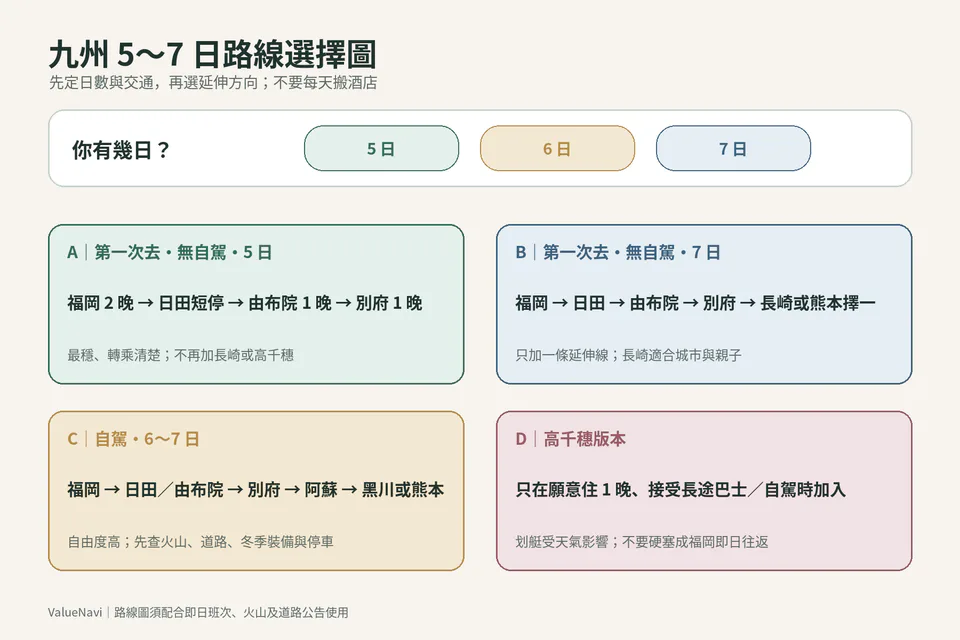
Five days: the Fukuoka–Yufuin–Beppu spine is already a complete trip
A five-day trip has four hotel nights. My planning ceiling for a normal first trip is three bases and two planned hotel moves unless a flight forces something else. Fukuoka → Yufuin → Beppu already uses that entire move budget.
A practical no-car version is:
Day 1 — Fukuoka arrival: keep the day near Hakata or Tenjin. A late flight should not be followed by a long mountain transfer.
Day 2 — Fukuoka: use the full city day instead of treating Fukuoka only as an airport waiting room.
Day 3 — Fukuoka → Yufuin: travel early enough that the ryokan afternoon, dinner and bathing are still usable. Add Hita only if it has a specific purpose and the luggage is already solved.
Day 4 — Yufuin → Beppu: protect the Yufuin morning, then move to Beppu for the more flexible second onsen night.
Day 5 — Beppu + departure: use the remaining hours according to the actual airport or Fukuoka return requirement. Do not put a distant mountain stop ahead of the flight.
This route works because each hotel has a different function. Fukuoka handles arrival, city time and transport. Yufuin earns one fragile, experience-led night. Beppu handles a more flexible onsen day and the onward journey. Adding a fourth base to a four-night trip usually means one of the existing nights never gets used properly.
If you need the transport details between Fukuoka and Yufuin, use the Fukuoka to Yufuin train, bus or car comparison. If you are not sure whether both onsen towns deserve a night, use Beppu vs Yufuin before adding another checkout.
Hita is not automatically a free stop because it sits on the way
Hita looks attractive on a route map because it can sit between Fukuoka and Yufuin. The hidden cost is the suitcase. A two- or three-hour old-town stop is very different when two 29-inch cases are being dragged to storage, retrieved before the next train and then moved again at Yufuin.
I would keep Hita in the five-day route only when one of these is true:
the large bags stay in Fukuoka and you are travelling light for the onsen segment;
the bags are forwarded ahead and you carry only an overnight bag;
you have verified storage that fits the actual bags and operating hours;
Hita itself is a priority rather than a place you added because the train stops there.
If none is true, take the direct Fukuoka–Yufuin journey and spend the saved handling time in Yufuin. The Hakata-to-Yufuin luggage guide is useful when Hita is worth protecting.
Seven days: choose the extension by direction, not by popularity
The extra two days should change the shape of the route, not merely add two famous names. The most important question is where should the itinerary point after Beppu?
There are three sensible answers:
West toward Nagasaki: only if Nagasaki is attached to the Fukuoka side of the trip rather than treated as a natural continuation from Beppu.
Central toward Aso and Kumamoto: the cleanest directional extension from Beppu.
Mountain overnight in Takachiho: a deliberate transport-mode change that replaces another extension.
If the answer is “all three”, the problem is not route optimisation. The trip is too short.
Nagasaki belongs beside the Fukuoka part of the week
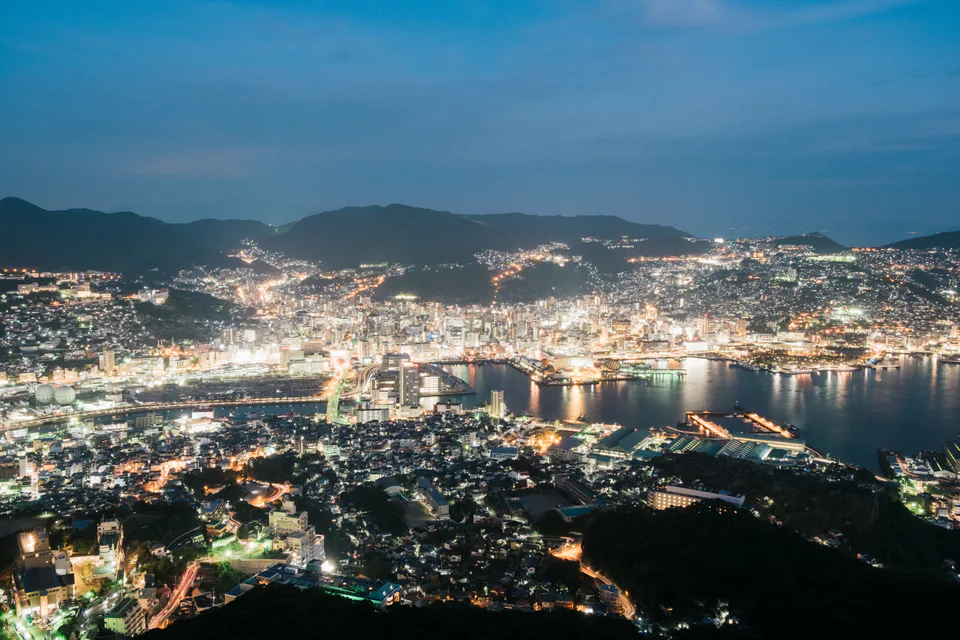
Nagasaki is an excellent seven-day extension for travellers who want a no-car trip, city history and a different evening atmosphere. The mistake is putting it after Beppu as though east Kyushu naturally flows west to Nagasaki.
JR's current Nagasaki rail structure explains the geometry. Travel from Hakata toward Nagasaki uses the Relay KAMOME to Takeo Onsen, then the Nishi Kyushu Shinkansen KAMOME; JR currently publishes the transfer at Takeo Onsen on the same-platform opposite side. Nagasaki is therefore connected to the Fukuoka/Saga side of the network, not directly to Beppu.
For a round-trip Fukuoka flight, I would usually place the Nagasaki block before you commit east to Yufuin/Beppu, or at the very end after you have returned to the Fukuoka side. For an open-jaw trip, the route can be even cleaner: enter on one side and leave from the other, subject to the actual flight schedule.
A six-night example is:
Fukuoka 1 night
Nagasaki 2 nights
Yufuin 1 night
Beppu 2 nights
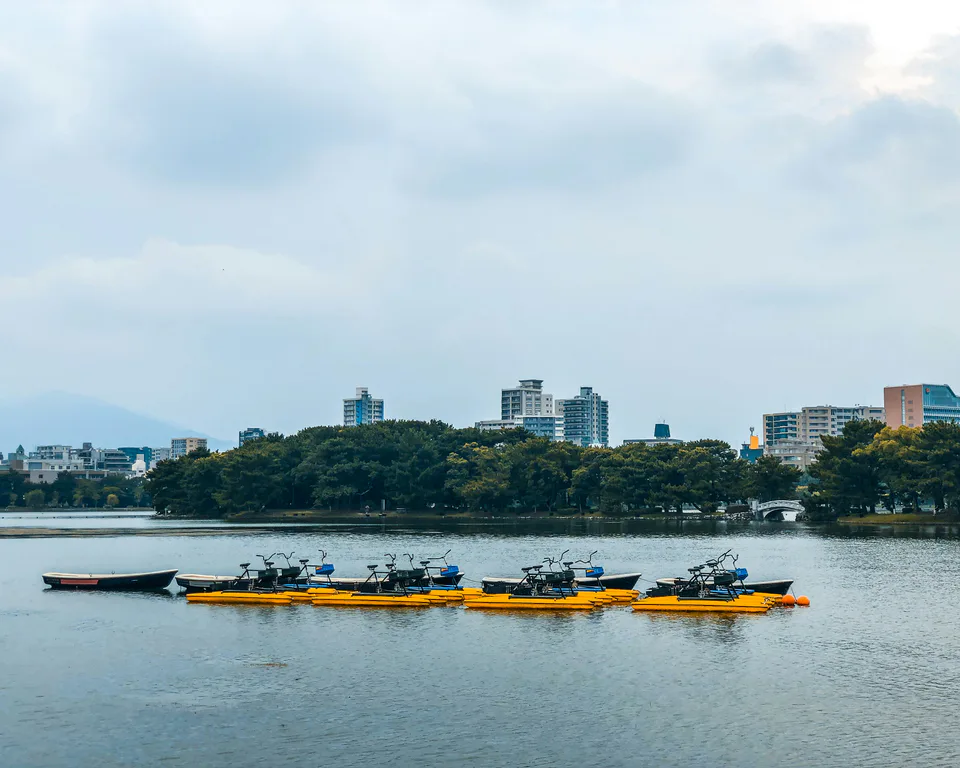
The long Nagasaki-to-Yufuin transfer day should be accepted as a transfer day, not disguised as a full sightseeing day. The gain is that Nagasaki receives two real nights and the Oita core remains intact. The alternative—Beppu, then a westward dash to Nagasaki, then another airport return—can turn the final third of the week into repeated hub travel.
Aso and Kumamoto are the cleanest directional extension after Beppu
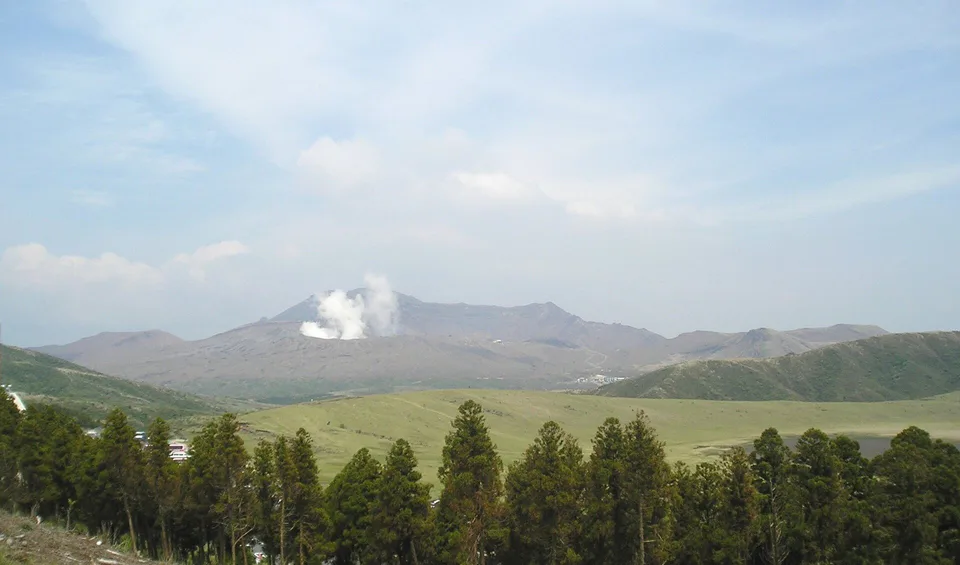
Central Kyushu is different because JR currently gives the route a real spine. The Kyushu Odan Tokkyu runs three round trips a day. The current timetable includes a 07:49 departure from Beppu that reaches Aso at 10:08 and Kumamoto at 11:21.
That single fact changes the itinerary logic. You do not need to return to Fukuoka before going south-west. A seven-day route can progress:
Fukuoka → Yufuin → Beppu → Aso → Kumamoto.
A six-night version might use Fukuoka 2, Yufuin 1, Beppu 1, Aso 1 and Kumamoto 1. This has more bases than the Nagasaki version, so I would only use it when Aso itself is a major reason for the trip. For a family with large luggage or an older traveller, simplify further: skip the Yufuin night, use Beppu as the onsen base, or sleep in Kumamoto and treat Aso as a day rather than adding another hotel.
A partial rental can become useful around Aso or Kurokawa because it changes what you can reach, but it should start where the public-transport spine stops being useful. Do not rent from Fukuoka for a week merely because one mountain section benefits from a car.
Kurokawa is not a free add-on to Aso
“Aso/Kurokawa” is often written as if it were one stop. It is not one hotel decision or one transport product. Aso Station works with the JR east–west corridor; Kurokawa Onsen adds a separate bus or driving layer.
If Kurokawa is the accommodation experience you actually want, let it replace another base rather than adding it after Aso. If you are not comfortable with mountain driving, build around the live bus schedule before paying for the ryokan. If the bus timing forces the whole day into a fragile chain, stay in Aso or Kumamoto instead.
The recommendation reverses for confident drivers who specifically want scenic roads, remote stops and a Kurokawa overnight. In that case a partial rental can earn its cost because it changes the itinerary, not merely because it is more convenient than a train.
Takachiho is an overnight extension, not a checkbox day trip
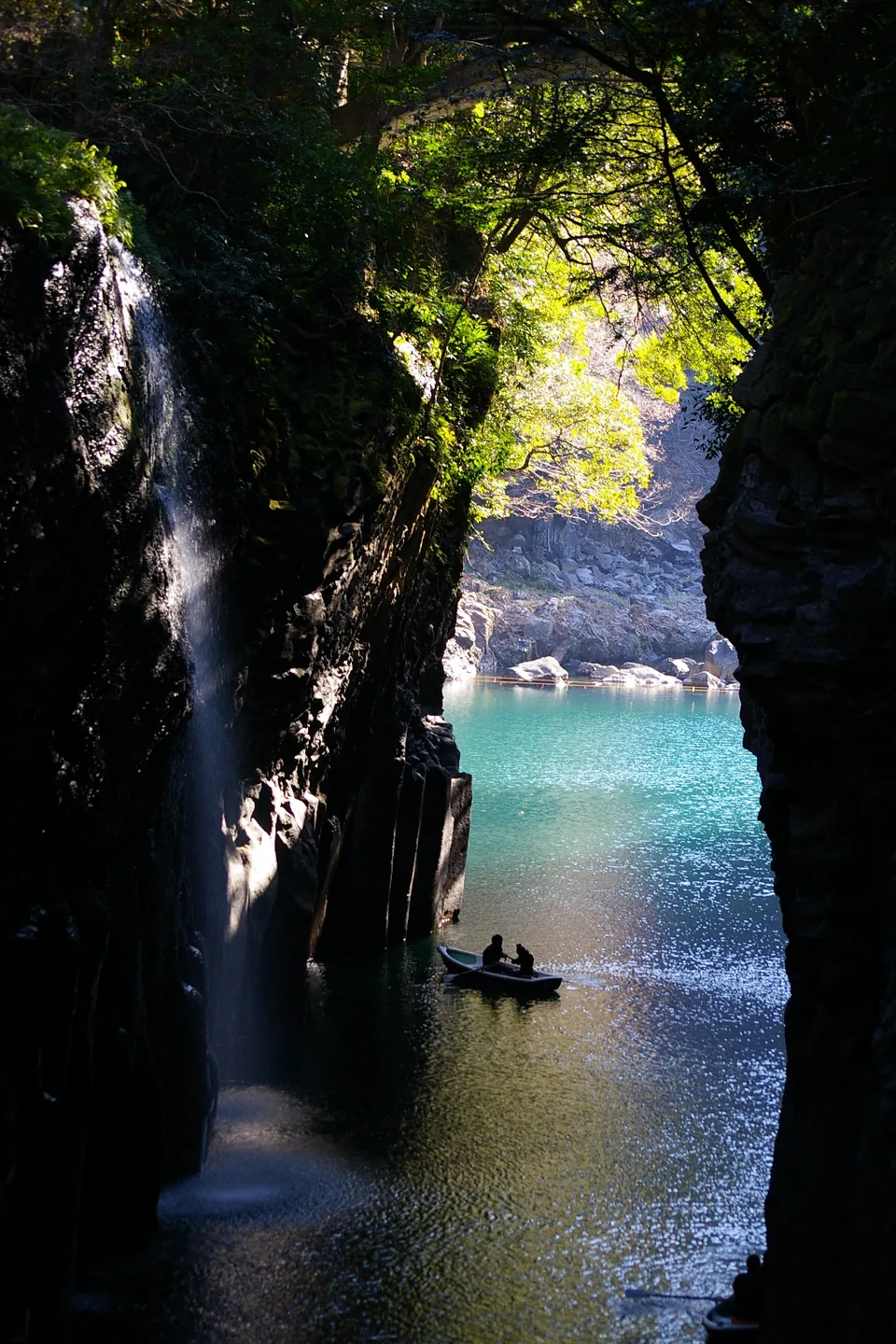
Takachiho has a higher transport cost than its map position suggests. The Takachiho Tourism Association currently publishes the Gokase-go highway bus from Fukuoka Airport at about 3 hours 30 minutes, only four services a day and reservation required. From Aso, the current official access page shows the Asochiho bus at about 1 hour 50 minutes, one service a day and reservation required.
That is enough to make one rule clear: do not add Takachiho unless you are willing to build the day around the transport.
An overnight can justify that cost because Takachiho Kagura is currently performed from 20:00 to 21:00, with advance reservations available. The night therefore unlocks something a rushed daytime gorge stop does not.
The gorge boat is also a poor single point of failure. The tourism association opens advance online booking from two weeks before the ride date until two days before at 09:00, and some busy dates can have no same-day tickets. Weather and river conditions can also affect operation. Build Takachiho so the trip still has value if the boat does not happen.
For seven days, I would use Takachiho only by deleting something else: Nagasaki disappears, Hita usually disappears, and one Fukuoka/Beppu night may need to be compressed. If you want Nagasaki, Aso, Takachiho, Yufuin and Beppu all to feel meaningful, extend the trip.
Use a hotel-move budget before you use a rail pass
For a short multi-city trip, hotel moves are a scarce resource. Each move includes packing, checkout, luggage storage or forwarding, station transfer, travel, finding the new hotel and check-in. A route planner does not show that whole cost.
My planning rule is:
4-night trip: normally no more than two planned hotel moves.
6-night trip: normally no more than three planned hotel moves, and every new base should either change geographic centre or unlock an experience that a day trip cannot reproduce.
This is editorial guidance, not a railway rule. It should be relaxed for light-packing solo travellers and tightened for families, older travellers and anyone carrying several large cases.
Yufuin is the easiest move to justify because the night itself can be the product. A one-night Hita hotel is much harder to justify if Hita can be a daytime stop. A one-night Kumamoto stay can be justified if it completes the Aso corridor and positions the next departure. Count what each checkout buys.
Choose the rail pass after the route is final
Do not buy a JR Kyushu Rail Pass and then reshape the trip to make the pass feel useful. First decide the route; then calculate the eligible JR journeys.
JR Kyushu currently prices the Northern Kyushu Rail Pass at JPY 14,000 for 3 days and JPY 16,000 for 5 days through JR Kyushu Rail Pass Online Booking; station/travel-agency prices are JPY 15,000 and JPY 17,000. The All Kyushu Rail Pass is currently JPY 21,000 / 23,000 / 25,000 online for 3 / 5 / 7 days, with station/travel-agency prices JPY 22,000 / 24,000 / 26,000.
The Northern Kyushu area covers Fukuoka, Oita, Kumamoto, Nagasaki and Saga on eligible JR services, including limited express trains and the Nishi Kyushu Shinkansen within the pass area. But JR explicitly excludes the Sanyo Shinkansen between Hakata and Kokura, subways, buses and railways run by other companies.
That exclusion matters on exactly this itinerary:
a highway bus to Yufuin does not become free because you own a rail pass;
a bus to Kurokawa or Takachiho is not an eligible JR ride;
local city transport still needs its own fare;
a pass does not make an over-complicated route better.
A rail-heavy Fukuoka–Nagasaki–Beppu–Aso–Kumamoto trip gives the pass more work to do than a bus-heavy Fukuoka–Yufuin–Takachiho route. Compare the actual eligible fares and reservation needs, not the number of cities on the map. For a full calculation, use the Northern Kyushu Rail Pass decision guide.
Train, bus or car: let the hardest segment choose the mode
↔ Scroll table left or right
Route problem | Start with | Why |
Fukuoka–Yufuin–Beppu, one or two travellers | Rail + highway bus | Direct public transport already covers the main corridor; a car often adds more process than access |
Beppu → Aso → Kumamoto | JR first | Kyushu Odan Tokkyu creates a real directional rail route |
Aso/Kurokawa with rural stops | Partial rental or confirmed buses | The car can change what is reachable; full-week rental is not automatically necessary |
Takachiho | Reserved bus or deliberate mountain drive | Service is sparse enough that the entire day must be built around it |
Family with several large cases | Fewer bases first | Reducing hotel moves can save more friction than optimising the vehicle or ticket |
Late arrivals and early departures should delete a destination
A late Day 1 flight is not a normal sightseeing day. If you reach Fukuoka in the evening, sleep in Fukuoka. Do not make the trip prove its ambition by continuing to Yufuin, Aso or Takachiho at night.
The same logic applies on the final day. If the flight requires an early airport arrival, the final hotel should protect the flight rather than preserve one more mountain view. The cost of deleting a half-day attraction is smaller than the cost of making the entire departure chain fragile.
For a five-day trip, a late arrival plus early departure may leave only three real sightseeing days. In that case, even the full Fukuoka–Yufuin–Beppu core may need one fewer night or one fewer stop.
Families and older travellers: remove one base before upgrading transport
When a route feels difficult with children, a stroller or older parents, the first instinct is often to rent a car. Sometimes that helps; sometimes the real problem is that the itinerary has too many hotels.
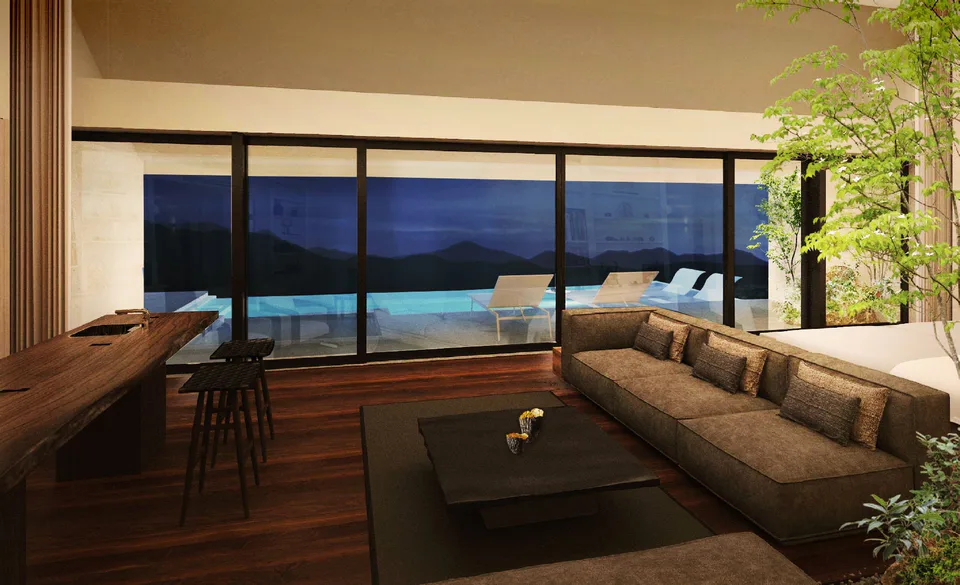
Try removing one base first. Two nights in Beppu with a Yufuin day trip can be easier than one Yufuin night plus one Beppu night when luggage and room changes are the dominant cost. Two nights in Kumamoto can be easier than Aso overnight plus Kumamoto when mobility matters more than the dawn view.
A car does not remove packing, checkout and re-check-in. Simplify the hotel geometry before paying to simplify the road geometry.
What I would cut first from an overloaded itinerary
If a seven-day draft contains Fukuoka, Hita, Yufuin, Beppu, Aso, Kurokawa, Takachiho and Nagasaki, cut in this order:
Delete Hita if it has no specific activity. “It is on the way” is not enough.
Choose Aso or Kurokawa as the central overnight. Do not add both just to collect names.
Choose Nagasaki or Takachiho. They point the week in different directions and both deserve real time.
Choose whether Yufuin needs a night. Keep it if the ryokan experience matters; day-trip it or skip it if the room is only a bed.
If the itinerary is still crowded after those cuts, add days. The most expensive mistake in Kyushu is not missing a town; it is spending the trip checking out.
Four route templates that survive the red-team test
5 days: first-time no-car core
Fukuoka 2 → Yufuin 1 → Beppu 1. Best when the trip is about food, city time and two distinct onsen experiences. Hita is optional and should not create another hotel.
7 days: no-car Nagasaki extension
Fukuoka/Nagasaki side → Yufuin → Beppu. Give Nagasaki two nights and place it beside the Fukuoka rail segment. Best for travellers who want a city-led extension and prefer not to drive in mountains.
7 days: central Kyushu extension
Fukuoka → Yufuin → Beppu → Aso → Kumamoto. Best when landscape and Aso are more important than Nagasaki. The current Kyushu Odan Tokkyu is the key piece that makes the east-to-central sequence coherent.
7 days: Takachiho-led extension
Shortened Fukuoka/Oita core → Aso or Kumamoto connection → Takachiho overnight. Best when Takachiho Gorge and the 20:00 kagura are major trip goals. It is not the route for travellers who also insist on Nagasaki in the same week.
Final verdict: route shape matters more than the number of famous stops
For five days, finish one spine: Fukuoka, Yufuin and Beppu. For seven days, add one extension that continues the route instead of fighting it. Nagasaki belongs on the Fukuoka side. Aso/Kumamoto belongs after Beppu. Takachiho deserves an overnight and should replace another extension rather than sit on top of it.
The recommendation changes when one destination is the reason you booked Kyushu in the first place. If Nagasaki is the trip, delete the Oita core. If a Kurokawa ryokan is the trip, build the week around central Kyushu. If Takachiho Kagura is non-negotiable, give the sparse transport its own day. A good Kyushu itinerary is not the one that proves how many places can technically fit; it is the one where every hotel move changes what the next day can do.
More planning
Fukuoka to Yufuin: Train, Bus or Rental Car · Beppu vs Yufuin: Where Should You Stay? · Yufuin Ryokan with Private Onsen · Kumamoto and Aso: Overnight or Day Trip? · Northern Kyushu Rail Pass: Is It Worth It?
Sources and verification date
JR Kyushu — Kyushu Odan Tokkyu timetable · JR Kyushu — Relay KAMOME and Takeo Onsen transfer · JR Kyushu — rail-pass prices and conditions · Takachiho Tourism Association — current access routes · Takachiho Tourism Association — Takachiho Kagura · Takachiho Tourism Association — gorge boat booking and operating status. Checked August 25, 2026. Timetables, fares, volcanic conditions, road restrictions, bus reservations and boat operation can change; verify the exact travel dates before booking non-refundable accommodation.