
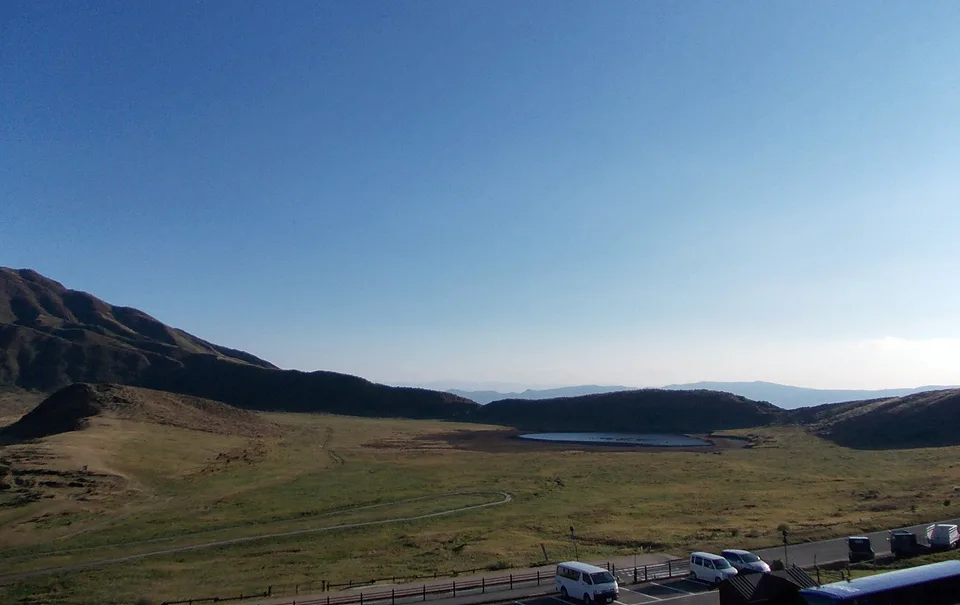
For a four-day Kumamoto trip, keep Aso as a day trip when Kusasenri, the caldera scenery and one or two accessible viewpoints are enough. Stay one night when Aso itself is a major reason for the trip, the night gives you a real onsen or early-morning landscape window, or the hotel moves you forward toward Kurokawa, Takachiho or another rural destination. Do not stay overnight simply because you hope a second morning will unlock Nakadake crater.
That distinction is especially important now. On August 14, 2026, the Japan Meteorological Agency raised Aso to Volcanic Alert Level 3. JMA's latest status page still showed Level 3 on August 24. Aso City currently says traffic is possible as far as Kusasenri, but Nakadake crater sightseeing is not allowed and Takadake, Nakadake, Kishimadake and Eboshidake cannot be climbed. The wider city area is not under a blanket road closure. Your day-trip/overnight decision should therefore be built around the accessible caldera experience—not around a crater visit that is currently unavailable.
↔ Scroll table left or right
Your real Aso plan | Default | Why |
Kusasenri + caldera scenery + one or two accessible stops | Day trip | You can get the core landscape without paying for another hotel move |
Nakadake crater visit is the main reason for going | Do not add an overnight for that reason | Crater sightseeing is currently unavailable under Level 3 |
Onsen evening + early caldera morning | Overnight | The room creates two usable edge-of-day windows |
Driving onward to Kurokawa / Takachiho / another rural base | Overnight gets stronger | The hotel removes backtracking as well as adding Aso time |
No car and only one night available | Stay near the transport spine | A scenic remote hotel can create a new taxi/shuttle problem the next morning |
Family / older travellers returning to Kumamoto next day | Focused day trip unless the overnight has a second job | One familiar hotel may be easier than moving bags to save a partial return journey |
Check the volcano gate before deciding the hotel
Aso is different from a normal scenic destination because the itinerary can change for safety reasons after the room is booked. JMA raised the alert from Level 2 to Level 3 at 15:45 on August 14, 2026. The warning covers roughly a two-kilometre radius around Nakadake First Crater because of the risk of large volcanic blocks and pyroclastic flows, with additional ash, small-projectile and volcanic-gas risk downwind.
Aso City's current visitor notice translates that into a practical tourism boundary: you can travel as far as Kusasenri, but you cannot visit Nakadake crater, and the named central-peak hikes are not available. That means the wrong planning question is “Should I stay overnight so I have two chances to see the crater?” Under the current restriction, a second morning does not solve the access rule.
The better test is: if the crater remains unavailable for both days, does Aso still deserve the room? If Kusasenri, the caldera scale, an onsen evening, Daikanbo or an onward rural route still make the answer yes, the overnight is robust. If the answer becomes no, keep Aso as a shorter visit or defer the mountain component rather than using a hotel night to chase an unavailable attraction.
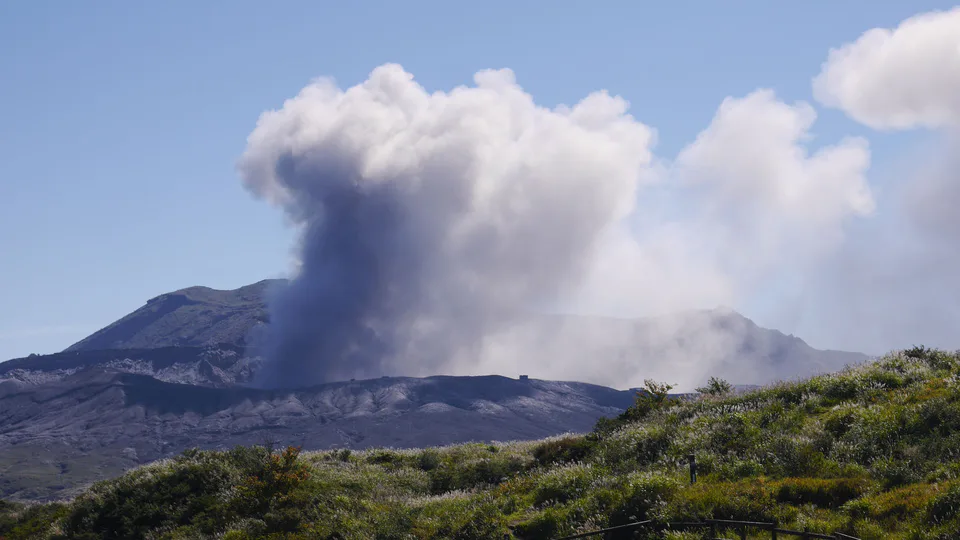
A day trip works better now when you treat Kusasenri as the anchor
Under the current access situation, Kusasenri is the more durable first-time anchor because Aso City says the road is open as far as the grassland area even while Nakadake crater sightseeing is suspended. Build the day around what is actually accessible, then add another caldera or outer-rim stop only if the route and weather support it.
A disciplined day trip can therefore be stronger than an overnight whose only extra purpose was crater access. Leave Kumamoto, spend the central part of the day around Kusasenri and the accessible mountain landscape, then return without another checkout. This is especially sensible when Kumamoto city still has a second full day that matters.
The failure mode is trying to compensate for the crater closure by adding more distant stops. Level 3 should make the itinerary simpler, not turn one inaccessible attraction into three replacement drives.
What the overnight should buy now: onsen time, light or route progression
One night in Aso still has strong value, but the justification has shifted away from “more volcano access.” I would pay for the night when it buys at least two of these:
Onsen / rural evening: you deliberately want the accommodation and a slower night rather than returning to Kumamoto.
Early landscape window: you will actually use the morning around the caldera before continuing.
Weather flexibility: one cloudy afternoon does not force the whole Aso experience into a single short window.
Onward geometry: the next destination continues through rural Kyushu instead of sending you back to the same Kumamoto hotel.
If the room creates only breakfast and a return journey to Kumamoto, it has weak incremental value. An overnight should change the hours you can use or the direction you travel next.
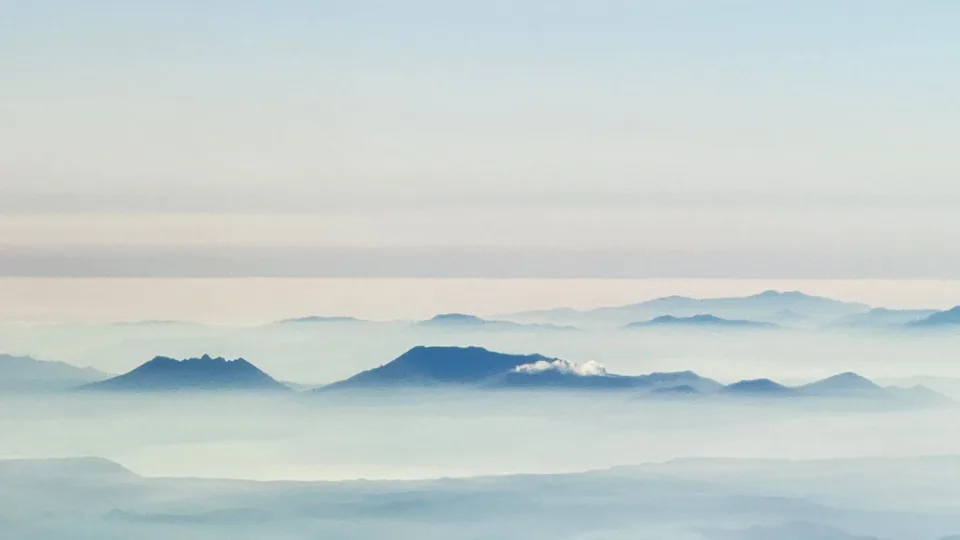
Level 3 actually makes the “day trip versus overnight” comparison cleaner
When the crater is open, travellers can mistakenly treat the overnight as insurance against arriving during a temporary gas restriction or bad viewing window. Under the current Level 3 restriction, that option-value mostly disappears: the gate is not a normal queue that may clear after lunch.
This forces the overnight to prove its value using the rest of Aso. That is useful. If a local onsen, early grassland, slower photography, rural dinner and onward route sound compelling, stay. If all of those feel secondary and the crater was the headline reason, do not let a sunk hotel booking dictate the itinerary.
Driving: one night is strongest when you stop backtracking
A Kumamoto → Aso → Kumamoto self-drive works well for a focused day. The overnight becomes more efficient when the wider route is already moving through Aso toward Kurokawa Onsen, Takachiho or another rural stop. Check out of Kumamoto, use Aso as the main landscape day, sleep locally, then continue instead of repeating the same road back to the city.
This is the highest-value version of the hotel move because it does two jobs. It buys an evening/morning in Aso and converts a round trip into a one-way progression.
If you are returning to Kumamoto the next morning anyway, compare the extra hotel change with the amount of edge-of-day time you will really use. “Closer to Kusasenri tomorrow” is not automatically enough.
No car: the scenic hotel can be the wrong overnight
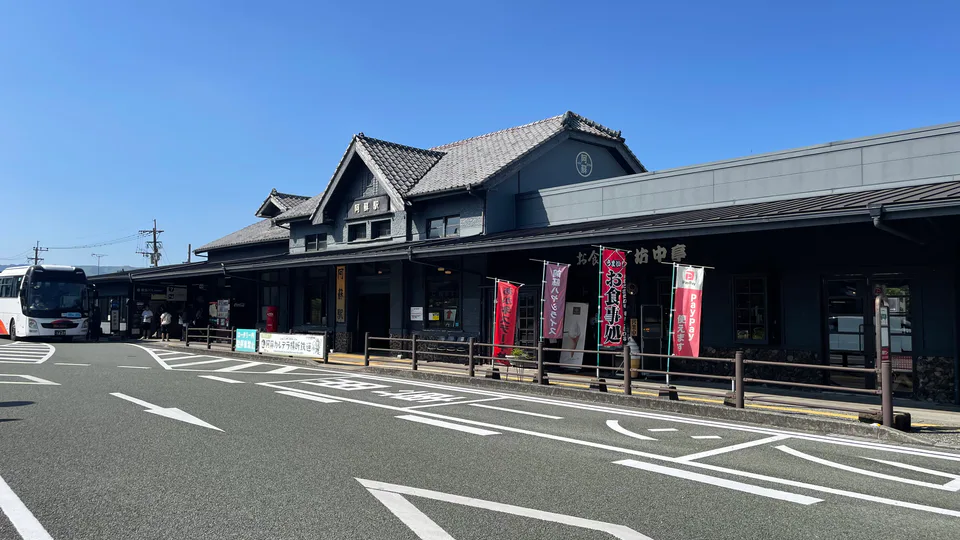
Without a car, hotel location matters more than the room view. Aso's official tourism transport page currently gives a reference taxi trip from Aso Station to Kusasenri/Aso Volcano Museum at roughly 35 minutes and JPY 3,500. Public buses and intercity services also shape the route, but their frequency and exact stop pattern must be checked for the travel date.
If you stay one night in a remote property, ask what the next morning's first movement is before paying. A hotel shuttle that starts too late, a taxi that must be reserved, or a sparse bus can erase the benefit of sleeping locally. For a car-free overnight, staying near Aso Station or a confirmed bus/shuttle corridor can be more valuable than the most scenic address.
If the trip continues through Aso toward Kurokawa or Yufuin, use the Kyushu Odan Bus guide before deciding the hotel.
Families and older travellers: do not add a hotel just to make the map look gentler
A long Aso day can be tiring, so one night can genuinely split the load. But changing hotels also means packing, checkout, luggage handling and another check-in. For a family or older traveller, the overnight should remove a marathon return or create a calm onsen/morning experience that everyone wants.
Under Level 3, the central-peak hiking restrictions also matter. Do not choose a mountain-oriented hotel because the group expects to hike Takadake, Nakadake, Kishimadake or Eboshidake on the second morning; Aso City currently lists those mountains as unavailable for climbing. Rebuild the day around accessible low-risk sightseeing and official local instructions.
Three four-day Kumamoto structures
A: Kumamoto is the main base
Keep all hotel nights in Kumamoto, use one complete day for the accessible Aso landscape, and return. This is the strongest answer when Kumamoto city and another city-side excursion still deserve time.
B: Aso is one of the main reasons for the trip
Move one night to Aso, but make the accommodation and the caldera—not crater entry—the purpose. Use an afternoon landscape window, onsen evening and early morning, then continue or return.
C: Aso is the bridge to the next rural destination
Use the overnight as a route node between Kumamoto and Kurokawa/Takachiho or another rural area. This usually gives the hotel the strongest operational value because it removes backtracking.
Final verdict under the current Level 3 alert
Day trip: choose it when the accessible Kusasenri/caldera landscape is enough and Kumamoto remains your natural base.
Overnight: choose it when the room creates an onsen evening, an early landscape window, a second weather window or a one-way route to the next rural destination.
Do not use the overnight as crater-access insurance. JMA still had Aso at Level 3 in its August 24 status update, and Aso City currently says Nakadake crater sightseeing is unavailable. Kusasenri remains reachable, so Aso is not “closed”; it is a different trip from the one many older guides describe.
Recheck JMA and Aso City immediately before travel. Volcanic access is a same-day operating condition, not a fact a hotel reservation can lock in.
Sources and current restriction
Japan Meteorological Agency — current Aso volcanic activity status · JMA — August 14, 2026 Level 3 warning · Aso City — current visitor restrictions · Aso tourism — public transport and taxi access. Checked August 25, 2026. Alert level, roads, crater access, hiking restrictions, buses and local operating instructions can change quickly.