
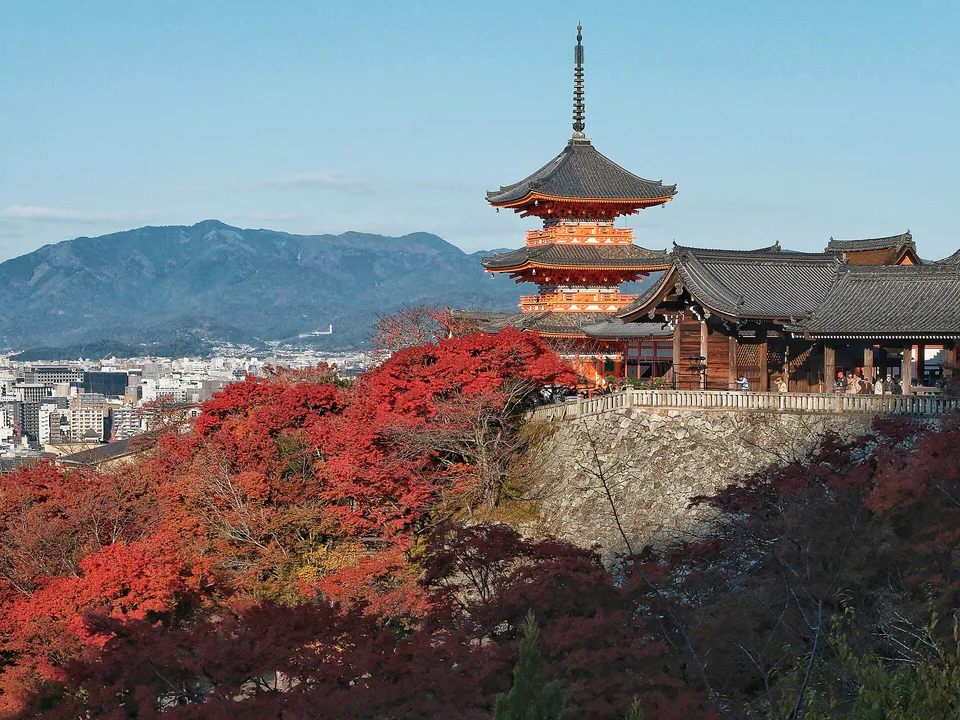
Three autumn days in Kyoto should be planned as three geographic corridors, not as a list of famous temples. Give each day one morning anchor, one nearby afternoon option and at most one evening illumination. In early November, move toward higher or earlier-colouring areas such as Takao or Ohara. In mid-November, use Arashiyama and northern Higashiyama selectively. In late November, southern Higashiyama, Tofukuji and lower-elevation Kyoto become stronger. In early December, stop forcing mountain colour and use Uji, Daigoji, Toji and central gardens as the late-season layer.
The 2026 calendar also matters. Kiyomizu-dera’s official autumn night viewing runs November 21–30, open until 21:30 with last entry at 21:00. Eikando’s current 2026 announcement lists night viewing from November 20–December 6, with reception from 17:30–20:30 and closing at 21:00. Toji’s 2026 autumn illumination runs October 31–December 13, 18:00–21:30 with last entry at 21:00. Those events are useful, but one late night should replace another activity rather than being stacked on top of a full dawn-to-dusk day.
↔ Scroll table left or right
Your dates | Day 1 anchor | Day 2 anchor | Day 3 anchor |
Early November | Takao or Ohara | Arashiyama | Northern Higashiyama / central Kyoto |
Mid-November | Arashiyama | Nanzenji / Eikando corridor | Tofukuji + one nearby south/east branch |
Late November | Kiyomizu / southern Higashiyama | Tofukuji + Fushimi or Uji | One lower-elevation late-colour district |
Early December | Uji | Daigoji / Toji | Central gardens + indoor Kyoto |
The three-day rule: one morning anchor, one afternoon branch, one night event at most
Kyoto autumn itineraries fail because each temple is treated as a separate stop. In reality, the expensive unit is the cross-city move: leaving one district, joining another bus or train queue, walking from a new station and then entering another crowded site.
For three days, use this ceiling:
Morning: one site or compact corridor where early arrival genuinely changes the experience.
Afternoon: one adjacent branch that can be shortened or deleted.
Evening: illumination only when you still have energy and the event sits near the day’s route or near the hotel.
If your plan needs Arashiyama in the morning, Kiyomizu in the afternoon and Toji at night, you have not built one day. You have built three separate crowd-and-transport events.
2026 timing: use official event dates, but do not confuse them with foliage guarantees
Kiyomizu-dera’s official 2026 schedule lists autumn night viewing from November 21 to November 30. The temple itself also describes its broad autumn-leaves period as mid-November to early December and explicitly notes that the best viewing time varies by year.
Eikando’s current official 2026 announcement lists its autumn night visit from November 20 to December 6. Day visitors must leave before the night session; the daytime and nighttime admissions are separate. That matters if you were planning “Eikando all afternoon into the illumination” as one continuous ticketed stop.
Toji’s official 2026 autumn schedule lists illumination and special night viewing from October 31 to December 13. That long event window is useful precisely because the illumination calendar is not a promise that the trees are at peak colour every night.
Kyoto City’s current tourism guidance identifies mid-November to early December as one of the busiest periods of the year and provides area-by-area congestion forecasts and live-camera information. Use that tool during the final week before travel to change time of day inside the chosen district rather than changing the whole itinerary.
For 2026, the broader seasonal outlook also points to a warmer-than-normal autumn across much of Japan. Treat that as a reason to keep lower-elevation late-colour options available, not as permission to predict an exact Kyoto peak months ahead.
If you choose only one night illumination, choose the one that deletes a transfer
Most three-day visitors should treat night illumination as a single scarce slot, not a collection. Kiyomizu, Eikando and Toji are all strong candidates, but the correct winner is usually the one that fits the day you already built.
↔ Scroll table left or right
Night option | 2026 operating window | Choose it when | Main trade-off |
Kiyomizu-dera | Nov 21–30; until 21:30, last entry 21:00 | Your daytime route is already southern Higashiyama, Gion or the hotel is nearby | Shortest date window; adding it after a west-Kyoto day creates another cross-city event |
Eikando | Nov 20–Dec 6; reception 17:30–20:30, closes 21:00 | Nanzenji / Okazaki / northern Higashiyama is already the day’s corridor | Day and night sessions are separate; daytime visitors must exit before the night visit |
Toji | Oct 31–Dec 13; 18:00–21:30, last entry 21:00 | You are staying near Kyoto Station, travelling in early December, or need the broadest date fallback | Excellent logistics do not mean the foliage stage will match Kiyomizu or Eikando on the same night |
ValueNavi decision rule: do not ask which illumination is “best.” Ask which one removes the most extra movement from the day. A Nanzenji/Eikando daytime corridor naturally points to Eikando. A southern Higashiyama day naturally points to Kiyomizu. A Kyoto Station hotel, late-season date or rail-heavy final day makes Toji unusually efficient.
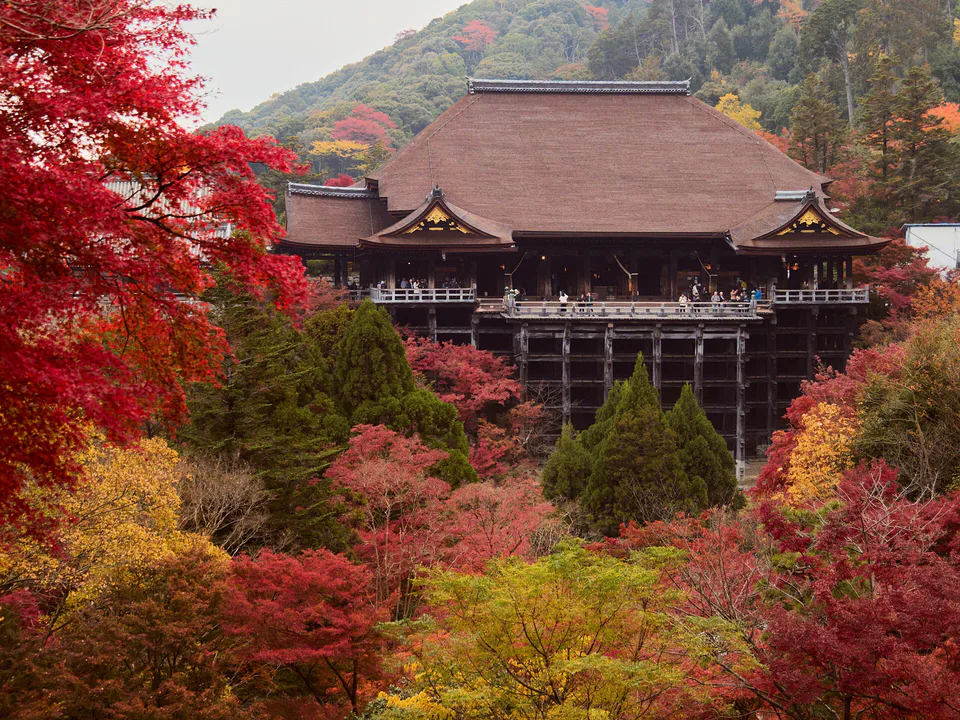
This also gives you a clean fallback hierarchy. If your dates fall outside Kiyomizu’s ten-night window, do not rebuild the whole trip around it. If Eikando’s evening queue or daytime energy cost looks wrong for the group, Toji’s much broader 2026 window can preserve a night-viewing experience without forcing another Higashiyama visit.
Early November: spend one day where the season starts earlier
Early November is the easiest period to waste by copying a late-November Kyoto itinerary. Central lowland temples may still be greener than expected, so one day should deliberately test an earlier-colouring or higher-elevation corridor.
Day 1 — Takao or Ohara, not both
Choose Takao when Jingoji and a more mountain-shaped day are the reason you came. Choose Ohara when you want Sanzen-in, Hosen-in and a slower village day with less climbing intensity. Do not treat the two as interchangeable morning and afternoon halves; transport consumes too much of a three-day trip.
Use a city fallback if weather, mobility or bus congestion makes the mountain day unattractive. Kyoto Gyoen, Okazaki museums or a central temple day can absorb the switch without another hotel or rail reservation.
Day 2 — Arashiyama as one west-Kyoto corridor
Start with the river/Tenryuji side and choose one quieter northern continuation such as Jojakkoji, Nisonin, Gioji or Saga-Toriimoto. The bamboo grove is not a separate half-day objective. If it is overwhelmed, walk through once or skip it and protect the temples that actually motivated the autumn visit.
Day 3 — northern Higashiyama or central Kyoto
Use Nanzenji, Eikando and a short Philosopher’s Path section when colour and crowds support it. If the east side is still early, do not force it simply because Day 3 was labelled “Higashiyama” months ago. Shift to a city garden, museum or the district currently showing better colour.
Mid-November: east and west Kyoto should be separate days
Mid-November creates the strongest temptation to cross the city because many famous sites are becoming relevant at once. Resist it.
Day 1 — Arashiyama
Use one complete west-Kyoto day. Arrive early, do Tenryuji/riverside first, then one northern temple cluster. Finish in Arashiyama or return to central Kyoto for dinner. Do not add Kiyomizu because there are still daylight hours on the clock.
Day 2 — Nanzenji / Eikando / Okazaki
This is one of the easiest corridors to keep coherent on foot. Start with Nanzenji/Keage, continue to Eikando when the queue is acceptable and use Okazaki or an indoor museum as the afternoon release valve.
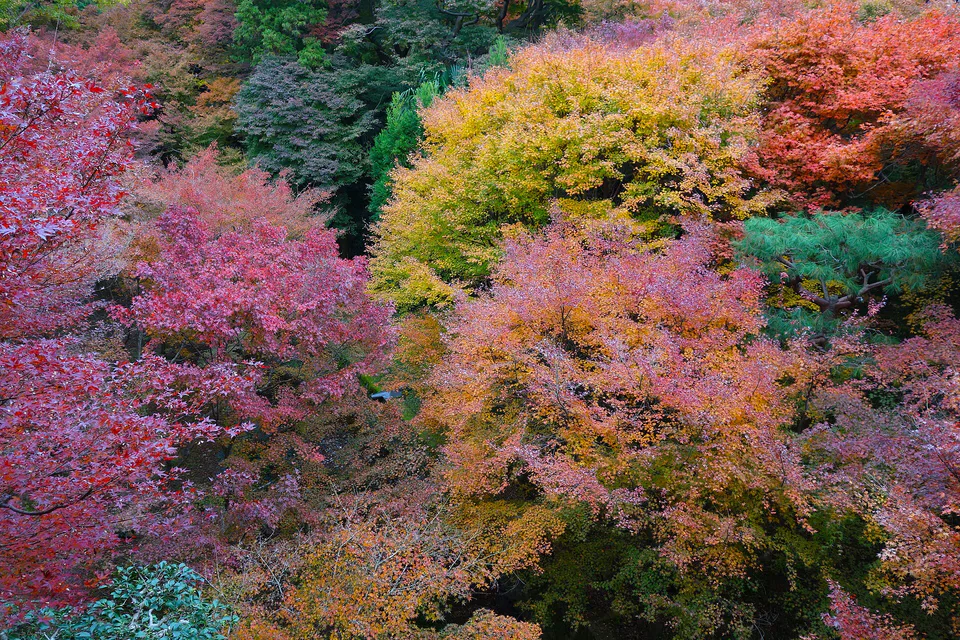
If Eikando is saturated, deleting it can improve the day more than standing in a long line because it is “the famous autumn temple.” The Kyoto congestion forecast is useful here: check the district and time, not just the attraction name.
Day 3 — Tofukuji plus one south/east branch
Tofukuji is the morning anchor. After that, choose Fushimi for shrine/sake-district logic or Uji for a separate half-day. Do not add both. The late-afternoon cost of changing rail corridors is exactly what makes a three-day itinerary feel rushed.
Late November: choose daytime Kiyomizu or night Kiyomizu for a reason
From November 21–30, 2026, Kiyomizu-dera stays open until 21:30 for the official autumn special night viewing, with last entry at 21:00. That creates an opportunity, but also a planning trap.
Daytime Kiyomizu is better when you want a quieter early start, the surrounding Sannenzaka/Ninenzaka streets and a coherent southern-Higashiyama morning. Night Kiyomizu is better when illumination itself is a priority and you are willing to preserve energy during the afternoon.
Do not do a dawn Arashiyama start, full west-Kyoto day, long dinner and then force Kiyomizu night viewing because the ticket window is still open. A night illumination should be treated as one of the day’s main activities.
Late-November Day 1 — southern Higashiyama
Kiyomizu-dera, then Sannenzaka/Ninenzaka and one Kodaiji/Entokuin/Gion continuation. If you plan the night viewing instead, use a lighter daytime programme and return in the evening deliberately.
Late-November Day 2 — Tofukuji + Fushimi or Uji
Keep the rail line coherent. Tofukuji plus Fushimi works when the sake district or Fushimi Inari is the afternoon objective. Tofukuji plus Uji works when tea, Byodoin and river scenery matter more. Choose one branch.
Late-November Day 3 — one late-colour district
Choose the area that is actually holding colour: lower Arashiyama, Daigoji, central gardens, Uji or even Nara when Nara itself is a trip priority. Do not cross into a second city merely because the first site finishes at 13:30.
Early December: stop judging the day only by red maple density
Early December is where a resilient Kyoto trip can outperform a peak-week checklist. Crowds begin to ease, but some mountain colour may already be finished. Use places that still have independent value after the leaves weaken.
Day 1 — Uji
Byodoin, the river and tea culture remain worthwhile even if the exact colour stage is imperfect. This is a better late-season product than spending hours chasing one remaining red tree across Kyoto.
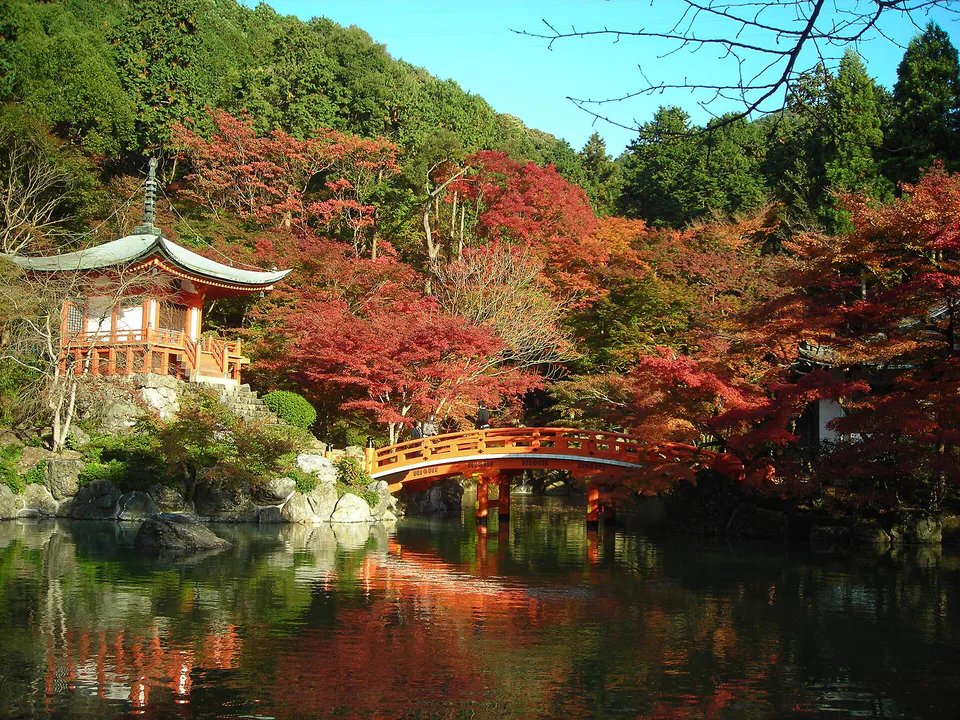
Day 2 — Daigoji plus Toji evening if it still fits
Use lower Daigoji as the daytime autumn anchor. Toji can be the evening option because its 2026 autumn illumination extends into December. Treat that as a separate night experience, not evidence that Daigoji and Toji are at the same foliage stage.
Day 3 — central Kyoto + indoor culture
Kyoto Gyoen, Nijo, Kitano or Umekoji can be mixed with a museum, tea experience or market. The goal is to make the final day useful even in cold rain or after peak leaves.
Where to stay: choose the hotel by the first and last useful hour
The old version of this guide listed twelve hotels. That is the wrong level of decision. First choose the area.
↔ Scroll table left or right
Area | Best for | Main trade-off |
Kyoto Station | Tofukuji, Uji, JR day trips, luggage-heavy arrival/departure | Requires local movement for Gion/Higashiyama evenings |
Kawaramachi / Gion edge | Higashiyama mornings, central dinners, night illumination | Less direct for JR-heavy days and airport/long-distance transfers |
Karasuma / central Kyoto | Balanced three-day trip using several corridors | Not the closest option to any single headline district |
Otsu / Yamashina fallback | Peak-week price/availability escape when rail access remains good | Daily return travel; do not book solely because the room is cheaper |
For only three days, keep the same hotel for both nights. A one-night Kyoto Station / one-night Gion split normally spends more time on luggage than it saves. If you are still choosing the area, use Kyoto Station vs Gion and Where to Stay in Kyoto.
Compare Kyoto hotels after choosing the area
Transport: default to IC card until a pass clearly wins
A three-day autumn itinerary mixes JR, subway, Keihan, Hankyu, buses and walking. That is exactly the kind of trip where a simple IC card can be more useful than buying a pass first and then redesigning the day to make the pass pay.
Use a pass only when the day is already transport-heavy on the operators it covers. A Takao or Ohara day can depend on bus specifics. An Arashiyama day may use JR, Hankyu or Randen depending on hotel and route. Tofukuji/Uji may favour JR or Keihan. There is no single Kyoto autumn pass that makes all four seasonal versions optimal.
Price the pass after the corridor is fixed. If the pass saves a few hundred yen but adds another transfer or encourages another district, it has made the itinerary worse.
Energy budget: one late illumination should cost you something earlier
Autumn Kyoto creates unusually long tourist days because temples open early and illuminations run late. The biological constraint is more important than the timetable.
If you plan a night event:
drop one afternoon temple;
schedule a hotel/café rest;
eat before the worst evening queue;
avoid another aggressive dawn start the next morning unless it is the trip’s top priority.
For older travellers and families with young children, I would usually choose either the premium early-morning experience or the illumination experience on a given day. Trying to buy both with sleep is the fastest way to make Day 3 collapse.
Rain and crowd Plan B: change intensity, not geography
A rainy or overcrowded morning should not trigger a cross-city escape. Keep the same corridor and reduce exposure.
Arashiyama: shorten the outdoor walk, use Tenryuji and rail-based movement, then return earlier.
Higashiyama: replace a long Philosopher’s Path walk with Okazaki museums or a shorter temple pair.
Uji: lean more heavily on tea, Byodoin and indoor stops.
Central Kyoto: use museums, Nijo-area culture, markets and covered shopping.
The Kyoto Travel Congestion Forecast is designed to compare popular places by area, time and expected weather. Use it to shift a morning by an hour or swap two days; do not treat it as a reason to rebuild all three days overnight.
What to delete first when the day falls behind
Use a deletion order before travel:
delete the optional café/photo detour;
delete the second afternoon temple;
delete the night illumination when fatigue is already high;
protect the final train/bus and the next morning’s top anchor.
Do not delete the transport buffer before deleting sightseeing. A late autumn sunset and peak crowds make “we can still squeeze it in” especially expensive.
Red-team: when this three-day structure is wrong
This guide assumes Kyoto autumn foliage is the main purpose of the three days. The recommendation changes when:
one of the days is actually a fixed Nara, USJ or Osaka commitment;
mobility constraints make Takao, temple stairs or long walking corridors unsuitable;
your dates sit clearly outside the useful Kyoto foliage period and autumn is only a bonus;
a repeat visitor wants one specialist temple or photography location rather than broad first-trip coverage.
In those cases, reduce the number of autumn corridors rather than trying to preserve all three.
Final verdict
Three autumn days in Kyoto are enough when each day has one geographic identity. Early November should test earlier/higher areas. Mid-November should separate Arashiyama from Higashiyama. Late November should protect southern Higashiyama and Tofukuji without stacking distant illuminations. Early December should move lower and give indoor Kyoto more value.
Keep one hotel, use an IC card until a pass proves itself, and limit evening illuminations to the nights you actually have the energy to use. The best three-day itinerary is not the one with the highest temple count. It is the one where Day 3 still feels like a holiday rather than recovery from Days 1 and 2.
Where to Stay in Kyoto for Autumn Leaves: Kyoto Station, Kawaramachi, Gion or Osaka?
Osaka and Kyoto 4-Day Itinerary With USJ: Does Kyoto Still Fit?
Osaka for Couples: A 7-Day Itinerary That Saves the Best Nights for Kyoto, Kobe and One Big View
Tokyo to Nikko Autumn Leaves: Trains, Passes, Day Trips and Overnight
Japan Autumn Leaves in September: Hokkaido, Alpine Routes and Grass Foliage
References
Kiyomizu-dera — 2026 special night viewing · Eikando — 2026 autumn exhibition and night visit · Toji — 2026 autumn special viewing and illumination · Kyoto City Official Travel Guide — current congestion forecast. Checked August 25, 2026. Foliage timing varies by year; event dates do not guarantee peak colour.