September autumn in Japan is an elevation-chasing trip, not an early Tokyo–Kyoto maple trip. As of 25 August 2026, the nationwide 2026 foliage services from tenki.jp and Weathernews still have not opened, but Daisetsuzan has entered the first useful local-monitoring phase: Asahidake Ropeway published a 19 August update describing the mountain as moving from summer toward autumn. That is not a peak-colour report. It is the signal to start watching high Hokkaido now instead of waiting for a nationwide forecast before making every September decision.
The month then changes product quickly. Early September is high Daisetsuzan first. Mid-September adds Ginsendai and other very early Hokkaido corridors when 2026 access is confirmed. Late September broadens toward Tateyama Murodo/Midagahara and grass foliage such as Oze. Tokyo, Kyoto and Osaka remain city/cultural bases rather than reliable mature-foliage promises.
↔ Scroll table left or right
Your September window | First place to monitor | What makes it work | Main failure mode |
1–10 Sep | Asahidake / Kurodake upper zones | Highest accessible Hokkaido elevations and live ropeway data | Too early even there, or wind/cloud removes the mountain |
11–20 Sep | Daisetsuzan + Ginsendai watch | More early-colour corridors enter play | Road controls, bus capacity, hiking weather and return timing |
21–30 Sep | Daisetsuzan lower bands + Tateyama + Oze grass foliage | More regions and elevations become viable | First snow, fog, seasonal transport and daylight |
Tokyo / Kyoto only | Do not sell the trip as peak autumn leaves | City sightseeing is still worthwhile | Expecting November-style maple colour in September |
25 August pre-season status: high Hokkaido is now a watch, not a promise
Three evidence layers need to stay separate. Tenki.jp's current foliage page still says its 2026 service is expected around September. Weathernews also says next-season information is planned for September 2026. There is therefore no responsible nationwide 2026 peak calendar to copy into a September itinerary today.
Local evidence is more useful at the very top of Daisetsuzan. Asahidake Ropeway's 19 August update says the area is gradually moving into autumn mode, and its 24 August live conditions at Sugatami Station around 1,600 metres showed about 15°C with poor visibility. That is enough to move Asahidake into monitor-now status, not enough to call it colouring or peak.
Kurodake's official mid-August live page was still using a spring/summer seasonal label with alpine-flower information. Its operator's general guide notes that summit-area colour normally begins around early September, but that is historical/operator timing context. Use the next dated 2026 update to decide the actual day.
This gives September travellers a practical rule: do not wait for one national forecast to tell you whether to visit a mountain. Watch the exact high-elevation operator now, then upgrade the route only when explicit colour and same-day operation agree.
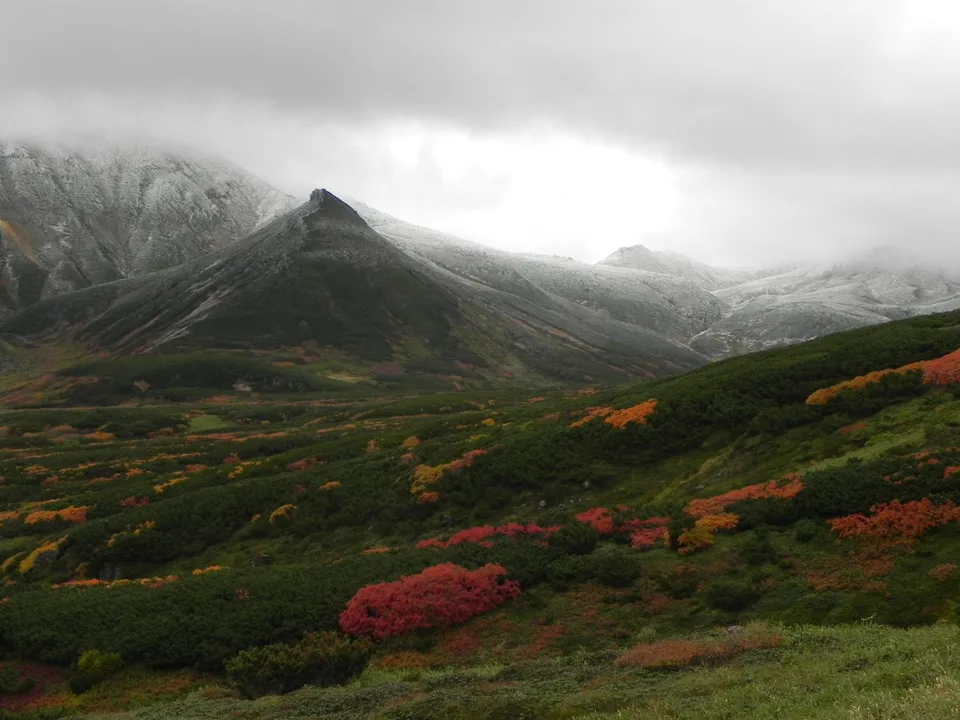
Historical Daisetsuzan image; not a current 2026 colour report.
Early September: keep Asahidake and Kurodake in the same decision corridor, not the same day
Asahidake is the stronger first watch when you want Sugatami Pond, fumaroles and a broad volcanic plateau. The official Sugatami walking circuit is about 1.7 km and roughly one hour as a reference, but exposed wind, uneven ground and fast weather changes mean a ropeway does not turn the area into a city walk.
Kurodake is the more modular product. The ropeway climbs from Sounkyo to the 5th station in about seven minutes; an easy 5th-station walk can be enough for a mixed-age group. The optional summer chairlift continues to the 7th station. In 2026 the summer chairlift is scheduled through 15 October, so September remains inside its normal operating season, subject to weather.
Do not combine Asahidake and Kurodake in one day simply because both are early. They sit in different access valleys and each day needs its own live weather, operation and return calculation. An Asahikawa base gives Asahidake one clean car-free day; a Sounkyo overnight can give Kurodake an early-morning attempt plus an onsen fallback.
For the exact comparison, use Asahidake vs Kurodake.
Mid-September: Ginsendai can be stronger colour and much harder logistics
Ginsendai should only enter the plan after its 2026 access regime, road controls, parking or bus procedure and return times are confirmed. It is a road-end trail access point, not a ropeway viewpoint. That raises the failure cost: fog, rain, first snow, hiking speed and a missed return can all matter more than the foliage report.
A Sounkyo pre-night is normally more resilient than leaving Asahikawa late for a one-shot attempt. Carry proper footwear, waterproof warmth, food, water, offline navigation and bear-awareness equipment appropriate to the route. If current access or weather does not work, Kurodake and Sounkyo should be the fallback rather than improvising around a mountain road.
The decision threshold is higher than for a ropeway: Ginsendai should be both visibly worth it and operationally executable. “Historically peak around mid-September” is not enough to override a poor transport day.
Late September: the opportunity set expands beyond Hokkaido
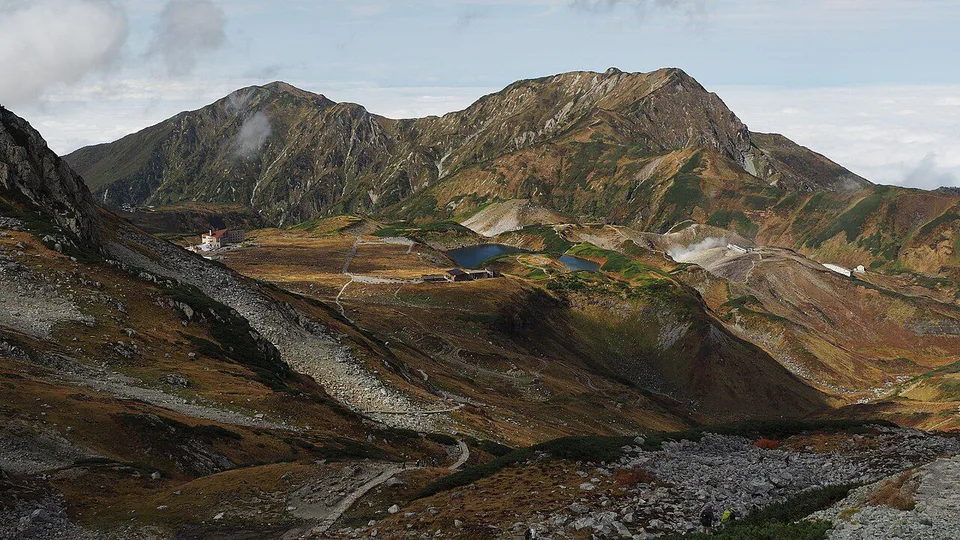
By late September, a September foliage trip does not need to be entirely Daisetsuzan. Tateyama's Murodo around 2,450 m and Midagahara around 1,930 m create separate elevation bands, while Oze offers kusamomiji — grass and marsh vegetation turning gold, ochre and reddish brown rather than a Kyoto-style maple canopy.
The Tateyama Kurobe Alpine Route is scheduled to operate through 30 November 2026, but a full Toyama–Ogizawa crossing is a different product from a Murodo out-and-back. The crossing uses multiple timed transport segments and requires a more serious luggage and connection plan. Do not attach it to a flight day or a non-refundable dinner.
For a flexible mountain day, two nights in Toyama can be stronger than a one-night dash: one day gets the best mountain forecast, the other can absorb Toyama, Kanazawa or another lower-risk alternative.
Oze kusamomiji is a different visual product
Oze in September is valuable when you want boardwalks, marshland and broad grass colour. It should not be sold as a substitute for temple maple leaves. A Katashina/Tokura pre-night makes the route much more controllable than a rushed Tokyo out-and-back, especially when the group is not fast on long boardwalk days.
If the success criterion is “red trees around Japanese architecture,” save the autumn-leaf expectation for a later trip or later dates. If the success criterion is “first visible seasonal change in alpine and wetland landscapes,” September becomes much stronger.
Use a three-level evidence rule before changing hotels
September is early enough that one optimistic social post can cause an expensive route change. Require three levels of evidence before changing the itinerary:
Colour: a recent dated location-level report that explicitly describes the foliage stage.
Access: ropeway, road, bus, trail or capacity information for the same date range.
Execution: a usable weather window and a protected return.
If only level 1 is good, keep the base and wait. A mountain can be beautifully coloured and still be a poor trip because wind, fog or a capacity-controlled bus makes the day fragile.
Hotel bases and luggage: buy weather options, not hotel changes
Asahikawa is the strongest flexible base for an early-September Daisetsuzan trip because it supports airport/rail access, Asahidake, Biei and city fallbacks. Sounkyo is stronger when Kurodake or Ginsendai is important enough to justify an onsen night and an early second weather window. Toyama is the west-side base for a late-September Tateyama attempt.
Forward the main suitcase between city hotels where practical and carry one mountain overnight bag. Large luggage adds failure cost to every missed rural connection. A hotel move should earn at least two useful sessions — for example, an onsen evening plus a second early mountain attempt — rather than exist only because one historical foliage calendar says the area should be red.
JR passes do not solve the final mountain access
A nationwide or regional JR pass may cover part of the intercity spine, but Daisetsuzan relies on local buses, ropeways and roads; the Alpine Route uses multiple non-JR transport systems; Oze uses rural buses and shuttles. Price the final mountain access separately. A fare pass cannot create a seat, reopen a ropeway or protect a missed rural return.
Weather Plan B is part of a September foliage itinerary
Asahidake or Kurodake in wind/cloud: use Asahikawa, Biei, Higashikawa, Sounkyo gorge or onsen. Ginsendai access poor: do not improvise around the road; use Kurodake or the gorge. Tateyama in fog: keep Toyama and move the mountain day if the stay allows. Oze in persistent rain: shorten or cancel rather than protecting a fixed boardwalk plan.
First snow, frost or ice should immediately change the walking plan for travellers without winter mountain equipment and experience. September colour is valuable precisely because it is alpine; that same elevation creates the risk.
Final verdict
For 1–10 September, monitor Asahidake and Kurodake first, with Asahidake currently providing the clearer late-August seasonal-transition signal. For mid-September, add Ginsendai only when 2026 access and the return are fully confirmed. For late September, expand the comparison to Tateyama and Oze instead of forcing Hokkaido after the best high-elevation window has moved.
The goal is not to predict a perfect national September peak. It is to keep the route at the elevation where autumn is actually happening while preserving a hotel base and Plan B that still make the trip worthwhile when the mountain is green, hidden or closed.
Related planning
Official operating checks
tenki.jp foliage service status · Weathernews foliage service status · Asahidake Ropeway live operation and seasonal updates · Kurodake Ropeway live operation · Kurodake ropeway/chairlift operating periods · Tateyama Kurobe official notices. Checked 25 August 2026. Foliage, roads, buses, ropeways and first snow can change quickly; recheck the exact travel day.