
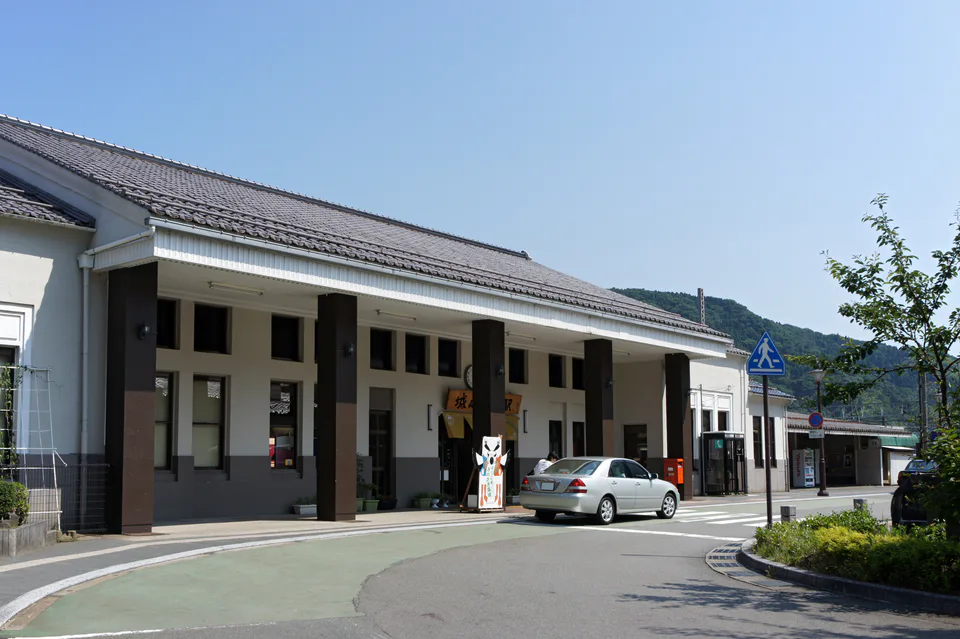
For a one-night Kyoto → Kinosaki Onsen stop, the best luggage plan is usually to send the large suitcase past Kinosaki to the next confirmed hotel and travel with a self-contained overnight bag. But that is not the only sensible option. If the next hotel cannot confirm receipt, if you need the full suitcase in Kinosaki, or if delivery timing makes you uncomfortable, carry the case to Kinosaki Onsen Station and use the town’s Ryokan Service Center rather than dragging it through the onsen streets yourself.
The key decision is therefore not simply forward or carry. It is where should the large suitcase rejoin the itinerary? One-night Kinosaki usually favours forwarding past the town. Two nights make access to the full suitcase more valuable. An uncertain next hotel makes local Kinosaki handling the safer middle path.
↔ Scroll table left or right
Your trip shape | Best starting plan | Why |
Kyoto → 1 night Kinosaki → confirmed Osaka/Tokyo/Fukuoka hotel | Forward the large case past Kinosaki | You avoid handling a suitcase twice for less than 24 hours of useful access |
Kyoto → 2 nights Kinosaki | Carry it or send it to the Kinosaki accommodation | The full wardrobe and personal items now have more value during the stay |
Next hotel is uncertain or will not confirm baggage receipt | Carry to Kinosaki Station | Control is more valuable than an elegant forwarding plan with a weak destination |
Large family luggage but only one night in Kinosaki | Forward bulk luggage; carry essentials | The station and ryokan transfer become much easier without several full-size cases |
Medication, specialist gear or critical clothing is in the main case | Carry or repack before forwarding | Convenience never justifies separating from something the trip cannot function without |
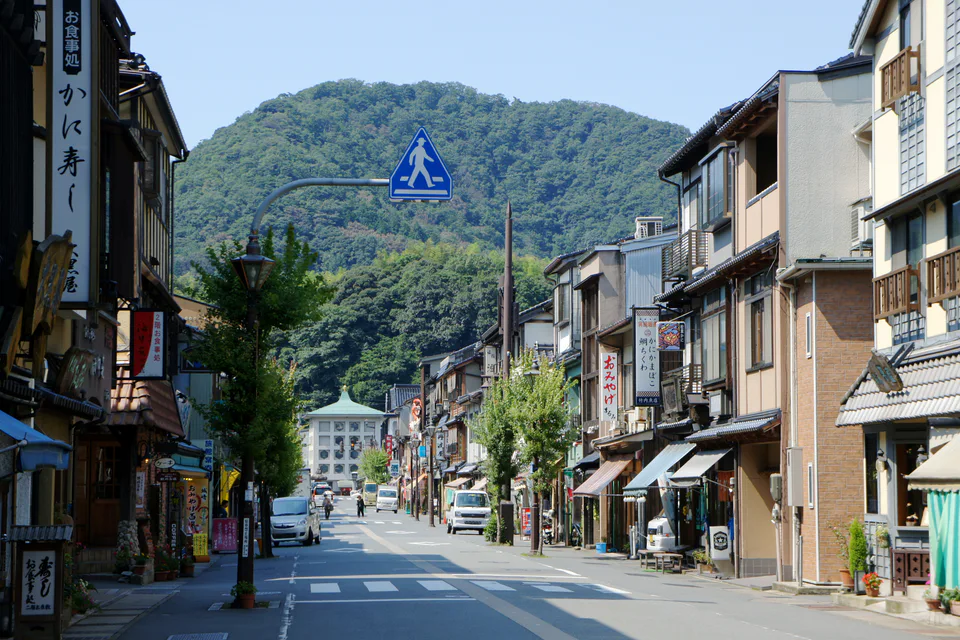
There are three luggage strategies, not two
Most advice frames this as a binary choice: send the suitcase from Kyoto or carry it on the train. Kinosaki has a useful third option.
Strategy 1: forward the suitcase past Kinosaki
This is the strongest one-night strategy when the hotel after Kinosaki has confirmed that it accepts forwarded luggage. Send the large case from Kyoto to that next hotel and carry only what you need for the onsen night.
The benefit is not only the train. You also remove the suitcase from check-in, the ryokan room, the next-morning checkout and the return to Kinosaki Onsen Station. For a stop built around a kaiseki dinner, yukata and public-bath hopping, the full suitcase often contributes almost nothing during the hours you are actually there.
Strategy 2: carry the suitcase to Kinosaki, then hand it off locally
Visit Kinosaki currently says the Kinosaki Onsen Ryokan Service Center, across from the station, can store luggage and can send it to participating accommodation for a fee when possible. Its FAQ says most Kinosaki accommodations participate in the service. SOZORO Tourist Information Center and coin lockers provide additional storage options, although SOZORO does not forward luggage to the accommodation.
This is the best fallback when forwarding from Kyoto fails the confidence test. You keep possession of the case during the intercity leg, but you do not have to roll it through town or arrive at the ryokan carrying everything.
Strategy 3: send the suitcase to Kinosaki itself
This can make sense for two nights, winter travel with more clothing, a longer ryokan stay, or a traveller who genuinely needs the contents. It is weaker for a one-night stop because you pay to reunite with a case that you may open once and move again the following morning.
Before sending it to a ryokan, obtain a direct confirmation that the property accepts deliveries, the guest name it wants on the label, and the acceptable arrival date. Do not infer acceptance from a generic parcel-delivery rule.
Do not assume “same-day luggage delivery” means Kyoto → Kinosaki
Yamato’s current Kyoto hands-free travel information says next-day delivery is available to most of Japan, with some distant areas taking longer. Its special same-day service from Kyoto is much narrower: it covers participating accommodation in specified parts of Kyoto, Osaka and Kobe, not Kinosaki Onsen.
That distinction matters. A traveller who sees “same-day luggage delivery from Kyoto” can easily assume the case can leave Kyoto in the morning and be waiting at a Kinosaki ryokan that afternoon. The published Kyoto same-day product does not support that assumption.
For a Kyoto → one-night Kinosaki → next-city itinerary, the safer logic is normally to forward past Kinosaki with an appropriate delivery buffer, not to build the onsen night around same-day arrival of the main case.
Next-day delivery is useful, but the overnight bag still needs a failure buffer
Yamato currently describes next-day delivery as available to most of Japan from its branches, with specified distant prefectures and islands taking around two days. Its Kyoto information gives a current example of JPY 3,160 for a size-160 bag from Kyoto to Tokyo or Fukuoka.
That price is useful as a scale reference, not as a quote for every suitcase or route. Size, destination and service conditions change the fee. More importantly, Yamato also warns that weather, traffic and parcel volume can delay delivery.
So the overnight bag should not contain exactly one night of survivability. Pack it so the trip still works if the large suitcase is not available at the first moment you expected to collect it.
The receiving-hotel test comes before the shipping counter
Do not send the suitcase until the next hotel is a real destination rather than an itinerary idea. Ask the receiving property to confirm:
that it accepts luggage delivered before check-in;
the reservation name that should appear on the shipping label;
the check-in date or arrival date that should be written on the shipment;
whether there are any size, timing or payment restrictions;
whether it will hold the case if delivery arrives before you do.
If the answer is ambiguous, do not solve the ambiguity by hoping the carrier and hotel work it out. Carry the bag to Kinosaki and use local storage, or forward only after the onward hotel is fixed.
Kinosaki’s local luggage system changes the cost of carrying
Carrying a suitcase all the way from Kyoto sounds unattractive if you imagine dragging it from the platform to the ryokan. That is not the only local workflow.
Visit Kinosaki says the Ryokan Service Center can hold baggage and, where possible, send it to the accommodation. It also says ryokan guests can use a free station-to-ryokan shuttle that generally operates from around 12:30 p.m. to 6:00 p.m. in coordination with limited-express arrivals rather than a fixed public timetable.
This creates a more nuanced comparison:
Forward past Kinosaki: least luggage handling overall.
Carry + Ryokan Service Center: more intercity handling, but little need to drag the case through town.
Carry directly to the ryokan: simplest administratively, but physically worst when the property is farther from the station or the streets are busy, wet or snowy.
The second option is why “the next hotel cannot accept luggage” does not automatically make the Kinosaki stop a bad idea.
Ryokan dinner creates a hard arrival edge
Visit Kinosaki recommends arriving before check-in time when possible and notes that many ryokan dinners are served around 6:00 p.m. It also advises guests to tell the ryokan their expected arrival time. Individual properties can have stricter rules; some published plans explicitly state that dinner cannot be served after a certain arrival time.
That means luggage should support the dinner plan, not compete with it. If your train arrives in the late afternoon, spending additional time finding storage, filling out a delivery form and moving a large suitcase can consume the margin that was supposed to become a bath before dinner.
For a half-board stay, the better question is not “Can I physically carry the suitcase?” It is “Does this luggage plan preserve the ryokan arrival window I paid for?”
If meal timing is still undecided, use Kinosaki ryokan dinner included vs room only before choosing the train and luggage plan.
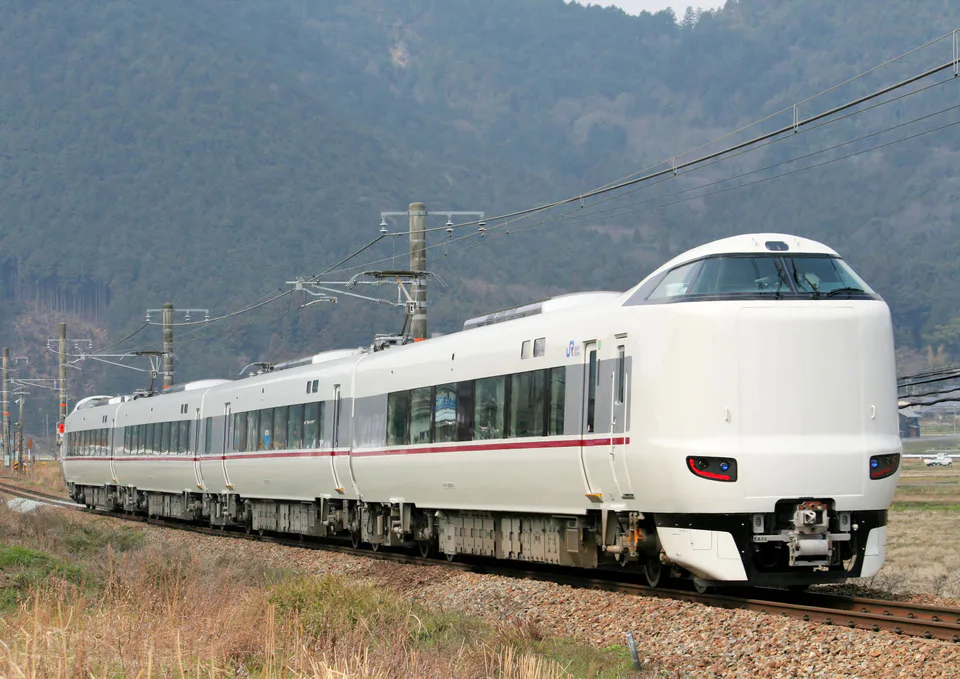
One night and two nights have different break-even points
One night: forwarding past Kinosaki usually has the clearest payoff. The case would otherwise be handled into town and out again for less than a day of access.
Two nights: the answer becomes conditional. Two nights may require more clothing, medication, work gear, children’s items or weather layers. If the overnight bag grows until it is almost another suitcase, forwarding the main case past Kinosaki has stopped solving the problem.
A useful ValueNavi test is:
If the bag you need to carry into Kinosaki exceeds roughly the amount you would willingly carry around one large station without assistance, reconsider forwarding past the town. Either send the main case to the Kinosaki accommodation or carry it and use the Ryokan Service Center.
That is an editorial comfort threshold, not a railway rule. The point is to stop splitting luggage when the “small bag” is no longer small.
Set the stay length first with Kinosaki Onsen: 1 Night or 2 Nights?.
Families gain more from forwarding because luggage multiplies faster than people
A solo traveller can usually manage one suitcase plus one overnight bag. A family may be handling two large cases, a stroller, children’s bags and tired children at the same time. Removing even one or two large pieces can change the entire transfer.
But the family version needs a stronger essentials plan. Keep medication, documents, chargers, children’s comfort items, weather layers and at least one clean change of clothing with the travellers. Do not put every child’s backup clothing into the suitcase that is skipping Kinosaki.
Forward the bulk, not the items that determine whether the next 24–48 hours function.
What belongs in the overnight bag?
passport, wallet and valuables;
medication and medical devices;
phone chargers and power bank;
one complete change of clothing;
underwear and sleep essentials;
weather layer appropriate for the season;
contact lenses / glasses and toiletries that cannot be easily replaced;
anything required for the next morning’s reserved activity or train;
Ryokan commonly provide yukata and bathing items, but the exact amenities vary. Use the Japanese onsen etiquette guide for what the bathing sequence normally requires, then check the actual ryokan rather than overpacking “just in case.”
After checkout, do not assume every ryokan handles luggage the same way
Visit Kinosaki’s general FAQ says travellers who want to send luggage onward should ask their accommodation for assistance. Some individual ryokan go further and publish free luggage delivery back to the tourist information center near Kinosaki Onsen Station after checkout. That is useful, but it is property-specific rather than a townwide guarantee.
Before the trip, ask whether your ryokan will:
hold luggage after checkout;
send luggage back to the station area;
help arrange takkyubin to the next hotel;
have a cutoff that conflicts with your morning bath or sightseeing plan.
That answer can change whether you need to forward from Kyoto at all.
When carrying everything is actually the better decision
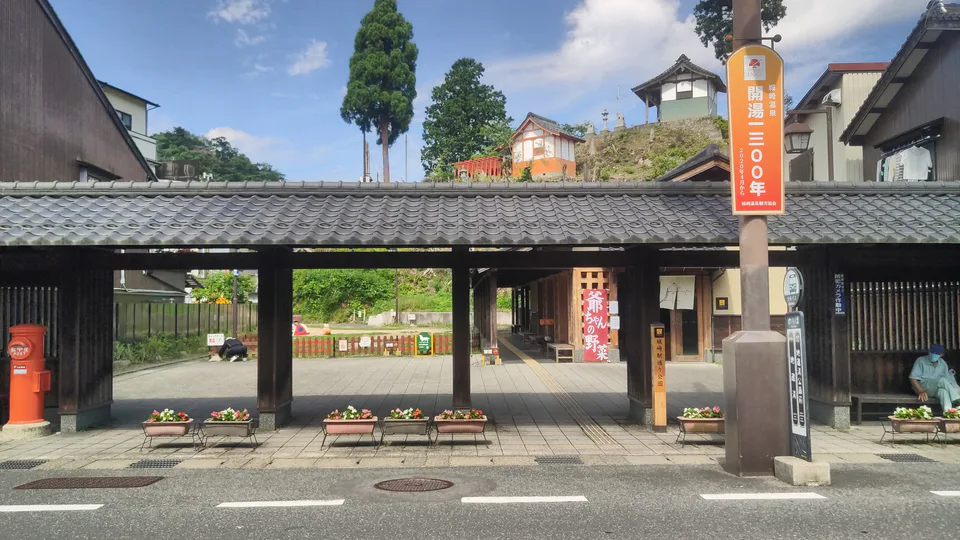
Carry the main suitcase when one or more of these are true:
the next hotel cannot confirm receipt;
the route after Kinosaki is still changing;
you need critical items from the suitcase during the stop;
you are staying two nights and the overnight bag would become large anyway;
delivery timing gives you less confidence than managing the bag yourself;
the luggage volume is small enough that the transfer is not a real burden.
This is the red-team case against forwarding. Luggage delivery is valuable because it removes friction; once it creates uncertainty about the next hotel, delivery time or essential contents, it has stopped doing its job.
When forwarding past Kinosaki is clearly worth it
It is strongest when all of the following are true:
Kinosaki is a one-night stop;
the next hotel is confirmed and accepts the suitcase;
you can comfortably live from a small bag for one to two nights if necessary;
you have multiple large bags, children or limited mobility;
your Kinosaki stay includes a time-sensitive ryokan dinner;
the next major hotel is somewhere the suitcase can wait for you rather than chase you.
That last point is important. Forwarding works best when the luggage route is simpler than the human route.
A practical decision sequence
Fix Kinosaki at one or two nights.
Fix the hotel after Kinosaki. If that hotel is uncertain, do not forward yet.
Ask the next hotel to confirm baggage receipt.
Decide how long you can live without the main case. Pack for a normal delivery delay, not only the ideal schedule.
If forwarding still feels robust, send the case past Kinosaki.
If it does not, carry it to Kinosaki Station and use local luggage handling.
This sequence separates route planning from luggage optimisation. Do not let a shipping label decide where the trip has to go next.
Final verdict
For a one-night Kyoto → Kinosaki stop, forward the large suitcase past Kinosaki to the next confirmed hotel and carry a self-contained overnight bag. That is the cleanest way to protect the ryokan afternoon, dinner and onsen evening.
But if the receiving hotel, delivery timing or essential contents are uncertain, do not force the forwarding plan. Carry the suitcase to Kinosaki Onsen Station and use the Ryokan Service Center or other local storage instead. For two nights, reassess whether access to the full case is worth more than the transfer you are trying to remove.
The useful principle is simple: the suitcase should take the simpler route. On a one-night onsen detour, that often means the suitcase skips Kinosaki while you do not.
Kyoto Autumn Leaves Guide: Timing Map from Mountains to City
Sapporo Concert Hotels: PREMIST DOME, Makomanai and Zepp Send You Home on Different Routes
Hotel Gracery Sapporo vs Hotel Emion Sapporo: Winter Luggage, Bath or Shorter Walk?
Osaka Budget Itinerary: 7 Days With USJ, Kyoto, Nara and Kobe — Without Buying Every Pass
Japan Autumn Leaves Late November: Kyoto, Tokyo, Nara, Miyajima and Kyushu
References
Visit Kinosaki — luggage storage and onward-luggage guidance · Visit Kinosaki — ryokan arrival, station shuttle and luggage service · Yamato Transport — Kyoto baggage delivery, next-day coverage and same-day service areas. Checked August 25, 2026. Delivery time, acceptance, fees, service-center handling and ryokan dinner rules can change; confirm the carrier and both hotels for the actual dates.